Ronaldo a no show in Korea – Do players truly care for pre-season trips?

Imagine being a soccer fan in South Korea.

You have your local sides such as Jeonbuk Hyundai Motors, Seoul FC and Suwon Samsung Bluewings. But you prefer the higher quality leagues of Europe.

Your national team’s stars play there, including Heung Min-Son, Lee Jae-sung and Hwang Hee-chan. You dream of one day, seeing some of the world’s best play live.

Then, Italian champions Juventus are announced as the headline pre-season tournament side. You’d be pretty darn excited wouldn’t you?

Australian soccer fans would be over the moon if Juventus came Down Under for a few pre-season friendlies.

Understandably, you want tickets to see one of the greatest clubs in world football strut their stuff.

Paulo Dybala, Miralem Pjanic, Giorgio Chiellini and Cristiano Ronaldo, just to name a few, will be kicking about in your own backyard.

Sounds good, doesn’t it?

Usually, this is where you’d see the phrase, ‘If it’s too good to be true, it usually is.”

The only difference this time is that in this instance, it shouldn’t be.

We’ve seen international superstars play pre-season matches across the globe before. English clubs Arsenal, Manchester United and Leeds United sent strong squads to their respective tours.

Granted, younger and lesser-known players were given priority but these stars such as Paul Pogba, Mesut Ozil and Pablo Hernandez still played in front of fans who paid their dues.

Heck, even Real Madrid took new star signing Eden Hazard on their tour of the United States.

They understood and respected how far some fans go for their teams, and that some fans can’t travel to watch league or cup fixtures. They tried giving them lifelong memories.

Autographs, selfies and just the experience of having your heroes out there will do that for fans of these clubs.

Juventus, however and specifically Ronaldo, didn’t seem to care.

Not only was Ronaldo barely sighted during signing and photograph sessions with fans, he didn’t even play!

Imagine taking one the most highly decorated and talented footballers to a country filled with passionate soccer fans, for him to sit on the bench. That’s ludicrous enough.

Now imagine paying to see this match with the promise that he’d be out there playing. That’s where the line is drawn.

Understandably, fans are suing as a result of not getting what they were promised.

The event has gone from a harmless, pre-season friendly to a dumpster fire that the Italian giants have only themselves to blame.

But this begs the question. Do some players genuinely care for their pre-season tours?

Combined with this Ronaldo incident, Arsenal skipper Laurent Koscielny refused to travel with the squad on the Gunners’ trip across the United States.

It is becoming increasingly commonplace in the elite world of soccer and only time will tell if it becomes an unfortunately commonality.

We understand that some players may not want to risk injury and that’s fine. Ruben Loftus-Cheek of Chelsea injured his Achilles tendon during a friendly match and is set for a huge stint on the sidelines.

He is one of many examples where a player jeopardises the side after an injury during a non-competitive fixture.

If clubs and/or the players themselves come out and say that they don’t want to risk injuries to their stars, that’s totally acceptable.

But don’t give fans hope for it to be taken away when they least expect it.

Imagine the uproar if Paul Pogba didn’t play any minutes for Manchester United in the Australian tour. Fans would be left feeling totally ripped off, right?

That’s how all South Korean soccer fans feel right now. Trust me, it’s not an enviable feeling.

 

Previous ArticleNext Article

What does the Federal Budget mean for the Future of Football?

While Canberra spent Budget night arguing about negative gearing, capital gains tax and the politics of broken promises, Australian football was left reading between the lines.

Since ‘Sport’ falls under the jurisdiction of the State level, there was no headline “football package” in Treasurer Jim Chalmers’ 2026–27 Federal Budget, but the Federal budget marks a significant shift in the nation’s economic directive. No billion-dollar infrastructure splash for the world game. No new national facilities program. But for football clubs, players and families, the Budget may still shape the sport more than many realise.

From housing affordability to NDIS reform, fuel prices and women’s participation, football’s ecosystem sits directly in the path of the Government’s economic agenda.

The dominant story of the Budget has been Labor’s overhaul of negative gearing and capital gains tax concessions: reforms that immediately triggered political backlash and dominated national coverage.

Yet beneath the noise, football communities are likely asking a simpler question: what does all this mean for the people who actually play the game?

The answer starts with cost-of-living pressure.

The Budget forecasts inflation hitting five per cent in 2026, largely driven by global fuel shocks linked to conflict in the Middle East. Fuel prices matter enormously to grassroots football, particularly in suburban and regional Australia where families often drive multiple nights a week for training and matches.

The Government’s temporary fuel excise cut which reduced petrol prices by roughly 32 cents per litre may offer short-term relief for clubs travelling long distances and parents already struggling with registration fees.

But the broader economic outlook remains difficult. Slower growth, persistent inflation and rising household pressure could threaten participation rates, especially among lower-income families.

Football Australia and state federations have spent years warning that the game’s biggest barrier is affordability. Boots, rego fees, transport and facility access continue to price players out. A tougher economy only sharpens that problem.

Housing reform may indirectly affect the football workforce too.

The Government argues its negative gearing changes are designed to help younger Australians into home ownership, with Treasury estimating an additional 75,000 first-home buyers over a decade.

That matters in football because the sport’s backbone like coaches, referees, volunteers and young families, is overwhelmingly younger and suburban. If housing affordability improves even marginally, it could stabilise participation in growth corridors where football demand already outstrips infrastructure.

But there are also risks. Critics argue the reforms could reduce investment and tighten rental supply. For many semi-professional players, academy coaches and casual sports workers already locked out of ownership, rising rents would further squeeze disposable income available for sport.

The outlook for differently-abled football

The Budget’s NDIS savings measures may prove even more consequential for football.

The Government says it is “returning the NDIS to its original intent” as part of $63.8 billion in savings and reprioritisations. Disability advocates have already raised concerns about access and participation impacts across community activities.

That includes sport.

Across Australia, football programs have increasingly become entry points for social inclusion and disability participation, from all-abilities leagues to multicultural community initiatives. Any tightening of disability support funding risks flowing directly into reduced participation opportunities for players requiring support workers, transport assistance or specialised programs.

There were, however, some quieter positives for the game.

The Budget continues significant investment into women’s economic participation, childcare and workplace reform. That matters for football at a time when women’s and girls’ participation is booming following the legacy of the 2023 FIFA Women’s World Cup.

Expanded childcare access, stronger paid parental leave and support for women in the workforce may all help sustain female coaching, volunteering and administration pathways that football has historically struggled to retain.

Still, the clearest takeaway for football may be what the Budget did not contain.

Despite football being Australia’s largest participation sport, there was little direct mention of community football infrastructure or long-term sporting investment beyond broader transport and productivity measures.

For a sport preparing for the AFC Women’s Asian Cup 2026 and pushing for future global tournaments, that silence was notable.

Everyone else may be talking about negative gearing. In football circles, the bigger concern is whether families can still afford Saturday mornings at all.

NSW Football Associations Unite Behind AED Mapping Project for Statewide Safety Network

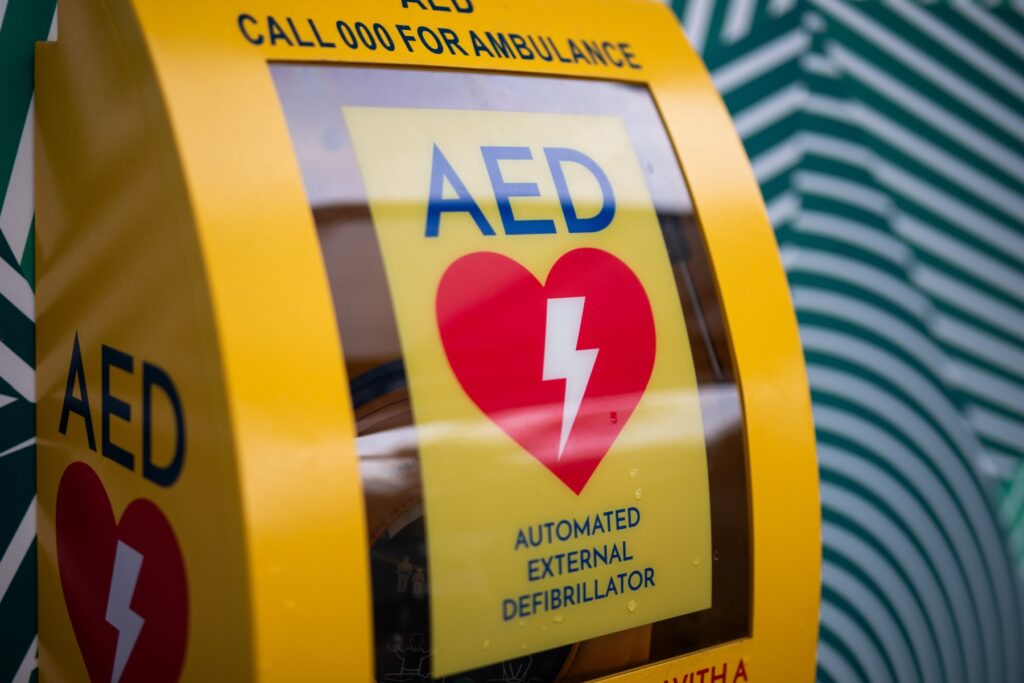
Twelve football associations across New South Wales have joined a statewide effort to map and register Automated External Defibrillators across sporting facilities, in a project that its organisers say will significantly improve emergency response times and save lives at community sport venues.

The Heartbeat of Sport AED Mapping Project, backed by funding from the Minns Labor Government to the Heartbeat of Football Foundation, represents the first comprehensive research into AED placement across NSW sports grounds. The data collected will be provided to NSW Ambulance and its GoodSAM team to enrich the existing AED registry available to ambulance and public first responders, and will feed into NSW Health’s newly released public AED map.

The project has drawn active participation from associations spanning the breadth of the state’s football community, including Eastern Suburbs, Manly Warringah, Granville, Southern Districts, Nepean, Northern Suburbs, Football Canterbury, Bankstown, Hills, Sutherland Shire, North West Sydney Football and Football South Coast.

When seconds matter

The urgency behind the project is not theoretical. At Doyalson Wyee Football Club, a 70-year-old player survived a sudden on-field cardiac arrest because an AED was available on site. The outcome of that incident – and the many others like it that occur across community sport each year – depends entirely on whether a defibrillator is accessible, charged and registered in the systems that emergency responders rely upon.

Sudden cardiac arrest kills without warning. The survival rate drops by approximately ten percent for every minute without defibrillation. In a community sport setting, where professional medical staff are rarely present, a registered and accessible AED is the difference between a player walking off a pitch and one who does not.

The mapping project addresses a gap that has existed largely unexamined. More than 2,400 defibrillators have been deployed across NSW sports and recreation facilities through the Local Sport Defibrillator Grant Program, with grants of up to $3,000 available to eligible organisations. But a device that exists without being registered in emergency response systems provides significantly less value than one that is accurately mapped and immediately locatable by ambulance crews responding to a call.

By encouraging clubs to complete AED registration surveys, the twelve participating associations are ensuring that the equipment already on their grounds is activated within the broader emergency infrastructure – translating a physical asset into a functional one.

Regional communities and the equity of safety

The project’s expansion of the #HeartHealthMatters Program, which brings CPR and AED familiarisation training to sporting organisations with a particular focus on regional areas, addresses a dimension of safety preparedness that often receives less attention than equipment access alone.

Knowing a defibrillator exists on site is insufficient if the people present during an emergency do not know how to use it. Regional clubs, which frequently operate with smaller volunteer bases and less access to formal training programs, face a compounded risk – less equipment, less training, and longer ambulance response times due to geography. The program’s regional focus acknowledges that safety infrastructure, like sporting infrastructure more broadly, is not evenly distributed.

The data gathered through the mapping project will also guide future investment decisions, identifying facilities that still lack AEDs and providing the evidence base for targeted grant funding to address those gaps.

Football associations that have already contributed AED data have demonstrated, in the words of the project’s organisers, strong sector leadership and a shared commitment to safeguarding participants at every level of the game.

For a sport that involves hundreds of thousands of players, officials and volunteers across the state each week, the ambition of the Heartbeat of Sport project is straightforward – that no preventable death occurs on a football ground because the right equipment was not there, or could not be found.

Most Popular Topics

Editor Picks

Send this to a friend