


Football Australia announces renewal with Qantas

Football Australia & Qantas

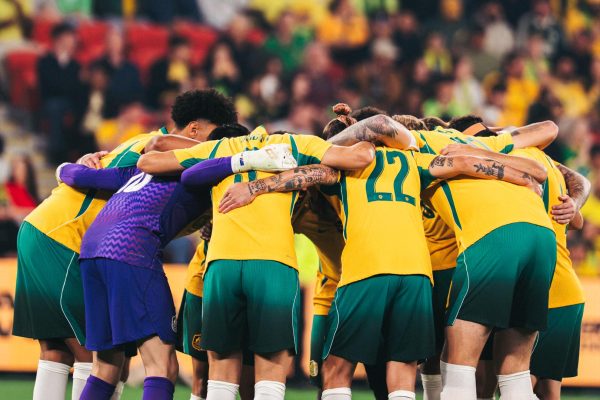
Football Australia will continue their long-term partnership with Qantas, with confirmation they are set to carry on their deal.Qantas remains as the Official Airline of the Subway Socceroos, CommBank Matildas, and the Australia Cup for the next three years, following a brief pandemic pause.

The announcement reaffirms Qantas’ commitment to grow Australian football, highlighting the progress made in sponsorships by Football Australia over the last three years. Australia’s most iconic brands are uniting to deliver unparalleled value and support for the sport.Qantas has been a loyal partner of the Subway Socceroos since 2004, and this partnership extension will see Qantas continue to champion the two senior national teams and promote the Green and Gold, further raising the profile of Australian football worldwide.“Football Australia is excited to renew its partnership with Qantas, which extends beyond two decades. Qantas is a key partner for us, and we are grateful for their ongoing support of Australian football,” Football Australia CEO James Johnson said via press release.“Our partnership with Qantas has allowed us to take the best of Australian football to the world, and we are thrilled to continue working together to grow the game for all Australians.”Qantas will continue to share a long-standing commitment to inclusion, diversity, sustainability, reconciliation, and supporting regional Australia. This is shown by Qantas’ ongoing support of the Australia Cup, the competition that connects more Australian football clubs than any other knockout sporting competition, with the 2023 edition involving over 770 clubs.“Qantas has been an essential partner of Football Australia and Australian football for many years, and we are delighted to continue our partnership for the next three years,” Johnson added via press release.“Our partnership extension will allow Qantas to maintain its position as a leader in these areas, in partnership with Football Australia.”Qantas’ renewal with Football Australia reflects the airline’s ongoing commitment to supporting Australian sport and its recognition of the appeal of football locally and globally, and its position in Australian culture.“As the national carrier, we’re excited to be continuing our support of Football Australia to help showcase our athletes on the world stage and also inspire a new generation of Socceroos and Matildas to represent Australia at the highest level,” Qantas Group Chief Customer Officer Markus Svensson said in a statement.For more information on Football Australia’s partnership with Qantas, visit the Football Australia website.
Previous ArticleNext Article

France’s LFP eye return of Ligue 1 to traditional broadcast platforms

The French Professional Football League (LFP) are hoping to again attract a traditional broadcast partner for the 2027/28 campaign, believing there is renewed interest in their domestic football media rights.

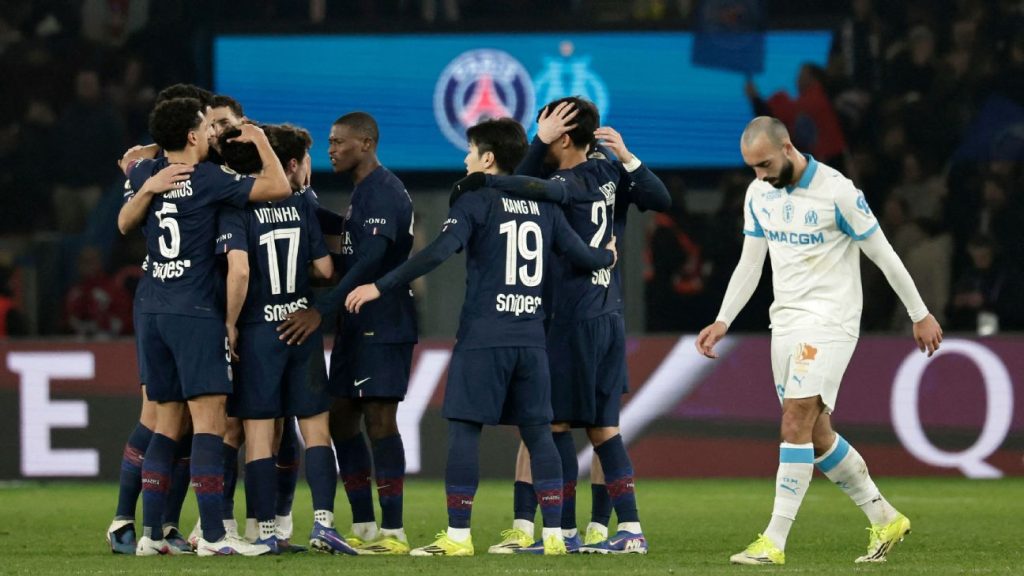
Ligue 1 – the top division of professional football in France and home to PSG, Marseille et al. – has been without a traditional broadcast partner since 2025 following a series of failed deals and the exhaustion of their potential partner market.

In place of a traditional broadcast deal the LFP launched its own direct-to-consumer platform, which presently carries all ten Ligue 1 matches each week. The platform has attracted around one million subscribers.

The LFP had hoped a return to a traditional broadcast partner could be on the cards from the 2029/30 season, however given their assessment that market interest has returned, they are expected to bring that tender process forward by two years. 

LFP Media chief executive Oliver Bramly believes the time is right to amend a situation that proved deeply unbecoming for a league as esteemed as Ligue 1 – considered, until recently, an indisputable member of Europe’s ‘Top Five’ leagues. 

‘Before I joined, the idea was to issue a tender for the period covering 2029 -2034,’ Bramly told SportsPro. 

‘But the reaction was that this was too far away. Streamers … [and] all the pay-TV platforms expressed a clear interest in a bid for the period between 2027 and 2032.’

‘It’s a once-in-a-lifetime occasion to get a domestic league in a big market like France at an affordable price.’

In March, the LFP presented research that indicated 59% of 9.9million football fans in France watched Ligue 1 via illegal pirate platforms.

Article first appeared in SportsPro. 

Ernie Merrick: ‘There are many clubs that would be fantastic additions to the A-League’

Ernie Merrick will be forever recognised as a key figure through the A-League’s golden early years. Appointed Melbourne Victory’s foundation manager in 2004 he led the club to not just silverware, but legitimacy and respect in a serious sport city.

A Scottish migrant and PE teacher by trade, Merrick was the youngest of the NSL’s managerial crop when he started with Preston in 1987 in the era of Thomson, Arok & Matic; when he finished with Newcastle in 2020 he was the elder statesman in the A-League age of Postecoglou, Popovic and Arnold.

For the places the game took him and all he achieved – including time as national team manager of Hong Kong – Victory supporters can comfort themselves in the fact that for whatever they feel towards Merrick and his iconic group of players, that feeling is mutual.

‘Yes, definitely,’ Merrick told Soccerscene Unfiltered when asked if managing Victory was the highlight of his career.

‘I think success is [fans] having identification with players, especially. We had Victorian boys playing for Victory.

‘That second year I was determined to have a complete pre-season. Archie Thompson bought me a birthday cake with 200 candles and said “Ernie, we’ve had 200 training sessions. We should celebrate this” – so he was looking forward to a big year, and we won the Grand Final 6-0.’

Nearing 20 years on, Victory and the A-League in general haven’t managed to drive forward as would have been hoped. Unsurprisingly that comes as painful to Merrick, as does the change in landscape regarding his other great passion and contribution in player development. 

‘I’m disappointed, as would most people be, that it’s struggled so badly. To me, there’s something missing,’ said Merrick of the current state of the A-League.

‘Those players we produced at the AIS and VIS went on to be the golden generation. Unless the league is fixed, there’s going to be ongoing problems with the financial status of things.

‘You just cannot earn enough money from selling a youngster, who you might get a million for, who then becomes worth several million in a few years if he does well. Maybe there’s a bit too much of selling players early.’

As someone who gave enduring service across Australia’s two domestic leagues, his voice holds weight in the consideration as to whether it’s time to now blend the, in today’s hyper-corporate landscape.

‘South Melbourne and Preston are two clubs that are perfect for the A-League, I think, down the track. They’ve set up, they’ve endured, they’ve been resilient, they’re playing good football and they’ve got a home base with a home crowd, which is far better than starting a club up from scratch.

‘All those players coming through those squads and the number of supporters they’ve got would be a huge addition. In Sydney too, there’s Marconi – there are so many good clubs around that I think would make a great addition to the A-League.’ 

Merrick also spent thirteen years as head coach at the Victorian Institute of Sport. He feels modern player development is an equation we still haven’t got right, post the closure of the AIS’ football program in 2017.

While many argue the move to club-based academy structures has seen Australia fall more in line with global practice while still producing players of quality, Merrick still feels there is merit in a national high performance program, in addition to club academies.

He was in the process of setting up state academies through the Member Federations during his time as Football Australia’s chief football officer from 2022-25. While the Victoria project was short-lived, academies in Tasmania, Western Australia and South Australia continue to run, but it appears the broader expansion of the concept has been abandoned.

‘I think both systems should work [together] equally well. When I started with the FA program clubs thought they would lose players to us, but I didn’t take any of their players. We offered the opportunity of a high-performance program to other youngsters.

‘We could develop players completely; we weren’t restricted to playing 4-3-3 to combine with the way the first team were playing. We provided more of a rounded education, and good players can play in any system.

‘We managed to affect the coaches involved so they were up to date with the latest information on methods of coaching, etc.’

Catch the full chat with Ernie Merrick on Soccerscene Unfiltered: from being two-footed by a 15-year old Kevin Muscat to his enthusiasm for the future of the Socceroos, his memories of Wellington and Newcastle, and plenty more…

Most Popular Topics

Editor Picks

Send this to a friend