


APL release annual report highlighting growth across A-Leagues competitions

APL Annual Report 2023

The Australian Professional Leagues (APL) recently released its Annual Report for the last season of A-Leagues action, for 2022/23.

The period was marked by an increased interest in football across Australia and New Zealand due to the successful hosting of the Women’s World Cup in July, and a Men’s World Cup in late 2022, where the Socceroos performed above expectations.

The key takeaways from the APL’s report included:

  • Record number of eight A-League men players selected for the Socceroos squad for the 2022 World Cup
  • 100% of Matildas selected for the 2023 World Cup squad play or have played in the A-League Women competition
  • Aggregated attendances across both A-League Men and Women competitions were up by 46% from the previous season – with record attendances set in both competitions’ final series’
  • 31% year-on-year increase in aggregate minutes viewed of A-League Men matches go on 10 Bold, 10 play and Paramount+
  • 63% year-on-year increase in aggregate minutes viewed of A-League Women matches on 10 Bold, 10 Play and Paramount+
  • 57% increase in goals by U23 A-League Men’s players since 2019
  • 42% increase in contracted players in the A-League Women’s competition since 2018
  • 174% year-on-year increase in KEEPUP users
  • 368% year-on-year increase in social media video views of KEEPUP content

Outgoing APL Chair Paul Lederer elaborated on the achievements of the Australian national teams, 43 of 46 of whom were developed in the A-League Men and the A-League Women competitions.

“The impressive contribution of A-Leagues players to our national teams is not an accident. It is the direct result of investments over many years by our clubs with a vision of a thriving league where fans can watch fast-paced and exciting football,” Lederer said on the release of the annual report.

“This year has seen us begin to awaken the global football economy to the strength of the A-Leagues. Our annual transfer fee records were broken in a single transfer window thanks to the international interest in academy products such as Sammy Silvera, Jordan Bos, Anthony Pavlešić and Marco Tilio.

“It is vital that we continue to support our players’ journeys overseas, and equally vital that we are a destination of choice for local and international players alike.

“Next season, we will add new clubs in both Australia and in New Zealand, with further expansion planned in the following year, creating more opportunities for players, more competitiveness, and more compelling drama for our fans.”

APL CEO Danny Townsend stated that the APL has set in motion an ambitious new strategy in the past two years to help realise a vision – to establish football as the most entertaining and popular sport across Australasia.

“At its heart, APL’s strategy had the intent of inspiring the next-generation of A-Leagues superstars to fulfil their potential,” Townsend said via media release.

“On the eve of a new season, and with unprecedented numbers of young players making their mark in our leagues, there is much for the A-Leagues to be proud of and excited by.

“The FIFA Women’s World Cup has delivered football in our region an enormous opportunity. We all must now take responsibility for leveraging the momentum created by the excitement of the tournament. We want to make sure the almost two million fans who attended World Cup games, or the many millions more who were enthralled by the event’s broadcast, look to the A-Leagues as their way of continuing to feel the excitement provided by top-quality football.

“Last season saw the highly successful debut of Western United’s team in the Liberty A-League as part of APL’s expansion strategy across the A-Leagues. This coming season will see the Central Coast Mariners women enter the Liberty A-League providing even further opportunities for talented young girls across Australia and New Zealand.

“The growth of APL’s content business, KEEPUP, has continued at pace over the past year. As a demonstration of the maturing of KEEPUP, it was one of the leading publishers of digital content during the FIFA Women’s World Cup despite not being an official rights-holder.”

Townsend also paid tribute to Lederer, APL’s inaugural Chair in the release of the report.

“Paul has been at the helm through the time of the global pandemic, and during our subsequent extraordinary growth. Quite simply, we could not have done this without Paul’s leadership over the past two and a half years,” he added.

APL recently announced the appointment of former Federal Government Minister, the Hon Stephen Conroy, as its first ever Independent Chair. Lederer will also still remain a member of the APL Board.

The A-League Women competition kicks off on October 14, with the A-League Men start on October 20.
Previous ArticleNext Article

South Canberra FC Breaks the Mold: Equity-Driven Model Earns ‘Club Changer’ Honour

South Canberra Football Club has been named Club Changer of the Month for April, in a recognition that reflects a broader shift across Australian football toward rewarding clubs that are actively dismantling the structural barriers limiting women’s access to the game.

The AFC Women’s Asian Cup has just delivered record crowds and unprecedented visibility for women’s football in Australia, and the Club Changer program is now asking what comes next. Its decision to name South Canberra Football Club as Club Changer of the Month for April signals a clear shift in how the program defines contribution: away from participation numbers alone, and toward the equity frameworks that determine whether women stay in the game once they arrive.

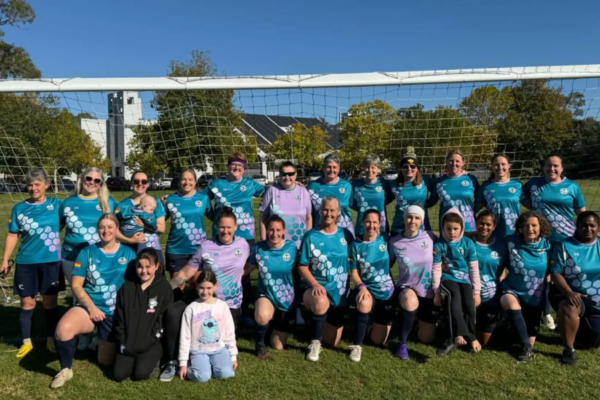
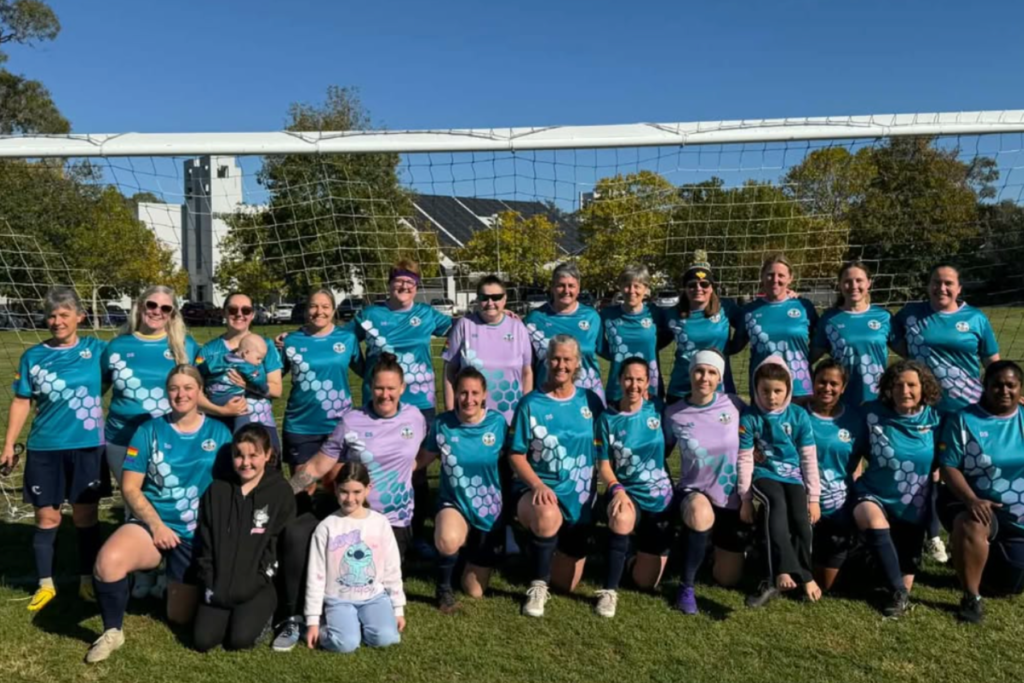
South Canberra FC built that framework from the ground up. Established in 2021, the club set out to give women and female-identifying players a safe, inclusive environment to play football at any level. It runs entirely on volunteers, operates as a not-for-profit, and is governed by an all-female committee with 13 of its 14 coaches identifying as female.


Building the infrastructure of inclusion

In 2026, the club secured grant funding and put it to work immediately. Two coaches are completing their C Licence qualification, and ten coaches, players and community members have undertaken the Foundations of Football course, which directly tackles the cost and accessibility barriers that exclude women out of coaching pathways.

The club also commissioned a female-specific strength and conditioning program with sports physiotherapists ahead of the 2026 season, targeting injury prevention and explicitly supporting players returning after childbirth.

SCFC’s leadership team draws from LGBTIQ+ individuals, First Nations people and veterans, strengthening the club’s connection to the communities it was built to represent.

The Club Changer program is backing clubs that do this work- clubs that treat equity as infrastructure rather than aspiration. At a moment when Australian football is under pressure to turn its biggest-ever surge of women’s interest into something lasting, SCFC’s model offers a clear answer to the question of how.

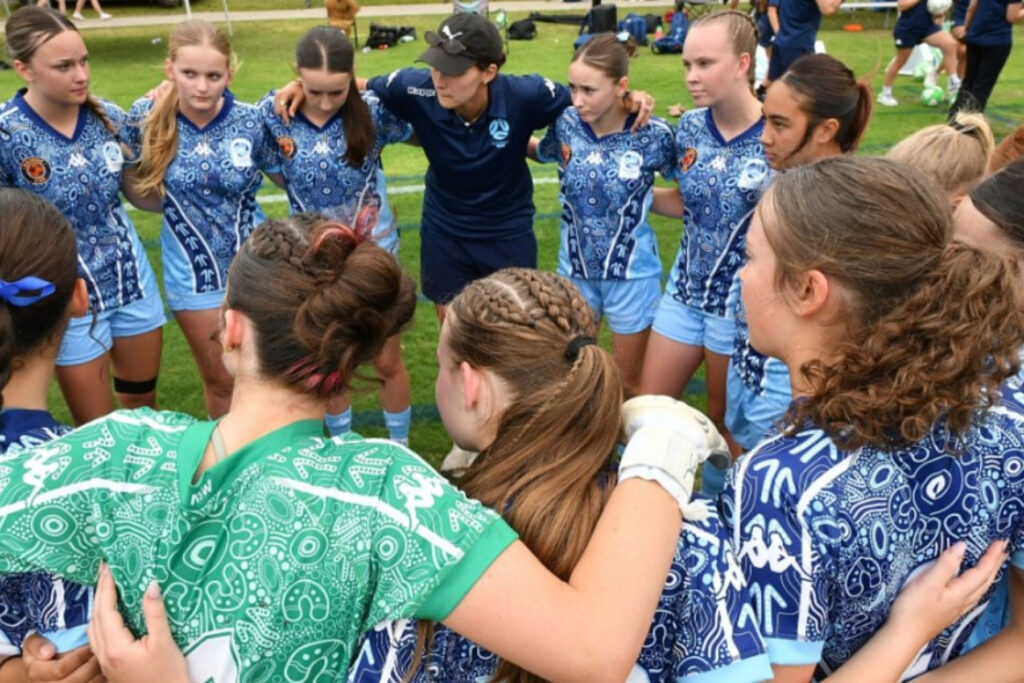
Football NSW announces 2026 First Nations Scholarships as pathway access program enters new phase

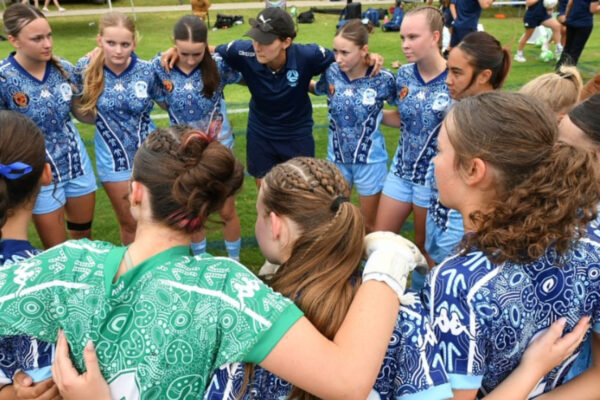
Football NSW has announced the recipients of its 2026 First Nations Scholarships, with ten emerging Aboriginal and Torres Strait Islander players from metropolitan and regional NSW receiving support designed to reduce the financial and structural barriers that have historically limited First Nations participation across the football pathway.

The scholarship program, developed and assessed in collaboration with the Football NSW Indigenous Advisory Group, targets players across both elite and development environments – recognising that talent identification alone is insufficient without the resources to support progression once players are identified.

Co-Chair of the Indigenous Advisory Group Bianca Dufty said the calibre of this year’s recipients reflected the depth of First Nations football talent across the state, and the importance of structured support in converting that talent into long-term participation.

“Their dedication to football and the desire to be role models for younger Aboriginal footballers in their communities is to be celebrated,” Dufty said. “I’m confident we will see some of these talented footballers in the A-League and national teams in the future.”


Beyond the pitch and into the pipeline

The 2026 cohort spans both metropolitan clubs and regional associations, an intentional distribution that acknowledges the particular barriers facing First Nations players outside major population centres, where access to development programs, qualified coaching and pathway competitions is more limited and the cost of participation more prohibitive.

The next phase of the program will introduce First Nations coaching scholarships, extending the initiative’s reach beyond playing pathways and into the coaching and administration pipeline – areas where Indigenous representation remains among the lowest in the game.

The structural logic is clear. Scholarships that reduce financial barriers at the entry point of elite pathways matter most when they are part of a sustained ecosystem of support rather than isolated gestures. Football NSW’s collaboration with the Indigenous Advisory Group provides that continuity, ensuring the program is shaped by the communities it is designed to serve.

Most Popular Topics

Editor Picks

Send this to a friend