

Heather Garriock: Acting for the good of the game

Heather Garriock

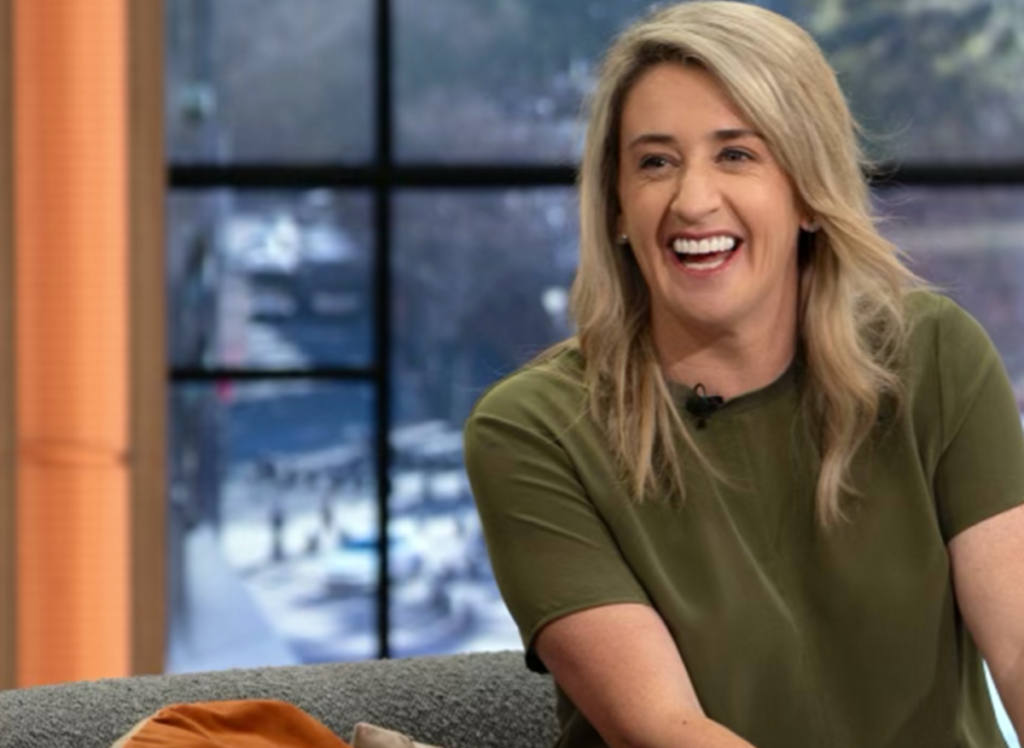
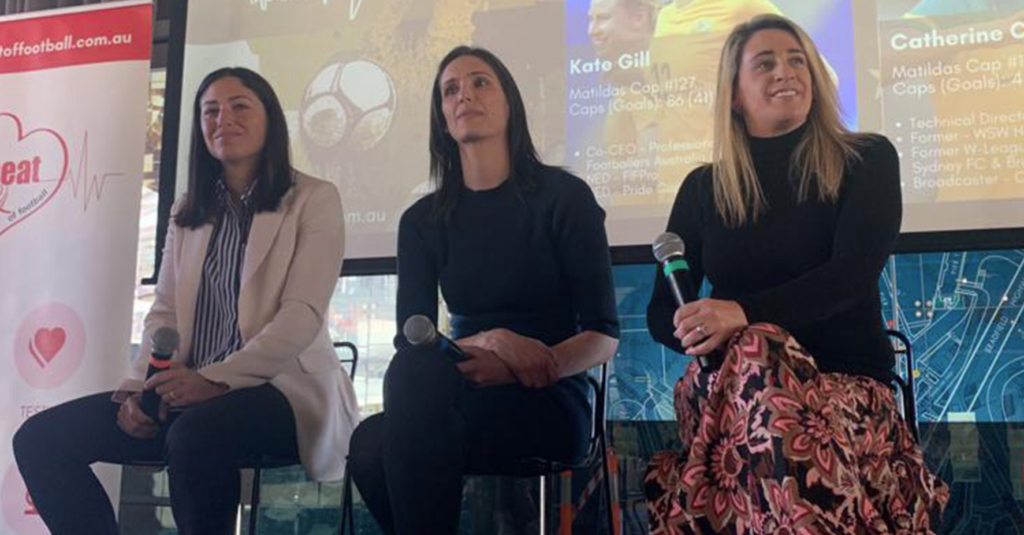
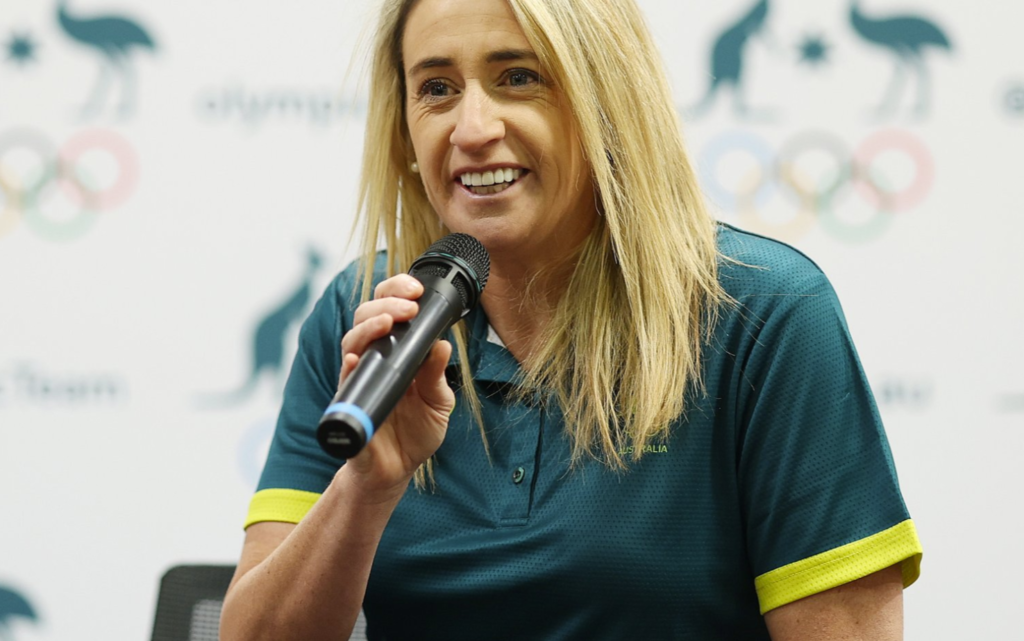
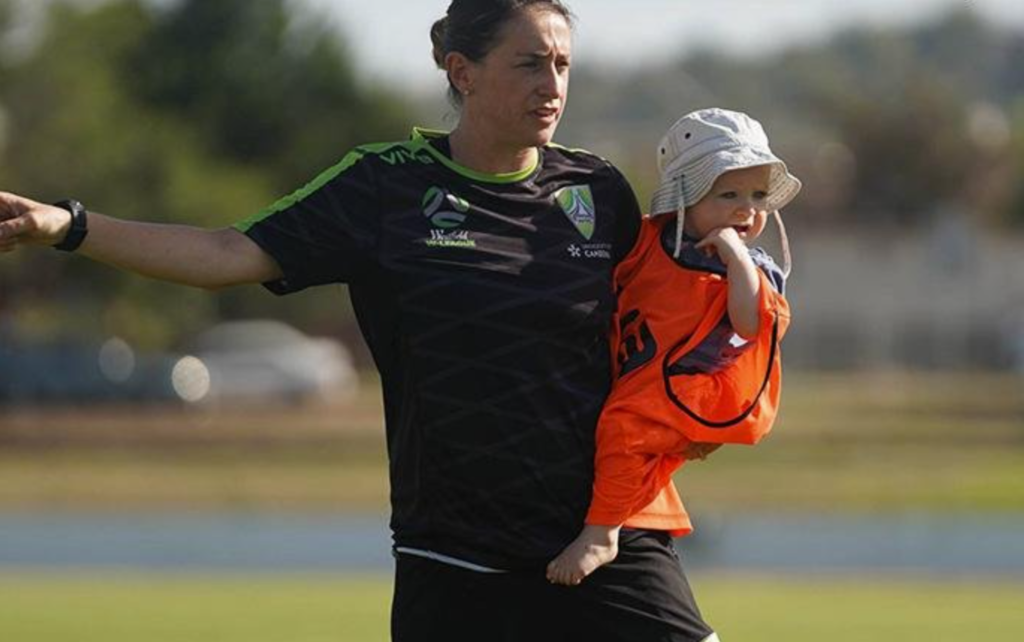
Heather Garriock, the former Matildas midfielder, is the proud holder of 130 Caps for her country and as she looks back at her extensive career in playing, coaching and mentoring, she faces her biggest challenge to date in attempting to make a difference on the Board of Football Australia (FA) which she was appointed to in September, 2021.

After the success of the Women’s World Cup, when the Matildas became the talk of the nation, it would be easy to say that football in Australia had finally arrived on the map.

However, acceptance for the game has never been that simple and despite the impetus generated in women’s participation numbers since the World Cup and some excellent attendances at the A-League Women’s matches this season, the A-League Men’s competition is struggling.

On the football field, Garriock always accepted a challenge and she is determined in her role on the FA Board to make a difference.

In this interview with Roger Sleeman, Heather Garriock discusses her early career in football before she rose to the top, the meaning of being a Matilda, how she contributes to the continuing growth of the women’s game, her involvement on the board of the F.A. and the role of past players.
ROGER SLEEMAN

When was your introduction to football?

HEATHER GARRIOCK

My Dad was a Scotsman who played semi-professional football and was a fanatical Hearts supporter.

I started playing as a six year old at Leppington Lions and lived and breathed the game into primary school when I was selected in the NSW Primary Schools squad.

Eventually, I was chosen in the first NSW women’s public school team from 250 triallists.

R.S.

What was your progression from there?

H.G.

I attended Westfield Sports High School and also participated in the NSW Institute of Sport from 13-14 years old where I was coached by Connie Selby, 3-4 nights a week.

I was in the state teams and played under Jean-Paul de Marigny who reckoned I had a bad attitude so I left to play in Marconi Reserves.

While at the club, I was privileged to witness the feats of Craig Foster, Andy Harper and Francis Awaritefe.

On leaving school at the end of year 10, I went to the AIS where I was coached by Chris Tansey and in the same year became the top scorer and player of the year at Marconi.

Ultimately, my winning mentality and strength of character was rewarded when I was selected for my first Matildas appearance against China in October, 1999.
R.S.

Can you describe your early journey with the Matildas?

H.G.

Early in my experience, we had tough coaches like Chris Tansey and Adrian Santrac but fortunately when Tom Sermanni took over the reins, things changed completely.

Tom was able to get the best out of me and I loved playing for him.

R.S.

How much has women’s football changed since you first played at a senior level?

H.G.

I still can’t believe how the women’s game has grown so much, but I am proud to say I was part of the pioneer movement which worked so hard to pave the way for future generations to excel in the sport.

R.S.

How do you rate the standard of the current Matildas with those playing in your time?

H.G.

It’s hard to compare eras because we were part timers, unlike so many of the current players who play full-time overseas.

The game is also quicker and players are in some cases playing 50-60 games a year.

However, from my era, players of the quality of Cheryl Salisbury, Di Alagich, Joey Peters, Lisa de Vanna and Julie Murray had that X-factor and would perform in any company.

R.S.

What is your opinion of the A-League Women’s competition?

H.G.

While the established Matildas are playing overseas at big clubs which has left a void, our young players are getting the opportunity to  compete at the highest level in Australia.

Also, their local experience has been highly beneficial to the Young Matildas who are improving rapidly in international competition and the recent defeat of China was a testimony to this.

Furthermore, as the professionalism of the league improves, so will the quality of players.
R.S.

After the success of the Women’s World Cup, why hasn’t that success been capitalised on by infiltrating the business world to back the game?

H.G.

On the contrary, the Matilda’s brand is one of the strongest in Australian sport, superseding the Socceroos.

However, it’s not a competition between the two because we need both to be strong.

R.S.

You were appointed to the FA Board in September, 2021.

What is your role and what have you achieved in this time period?

H.G.

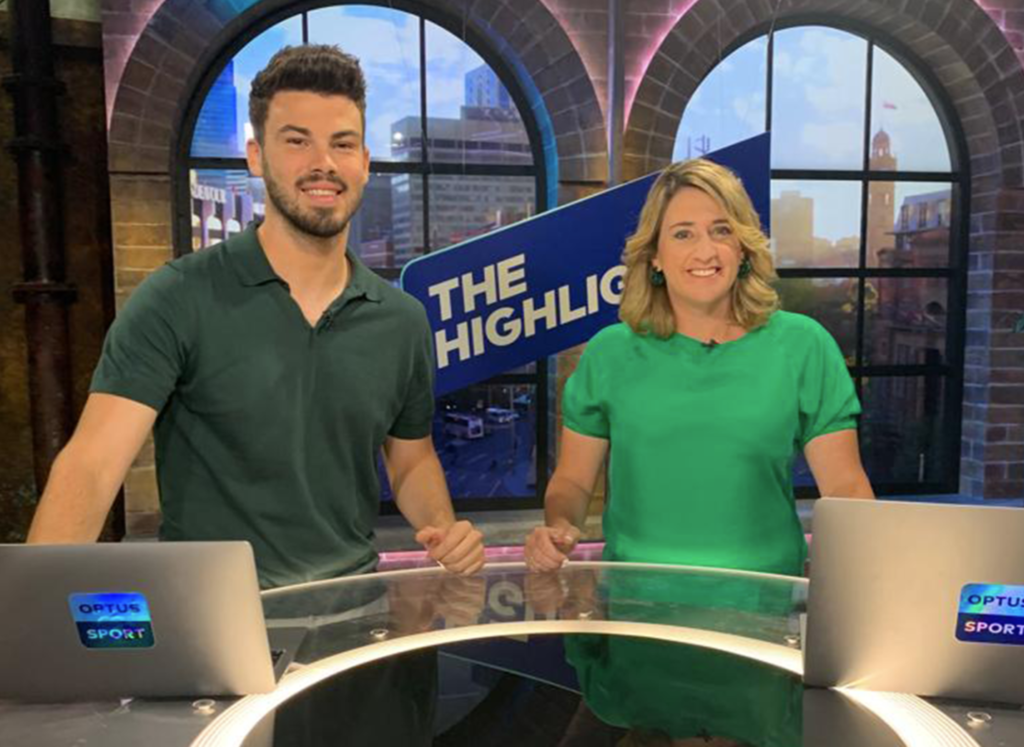
In this time, I’ve been involved in improving the lot of the Matildas, e.g. the collective bargaining process which has led to equal pay conditions with the men.

Also, I’m involved with overseeing the technical development, development pathways, junior national teams and focusing on the history of the game.

The success of integrating the former Matildas into the World Cup experience was a great achievement and we’ve had so much feedback about how they felt so accepted during the event.
R.S.

How do you rate the current FA Board’s ability to turn the future of the game around?

H.G.

We have a new team with new leadership in Chairman Anter Isaac, who has been in the game for many years and is determined to take the game to a new level.

The game has to be united with a top to bottom approach, with particular emphasis on working with the stakeholders and the member federations.

R.S.

Why can’t more opportunity be provided to former players from the women’s and men’s game to contribute their expertise, rather than non football people dominating the sport?

H.G.

This is a fair point to action and we must identify what they can contribute so the game benefits and becomes stronger in all areas.

Recently, we discussed the appointment of talent scouts to scour the country for the very best young players.

Obviously, there are many other areas they can be utilised.

Previous ArticleNext Article

FA Board of Directors Welcomes Two New Appointments

Rachel Wiseman and Angela Mentis will join the FA as Directors, reflecting a continued drive within the governing body to prompt a new era for football in Australia.


Leading with expertise

Both Wiseman and Mentis join the FA at a time of immense change and ambition.

In February, the appointment of Martin Kugeler as CEO was symbolic of new beginnings for the industry. And now that Wiseman and Mentis are on board, the FA looks set for a defining year.

“We are pleased to welcome Rachel (Wiseman) and Angela (Mentis) to the Football Australia Board,” expressed Football Australia Chair, Anter Isaac.

“These appointments reflect a deliberate effort to strengthen the Board’s capability across commercial strategy, digital transformation, financial services and major rights environments.”

If Australian football is to progress across digital, commercial and beyond, industry experts must sit at the centre of governance.


Aligning experience and vision

Most recently Chief Executive Officer Member Capital at NRMA, Wiseman brings experience and knowledge in executive roles, and legal practice.

Further to overseeing the growth and diversification of NRMA since 2016, as well as leading Tabcorp Holdings Limited as General Manager, Commercial Development – International, Wiseman has past experience in the sports landscape.

As Director of Business Affairs for Fox Sports Australia between 2007 and 2024, Wiseman negotiated agreements to broadcast key sports rights. With Football Australia looking to grow its financial power and commercial strategy in the coming years, Wiseman’s knowledge aligns perfectly with the governing body’s vision.

Mentis is an industry leader in financial services, with an extensive range of skills across customer and culture transformations.

Furthermore, following more than 30 years of work spanning Australia, New Zealand, Asia, United Kingdom and USA, Mentis will help the FA with essential, high-quality leadership.

While at the National Australia Bank, Mentis led a division over 900 people across Australia, Vietnam and India. And as the first female Chief Executive Officer at the Bank of New Zealand from 2018-2021, there is no question that Mentis’ credentials and expertise will bring about significant change and organisation at the FA.

Media Mega-Mergers, Minor Leagues: Why Global Consolidation Should Be a Wake-Up Call for Australian Football

The approval of a reported $113 billion merger between Warner Bros. Discovery and Paramount Global is being framed as the creation of a “next-generation media and entertainment company.”

But beyond Hollywood headlines, the deal signals something far more consequential for sport: a global media landscape rapidly consolidating into fewer, more powerful hands.

For Australian football, particularly the A-League, this is not just background noise. It is a structural shift that could define the league’s future.


A shrinking marketplace, a growing imbalance

The merger brings together an enormous portfolio of assets, such as film studios, broadcast networks and streaming platforms, under a single corporate umbrella. It reflects a broader industry trend: scale is no longer an advantage in media, it is a necessity.

Yet with that scale comes concentration. Fewer buyers now control more platforms, more audiences, and more capital. Critics of the deal have warned that such consolidation risks reducing competition and narrowing the range of voices in global media.

For sport, the implications are immediate.

Broadcast rights are no longer negotiated in a diverse, competitive market. Instead, leagues are increasingly competing for space within vertically integrated media ecosystems. This is because decisions are driven not just by audience demand, but by global strategy, bundled content offerings and long-term platform growth.


Why the A-League is particularly exposed

This shift lands unevenly across the sporting landscape.

Leagues like the Australian Football League (AFL) and National Rugby League (NRL) remain dominant domestic products, commanding billion-dollar broadcast deals and consistent mass audiences.

The A-League, by contrast, operates from a more fragile commercial base.

Despite its global game status, the league continues to face:

  • Inconsistent crowd figures
  • Fluctuating visibility
  • A comparatively modest broadcast deal with Paramount

In a fragmented media environment, this is manageable. In a consolidated one, it becomes a vulnerability.

Because as the number of broadcasters shrinks, so too does the margin for leagues that are not seen as “must-have” content.


From open market to closed ecosystem

The critical shift is not just economic, it is also structural.

In the past, leagues could leverage competition between broadcasters to drive rights value. Now, with fewer but larger players, the balance of power tilts toward the platforms.

Content is no longer simply acquired, it is curated.

And in that environment, only properties that deliver one (or more) of the following will thrive:

  • Guaranteed audiences
  • Global scalability
  • Year-round engagement
  • Strategic value within a broader content ecosystem

This is where the A-League faces both its greatest challenge—and its greatest opportunity.


The overlooked strength of Australian football

While often positioned as a “developing” product domestically, football offers something no other Australian code can replicate: global alignment.

As the world’s most popular sport, football operates within an international ecosystem that extends far beyond national borders. Australia’s geographic position, bridging Asian and Western markets, adds further strategic value.

For a global media entity like Paramount, this matters.

The A-League is not just local content. It is potentially exportable, scalable and aligned with global football narratives. It also taps into younger, more digitally engaged audiences, who are increasingly driving subscription-based streaming growth.

In a media environment defined by platform expansion, that is not a weakness. It is an underutilised asset.


Why consolidation should drive MORE investment

The instinct in a consolidating market is often caution by tightening budgets, focusing on proven performers and minimising risk.

But for Australian football, that approach is self-defeating.

Because without investment:

  • Production quality stagnates
  • Storytelling weakens
  • Audience growth plateaus
  • Commercial value declines

And in a system that rewards scale and engagement, stagnation is equivalent to irrelevance.

Instead, consolidation should be seen as a trigger for strategic investment:

  • Elevating broadcast presentation
  • Strengthening club identities and narratives
  • Expanding digital and streaming integration
  • Positioning the league within the broader global football conversation

In short, making the A-League indispensable, rather than optional.


The real risk: being left behind

The emergence of media giants like a merged Warner Bros. Discovery and Paramount Global signals a future where content is filtered through fewer, more powerful gatekeepers.

In that world, leagues that fail to assert their value risk being sidelined, not because they lack potential, but because they fail to meet the evolving demands of the platforms that distribute them.

For the A-League, the danger is not collapse. It is marginalisation.

A slow drift into irrelevance while larger codes capture the attention, investment, and audiences that define modern sport.


Conclusion: a defining moment

This merger is not about Hollywood. It is about power.

Power over distribution. Power over audiences. Power over what gets seen and what does not.

For Australian football, the message is clear.

In a world of media consolidation, visibility is earned through value, not assumed through presence.

And if the A-League is to secure its place in that future, investment is no longer optional.

It is existential.

Most Popular Topics

Editor Picks

Send this to a friend