

Lawrie McKinna: A true survivor

Since 1986, when he first appeared for Heidelberg United in the NSL, Lawrie McKinna, the current Sydney Olympic CEO, has seen it all in Australian football.

After playing stints with Apia and Blacktown City, he eventually teamed up with David Mitchell at Sydney United and Parramatta Power in coaching roles, followed by Northern Spirit in his own right.

When the A-League commenced in 2005, Mckinna was involved at Central Coast Mariners and eventually became mayor of Gosford.

In recent times, he was CEO at the Newcastle Jets until the opportunity arose two years ago to take the helm at Sydney Olympic.

It is no coincidence that Lawrie McKinna faces one of the greatest challenges of his career in preparing the club to be ready for the start of the National Second Division in the winter of 2025.

Fittingly, on Saturday January 13th, a challenge match commemorated the first NSL  match between Sydney Olympic and South Melbourne which was played on April 2nd, 1977 at the Sydney Sportsground.

It was a unique day for football as it was the first code in Australia to form a national competition.

Lawrie McKinna is well aware of the famous players who appeared on that day, notably Gary Meier and Joe Senkalski for Sydney Olympic and former Socceroos, Jack Reilly, Billy Rogers, Duncan Cummings, Jimmy Mackay and Peter Ollerton for South Melbourne.

In fact, it was Peter Ollerton who scored the two goals for South Melbourne to secure his team’s victory.

In this interview with Roger Sleeman, Lawrie McKinna discusses the current state of Australian football, his vision for the success of the National Second Division and the significance of the Sydney Olympic v South Melbourne clash.

ROGER SLEEMAN

Looking back over all those years you’ve been involved in the Australian game, how do you see its current state?

LAWRIE McKINNA

When I first played at Heidelberg in the NSL, there were big crowds but we played at poor stadiums like Connor Reserve and Sunshine Reserve in the winter. Furthermore, we played in ankles of mud which was very much like playing in Scotland.

The current A-League stadiums are top notch with good surfaces and part of the criteria for the B-League will be for this to be replicated.

One of the glaring weaknesses of the A-League is the lack of media as the other codes receive blanket coverage.

If the game is trying to entice more support there is no incentive for the general sporting fan to follow it so this must be addressed.

However, the success of the Matildas is well known and the Socceroos popularity has never been greater so these strengths have to be built on.

R.S.

Do you think the right people are running the game?

L.M.

I don’t even know who is running the game since Danny Townsend left the APL.

I’ve never seen Nick Garcia, the new APL CEO, because he’s never appeared on television.

There are very large staff numbers at the APL but they’re invisible people.

James Johnson, the FA CEO, is their spokesperson and at least people recognise him but there still isn’t enough exposure of the FA Management to the supporters.

R.S.

Newcastle Jets, Perth Glory, Western United and Brisbane Roar are in survival mode.

Is this a satisfactory situation?

L.M.

This is not the only country in the world with financial problems so it’s a matter of getting the right owners who will commit for the long term.

However, it’s not a bottomless pit so better broadcast deals are required to bring money into the game.

R.S.

What do you see as the vision for the National Second Division and how can it integrate with the A-League?

L.M.

The admission of the first eight clubs is positive but a 12-club League is desirable.

We also need Adelaide, Brisbane and Tasmania to be represented to make it a truly national competition.

At the moment, a new television deal is being worked on to encompass the Matildas, Socceroos, Asian Cup and National Second Division and this was the major reason the new League was postponed until 2025.

R.S.

Will there be promotion from the B-League to the A-League?

L.M.

There won’t be for a number of years and the only way it could happen is if there is a bid for an A-League licence which would be in the vicinity of $10 million.

Eventually, there will be relegation from the B-League to the NPL and promotion upwards.

R.S.

Why should the B-League be more successful than the NPL?

L.M.

Simply, of the eight teams accepted for the B-League, seven of them were former, large NSL clubs who have strong community support and financial backing.

There’ll be more money spent to get better players into the League and also compensation will be provided to the clubs if an A-League club signs a player.

At the moment, there is virtually no compensation for the sale of NPL players to the A- League and if a player moves overseas , there’s usually a free transfer clause in their contract.

Also, contracts in the B-League will be for 2-3 years while in the current NPL they’re usually only for one year.

There’ll be more movement between NPL and the B-League with the aim to provide players with more games and opportunity which is one of the weaknesses of the current system.

R.S.

What is the main purpose of the match between Sydney Olympic and South Melbourne?

L.M.

Apart from recognising the famous match of April 2nd, 1977, we are attempting to reconnect the Olympic fans who haven’t identified with the game and the club since the end of the NSL.

At the Greek festival, I attended last weekend there was a lot of interest expressed about the B-League which resulted in some promising ticket sales for the match.

The venue at Netstrata Stadium is ideal and we intend to play our home matches there in 2025.

We also hope those former fans will bring their children to the games and create a new generation of supporters.
Previous ArticleNext Article

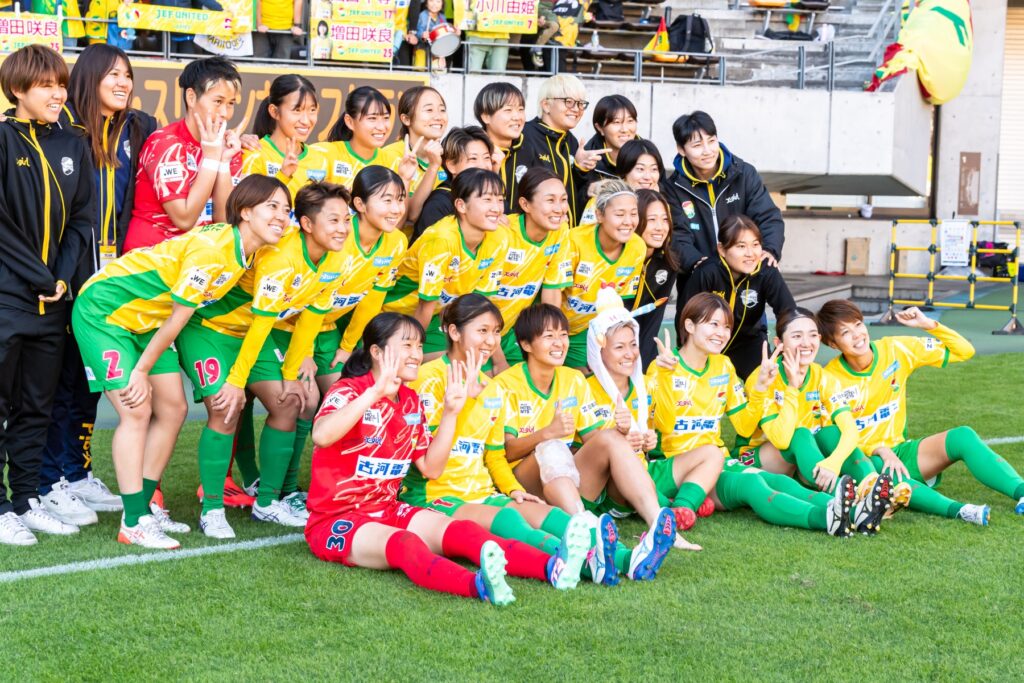
Beyond the Pitch: Miyuki Kobayashi on the Real Challenges Facing Japan’s Women’s Game

Last week, Soccerscene spoke to pioneer of women’s football in Japan, Miyuki Kobayashi, about the game’s development in Japan and the intersection between sporting and social change in the country.


Talent, quality and recent silverware

After Japan’s recent AFC Women’s Asian Cup victory in the final against Australia, the women’s national team solidified its standing as the No.1 team in Asia.

Throughout the last 15 years, Japan’s women’s national team has grown into a formidable opponent, boasting a World Cup trophy, an Olympic silver medal, as well as three AFC Women’s Asian Cups.

The talent is undeniable. The quality is unwavering. And the team shows no signs of slowing down.

But these victories and trophies on the world stage wouldn’t be possible without the leaders behind the scenes – none more so than Miyuki Kobayashi, former WE League Board Member and current JEF United Ladies Scout and Academy Chief.


Laying the foundations

Kobayashi has led the charge for women’s football in Japan, promoting not only a sport which values success, but one which empowers female footballers across the nation.

“At university, not many girls were playing and we didn’t have an official team. I went to the US and the environment was so different,” Kobayashi explained.

“That opened my eyes – women can play. That’s how I started the women’s soccer league when I came back: to make an environment for girls to play.”

Thus, accessibility and opportunity became driving factors behind Kobayashi’s work, not only for those on the pitch, but for those in the dugout.

“I got involved at the JFA (Japanese Football Association) to promote women’s football. We wanted to create the opportunity for women to be coaches.”

“They are coached by men all the time, so even when the top players leave the football world, they never think to be involved.”

Furthermore, as a former coach of JEF United Ladies Youth and General Manager, Kobayashi was intent on employing as many female coaches as possible. It was not merely a personnel change, but a challenge to widespread social attitudes.

“When I started to employ female coaches, the girls’ parents asked why the coach wasn’t a man. But gradually, we started to make it equal – they didn’t talk about the gender, but about the quality of the coach.”


The mission to empower

In 2011, the same year Japan’s women won the World Cup, the domestic league was yet to become professional. Known as the Nadeshiko League, players would work during the day and train in the evenings.

The transition from an amateur to the current professional league required time, resilience and a change in perspective.

“The sports world in Japan is more traditional – it is dominated by men,” said Kobayashi.

“If you want to make the environment even, or (want) more women to come into the (football) world, you can change the mind of the players.”

Since 2021, the WE League has embodied a sense of growth and positive change for the women’s game. In name and nature, it looks to empower players, coaches and all involved in the industry.

“I was in charge of mission achievement for women’s empowerment. We wanted to educate the players, to inspire girls and women who watch the game.”

However, the drive to empower women in football was not without backlash and challenges.

“Some people don’t like that word: ’empowerment’. It’s too strong for them. Some women really appreciate it, but it’s not easy to change the mind of society through football,” Kobayashi admitted.


Growing and attracting talent

Although WE League clubs are accelerating youth development and expanding pathways across U15, U18 and first team football, Kobayashi acknowledged that the overall product must improve to bring foreign players to Japan and entice homegrown talent to stay.

“Most of the national team players go to Europe or North America. I don’t say it’s a problem, but from a young age, girls who can play in the WE League want to go abroad,” Kobayashi outlined.

Indeed, when looking at the starting XI in last month’s AFC Women’s Asian Cup final, only one player – Hana Takahashi – plays in the WE League.

But the key to attracting domestic and international players to the WE League, is aligning financial investment and industry attitudes.

“The reason why women’s football has developed in European countries is the social thinking – you have to be equal and have the same opportunities as men in football. The Japanese way of thinking, especially in the football world, is not that at all,” Kobayashi continued.

“When I speak to people at Spanish clubs, women’s football is not a charity, but an investment.”

“We have assets. We have good, young players, but we’re exporting them, so we need to import too.”

Indeed, Spain is a perfect example of what can happen when investment becomes intentional, not optional. Back-to-back UEFA Women’s Nations League titles, 90% television viewership increase since 2016, and record-breaking crowd numbers reflect what can happen when the industry aligns in vision and commitment.

Japan has the players to compete against any nation in the world. Purposeful investment, combined with its overall quality of players and style, could transform the WE League into a true, global powerhouse.


The vision for the future

Moving forward, Kobayashi hopes that girls progressing through JEF United’s academies develop confidence and resilience, whether as players or people.

“We want to make the girls – even if they aren’t in JEF United – continue playing football and continue to be leaders,” Kobayashi said.

“Some of them have a dream to be a coach or a leader off the field too, so that’s one of the attributes we want to develop.”

This resilience, reflected by the club’s ‘never give up’ philosophy, is testament to the vision of empowerment championed by Kobayashi across the women’s game.

Even in the face of social obstacles and a lack of financial investment, perseverance and hard work is at the bedrock of women’s football in Japan. It is not just that these values exist, but that they are consistently manifested on and off the pitch, which can show future generations that football is a sport for all – men and women alike.


Final thoughts

There is no limit to what the WE League and the national team can achieve if given the resources it deserves. All the ingredients are there: individual quality, a distinct playing style, football philosophy and ambitions to grow.

By following the example of industry leaders like Kobayashi, women’s football in Japan can hopefully continue to make waves of impact – in the sporting landscape and society as a whole.

How Sunbury United Is Defying the Odds to Keep Grassroots Football Alive

Sunbury United stands as a cornerstone of the local community in Melbourne’s outer northwest. But for all the hard work given by local families and volunteers, the lack of funding continues to prohibit a level of growth which matches both ambition and potential.


Consolidating growth across the club

Soccerscene recently spoke to Club President, Sherridan Long, about the club’s ambitions going forward, the family-oriented culture, and the challenges of operating at grassroots level in Australia.

“It’s gone really well in retention of players from 2025, [and] recruiting some players who have been really keen to come to the club and are really contending over just a small handful of spots,” explained Long.

“That’s been really rewarding to see the popularity of our programme and what the team is trying to develop in terms of culture and performance, to be somewhere that people want to go to.”

Furthermore, Sunbury United’s reputation in the community continues to inspire waves of prospective junior players, who are lining up for squad vacancies.

“We’ve got waitlists for almost every age group,” Long continued.

“We’ve seen a growth in interest coming into the club and girls wanting to play football, but also lots of families wanting to move to Sunbury and join our club, or move from other clubs.”

Sunbury United is ensuring that its culture and matchday atmosphere remains a safe, welcoming place for those who matter most in grassroots football: families, players and volunteers who sustain it every week.

Planning for success on and off the pitch

Despite solidifying a successful culture off the pitch, Sunbury United are refusing to slow down. From the senior men’s team to junior age groups, high-performance remains a key objective.

“Everyone is trying to win leagues – this is something we’ve been working towards for a few years,” said Long.

“Each little milestone across the year means we’re getting closer to a senior men’s promotion or championship – it’s been over ten years since a promotion or championship at the club.”

Although several years have passed since Sunbury United saw success in the form of silverware, the club’s progress in recent seasons may yet lead to a trophy in the very near future.

But reaching this goal requires not only a cohesive effort from players and coaches, but from all stakeholders and participants within the club space. To this end, Sunbury United underwent a strategic plan set-up to align their operations with the ambitions and thoughts of everyone involved.

“We undertook some survey and stakeholder analysis through our members to understand what it is they love about Sunbury United, why they participate, where they see the club going and how they can be a part of that.”

“It was nice to hear exactly what they wanted, what they thought of and what they felt by being part of United. So that shaped our strategic plan in terms of performance, community and working together as a team.”

Ultimately, it is this balance of performance, teamwork and trust in the community which can set clubs up for success. Whether at grassroots or professional level, if everyone involved operates under shared values and vision, the silverware becomes a question of when, not if.


Challenges of the grassroots game

As with any club or organisation in sport, progress inevitably encounters barriers, hiccups and challenges along the way. Facility access, infrastructure quality and investment are common issues not just for Sunbury, but for all in the grassroots space.

“Most places share winter and summer sports so you can only use your space a certain amount of months a year before it turns to the summer sport,” Long outlined.

“It means that there’s no space for juniors to conduct a proper pre-season, so they’re doing it at other reserves in Hume Council and not actually at our home.”

Indeed, we have seen already the lack of investment directed towards the football community. Soccerscene recently looked into The City of Hume’s current budget, which revealed a 10:1 funding imbalance between AFL and the beautiful game. For Sunbury United, and many other clubs, the impact is undeniable.

“We can’t fill the second or third women’s team because there’s no infrastructure to facilitate changing between boys and girls changing room on the flick of a dime. You’re not only balancing access between two squads and gendered safe spaces, but also junior and senior spaces,” Long explained.

“We’re limited by aspirations being within the lines and being within the physical building that we have. Investment in football infrastructure would be a game-changer.”

It’s a common theme in Australia’s grassroots landscape. Clubs with loyal supporters, interested players and a desire to develop, continue to be restricted by the boundaries of their facilities.

It is not about demand. It’s about necessity. If clubs like Sunbury United are to continue working towards player development and squad expansion, external investment is a must-have.


Fighting for the future

As Sunbury United continues to strengthen bonds with the surrounding community and within the club, the foundations are ready for the seasons to come. From youth teams to seniors, the club continues to emphasise connection as a fundamental principle.

“We sit under one umbrella. We’re not two separate committees or two clubs,” Long revealed, expressing the idea behind a connected senior’s and junior’s set-up.

“It’s important to the long-term sustainability and longevity of our club, not just to the performance side, that everyone’s invested and feels a part of something, and that they can be involved.”

One club, one philosophy and one family. Grassroots football will continue to throw its challenges for years to come, but Sunbury are, and will be, more united than ever.

Most Popular Topics

Editor Picks

Send this to a friend