


NSW Football Legacy Program paying dividends as player registration numbers hit record levels

Football NSW (FNSW) is recording an unprecedented number of player registrations in 2024, the member federation revealed on Friday.

A staggering 25,000 more people have registered to play football in the state compared to last year, with still another month before most community competitions begin.

Female registrations are reporting a year-on-year increase of 23%, including a 27% increase amongst women over 18 years old.

Meanwhile, Miniroos (aged 5-12) registrations have risen 27% compared to last year.

A 34% increase in registrations for FNSW Summer Football competitions was an early indication that player participation in 2024 would soar.

Whilst the 2023 Women’s World Cup is a much publicised factor, the success of the NSW Football Legacy Fund has also contributed to the increase in demand.

Led by FNSW and the NSW Government to improve facilities and increase participation, the fund delivers $6.21 million to football clubs and associations under the FNSW and Football Northern NSW banner.

This helps football clubs – who may be lacking in quality infrastructure – improve their football operations, and the health of the communities they represent.

Speaking to FNSW, South Coast Football CEO Ann-Marie Balliana says the funds clubs receive is helping to grow registration numbers.

“It’s great to see the continued growth of football in our region,” Balliana said.

“Our local clubs were very successful with Legacy Fund grants for much needed upgrades to facilities, however, with continued growth in numbers comes additional infrastructure needs, and we certainly hope that the increased participation in football is reflected in further funding and grant opportunities.”

FNSW CEO John Tsatsimas agrees with Balliana, advising there is no plan to stop its campaign for more funding.

“With such significant demand to play football, the practical implication is that we are now exceeding facility supply in many areas across NSW,” he told the FNSW website.

“It is vitally important that funding at all levels of government is directed towards improving existing venues and developing new fields so that everyone has the opportunity to play our game.”

Overall, though, Tsatsimas is delighted by the statistics and excited for the future of football in New South Wales.

“We’re on track to break records across the board this season and are thrilled to see female participants at the forefront of this growth,” he enthused.

“Our Club volunteers and local Associations do an incredible job within their respective communities to deliver a positive football experience and welcome new members to the football family.”

Football West revealed last month that its registration figures were on a similar trajectory to that of New South Wales, suggesting a nationwide increase in demand to play football.

Australian football collectively knows it has a responsibility to deliver the highest-quality playing experience so that current participation rates are guaranteed in the future.
Previous ArticleNext Article

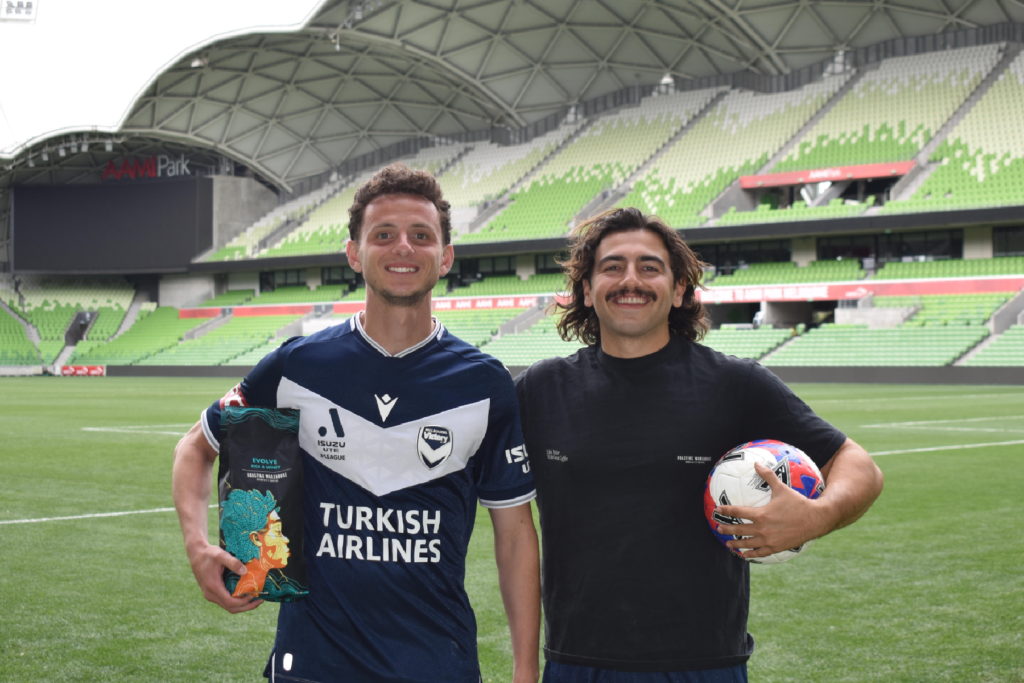
Victory unites with Roasting Warehouse in culture-led partnership

The Melbourne-based anf family-owned business will join the Victory family, uniting two institutions which represent the city’s culture and identity.

A partnership with local roots

As the newest partner of Melbourne Victory, Roasting Warehouse joins forces with a vital part of the city’s sporting landscape.

The club’s Managing Director, Caroline Carnegie, outlined why the partnership bears so much value to both parties.

“We are excited to collaborate with Roasting Warehouse, a community-oriented destination for high-quality coffee, proud of its foundations in Melbourne,” said Carnegie via official media release.

“Football and coffee sit at the epicentre of Melbourne’s culture. The two go hand-in-hand, consistently at the centre of the conversation that stirs Melburnians, which is no different to the conversation sport and Melbourne Victory stir in the State.”

Indeed, this is a partnership which combines the identity, passions and culture of an entire city, therefore giving it the foundations required for long-term, mutual success.

Representing the best of Melbourne

Both Victory and Roasting Warehouse are hugely successful in their respective industries. They are institutions with community-oriented philosphies, who pride themselves on craft and quality.

“We’re incredibly proud to partner with Melbourne Victory, a club that represents the heart, passion, and ambition of Melbourne,” revealed Roasting Warehouse Head of Brand, Alexander Paraskevopoulos.

“As a Melbourne-founded, family-run business, supporting a team that means so much to the local community feels very natural for us.”

Furthermore, through their high-quality blends, Roasting Warehouse will look to prepare Victory’s players and staff for high performances on the pitch as the seasons nears completion.

But this is about far more than just fueling athletes.

This is a partnership which embodies and unites two of Melbourne’s greatest strengths and cultural markers – a connection forged from the city’s very own DNA.


For more information about Roasting Warehouse, click here.

Football NSW supports Female Coaches CPD as Women’s Football Surges

Football NSW has used the platform of the AFC Women’s Asian Cup to deliver a targeted professional development workshop for female coaches, bringing together scholarship recipients for an evening of structured learning and direct engagement with elite women’s football.

Held at ACPE last month, the session was open to female coaches who received C or B Diploma scholarships through Football NSW in 2025. Coaching accreditation carries a financial cost that disproportionately affects women, who are less likely to have their development subsidised by clubs or associations operating in underfunded community football environments. Scholarship access changes that equation at the point where many women exit the pathway.

Facilitated by Football NSW Coach Development Coordinator Bronwyn Kiceec, the workshop focused on goal scoring trends from the tournament’s group stage, with coaches analysing attacking patterns and exploring how those insights could translate into their own environments. The group then attended the quarter-final between South Korea and Uzbekistan at Stadium Australia.

The structure of the evening mattered as much as its content. Female coaches in community football rarely have access to elite competition environments as a professional resource. The gap between the level at which most women coach and the level at which the game is analysed and discussed tends to reinforce itself. Placing scholarship recipients inside a major tournament, as participants rather than spectators, closes that gap in a way that a classroom session cannot.

Female coaches remain significantly underrepresented across all levels of the game in Australia. The pipeline that will change that depends not only on accreditation access but on the professional networks, peer relationships and exposure to elite environments that male coaches have historically taken for granted.

The workshop forms part of Football NSW’s ongoing commitment to developing female coaches through scholarships and structured learning opportunities.

Most Popular Topics

Editor Picks

Send this to a friend