



Eyeball: Changing the foundation of scouting

The very foundation of scouting has changed forever. 

Eyeball is an Artificial intelligence (AI) powered product designed to assist footballing entities in scouting the potential football athletes from various countries around the world.

With over 100,000 players within the technologies database all comprised of youth players, football clubs across the globe are raising their eyebrows as to what this brilliant technology can provide.

The system acts as a football scout. Remotely and in the convenience of a smartphone device, the search and evaluation of performance capacity of the players within its database can be compared to football’s finest players. The service prides itself on optimising academy recruitment, without a club worrying about the financial difficulties involved in travel or acquisition of scouting personnel.

The contemporary scouting platform has an established and researched insight database, all gathered from the youth academies of Europe’s leading football giants.

European markets including the footballing nations of Spain, England, Germany, Holland, Belgium, and Croatia are also joined by the African markets of Ghana, Mali, Ivory Coast, Nigeria, Guinea, Senegal and Sierra Leone. These are the markets in which Eyeball operate within, acting as the ever growing customer base of their elite scouting technology.

Youth scouting is strenuous. Professional clubs who are struggling within their respective leagues due to being less financially opportunistic, are already on the back-foot. With its locality and lack of scouting network, the fundamental exercise in terms of growing a club and its talent pool, becomes surplus. The purpose of Eyeball and its technology is to make the scouting process simple yet effective, as it has essentially modernised the process, bridging the gap between potential players and professional clubs.

Determined to enhance its science, searchable player data is a primary focus of Eyeball in which they seek to further improve. This is through the analysation of video data from talented players throughout the globe, combatted with the collection of a prospects data.


The data collected is imperative. Driven by 13 statistical parameters, it includes shots on target, successful dribbles, incisive passes and passes in the final third – just to name a few.

The parameters collected can be searched by the club officials using the app, perhaps on the hunt for a player in whom possess specific qualities dependent on what the club requires on the pitch.

Summaries of key stats are compiled by AI based upon data collected from partner clubs that have detailed profiles upon talent within the database. The AI technology allows partnered clubs to put these prospects into AI generated match-simulations, allowing for the assessment of a players performance all through the use of Eyeball’s data breakdown technology.

The player app feature of Eyeball can be a considered a polarizing tool in which football participants can utilise in order to garner a tangible understanding of their ability. The player app allows players to access performance data from within the platform while also showcasing to the scouts using the technology, the ability in which the player possesses.

Games can be watched back by players, while Eyeball analyses the games and a breakdown of the performance. This allows players and coaches to make the necessary changes to a players training routine, showcasing the areas in which are in need of improvement.

It basically allows a player to sell themselves to scouts. Professional clubs are examining the profiles and the players are able to customize their profile, showcasing their greatest qualities in-match highlights. Matches can be watched back and analysed, as they are stored within Eyeball’s database.

Individuals can hunt for specific match moments, with a play-by-play game events feature dissecting every move a player makes throughout matches documented. Eyeball’s analysts watch each match closely, providing a breakdown of performance statistics. Players distribution performance, as well as their offensive and defensive performances are outlined.

Eyeball possesses the ambition of wanting to become a pioneer in bridging the gap between talented youth prodigies and becoming the next generational top tier of talent across the globe. All through the inclusive access of insight and data performance surveyed and interpreted through its system.

Over 100 professional clubs are using the Eyeball technology, with the company making major waves in regards to the foundation in which scouting is exercised. Perhaps it would be in the interest of Australia professional clubs to also utilise this ground-breaking technology for their benefit.  
Previous ArticleNext Article

More Than One in Five Football Australia Staff to Lose Jobs Amid Growing Financial Losses

Australian football finds itself in a curious position.

From the outside, the game appears to be riding a wave of momentum. Attendances, visibility and public interest have all experienced significant uplift in recent years, while major international tournaments and growing discussion around football’s future continue to place the sport firmly within the national conversation.

Yet behind that momentum, Football Australia is now confronting a far more challenging internal reality.


A compounding deficit

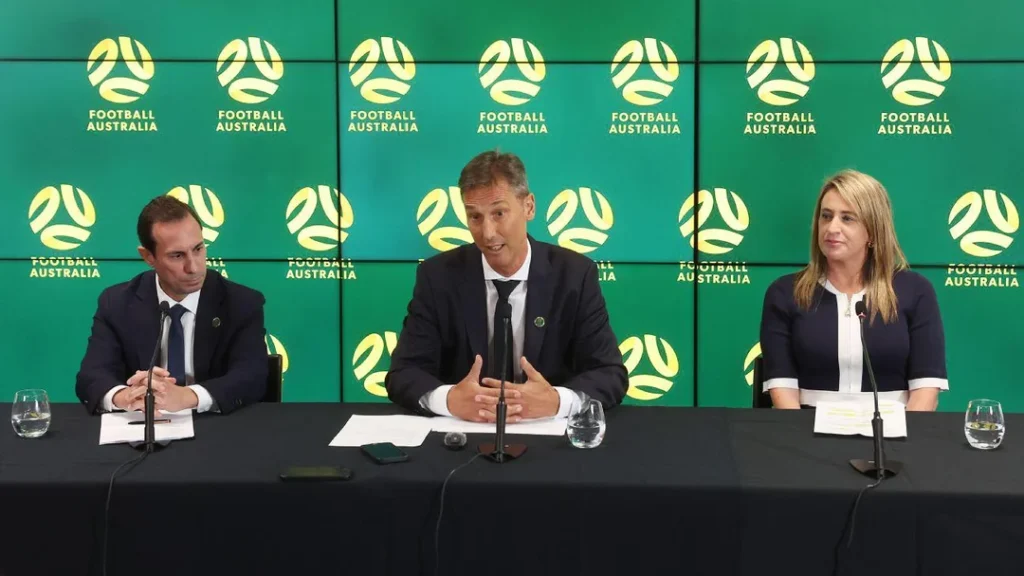
Chief Executive Martin Kugeler has reportedly indicated the governing body’s projected financial losses for 2025 are expected to exceed the organisation’s reported $8.5 million deficit from the previous year. Accompanying the financial outlook are substantial organisational changes, with reporting from Tracey Holmes indicating more than one in five Football Australia employees are expected to lose their positions through restructuring measures.

The figures represent more than a difficult balance sheet. They point toward a significant period of recalibration inside the organisation responsible for overseeing the sport nationally.


Losing the wisdom of existing staff members

For governing bodies, restructures are often framed as strategic necessities for future sustainability. However, workforce changes on this scale also raise broader questions around the challenges of such a transition.

People are often the carriers of knowledge, relationships and long-term strategic understanding. When organisations undergo significant structural change, the effects can extend beyond immediate financial outcomes.


Contradicting timing

The timing is what makes the developments particularly notable.

Football in Australia has spent recent years discussing expansion, growth and long-term opportunity. The conversation surrounding the game has increasingly centred on future potential. Often headlining stronger pathways, larger audiences, infrastructure development and greater visibility.

Against that backdrop, news of deep financial losses and substantial staffing reductions creates a different conversation: one focused not on where the game wants to go, but on what may be required to sustain that journey. Therefore, this announcement points toward stagnancy, rather than growth.

Further detail surrounding Football Australia’s strategy and long-term direction will likely emerge over coming months. For now, the developments serve as a reminder that growth stories are rarely straightforward.

Often, the periods that appear strongest from the outside can also be the moments organisations face their most significant internal tests.

Heidelberg United denied qualification to AFC UCL 2

In an announcement made yesterday, Football Australia revealed that, in place of Heidelberg United, Melbourne Victory will now take the AFC UCL 2 spot.

A premature ending

In what is sure to be a disappointing verdict for Heidelberg’s fans, staff and supporters, the NPL VIC side will no longer compete in next season’s AFC CL 2.

The decision comes despite Heidelberg meeting the necessary criteria outlined in Football Australia’s National Club Licensing Regulations.

“We understand that this will be a disappointing outcome for everyone connected to Heidelberg United FC,” said FA Executive Director of Football, Heather Garriock, via press release.

“The club earned enormous respect through its performances this season and should be proud of what it achieved both on and off the pitch.”

Indeed, through defeating several A-League outfits en-route to the Australia Cup Final against Newcastle Jets, Heidelberg did earn widespread respect and admiration across the landscape. Football Australia also strongly advocated for the side’s place in the AFC CL 2 following Newcastle’s qualification to the AFC CL Elite.

But despite the determined efforts of the club’s board to meet all necessary criteria, the Asian Football Confederation (AFC) ruled the side ineligible to compete.


Victory emerge as replacements

Filling the now-vacant position in next season’s competition is Melbourne Victory, who finished 4th in the A-League this year.

As 3rd-place Auckland FC are based in New Zealand, thus falling under the Oceania Football Confederation (OFC), they are also ineligible to compete.

So while the AFC CL 2 will still be arriving in Melbourne next season, fixtures will no longer be built on the underdog success story of Heidelberg’s immense rise from NPL to AFC CL matchdays.

The club, however, will appeal the decision, and has written to Football Australia for further clarity on the Appeals Process.

It remains uncertain whether the appeal will be successful or not, but Heidelberg will undoubtedly enjoy the backing not just of its own staff and supporters, but of the entire Australian grassroots community.

Most Popular Topics

Editor Picks

Send this to a friend