

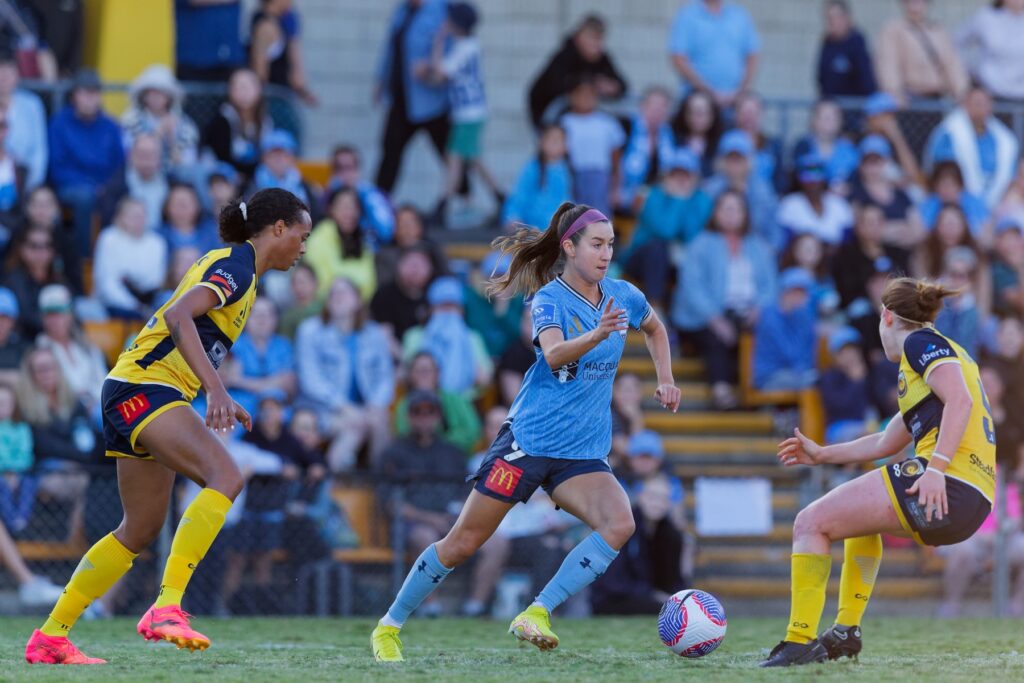
How the Liberty A-League can learn from the incredible growth of NWSL

As the A-League Women’s Grand Final approaches and season comes to an end, it is a time to reflect on a season of incredible growth and broken records.

Similarly to the National Women’s Soccer League (NWSL) post-2015 Women’s World Cup, there was a popularity boost that translated into increased attendances and revenue for the league.

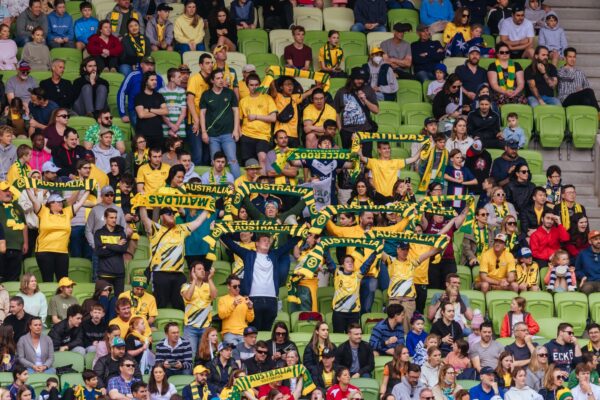
However, as the NWSL continued to rapidly develop, it seems as if the Liberty A-League struggled to consistently grow after a fantastic first round showing that involved a record-breaking 11,471 crowd for the Sydney Derby.

In the top 10 attendances of the regular season, eight feature games played before the new year despite the Matildas set to sell out a 14th consecutive home match before the Olympics commence in July.

The Liberty A-League crowd average is a little over 2,200 per match, which is a great benchmark for future growth but doesn’t do the participation and momentum justice.

The NWSL is a great case study to look at, with the league being formed only 12 years ago in 2012 and its first season started in the April of 2013.

In its formative years, the NWSL averaged an attendance 4,270, with a high of 17,619. A decent foundation but plenty of room to improve in the world’s biggest sporting market.

It wasn’t until the 2015 season where the league was forced into a shortened schedule and some early-season roster instability due to the 2015 FIFA Women’s World Cup in Canada.

The World Cup, which was won emphatically by the USWNT also provided invaluable exposure to the NWSL, which was credited with boosting attendance numbers across the league.

Instantly, teams such as Seattle and Washington who averaged 3,500 crowds per game were selling upwards of 6,000 to their next home game, an immediate resurgence.

So what did the NWSL do to fast-track growth using the World Cup?

Ticket prices

The NWSL, immediately after the 2015 Women’s World Cup pledged to keep the ticket prices consistent within teams, as it sat at $10-$15 USD (AUD $15-$23) across the league.

It was extremely cheap in a saturated and quite expensive US Sports market that allowed the league to use it as a point of difference.

It’s a simple solution that Melbourne City coach Dario Vidosic hinted at for this weekend’s Grand Final in his recent press conference.

Vidosic claimed that “If it was up to him, everyone would be let in for free for Saturday’s final.”

This is simply to create an exciting atmosphere that legitimises the league’s biggest game of the year on a national stage.

Breakaway from Men’s competition

NWSL Commissioner Jessica Berman made an extremely interesting point about the NWSL being its own entity.

Speaking to reporters at the Financial Times’ Business of Football summit in London, Berman said the “superpower” of the NWSL was its “independence” – notably from men’s clubs and leagues, which is not the case in Europe or Australia.

It certainly isn’t an overnight fix by any means but allowing the A-League Women’s to run separately from the A-League Men’s, even if it is just ownership could provide a difference that attracts more fans.

Maintaining local star players

Even in it’s infancy, the NWSL were able to show off USWNT stars like Lynn Williams, Megan Rapinoe and Alex Morgan during their ‘Golden Era.’

It collectively brought in more fans to the stands and increased the league’s exposure in the mainstream media.

It certainly isn’t as easy as that when the prospect of playing for more money and exposure in the US or Europe is a possibility now, but Cortnee Vine provides a great example of a star Matilda willing to be the face of the league to inspire young girls.

If the league are able to keep hold of exciting prospects like Daniela Galic or legends like Michelle Heyman for a few years, it would benefit the league greatly as an entertainment product.

Providing a great fan experience

There was an onus on the NWSL clubs and the league itself to make sure matchdays are an experience that brings fans back.

Two clubs in particular Angel City and San Diego Wave fans host tailgates pre-game near the stadium for anyone to join on top of other activations inside the stadium to connect fans closer to the team.

The WSW Women’s team are a fantastic example of an effort to build support, with their Wander Women program, school clinics, fan interactions and their own social media channels helping them grow slowly but surely.

It’s time the others follow suit in a collective attempt to maximise exposure.

To conclude, the NWSL used the 2015 World Cup as leverage to strike a quick deal with Fox Sports to broadcast 15 games for the rest of that season, cashing in on the national team’s success.

Now it boasts the biggest ever Women’s football media deal in history, with the recent four-year $240 million USD ($324 million AUD) domestic broadcast deal across four major streaming and cable partners.

It will be extremely interesting to see the direction the Liberty A-League takes before it renews its broadcast deal in 2026 as it simply cannot waste this golden opportunity it was presented.

Previous ArticleNext Article

Build a home, create a culture: How do we secure the Socceroos as global competitors?

The Socceroos kicked off their World Cup campaign with a convincing 2-0 win over Turkey. It was an important win for their tournament ambitions, but also a statement about their quality on the world stage. It is time that we built a facility to ensure this quality is nurtured, not stifled.

Otherwise, we risk falling behind.


One of four…

Australia’s Men’s National Team currently sits as the 23rd-ranked team in the world in the official FIFA rankings. The Matildas, meanwhile, are the 15th highest-ranked women’s team.

This year is also the sixth consecutive FIFA Men’s World Cup featuring the Socceroos, confirming their position as a regular competitor in the most prestigious tournament in world football.

So why is it, despite these undeniably positive reflections of Australia’s growth in international football, that the Socceroos are still homeless?

At the 2022 FIFA Men’s World Cup in Qatar, Australia was one of four competing teams (a list featuring Denmark, Poland and Senegal) without a national base. In 2024, former Socceroos coach Graham Arnold described the team as “homeless” ahead of the World Cup qualifiers.

But four years on from the tournament’s last edition, the situations remains the same. And the world is taking notice.


A letter to the PM

In April this year, FIFA reportedly wrote to Australian Prime Minister, Anthony Albanese, encouraging the construction of a permanent home for football in the country.

The letter reflects concerns within the governing body that Australia, despite being so present in international football throughout the past 25 years, may fall behind the rest of the pack.

When we look at the talent in the current squad, Australia is by no means an emerging football economy. But commercial and infrastructural limitations in the landscape mean this talent is under-appreciated.

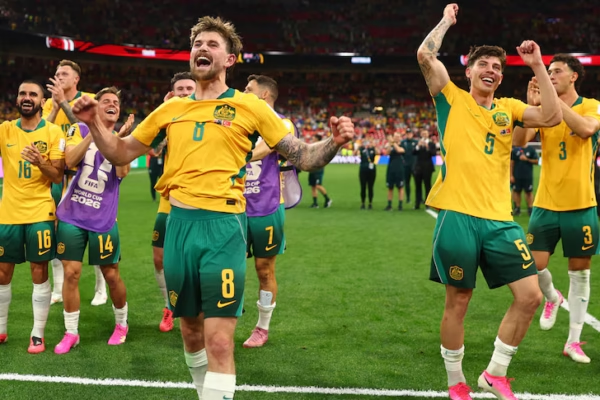
Nevertheless, it is a nation which regularly proves it can compete – and win – on the biggest stage. This we saw only a few days ago.

Which is why the players, coaches and staff representing the nation deserve a permanent facility which reflects, nurtures and inspires talent and competition. The survival of the landscape depends on it.


The investment question

Investment into football – from grassroots to professional levels – continues to be at the crux of national debate on how to secure football’s future in Australia.

In a conversation between Soccerscene and Melbourne-based community club, Sunbury United FC, infrastructure and facility-sharing challenges emphasised common grievances for many grassroots clubs.

The issue, therefore, is spread across the nation’s football pyramid. And prompts an uncomfortable question about future investments:

If even the Socceroos continue to share their current base, Leichhardt Oval, with various teams across rugby league and soccer, how can we ever expect clubs further down the pyramid to avoid similar fates?

The past few years, however, have fortunately seen improved investment into the women’s game in Australia – particularly embodied by the ‘Home of the Matildas’.

The result of a $101.1 million investment by the Victorian Government in collaboration with La Trobe University and the Federal Government, the facility boasts elite training features including premium FIFA-standard pitches, multiple changing rooms, a high-performance gym, a sports science lab and more.

This was a welcome and vital boost ahead of the 2023 FIFA Women’s World Cup which took place in Australia. Now, ever-increasing participation and pride are synonymous with women’s football, and the numbers confirm it.

In 2023, women and girls represented 190,746 participants across social, outdoor, fustal and registered football. In 2025, this increased to 231,435. It proves that, with the arrival of purposeful investment at the top, comes the spread of a football culture across the nation.


Aligning practical and cultural benefits

But what would a potential facility for the Socceroos actually look like? And what are the benefits?

When considering similar projects, we can look to both Japan and England as distinct examples of how a national base for football can unite practical, social and cultural benefits.

St George’s Park – England

Built in 2012, England’s base at St George’s Park is a masterclass in using facilities to establish a centre for industry cohesion and community impact.

As a centre of excellence, St George’s Park holds 14 outdoor pitches, a fustal arena, and hosts coaching and medical courses. It welcomes 28 teams across men’s, women’s, youth and para football, representing a place of unity and alignment for the entire football community.

Furthermore, the ‘Play Like the Pride’ program offers grassroots participants and school students the chance to experience the elite facilities for a day, showing how facilities can serve to connect young players to the world of their professional idols and foster real passion for the game.

JFA J-Village – Japan

The J-Village – beyond being a state-of-the-art football training centre – shows why a home for football can positively impact the community.

After being used as a support base for the nuclear power plant accident following the 2011 Great East Japan Earthquake, the venue now holds a deeply important place in the memory of Fukishima. As a result, upon resuming full operations in 2019, the facility – and the football development within it – represented a sense of perseverance, reconstruction and unity.

And through hotels and public transportation links, the J-Village also welcomes tourists and business travellers, encouraging more people to step into the world of football in Japan.

One venue, therefore, can give rise to an essential part of a thriving football landscape: culture. A culture for participation, community outreach, and elite development.


Final thoughts

The focus of the summer will no doubt be how the Socceroos perform on the pitch. And with homes, offices, and public spaces brimming with enthusiastic support, the sense of national pride is irresistible.

But for all the positive sentiment currently taking hold of the nation, there will come a time when Australia’s World Cup run is over, at which point an all-important question must be asked:

How do we move forward?

We move forward by transforming buzz into an aligned vision, commitment to nurturing talent, and a desire to establish a real footballing culture across the nation.

The first step to building this culture? Building a home from which it can thrive.

Kick Like a World Cup Star: Monopoly Launches $50,000 FIFA Challenge for Aussie Fans

As excitement builds for the FIFA World Cup 2026™, Hasbro Games is bringing the tournament home to fans across Australia and New Zealand with a new range of officially licensed FIFA World Cup games- and the chance to kick for $50,000.

Leading the lineup is Monopoly Panini Prizm FIFA World Cup 2026™ Core Edition, where players build their dream team using Panini Prizm trading cards featuring current stars and FIFA World Cup legends, competing to take control of iconic matches and score points.

Fans can also boost their squad with Monopoly Panini Prizm FIFA World Cup 2026™ Booster Boxes, which include 24 additional collectible FIFA cards, with the chance to uncover rare and ultra-rare finds.

The FIFA lineup also includes Monopoly Deal FIFA World Cup 2026™ Edition and Connect 4 Shots FIFA World Cup 2026™ Edition, where players use football cleat launchers to “kick” the ball into the net.

To celebrate the launch, Hasbro is giving fans the chance to turn their football skills into a $50,000 payday with the Monopoly “Kick to Win” promotion.

One lucky winner will be flown to Sydney to attempt three kicks for $50,000, while 1,000 instant $50 digital cash cards are also up for grabs.

How to Enter

  • Open to residents of Australia and New Zealand
    •Spend $25 or more on any Monopoly Board or Card Game, or Connect4 Shots FIFA Game
    • Submit your entry online

Promotion ends 10th July, for more information:
 https://www.monopolywin.com.au/fifa/

Most Popular Topics

Editor Picks

Send this to a friend