New format to decide Asia’s Women’s Olympic qualifiers

The battle for the final two spots to join hosts and reigning Asian champions Japan, at the Women’s Football Tournament at the Tokyo Olympics 2020 will be decided in a new and innovative qualifying tournament.

The Continent’s remaining women’s sides will learn their fate in the Asian Qualifiers Final Round Draw at the AFC House in Kuala Lumpur, Malaysia.

The revamped qualifying format for the 2020 edition will see the eight remaining teams divided into two groups, with the top two sides advancing to the two-legged play-offs to decide the final two Asian qualifiers.

This will give the Continent’s elite teams the opportunity to play their most significant matches in front of their home fans.

After two qualifying rounds of captivating action, the initial cast of 18 was whittled down to three with Myanmar, Vietnam and Chinese Taipei joining Australia, China PR, DPR Korea, Korea Republic and Thailand who reached the final round automatically as the highest ranked teams during the first round of qualifiers.

Following the outcome of the latest FIFA Ranking released on September 27, 2019, the Continent’s top-ranked sides Australia and DPR Korea will be placed in Pot 1, joint hosts for the final round, China PR and Korea Republic are in Pot 2, followed by Vietnam and Thailand in Pot 3 and Chinese Taipei and Myanmar confirming their places in the final pot.

The Asian Qualifiers Final Round will take place from February 3 to 9, 2020 with the two-legged play-off scheduled to take place on March 6 and 11, 2020.

Football at the Tokyo 2020 Olympics will commence with the women’s matches on July 22 – two days before the Games’ official opening ceremony – with the men’s competition to begin on July 23. The 12-team women’s tournament will conclude on August 7, with the men’s tournament to conclude the following day.

Asian teams have established a long and proud tradition at the Olympic Games, with China PR (1996) and Japan (2012) winning silver in the women’s tournament, while Japan (1968) and Korea Republic (2012) clinched the bronze medals in the men’s competition.

Previous ArticleNext Article

Football NSW backs 20 female coaches with qualification scholarships

Football NSW has supported 20 female coaches to complete their AFC/Football Australia C Diploma qualification in 2026, using scholarships funded through Football Australia and CommBank’s Growing Football Fund to reduce the cost of coach education.

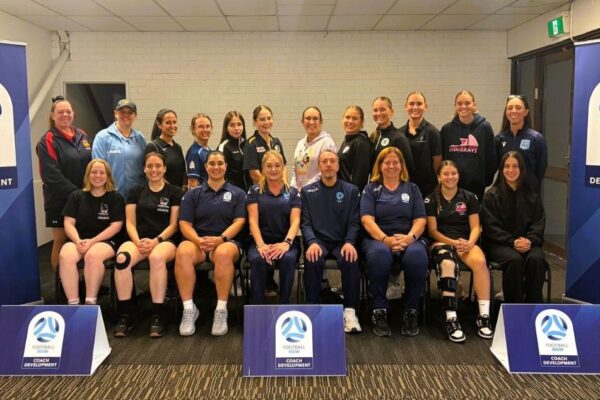
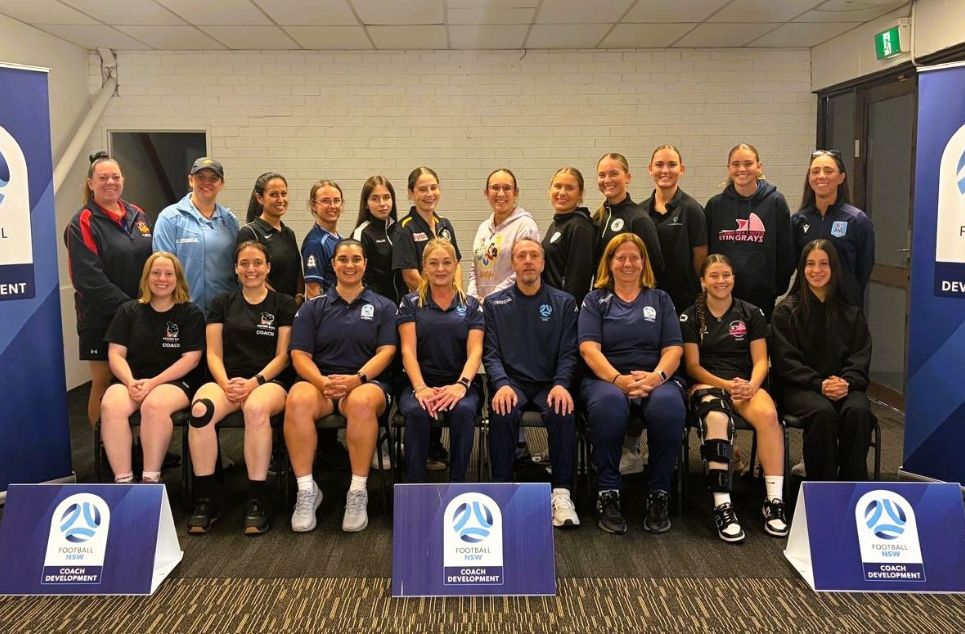
The initiative included a dedicated female-only C Diploma course delivered by Football NSW in April and May, attended by 13 coaches. An additional seven received support to complete courses closer to their local communities, improving access for coaches across metropolitan and regional New South Wales.

Football NSW Head of Women’s and Schools Football Hayley Todd said the scholarships had helped address a key barrier to coaching development.

“These scholarships have helped remove a significant barrier for many female coaches seeking to progress their coaching journey,” Todd said.

Todd said the combination of a female-only course and support for locally accessible qualifications had created pathways for 20 women to develop their skills and contribute to football in their communities.

The program reflects an ongoing challenge for the sport: increasing women’s participation also requires investment in the coaches who lead teams, develop players and help shape club environments.

By helping cover qualification costs, the scholarships give recipients an opportunity to strengthen their coaching knowledge and leadership capabilities while expanding the pool of qualified female coaches available to clubs.

The support also connects to the wider Growing Football Fund, a joint Football Australia and CommBank initiative aimed at creating more opportunities for women and girls in the game.

The fund’s community grant program offers eligible clubs and associations grants of up to $5,000 to help attract or retain women and girls in football, with applications for the 2026–27 round closing on 20 October 2026.

The governing body also offers Women in Football Coaching Scholarships worth 50 per cent of course costs, with applications limited.

Netflix’s Women’s World Cup deal puts IMG’s technology in the spotlight

Netflix’s first exclusive football deal will see the next year’s FIFA Women’s World Cup at the centre of it’s live-sport strategy. The US-streaming service company has appointed IMG as its production partner for all 64 matches in Brazil, as well as more than 100 hours of live studio programming. The deal includes English and Spanish coverage for viewers within the US, and English and French-language coverage for those in Canada. IMG will also support Netflix’s coverage of the tournament’s draw in December.

The 2027 Women’s World Cup runs from June 24 to July 25 across eight host cities, and will be the first edition to feature 32 teams. The scale of the tournament makes it an ambitious first foray into sports broadcasting for Netflix – which means IMG’s involvement will be of great significance.

IMG’s production engine

IMG has built its reputation on producing and distributing live sport at scale. It’s Stockley Park, London facility includes broadcast studios, production galleries, edit suites and facilities for radio, podcasting, dubbing and visual effects. The company has worked across major properties including the Premier League, Major League Soccer and other international sporting events.

For a World Cup, this infrastructure provides more than a place to make television; it creates a central point where production teams can manage feeds, graphics, replays, commentary, editing and distribution while events are taking place thousands of kilometres away.

Remote production is the key

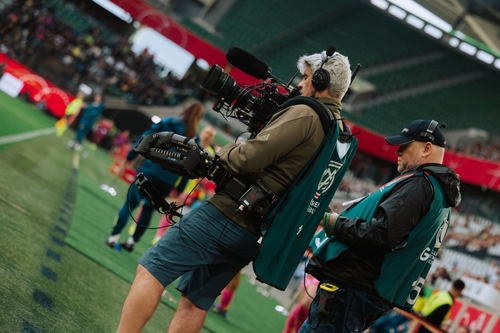
The most important technology for a tournament spread across eight Brazilian cities is connectivity. IMG has invested in remote-production workflows that allow production teams to work across locations, rather than putting every specialist inside each stadium. Its wider production operation has used fibre, satellite, cloud and IP-based connectivity to move live signals between venues and production centres.

That model can reduce the amount of equipment and specialist staff required at every venue while allowing senior producers, directors, replay operators and graphics teams to work from centralised facilities. IMG has also demonstrated long-distance IP production, including a 20,000-kilometre link between Tokyo and London that carried uncompressed, low-latency video. For Netflix, those capabilities are particularly relevant. The platform is building a single viewing experience for audiences in two markets, but the raw ingredients will come from stadiums spread across Brazil. A resilient network becomes just as important as the cameras themselves.

From stadium to stream

The technology chain does not end when the pictures leave the venue. A modern sports production operation has to manage ingest, replay, media asset management, graphics, audio, quality control, archiving and transmission. IMG’s facilities have been built around those workflows, with master control and transmission capabilities alongside post-production and archive operations.

That infrastructure also gives IMG the ability to turn the live tournament into a wider stream of content. A goal can become a replay, a highlight, a social clip or part of a studio package without waiting for the match to finish. For Netflix, that fits a platform built around on-demand discovery as much as live viewing.

A new test for Netflix

Netflix has already made a significant investment in football through documentaries and other programming. The 2027 Women’s World Cup takes it up a level. FIFA describes the agreement as the first competition Netflix has acquired in full, making the tournament a major test of its live sports operation. IMG therefore has a job that goes beyond producing 64 matches; it must help Netflix build the technical backbone for a month-long, multi-venue broadcast, while maintaining consistent production standards across languages and locations.

The viewer may simply press play and see a World Cup match appear instantly. Behind that button will be a complex network of cameras, connectivity, control rooms, production systems, people and data. That is the real significance of Netflix’s IMG deal: the streamer is bringing the tournament to its platform, but IMG is providing much of the machinery that can make a global football event feel seamless.

Most Popular Topics

Editor Picks

Send this to a friend