

Hanh Tran: “I have a passion for providing a voice for women in sport”

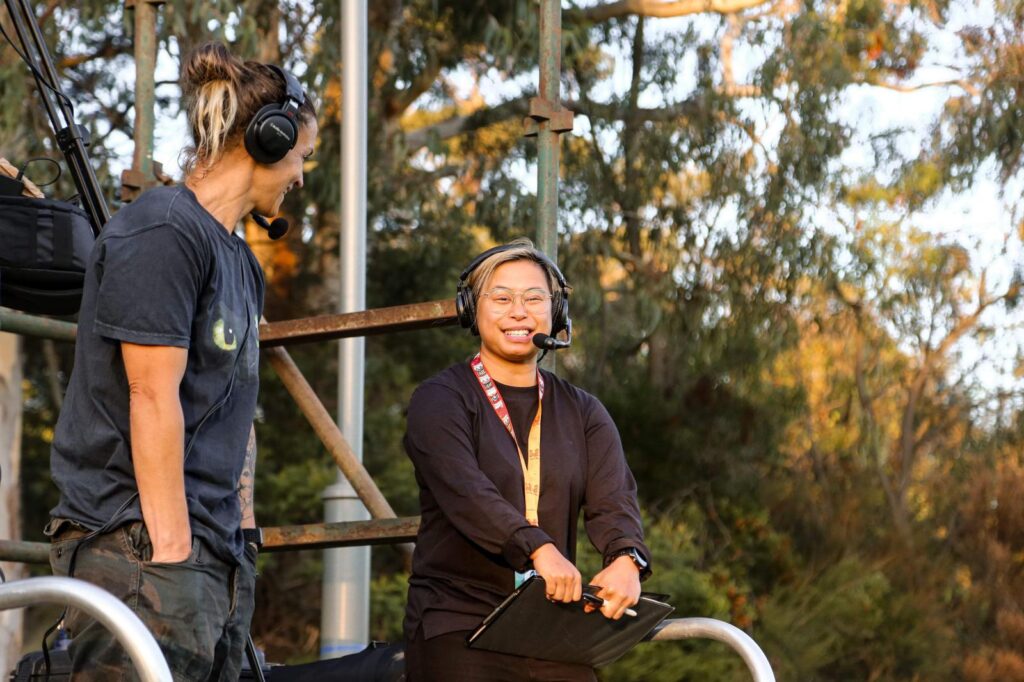
Hanh Tran is a familiar voice across Football Victoria, having served as the original Series Futsal women’s broadcaster. Hanh has become well intertwined within women’s football across the state.

An advocate for women’s football, she has effectively singlehandedly shone a spotlight upon women’s futsal.

Throughout her established commentary career, Hanh has had broadcast involvement in finals, cup competitions and League matches across both indoor and outdoor women’s and men’s football competitions.

Speaking to Soccerscene, she discussed topics including being a commentator, what her dream is as a commentator, and the changes she would like to see in Australian womens football.

Tell me about yourself as a commentator.

Hanh Tran: I have been commentating on women’s soccer for a little over 5 years.  I first began commentating on woman’s futsal for the Series Futsal Victoria Women’s league, played at Futsal Oz.

At the time the Men’s competition had weekly commentators calling their game and the women’s did not.  I was also a player for the women’s league at the time.

I felt that the woman needed a voice to help boost and build their game, so I then made the initiative to jump on the mic and give commentating a try with the encouragement from owner Peter Parthimos I was in the box commentating my first week after.

In the beginning, it was all voluntary work and was more than happy to provide my time each week as it was something that I loved doing and the players enjoyed watching the game with commentary on it.

In late 2019 Football Victoria held an information seminar for women in media. This opened a huge door for me to help bring my commentating to a new level and provide me with a new challenge.

I was invited to join the Football Victoria commentary team for the upcoming 2020 season of NPL and NPL Women’s.

Unfortunately, due to COVID, I couldn’t make my debut to call the NPLW games that year. Fast forward to 2021 and I have been on the roster for most of this season calling the NPLW games.

I have a passion for providing a voice for women in sport, where at times there has been a male broadcaster calling female games. I feel the industry is in the progression of providing opportunities for diversity.

Growing up, I played every sport that was provided to me and loved being part of the community of sport.

When I watch I hear sports on the TV or radio, I’m so intrigued by the commentators and the way they capture the audience and entertain us in their own unique way when calling the game. I’m always listening out to different techniques and phrases that they use.

I remember watching the Matilda’s vs Vietnam in the Olympic qualifying match and made myself a personal goal to one day commentate a Vietnamese vs Australia football game.

Being from a Vietnamese background, that would be a dream come true. To represent Vietnam, Australia and be the voice for women’s football.

I want to be the pioneer of a Asian background and be a role model for future generation of commentators and media personnel.

What is something with women’s football you’d like to see change?

Hanh Tran: I would love to see more promotion and increasing the exposure of women in the media and to boost diversity in the industry.

I found there was a lack of content to champion and showcase the female players; and most of these outlets were hosted mainly by men.

More games being streamed, especially VPLW. More podcast, reels, panel shows. Pre game and post game interviews.

Advertisement of the players and their clubs, introductory videos of the clubs and teams, similar to USA college basketball and NFL and side line reporters.

What are your thoughts on the Nike Cup competition?

Hanh Tran: Love to see a VPLW team to get to the finals. One of the best quality games we’ve seen in a long time. 2 penalty shoot outs and 3 games going to extra time. They’ve been very close games.

Great exposure to smaller clubs that normally don’t get much limelight. FV have invested time and energy this year to make the cup stand out for the womens game.

Where would you wish to see growth within football in Australia?

Hanh Tran: More investment in the A league and growing the women’s game. So much support goes to the Matilda’s, but then no huge return of money invested in the A league.

Need more growth and international players come to the A-league to grow the game internationally to make it more entertaining.

Similar to what cricket did with the Big bash. Try something fun and exciting to bring in new and young viewers.

90 minutes is a long time to concentrate on a game that is low scoring, something that can bring in new football fans to watch the game.

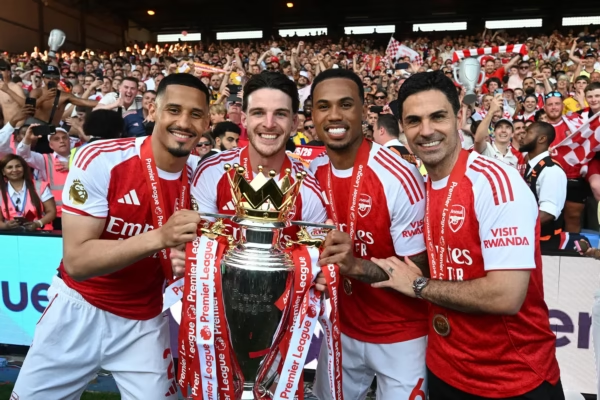
A more sense of community and excitement, or collaboration with the men’s games, more double headers. The All-Star game was a hit against Arsenal, that will draw in more viewers and spectators.
Previous ArticleNext Article

Theo Fotopoulos outlines vision for Canberra United’s future

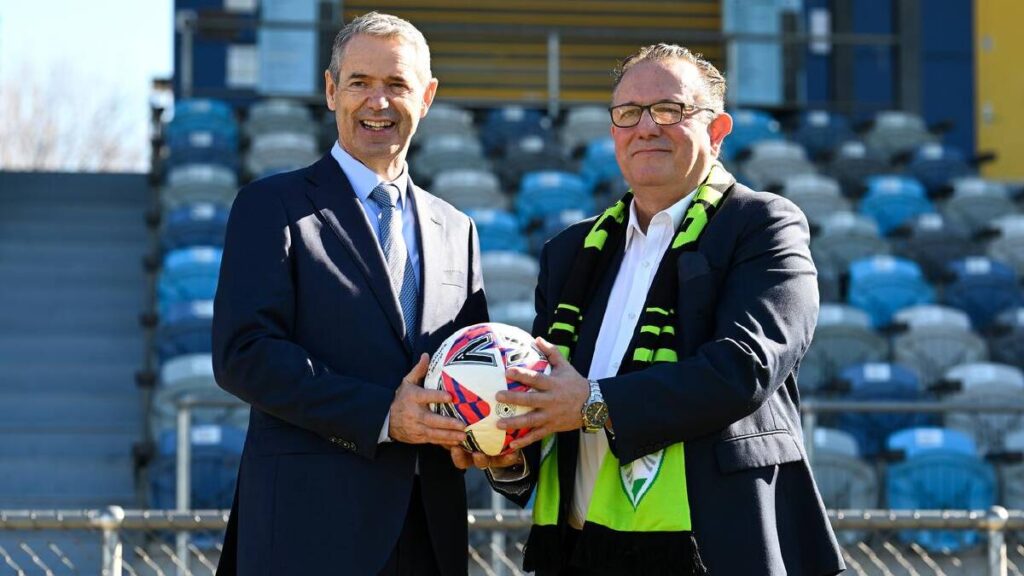
Professional football in the nation’s capital has entered a new era with Australian Sports Group (ASG) officially taking over Canberra United ahead of the 2026/27 season.

Led by Chairman Morris McAllister and CEO Theo Fotopoulos, ASG takes over a club whose future has been uncertain in recent years. Now, the focus has shifted from survival to building a sustainable future for football in Canberra.

Speaking to Soccerscene, Fotopoulos discussed why ASG chose to invest in Canberra United, the importance of preserving the club’s identity, and the roadmap for the chapter ahead for football in the nation’s capital.

Why Canberra?

The investment in Canberra United comes at an important time for the club. The beginning of the 2026/27 A-League Women season is just around the corner, and the prospect of an A-League Men side is drawing closer. Asked why ASG chose to invest in Canberra United and Canberra itself, Fotopoulos’ answer was simple.

“Canberra has stacks of football culture. It is a football city,” Fotopoulos said.

Speaking on the decision to retain the name Canberra United and not undertake a rebrand, Fotopoulos pointed to the club’s history and connection to the community.

“We retained the name, Canberra United, because of the history and the association. We felt there were more positives to retain the name,” Fotopoulos said.

The new ownership also wants supporters to play an active role in shaping the club’s future.

“The fans will be involved in making decisions,” Fotopoulos said.

Fotopoulos revealed that the club is already consulting with fans on the introduction of a nickname and is looking at developing a playing kit that is designed by the fans.

While Canberra offers a unique opportunity for professional football, Fotopoulos acknowledged the club will still compete for supporters’ attention alongside established sporting organisations such as the Canberra Raiders and ACT Brumbies.

Rather than viewing that as a disadvantage, he believes Canberra’s appetite for sport presents an opportunity to grow the club’s presence in the capital.

“It is something that allows us to accelerate the building of the brand in Canberra, Canberrans really love their sports,” Fotopoulos said.


The road ahead

The 2026/27 Ninja A-League season kicks off in October, and the priority for Fotopoulos and ASG at Canberra United is to ensure that Canberra is ready to compete not only next season, but sustainably for the years ahead.

“For us, it’s really stabilisation for the women’s. Build that and build the infrastructure around the women then translate that into an additional structure for the men’s program,” Fotopoulos said.

Infrastructure also forms a key pillar of ASG’s long-term vision. Fotopoulos said securing a long-term home at McKellar Park and improving football facilities across Canberra would play an important role in supporting future growth.

He believes better facilities will benefit not only Canberra United but football throughout the ACT and surrounding region.

Importantly, the takeover of the club included an option to introduce a team into the A-League Men’s competition from the 2028/29 season, which is something that ASG intends to pursue.

When speaking about the future of the proposed senior men’s side, Fotopoulos pointed to the quality within and around the organisation that will ensure its introduction.

“We’re quietly confident, the football department is very positive. There are a lot of quality people, both in Canberra and outside of Canberra, that have indicated interest in being part of the elite pathways academy structures that will be the foundation for a new A-League men’s team,” Fotopoulos said.


More than a football club

For Fotopoulos and ASG, this investment is about more than just owning and running a football club. The focus extends beyond results on the field to developing an integrated football structure and greater cohesion across the game.

In order to support a strong senior men’s and women’s side, Fotopoulos outlined the importance of establishing strong junior pathways for young players growing up in Canberra.

“One of the other big picture objectives is to finally get to establishing a permanent pathway,” Fotopoulos said.

Fotopoulos believes that these pathways will ensure long-term stability for Canberra United and help form the foundation of both senior playing groups for years to come.

However, it wasn’t just an investment in football in Canberra. It was a vote of confidence for women’s football in Canberra in particular.

While excitement is building around a potential expansion into the A-League Men, Fotopoulos believes that the current moment represents an even greater opportunity for the women’s game.

“If I was to look at any other time in history, this is probably the strongest time to invest in women’s football,” Fotopoulos said.


Mizuno’s Australian gamble: can a 120-year-old brand break through?

When Mizuno unveiled a mural of Socceroos captain Harry Souttar on a Richmond wall during the 2026 World Cup, the company’s name did not appear on the artwork. The artist, Rory Ledge, painted Souttar as the “Minister of Defence” behind a brick wall. Channel 7 and Channel 9 turned up. The Herald Sun ran it in their Saturday edition. Mizuno’s brand director called it “mainstream awareness” without paid media.

The mural sat within a broader push by the Osaka-based company to expand in Oceania. For the fiscal year ending March 2026, Mizuno reported sales of ¥259 billion, up 7.8 per cent year-on-year, with net income of ¥18.4 billion representing 20.5 per cent growth . Operating profit rose to ¥22.6 billion. The Asia and Oceania segment is central to the company’s medium-term plan, which targets net sales of ¥290 billion by fiscal 2027.

The growth imperative

Australian football has not historically been kind to specialist boot brands. Nike, Adidas and Puma dominate retail shelves. A-Leagues collective bargaining agreements and club deals have locked in incumbents. For a brand without the marketing budgets of its competitors, the path to relevance runs through the players.

Mizuno has grown its Australian ambassador base from one athlete to around 20 across the A-Leagues in recent seasons. Melbourne City’s Tolgay Arslan, who played in the Bundesliga and Serie A before arriving in Australia, told Front Page Football: “If I discovered these boots ten years ago, I would wear these boots overseas in my career.” Western United midfielder Angus Thurgate called them “the comfiest boots I’ve ever worn”.

The mural moment

Richmond was chosen for the mural because of its location. The suburb sits at the centre of Melbourne’s sporting precinct, five minutes’ walk from the MCG and AAMI Park. It is already home to murals of AFL players. Rowena Corner Store owner Con, who agreed to host the artwork, had previously welcomed murals of Dusty Martin and an AFLW player.

“We didn’t have access to Harry because he was in the US competing,” brand director Rishi said. “We couldn’t do a photoshoot. So we had to be clever. The best ideas come from real time, aligned with what the public discourse looks like. Once we saw his Wikipedia page updated to refer to him as the Minister of Defence, we knew we could play into this.”

Ledge incorporated an existing window into the design to create a net behind Souttar’s figure. The mural appeared the morning of the Paraguay match, when Australia’s clean sheet sent them into the knockout phase.

The World Cup provided a massive backdrop. The Socceroos’ run captivated the nation: 4.84 million Australians tuned in to the Paraguay match, making it the most-watched World Cup match in SBS history at the time, with an average audience of 3.086 million . The final reached 5.26 million viewers, and cumulative tournament reach hit 18.04 million— 64 per cent of Australia’s population. SBS director of sport Ken Shipp said: “We’ve never seen engagement at this level.” Mizuno spent comparatively little and had Channel 7 and Channel 9 on site.

The commercial question

For a brand with limited marketing firepower, organic PR coverage is the prize. The question for the company’s Oceania division, still in growth mode, is whether a mural and a handful of player endorsements can convert into sustained commercial traction. Retail partnerships with Ultra Football, which has created a dedicated Mizuno space at its Melbourne store, suggest the company is thinking beyond campaigns.

Mizuno’s European expansion has taken a different path. The company signed a five-year deal to become AS Monaco’s technical equipment partner from the 2025-26 season, its first entry into Ligue 1. It already has a presence in Germany’s Bundesliga and Italy’s Serie A. In Australia, institutional partnerships are harder to secure. The approach has been slower: build through athletes, then through community, then through culture.

The Queensland government signed a Memorandum of Understanding with Mizuno in March 2026 to explore the Japan-Australia Sports & Health Innovation Exchange (JASHIE), a two-year partnership focused on sport and health innovation . The agreement supports Queensland’s preparations for the 2032 Olympic and Paralympic Games.

The mural campaign reflected a broader trend in sporting brand marketing, where IP restrictions and athlete availability increasingly demand creative solutions. “I love what Levi’s did because they were able to lean into their brand codes and tell what I believe to be the most memorable advertising story from the World Cup,” Rishi said. “This is a different page out of fundamentally the same playbook.”

Mizuno’s boots are not cheap. The Made-in-Japan models retail well above competitors’ offerings. The brand’s pitch rests on quality and heritage, not price or volume. That is a harder sell in a country where discounting dominates and cost-of-living pressures are squeezing households.

The Souttar mural will eventually fade or be painted over. Mizuno is betting that by the time it does, enough Australian football fans will have noticed the three stripes’ quieter rival.

Most Popular Topics

Editor Picks

Send this to a friend