Aki Ionnas on Jack Edwards Reserve upgrades: “The project has been a milestone for the club”

The upgrade of Jack Edwards Reserve is well and truly underway, and the project, which is set to be completed at the end of 2025, is one that will improve multiple aspects of the club from increased attendance to unlocking important facilities for a women’s team in the near future.

The budget for the project is $14.73 million which is broken down through $4 million from State Government, $2 million from the Federal Government, $530,000 from the Oakleigh Cannons Football Club and $8.2 million from Council.

The key features of this mega project include:

– Construction of a safe 500 seat grandstand

– Instalment of 550 lux sports lighting for the main pitch

– Fencing & Pathways

– New pavilion and changing rooms

Soccerscene spoke with General Manager & Director of Football at the Oakleigh Cannons, Aki Ionnas to discuss what it looks like for the future of the club.

The progress at the ground has been steady thus far and it’s a project that has been in the talks for a long while, starting in September of 2021 with the State Government’s financial contribution before it officially began construction back on May 17th of 2024.

“It’s going fantastic, the works have started, and everything is going really well,” Ionnas said.

With a massive Australia Cup fixture on the horizon versus Sydney FC, the team they beat famously in the 2022 Quarter Finals at Jack Edwards Reserve, the move to Bundoora for this huge match is only going to be temporary.

After upgrades, Jack Edwards Reserve is sure to be ready to host these exciting, popular fixtures that will attract thousands into the stands and boost the already intimidating atmosphere.

“It’s at The Home of the Matildas because the club haven’t got lights to host night games at the moment but the first thing that will be installed will be the lights in November,” he said.

The new pavilion and grandstand supports the club’s goals to cater for a female team as well as host men’s and women’s double headers.

With a club of this size lacking an NPL Women’s side and the women’s game booming in popularity, Ionnas spoke on the importance of bringing one in, especially with the targeted upgrades.

“The club have talked about it quite a bit actually, it’s still a work in progress and it’s a goal of ours to have a team absolutely,” he said.

According to Ionnas, the project’s success and generous funding from multiple parties is a result of the hard work of Club President Stan Papayianneris and Chairman Kon Kavalakis, who lead this push for an upgrade that will shape the future of Oakleigh Cannons Football Club.

“This project has been a milestone, and I want to mention our Chairman Kon Kavalakis and our President Stan Papayianneris who have been instrumental in this project, it’s been a huge work in progress.”

“The person that started this was Kon Kavalakis who worked very closely with the local council and the state government to get this funding for the project. Stan Papayianneris has been working closely with Kon as well to get it over the line.”

This is a transformative project for the club, spearheaded by key figures in Kon Kavalakis and Stan Papayianneris. It promises to deliver in many aspects for the Cannons and solidify their future as one of Melbourne’s most successful football clubs.

Previous ArticleNext Article

How Husqvarna Is Helping Stadiums Cut Costs Without Cutting Quality

At a time when operational costs are rising across global sport, stadiums and football clubs are being forced to rethink one of their most overlooked expenses: turf maintenance.

From diesel consumption to labour hours, maintaining elite playing surfaces has traditionally been both resource-intensive and environmentally taxing. But new data emerging from venues like CBUS Super Stadium suggests a smarter, more sustainable model is already taking hold.

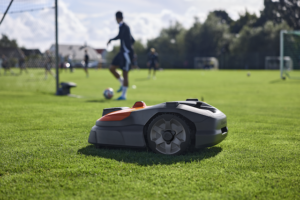
Leading that shift is Husqvarna, whose autonomous turf technology is quietly reshaping how professional venues manage their playing surfaces. Their product delivers measurable cost savings without compromising quality.

Cutting fuel consumption costs

At CBUS Super Stadium, the introduction of Husqvarna’s CEORA™ robotic mowing system has reduced diesel usage by approximately 20–30 litres per week. Over the course of a season, those savings compound into a significant reduction in both fuel spend and carbon emissions. This is particularly efficient for stadiums hosting regular fixtures and large-scale events.

CBUS Super Stadium General Manager Kristian Blundell said the robotic mower was a game-changer for the venue:

“This technology is not replacing staff but rather giving our grounds team the ability to do what they do best by helping to improve turf management processes, better manage fatigue and decrease our environmental footprint”

But the impact goes beyond fuel.


Time efficiency

By automating routine mowing, Husqvarna’s technology enables grounds teams to focus on higher-value maintenance tasks, from pitch recovery to detailed surface management. The result is not only greater operational efficiency but also improved turf consistency, which is an increasingly critical factor in elite football performance.

The benefits are being mirrored beyond stadium environments. At Oatlands Golf Club, Husqvarna’s autonomous mowing has delivered savings of up to 60 litres of fuel per week while freeing up staff for precision work. Quiet, round-the-clock operation also ensures surfaces are maintained without disrupting play—an advantage that translates directly to multi-use stadium settings.

Image Credit: Husqvarna

Importantly, Husqvarna’s lightweight robotic systems reduce the wear and tear typically caused by traditional heavy machinery. This not only protects the integrity of the playing surface but also reduces the need for costly repairs over time.

Football clubs navigating tight budgets at grassroots and semi-professional levels could benefit from such cost savings.

With rising energy prices, increasing sustainability expectations, and limited staffing resources, the ability to cut costs while improving performance is no longer optional. Solutions like Husqvarna’s CEORA™ are positioning clubs to operate more efficiently today, while preparing for a more environmentally accountable future.

As the sports industry continues to evolve, one thing is becoming clear: the next competitive edge may not just come from what happens on the pitch—but how it’s maintained.

Beyond the Pitch: Miyuki Kobayashi on the Real Challenges Facing Japan’s Women’s Game

Last week, Soccerscene spoke to pioneer of women’s football in Japan, Miyuki Kobayashi, about the game’s development in Japan and the intersection between sporting and social change in the country.


Talent, quality and recent silverware

After Japan’s recent AFC Women’s Asian Cup victory in the final against Australia, the women’s national team solidified its standing as the No.1 team in Asia.

Throughout the last 15 years, Japan’s women’s national team has grown into a formidable opponent, boasting a World Cup trophy, an Olympic silver medal, as well as three AFC Women’s Asian Cups.

The talent is undeniable. The quality is unwavering. And the team shows no signs of slowing down.

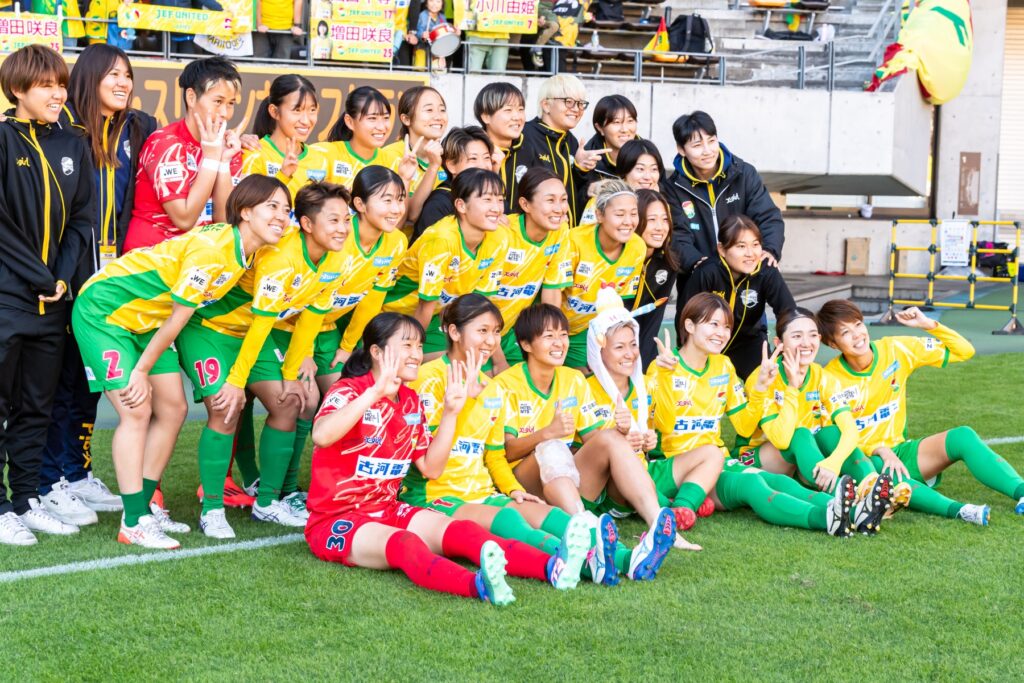
But these victories and trophies on the world stage wouldn’t be possible without the leaders behind the scenes – none more so than Miyuki Kobayashi, former WE League Board Member and current JEF United Ladies Scout and Academy Chief.


Laying the foundations

Kobayashi has led the charge for women’s football in Japan, promoting not only a sport which values success, but one which empowers female footballers across the nation.

“At university, not many girls were playing and we didn’t have an official team. I went to the US and the environment was so different,” Kobayashi explained.

“That opened my eyes – women can play. That’s how I started the women’s soccer league when I came back: to make an environment for girls to play.”

Thus, accessibility and opportunity became driving factors behind Kobayashi’s work, not only for those on the pitch, but for those in the dugout.

“I got involved at the JFA (Japanese Football Association) to promote women’s football. We wanted to create the opportunity for women to be coaches.”

“They are coached by men all the time, so even when the top players leave the football world, they never think to be involved.”

Furthermore, as a former coach of JEF United Ladies Youth and General Manager, Kobayashi was intent on employing as many female coaches as possible. It was not merely a personnel change, but a challenge to widespread social attitudes.

“When I started to employ female coaches, the girls’ parents asked why the coach wasn’t a man. But gradually, we started to make it equal – they didn’t talk about the gender, but about the quality of the coach.”


The mission to empower

In 2011, the same year Japan’s women won the World Cup, the domestic league was yet to become professional. Known as the Nadeshiko League, players would work during the day and train in the evenings.

The transition from an amateur to the current professional league required time, resilience and a change in perspective.

“The sports world in Japan is more traditional – it is dominated by men,” said Kobayashi.

“If you want to make the environment even, or (want) more women to come into the (football) world, you can change the mind of the players.”

Since 2021, the WE League has embodied a sense of growth and positive change for the women’s game. In name and nature, it looks to empower players, coaches and all involved in the industry.

“I was in charge of mission achievement for women’s empowerment. We wanted to educate the players, to inspire girls and women who watch the game.”

However, the drive to empower women in football was not without backlash and challenges.

“Some people don’t like that word: ’empowerment’. It’s too strong for them. Some women really appreciate it, but it’s not easy to change the mind of society through football,” Kobayashi admitted.


Growing and attracting talent

Although WE League clubs are accelerating youth development and expanding pathways across U15, U18 and first team football, Kobayashi acknowledged that the overall product must improve to bring foreign players to Japan and entice homegrown talent to stay.

“Most of the national team players go to Europe or North America. I don’t say it’s a problem, but from a young age, girls who can play in the WE League want to go abroad,” Kobayashi outlined.

Indeed, when looking at the starting XI in last month’s AFC Women’s Asian Cup final, only one player – Hana Takahashi – plays in the WE League.

But the key to attracting domestic and international players to the WE League, is aligning financial investment and industry attitudes.

“The reason why women’s football has developed in European countries is the social thinking – you have to be equal and have the same opportunities as men in football. The Japanese way of thinking, especially in the football world, is not that at all,” Kobayashi continued.

“When I speak to people at Spanish clubs, women’s football is not a charity, but an investment.”

“We have assets. We have good, young players, but we’re exporting them, so we need to import too.”

Indeed, Spain is a perfect example of what can happen when investment becomes intentional, not optional. Back-to-back UEFA Women’s Nations League titles, 90% television viewership increase since 2016, and record-breaking crowd numbers reflect what can happen when the industry aligns in vision and commitment.

Japan has the players to compete against any nation in the world. Purposeful investment, combined with its overall quality of players and style, could transform the WE League into a true, global powerhouse.


The vision for the future

Moving forward, Kobayashi hopes that girls progressing through JEF United’s academies develop confidence and resilience, whether as players or people.

“We want to make the girls – even if they aren’t in JEF United – continue playing football and continue to be leaders,” Kobayashi said.

“Some of them have a dream to be a coach or a leader off the field too, so that’s one of the attributes we want to develop.”

This resilience, reflected by the club’s ‘never give up’ philosophy, is testament to the vision of empowerment championed by Kobayashi across the women’s game.

Even in the face of social obstacles and a lack of financial investment, perseverance and hard work is at the bedrock of women’s football in Japan. It is not just that these values exist, but that they are consistently manifested on and off the pitch, which can show future generations that football is a sport for all – men and women alike.


Final thoughts

There is no limit to what the WE League and the national team can achieve if given the resources it deserves. All the ingredients are there: individual quality, a distinct playing style, football philosophy and ambitions to grow.

By following the example of industry leaders like Kobayashi, women’s football in Japan can hopefully continue to make waves of impact – in the sporting landscape and society as a whole.

Most Popular Topics

Editor Picks

Send this to a friend