Image Credits: Shutterstock
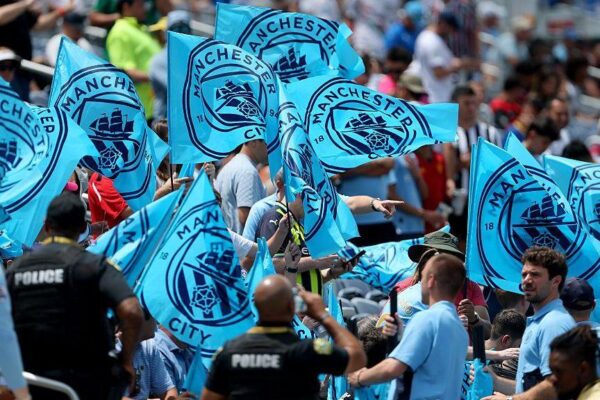
Manchester City’s financial scandal has reached boiling point. On the 29th of September, an independent commission found City guilty of all charges relating to serious breaches of the league’s financial rules across nine seasons, from 2009/10 to 2017/18. The commission also upheld three of four charges concerning the club’s failure to cooperate with the Premier League investigation.
The Premier League says City used sham commercial arrangements and disguised owner funding to inflate revenue and reduce costs by more than $1.7 billion (£900 million). Abu Dhabi United Group funded $1.58 billion (£830.69 million) that appeared in City’s accounts as sponsorship money from Abu Dhabi companies. The commission concluded that City’s accounts concealed the true financial position from auditors and regulators.
The 115 charges cover inaccurate financial information, player and manager payments, financial rules and the investigation itself. City has lodged its appeal against the guilty verdict, but for such a serious sporting scandal, attention has already turned to the potential punishments. In a Premier League era where foreign investment is king and revenues have skyrocketed, we should be asking questions. How did Manchester City get away with this for so long, and how can the punishment act as a deterrent to keep the reputation of football’s biggest league intact?
The hack that exposed the story
The most uncomfortable part of this saga is how the authorities discovered it and how most likely City never would have been exposed. In 2018, German publication Der Spiegel published leaked internal City emails and documents obtained through Football Leaks. Rui Pinto, the Portuguese hacker behind Football Leaks, supplied material that alleged City had disguised owner investment as sponsorship revenue and manipulated arrangements to satisfy financial regulations.
The Premier League investigation began in December 2018. City were formally charged in February 2023, after a four-year investigation, and the hearing finally began in September 2024. That timeline is nothing short of extraordinary; eight years between the leaks being exposed and charges being brought to Manchester City does significant sporting damage.
Man City won eight major titles during the alleged period, including three Premier League titles. Recalling titles in any sport leaves a sour taste in any sports fan’s mouth. The fans of opposing sides given titles feel robbed of the special moment, and Manchester City fans could feel rightfully deceived. But it goes beyond even this as we look at who Manchester City signed during those seasons. Players such as Ilkay Gundogan and Kevin De Bruyne played vital roles in City’s later titles beyond the 2017/2018 season. Would they have joined if this had been uncovered earlier? It’s impossible to say, but it shows how City’s early investment from 2009/10 still contributed to their titles in the 2020’s.
The Premier League’s credibility
That delay is not just embarrassing for City; it damages the Premier League. The league is the most competitive and commercially powerful domestic competition in football. Its rules are supposed to create a framework in which clubs compete on sporting merit while remaining financially sustainable. If a club can allegedly distort its accounts by hundreds of millions of dollars and the process takes years to reach a verdict, despite City’s potential obstruction, every other club has a reason to question whether the system works.
The irony is obvious: if Football Leaks hadn’t shared what they found on Manchester City through its hack, the scheme never would have been uncovered. If financial rules were designed to stop clubs gaining an unfair competitive advantage, then the Premier League may need to change how it investigates how its clubs’ finances are being managed. If anything should be gained from this, it may be that financial regulation needs to be improved as the Premier League and its clubs spend billions.
As for Manchester City, punishment cannot simply be a fine that becomes another operating cost.
Relegation is the only serious answer
If the verdict survives the appeal, Manchester City should be removed from the Premier League and those three aforementioned league titles removed. A fine would be inadequate and, depending on what points deduction City got, would punish the club in one season while leaving the historical record largely intact. Nottingham Forest received a four point deduction for a charge of Profitability and Sustainability rules in 2023-2024. City’s 114 charges will see much greater punishment then that.
Even if City are relegated they would almost be guranteed to be promoted the next season so even that feels like a slap on the wrist. Despite their investment during the nine seasons being questioned their five titles subsequent to that period will be expected to remain in their hands. My solution is to relegate City to the Championship without the potential of promotion for three seasons, one for each title won during that time.
City fans will call that harsh but their is strong reason to come down hard and that’s because this is bigger than Manchester City. Foreign ownership has brought huge investment into English football, but investment cannot mean exemption from the rules. Owners, executives and clubs must know that the Premier League’s financial regulations carry consequences that cannot be negotiated away.
The league has a choice. It can impose a manageable punishment and move on, or it can demonstrate that competitive integrity matters more than the commercial power of its biggest clubs. If City’s appeal fails, the answer should be clear: relegation, a reckoning over the titles and a message to every owner that the Premier League’s rules are not optional.