Are the Joeys’ slow starts evidence of a vacuum of opportunity for young Australian footballers?

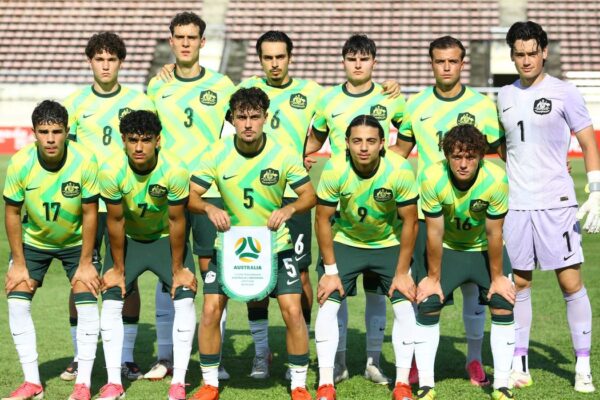
With the Joeys currently involved in the FIFA U-17’s World Cup, some of Australia’s best young footballers are on show for the first time on the world stage. It is one of the rare opportunities for them to be so. Promising Australian talent is often well and truly distanced from public attention, with few tournaments available for them to show their wares.

All bar one of the U-17’s squad are contracted to professional clubs, with the majority honing their skills at youth level and biding their time before receiving a crack at top flight professional play.

Brisbane Roar’s Izaack Powell and Melbourne Victory’s Birkan Kirdar have both had a taste of the top level, yet for most it is something of a waiting game. That waiting builds frustration and a footballing anxiety to impress.

Such has appeared to be the case for the Joeys in both of their group matches thus far. Jumped early and stunned in the headlights by Ecuador, the young Australians were two goals behind after just nine minutes. There was something of a revival, plenty of possession and a late goal, yet it was a disappointing start to the tournament.

Things began in much the same way against Hungary yesterday. This time it took a little longer, 20 minutes in fact, for a two goal deficit to be established, but the Aussies were once again frantic and energetic without being poised and polished.

Prior to Hungary’s opener in the 14th minute, the Joeys had looked good, really good; seeking to make amends for their opening fixture. However, as soon as the Hungarians found their rhythm, the gaps began to appear and anxiety levels in the Joey’s squad appeared to increase.

What followed was the most stirring of second half comebacks from Australia. A penalty was followed by an equaliser in the 69th and 74th minutes and the Joeys should have won it late. Sadly, the winner did not come and it was to be just a lone point to keep hopes alive in the event.

It appeared clear that the Joey’s lack of experience and competitive opportunities affected their starts to both matches. Once they settled, particularly against Hungary, they looked just fine and the early swagger and confidence prior to going behind returned.

Just three members of the squad ply their trade overseas, with the remainder domestically based and involved in youth structures at A-League or NPL club level.

That essentially equates to players remaining in their home state/city and playing against opposition they know well and on a consistent basis.

A national competition similar to the FFA’s Y-League is required for them to improve, however the financial ramifications would be insurmountable for the clubs. The U-23 League can muster just eight competitive matches for its players; with clubs pooled into regions to restrain costs.

It is an unfortunate curse from which the wide brown land suffers, with airfares, accommodation and equipment expenses making extended national competitions at junior level nigh impossible.

Perhaps the answer lies in FFA supported and federation funded inter-state football, where representative teams from the eight states and territories compete for a national youth championship. School Sport Australia run such tournaments at U-16 and U-18 levels with great success.

Youth level championships would showcase the best young talent available and provide scouts with a centralised venue in which to witness that talent on show. It would expose players to all clubs across the Asian Confederation, something that is becoming increasingly important as the region grows at a rapid speed.

It is a concept that could be implemented across a range of age groups, potentially even as an extension of the U-23 Y-League concept.

It’s fundamental goal would be to have young football talent in Australia playing more often against the best opposition available; beyond club land. Forging further corporate connections, streaming inter-state matches and broadening Australia’s reach across Asia are also potential benefits.

As it stands, Australia’s youth squads are blessed with immense talent, yet appear poorly prepared for the rigours of international football. Increasing their domestic opportunities against elite opposition could go some way to improving performances on the world stage.

Of course, organising and funding such opportunities is another thing altogether.

Previous ArticleNext Article

Brazil is coming. But what is the real price of bringing football’s giants to Australia?

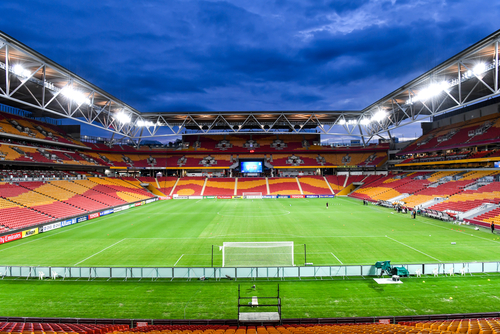
There is something undeniably exciting about Brazil coming to Australia. The five-time World Cup winners will face the Socceroos twice in Queensland from Friday, with Townsville and Brisbane set to host the blockbuster fixtures.

For Australian football, these are the kind of games that should be anticipated, celebrated and capture the public’s attention. But they also raise questions: how much should Australian football pay to bring the world’s biggest nations here, and when does the bill become too big? 

The cost of bringing the big names

Australia has always paid up to bring big names down under. Last week’s NFL game in Melbourne, at a cost of between $10 and 15 million dollars to the Victorian Government, is just the latest example.

It could cost the same amount to bring Brazil to Queensland. A report in The Sydney Morning Herald last year revealed Brazil was reportedly seeking around $7.5 million per match to play in Australia. The fee is in line with other major international events; Western Australia reportedly faced a bill of around $12 million in taxpayer funding for the recent Perth Italian Football Festival.

I’m worried Football Australia won’t get return on investment to make this particular event worthwhile. The enormous fee to bring Brazil to Australia can’t immediately be justified as an investment in our footballing future. Instead, Football Queensland and the state government could have put these funds into grassroots facilities. Part of Football Queensland’s scrapped state headquarters investment plan was to spend $8.5 million to refurbish fields, lights, drains and irrigation at Mappas and Meakin parks. Instead of these plans to invest in the state’s youth players and academies, money has been spent on two international friendlies.

So ahead of the fixtures, the question remains: will these games inspire the future generation, and will participation grow? The NFL match was impossible to ignore: a sold-out MCG and a live audience of 2.1 million on free-to-air, not even including those watching on ESPN and Netflix. Football Australia is not simply buying 90 minutes of football; it is buying the attention that comes with Brazil. So let’s see if they can maximize returns. 

Ticketing Tells a Story

Ticket sales provide insight into the interest in the fixture. Brisbane has sold much quicker than Townsville, but neither have sold out as yet. The fact these games didn’t immediately sell out may be considered surprising as there is a genuine appetite in Australia for elite international football at the moment, evidenced by SBS’ World Cup viewership numbers of 17.1 million.

Brazil is bringing some of its brightest stars: Vinicius Junior, Raphinha, Bruno Guimaraes, Marquinhos and Endrick are among the headline names in their squad. The star power is there. So why haven’t these matches sold out? There’s a chance it comes down to the competition and the visibility of the event.

The viewing problem

The timing of this fixture could raise eyebrows amongst fans. As much as Australia and Brazil will draw huge crowds, both games fall on either side of the AFL Grand Final. The 2024 AFL Grand Final, which involved Queensland’s Brisbane Lions, drew over 4 million viewers on free-to-air. Brisbane, who have won the last two premierships, will feature once again on Grand Final day. Therefore, fans who could’ve attended may instead be making the trip to Melbourne.

Then comes the strangest part: one of the fixtures Australia will play will not even be available on free-to-air television. The Townsville match will be shown free on Network 10 and 10 Streaming, as well as Paramount+. The Brisbane match, however, will be available exclusively on Paramount+. That creates a disconnect. If governments and football administrators are spending millions to bring a global sporting brand to Australia, why should a large section of the Australian public need a subscription to watch the second match?

The Brisbane game is behind a paywall, limiting the national reach of the event. Reach is surely part of the justification for spending big on Brazil, it’s not just that 50,000 people get to sit inside Suncorp Stadium. It is that millions of Australians get exposed to the spectacle and if that audience is restricted, the value of this fixture is limited.

A solution could be to spend the money on advertising the match to the public to try to generate interest across streaming and free-to-air. With less than a week until the first game I don’t believe the advertising has done enough to generate enough interest to justify a $15 million price tag for the two game series. 

The Brazil friendlies will be spectacular. They should attract big crowds, create memories and give the Socceroos an excellent test against one of football’s most recognisable nations. But for the appropriate return, attention must be measured. Does this fixture carry on the Socceroos hype and keep the eyeballs of the general public on our sport? I’m not convinced. However, if these matches bring new fans to football, strengthen the national team and create lasting investment in the sport, the enormous price tag could still be justified. But if they simply produce two nights of football before the attention disappears, then Australian football has paid a premium for a very expensive show.

Adelaide United renews StudyAdelaide partnership for Asian campaign

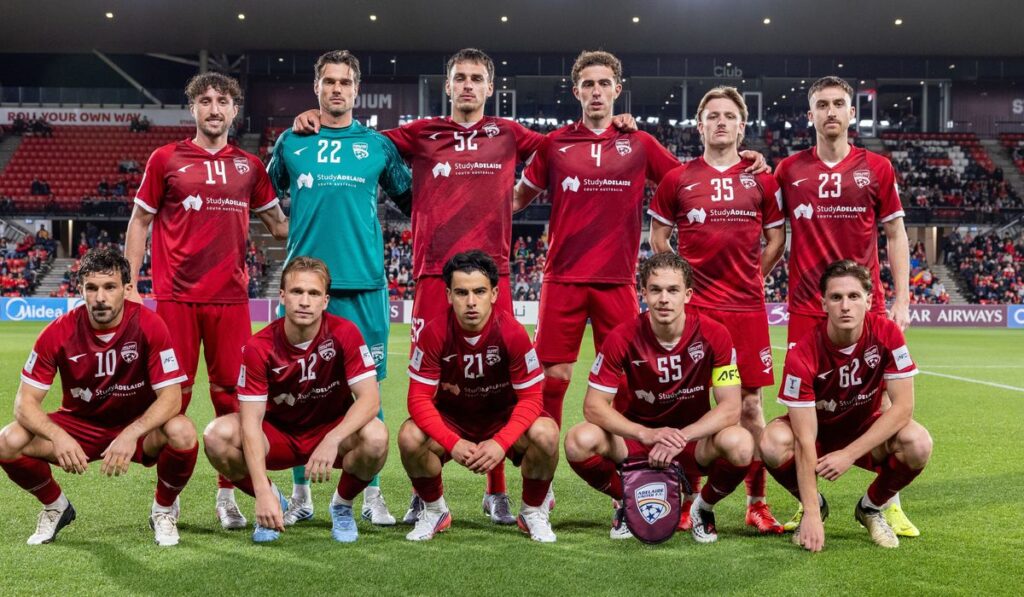
Adelaide United has brought back a familiar commercial partner for its return to continental competition, with StudyAdelaide signing on as front-of-shirt sponsor for the club’s 2026/27 AFC Champions League Two campaign.

The partnership reconnects two South Australian organisations after StudyAdelaide previously featured on Adelaide United’s shirt during their 2010 AFC Champions League campaign.

Adelaide commenced their six-match group-stage campaign on Thursday at Hindmarsh, defeating Hong Kong’s Tai Po 3-0.

For StudyAdelaide, the value of the partnership extends beyond traditional football sponsorship. The organisation, a partnership between the South Australian Government and more than 50 education institutions, is using Adelaide United’s Asian competition to promote South Australia as an international study destination.

The club’s continental schedule provides exposure in several key Asian markets, with Adelaide travelling to face BG Pathum United in Thailand and Lion City Sailors in Singapore during the group stage.

StudyAdelaide chief executive Jane Johnston said the partnership would provide a great opportunity to connect with young people across Asia.

“Having StudyAdelaide featured throughout this international competition is a unique platform to connect with young people across Asia and highlight the many reasons South Australia is their best option to study, live and build a career,” Johnston said.

The deal illustrates how football’s international competitions can provide commercial value beyond traditional brand exposure, particularly for organisations looking to promote to a specific or new region.

The Reds’ ACL Two campaign continues against BG Pathum United in Thailand on October 15.

Most Popular Topics

Editor Picks

Send this to a friend