



100+ Women footballers demand FIFA ditch Saudi Aramco deal

FIFA has introduced a new commercial partnership structure that will provide companies worldwide with increased opportunities to partner with soccer.

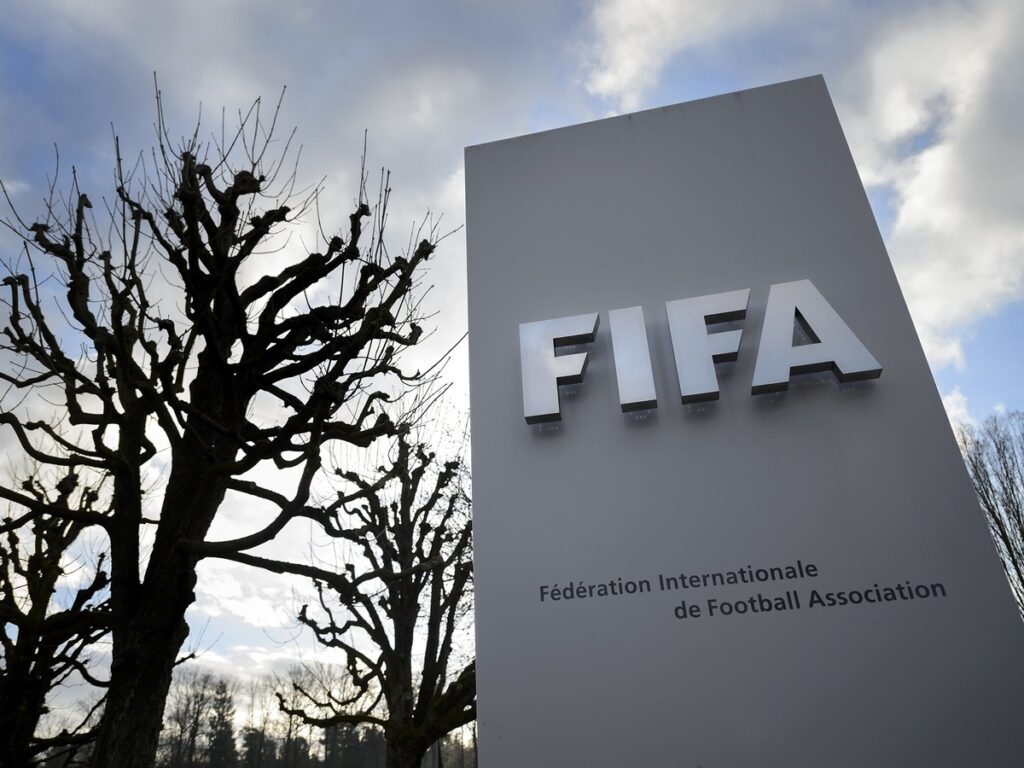
Over 100 professional women’s football players, including five Australians, have signed an open letter urging FIFA to drop its major sponsorship deal with Saudi Aramco, a state-owned oil conglomerate.

In the letter published on Monday, 106 players from 24 countries called on FIFA to reconsider its partnership with Aramco, citing concerns over human rights violations, the oil giant is 98.5% owned by Saudi Arabia.

Among the signatories are Matildas stars Aivi Luik and Alex Chidiac, alongside Australian players Isobel Dalton (Perth Glory), Emma Ilijoski (Canberra United), and Winonah Heatley (Nordsjaelland).

The letter highlights how LGBTQ+ players are being asked to promote a company from a country where same-sex relationships are criminalised and also expresses concerns about the oil giant’s role in contributing to climate change.

FIFA signed a four year worldwide partnership deal with Saudi Aramco back in April, which includes rights across multiple major tournaments, including the World Cup 2026 and the Women’s World Cup 2027. It’s also expected that Saudi Arabia will win the bid for the 2034 Men’s World Cup, signalling no real change in FIFA’s morals.

The letter highlights multiple human rights violations against women, including fitness instructor Manahel al-Otaibi sentenced to 11 years in prison under ‘anti-terror’ laws for promoting female empowerment on social media, the week after the partnership between FIFA and Aramco was confirmed.

The letter also asks FIFA three important questions:

  1. How can FIFA justify this sponsorship given the human rights violations committed by the Saudi authorities?
  2. How can FIFA defend this sponsorship given Saudi Aramco’s significant responsibility for the climate crisis?
  3. What is FIFA’s response to our proposal of the establishment of a review committee with player representation?

However, FIFA have spoken to ABC Sport about this issue where they mentioned the deal was unlikely to be removed despite these recent events.

“FIFA is an inclusive organisation with many commercial partners also supporting other organisations in football and other sports,” the organisation said in a statement to ABC Sport.

“Sponsorship revenues generated by FIFA are reinvested back into the game at all levels and investment in women’s football continues to increase, including for the historic FIFA Women’s World Cup 2023 and its groundbreaking new distribution model.

“As well as the increased support for teams at the tournament last year, FIFA’s updated Women’s Football Strategy for 2023-2027 further highlights how commercial revenues are reinvested back into the development of the women’s game. FIFA’s financial figures are also published annually.”

This bold stand by the 106 players represents one of the most significant pushbacks women’s football has seen against a major sponsor. It’s inspiring to witness how outspoken these athletes have been, despite the powerful influence of such a controversial partner.

Women’s football, which has long faced neglect and inadequate playing conditions, has steadily improved as the game has grown, but it’s clear these players are not just content with progress—they’re pushing for greater accountability.

The sponsorship with Aramco, in light of its links to human rights abuses and its environmental impact, feels like a direct affront to the principles these athletes uphold.

Whilst FIFA currently remain quite hesitant to change this fact, there is momentum growing behind this movement and it’s the only way change will be brought to the game.

Previous ArticleNext Article

Football Australia Expands Mental Skills Program for Match Officials Amid Sustained Focus on Referee Retention

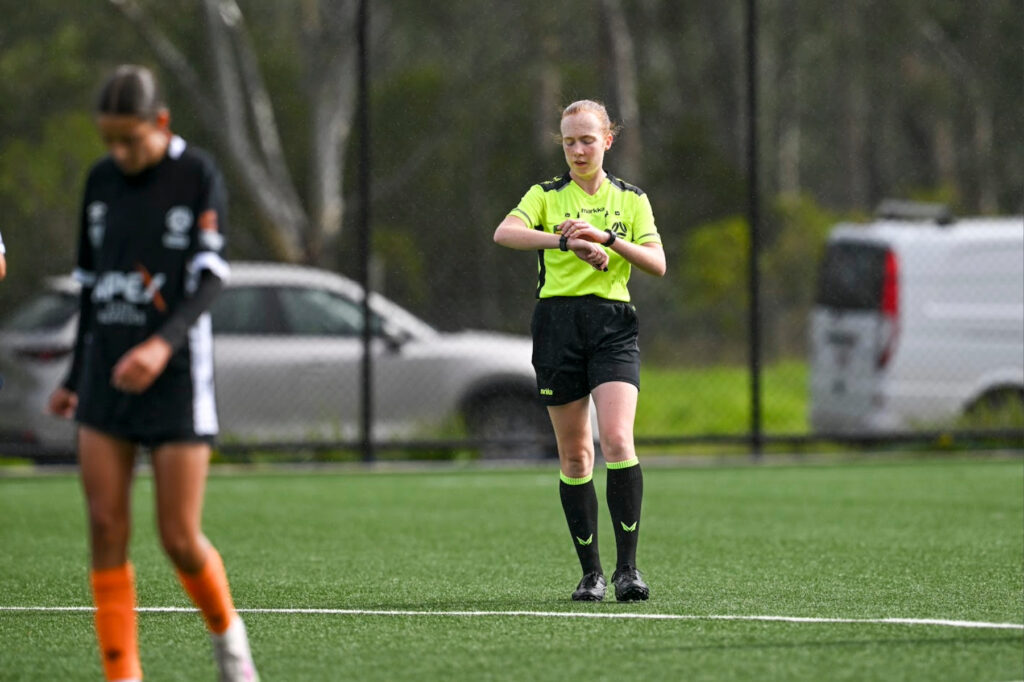
Football Australia has confirmed a second national webinar for match officials, led by sports psychologist Dr Liam Slack, extending a referee development series introduced after strong engagement with an initial session on managing match-day pressure.

The upcoming session, themed “parking with purpose,” will focus on decision-making strategies designed to help referees process on-field calls and reset attention quickly across a match that can present hundreds of individual decisions. Dr Slack, who also consults with The Football Association and the AFC Referee Academy and previously spent over a decade as a performance psychologist with the Professional Game Match Officials Limited in England, brings substantial elite-level experience to a program open to officials at every level, from grassroots to professional.

The theme builds on work Dr Slack has already delivered within Australian officiating. He recently led a session with Football Australia’s National Referee Academy on the same concept, framing the ability to consciously park a decision and refocus on the next phase of play as a trainable skill rather than an innate trait, one that separates officials who reset quickly under pressure from those who don’t. He has also addressed more than 100 Football Australia elite match officials and staff on developing a stronger match-day mentality, an indication of how embedded this psychological framework has become across the officiating pathway rather than remaining a one-off intervention.

The expansion of the webinar series reflects a broader shift in how football administrators are approaching referee attrition. Rather than treating retention purely as a recruitment or pay problem, the program signals an institutional acknowledgment that the psychological demands of officiating, particularly the compounding pressure of split-second decisions under public scrutiny, are a material factor in whether officials remain in the game.

It rests alongside other measures adopted across Australian football in recent years, including visible identification programs for junior referees and structural reviews of referee departments at state federation level, all aimed at the same underlying issue: a shrinking pool of match officials relative to demand.

Football Australia has not detailed metrics for assessing the program’s impact on referee numbers, though the recurring engagement of an internationally credentialed specialist across multiple tiers of the officiating pathway suggests sustained institutional investment in the approach.

Football Victoria elevates fan enjoyment with Streets partnership

Football Victoria (FV) revealed last week a new partnership with ice cream giants, Streets. The brand will become an exclusive ice cream partner for the next three years.


An iconic brand for joyful experiences

As a well-known and popular ice cream brand with people all around the nation, Streets will now look to support the fan experience in Victoria through its products.

It reflects FV’s commitment to delivering a family-friendly and memorable experience for spectators. Both on and off the pitch, the organisation is striving to elevate the experience for fans and families alike.

“Football Victoria is always looking for ways to elevate the experience at The Home of The Matildas, and this partnership does exactly that,” explained FV Executive Manager of Commercial and Facilities, Chris Speldewinde.

“It’s a fantastic fit for our community and we’re looking forward to what the next three years will bring.”

Furthermore, Senior Brand Manager at Streets, Ryan Katz, emphasised the brand’s role in community sport and in creating memories beyond the action on the pitch.

“Streets is proud to join Football Victoria as its exclusive ice cream partner,” Katz said.

“There’s nothing better than enjoying a great game with a classic ice cream in-hand, and we’re excited to be part of those moments across the state.”


Understanding community football

Community football is all about these moments. Sunny days, the family together, and a sweet treat in-hand while supporting a local team alongside friends and neighbours.

This is why a partnership between FV and Streets is particularly important.

Not for its commercial value, but for what it tells us about both parties’ understanding of what matters to fans. From young fans to experienced matchday-goers, everyone wants to find enjoyment while watching the game.

And while the 90 minutes of action is the focus, the experience of a local matchday is truly defined by interactions with fellow supporters and smaller – but no less significant – moments of happiness during the day.

Most Popular Topics

Editor Picks

Send this to a friend