


People like The Australian newspaper’s Will Swanton obviously detest football and apparently enjoy watching the game struggle, for acknowledgement and towards expansion.
The veteran journalist took a pot shot at football on the 17th of November, in an article pumping up the tires of the increasingly well attended National Basketball League. It was poorly timed to say the least. It came just a day after the football community had embraced the now traditional romance of November 16th; the anniversary of the day Australian football returned to World Cup respectability.
On that day in 2005, John Aloisi’s boot and Mark Schwarzer’s hands helped send the Socceroos to their first World Cup in 32 years. Never before had a team of professionals represented the nation on the biggest of football stages, yet the generation of players that emerged around the turn of the century was mature and did so with pride and determination.
Following the record breaking crowd of 17,514 that attended the Sydney Kings vs Illawarra Hawks NBL match a day later at Qudos Bank Arena, Swanton felt the need to do two things.
Firstly, he correctly identified the increase in interest and attendance at NBL matches thus far in 2019. At the time of writing, that attendance increase stood at 6.7% when measured against the 2018/19 season average. A fantastic achievement and one potentially impacted by Australia’s stellar but ultimately disappointing run at the recent World Championships in China.
Swanton captured the NBL success well with his use of the term “slam-dunk” in the headline, yet had many astonished by his decision to suggest that the A-League was kicking an “own-goal” in comparison. The award winning journalist doubled down in his second paragraph by fabricating the existence of a “summer shootout” between the two sports; arguing that basketball was gaining traction whilst football was floundering.
Perhaps confrontational by nature, Swanton felt the need to use divisive and inflammatory language to outline his thesis, when the reality is that many football fans are also embracing the success of the National Basketball League. In short, any attempt to infer that either sport is dragging fans away from the other is merely nonsense.
More alarming is the rather loose use of language and the exclusion of data that actually counters his argument decisively. The reality is that A-League crowds are up 6.9% on 2018/19 season averages, even considering the introduction of Western United and their expected mediocre crowds as they attempt to build a loyal supporter base in Geelong.
Hardly floundering.
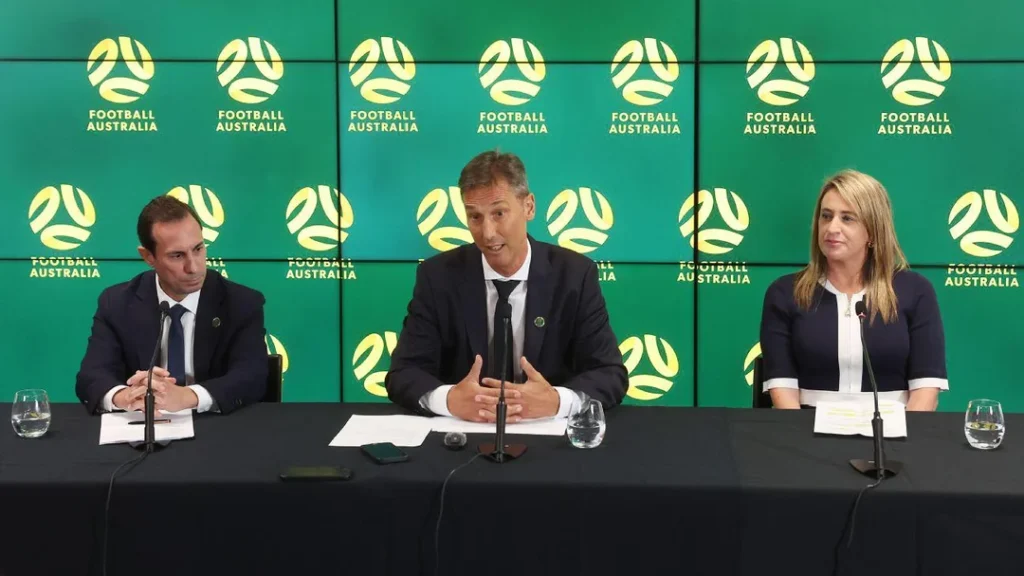
Just four days after The Australian published the piece, the FFA would announce an increased operating surplus for 2019 of A$44.04 million and a 13% increase in Australia’s football participation rates. That increase translates to around 1.8 million Australians playing the beautiful game on a regular basis.
A record 125,631 people became members of A-League clubs in 2019 and for the first time in the competition’s history, more than 50% of participants across the country were actively supporting an A-League team.
All potentially important fragments of information to be aware of before writing an article that death knells a competition and lampoons its quality as being “not in the top two” leagues in the world. Such drivel merely enunciates the limited research undertaken for the piece and potentially the lack of knowledge possessed by the writer when it comes to football and its deep seated roots in this country.
Former Socceroo and Fox Sports analyst Mark Bosnich made mere folly of Swanton’s reference to football’s poor television figures by noting that the viewing audience for the Kings vs Hawks fixture was in fact smaller than the crowd inside the arena for the contest.
Bosnich was correct in his assertion that football fans would never raise such a statistic. Co-existence in Australia’s overcrowded sporting landscape is a reality and there is room for both codes to survive and thrive.
Perhaps the writer should be more concerned about the shrinking attendances at international cricket matches, after the Brisbane test Match at the Gabba between Australia and Pakistan drew just 13,561 fans on the opening day of the international season.
Moreover, the 31.7% decrease in Big Bash crowds in just two seasons is surely worth more space than a rather desperate attempt to set up a futile code war between two emerging sports. Framing such a tension does little more than pander to those who salivate at the thought of seeing football punted from television screens and being told to assume its seat, as it has been told many times before.
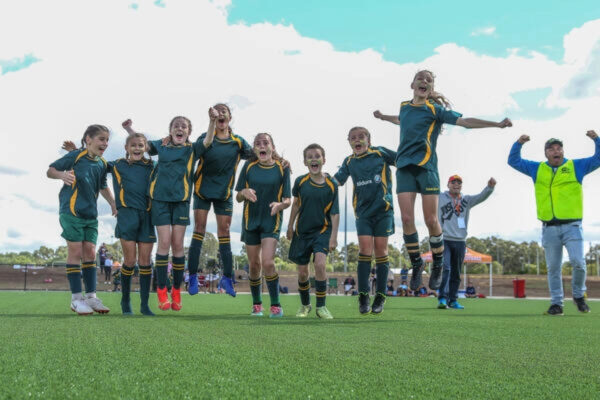
Sadly for Swanton, the game at grass roots level continues to grow, women’s football soars ahead in leaps and bounds and the A-League is plugging away quite well thank you very much.
The standard is commendable, the fans engaged and with new found independence, the future looks bright. Hopefully, those of us who enjoy watching the NBL and the A-League can savour the growth of both, hold hands, and march into the future with wonderful viewing options over the course of an Australian summer. I’ll do so with or without Will Swanton.