

Phil Moss: Australian football coaches deserve better

Phil Moss

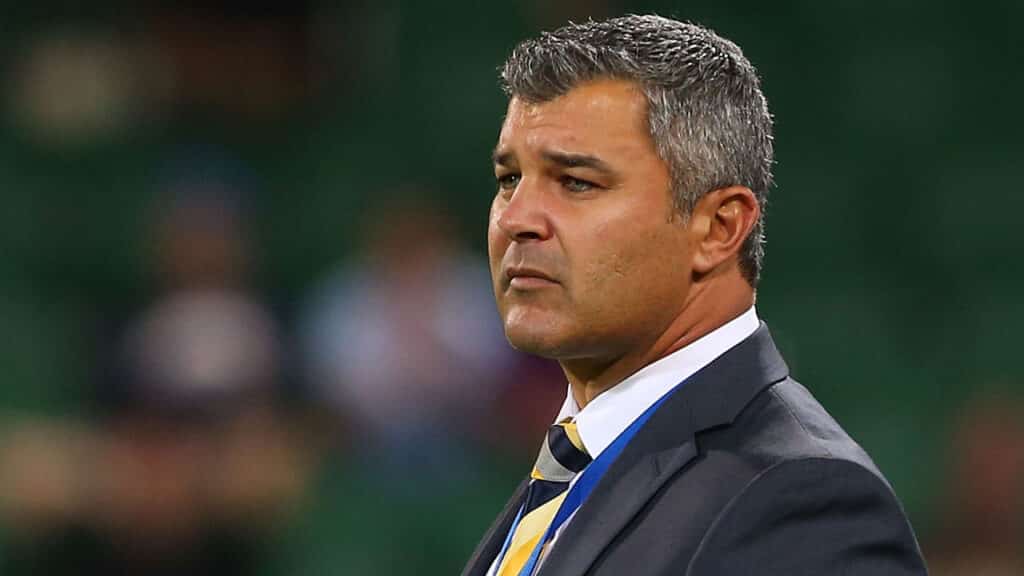
Former Central Coast Mariners coach Phil Moss claims football coaches in Australia deserve more respect and a higher level of support.

Speaking exclusively to Soccerscene, the former A-League coach claimed associations such as Football Coaches Australia (FCA), which he is currently president of, will improve the conditions and reputation of coaches in Australia.

“I think the main aim (of FCA) is to wrap coaches with a support mechanism, give them a collective voice and really drive towards a level of respect for coaches that we haven’t seen in this country,” he said.

“We’re always the easy option when things go wrong.

“There’s an old saying, when the team’s going well the players are great, but when the team’s losing it’s because the coach doesn’t know what he is doing.”

Moss had various coaching stints in his career at Dee Why FC, Northern Spirit youth (assistant), Manly United and the Olyroos (assistant) before moving to the Mariners in 2010.

He took over from Graham Arnold after being an assistant coach for the club in the three years prior, which included a championship winning season in 2012-2013.

Moss led the Mariners to a third placed finish in his first season as head coach in 2013-14.

However, he was eventually sacked near the end of his second season in charge after disagreements with the owner.

“We had a fantastic first season, we had a lot of success, we missed the grand final by one game,” Moss said.

“We also missed out on the second round of the ACL by a point and then we sold a lot of players. In the January transfer window of the following season, I think I lost six players in that period and that proved to be really tough.

“Things spiralled out a bit from there and the owner and I fell out. There was only going to be one winner in that situation.”

Moss believes a lack of appropriate professional support at the time of his removal, planted the seeds for his eventual involvement in FCA.

Central Coast ended up compensating Moss in the region of around $500,000 according to The Daily Telegraph, after his case for wrongful dismissal was settled before a court date. (Moss would go on to be an assistant coach at Sydney FC in 2017).

“I had my family, my closest friends, my mobile phone and a pretty good lawyer and that was it. That’s where FCA sort of morphed from.

“My mantra is to make sure no Australian coach is ever in the same situation I was in. Plenty of others before me were in (that situation) with no real support.”

Steps in the right direction have been taken to improve the employment conditions and general well-being of coaches through work driven by the association.

FCA recently released the findings of a study completed by the University of Queensland on these factors.

The report showcases data which highlights the need for contractual guidelines to be implemented, as well as standardising grievance and dispute resolution procedures, among other things.

FCA hopes to address these issues and move quickly into a process to fix them.

“We’re fighting for better conditions for coaches and probably a bit more uniformity,” claimed Moss.

“We are working hard on a well-being program for coaches, to support coaches in and out of jobs and in that transition into a job and out of a job. So, all those things are really important to us.”

The association was also in contact with the FFA and A-League clubs, before the start of this A-League season.

Greg O’Rourke and the FFA were kind enough to give us a slot during their agenda with the coaches.

“That was an opportunity for us to ask the coaches what their issues were, going into the season.

“We’re in the process of sharing that information with FFA and working through that, and not just with the FFA but obviously the new operating company of the independent A-league.”

The organisation has a seat at the table in the discussion for the introduction of a national second division, thanks to FFA Board member Remo Nogarotto.

Nogarotto is the current chair of the National Second Division Working Group.

Moss is thankful for FCA’s inclusion in the conversation, in what will provide elite Australian coaches with more job opportunities in the future.

“Full credit to Remo and his working group, for seeing it fit to include coaches.

“At the end of the day, coaches are responsible for the happiness and the satisfaction of four key stakeholders, the ownership and boards, the dressing room, the fans and the media.

“So, when you’ve got that sort of vested interest in the game, holistically, it seems really illogical not to have coaches part of the discussion and part of the decision-making process around the game.”

After being formally elected as president of FCA in July 2018, Moss was re-elected at an AGM in August of this year, in what was a proud moment for him.

Speaking about the privilege of leading FCA, Moss said: “It’s a massive honour. Probably aside from coaching in the A-League as a head coach, it’s right up there.”
Previous ArticleNext Article

Brazil is coming. But what is the real price of bringing football’s giants to Australia?

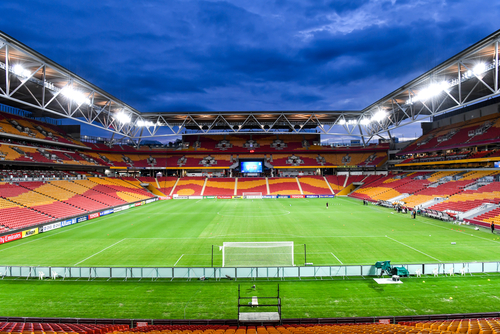
There is something undeniably exciting about Brazil coming to Australia. The five-time World Cup winners will face the Socceroos twice in Queensland from Friday, with Townsville and Brisbane set to host the blockbuster fixtures.

For Australian football, these are the kind of games that should be anticipated, celebrated and capture the public’s attention. But they also raise questions: how much should Australian football pay to bring the world’s biggest nations here, and when does the bill become too big? 

The cost of bringing the big names

Australia has always paid up to bring big names down under. Last week’s NFL game in Melbourne, at a cost of between $10 and 15 million dollars to the Victorian Government, is just the latest example.

It could cost the same amount to bring Brazil to Queensland. A report in The Sydney Morning Herald last year revealed Brazil was reportedly seeking around $7.5 million per match to play in Australia. The fee is in line with other major international events; Western Australia reportedly faced a bill of around $12 million in taxpayer funding for the recent Perth Italian Football Festival.

I’m worried Football Australia won’t get return on investment to make this particular event worthwhile. The enormous fee to bring Brazil to Australia can’t immediately be justified as an investment in our footballing future. Instead, Football Queensland and the state government could have put these funds into grassroots facilities. Part of Football Queensland’s scrapped state headquarters investment plan was to spend $8.5 million to refurbish fields, lights, drains and irrigation at Mappas and Meakin parks. Instead of these plans to invest in the state’s youth players and academies, money has been spent on two international friendlies.

So ahead of the fixtures, the question remains: will these games inspire the future generation, and will participation grow? The NFL match was impossible to ignore: a sold-out MCG and a live audience of 2.1 million on free-to-air, not even including those watching on ESPN and Netflix. Football Australia is not simply buying 90 minutes of football; it is buying the attention that comes with Brazil. So let’s see if they can maximize returns. 

Ticketing Tells a Story

Ticket sales provide insight into the interest in the fixture. Brisbane has sold much quicker than Townsville, but neither have sold out as yet. The fact these games didn’t immediately sell out may be considered surprising as there is a genuine appetite in Australia for elite international football at the moment, evidenced by SBS’ World Cup viewership numbers of 17.1 million.

Brazil is bringing some of its brightest stars: Vinicius Junior, Raphinha, Bruno Guimaraes, Marquinhos and Endrick are among the headline names in their squad. The star power is there. So why haven’t these matches sold out? There’s a chance it comes down to the competition and the visibility of the event.

The viewing problem

The timing of this fixture could raise eyebrows amongst fans. As much as Australia and Brazil will draw huge crowds, both games fall on either side of the AFL Grand Final. The 2024 AFL Grand Final, which involved Queensland’s Brisbane Lions, drew over 4 million viewers on free-to-air. Brisbane, who have won the last two premierships, will feature once again on Grand Final day. Therefore, fans who could’ve attended may instead be making the trip to Melbourne.

Then comes the strangest part: one of the fixtures Australia will play will not even be available on free-to-air television. The Townsville match will be shown free on Network 10 and 10 Streaming, as well as Paramount+. The Brisbane match, however, will be available exclusively on Paramount+. That creates a disconnect. If governments and football administrators are spending millions to bring a global sporting brand to Australia, why should a large section of the Australian public need a subscription to watch the second match?

The Brisbane game is behind a paywall, limiting the national reach of the event. Reach is surely part of the justification for spending big on Brazil, it’s not just that 50,000 people get to sit inside Suncorp Stadium. It is that millions of Australians get exposed to the spectacle and if that audience is restricted, the value of this fixture is limited.

A solution could be to spend the money on advertising the match to the public to try to generate interest across streaming and free-to-air. With less than a week until the first game I don’t believe the advertising has done enough to generate enough interest to justify a $15 million price tag for the two game series. 

The Brazil friendlies will be spectacular. They should attract big crowds, create memories and give the Socceroos an excellent test against one of football’s most recognisable nations. But for the appropriate return, attention must be measured. Does this fixture carry on the Socceroos hype and keep the eyeballs of the general public on our sport? I’m not convinced. However, if these matches bring new fans to football, strengthen the national team and create lasting investment in the sport, the enormous price tag could still be justified. But if they simply produce two nights of football before the attention disappears, then Australian football has paid a premium for a very expensive show.

The Young Socceroos exposed one of Australian football’s biggest problems

Australian football has spent years trying to create a clearer structure for the game.

But one question keeps resurfacing: who is actually responsible when the interests of Australian football collide?

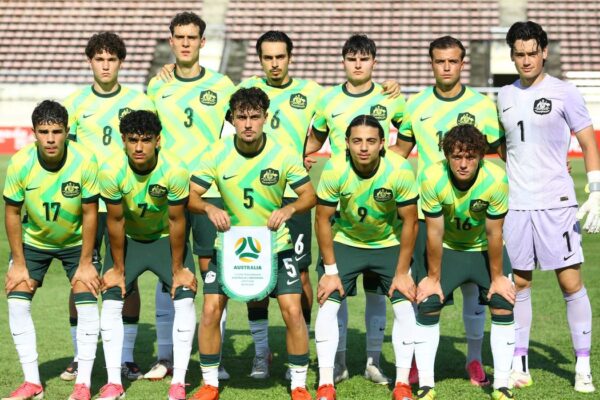
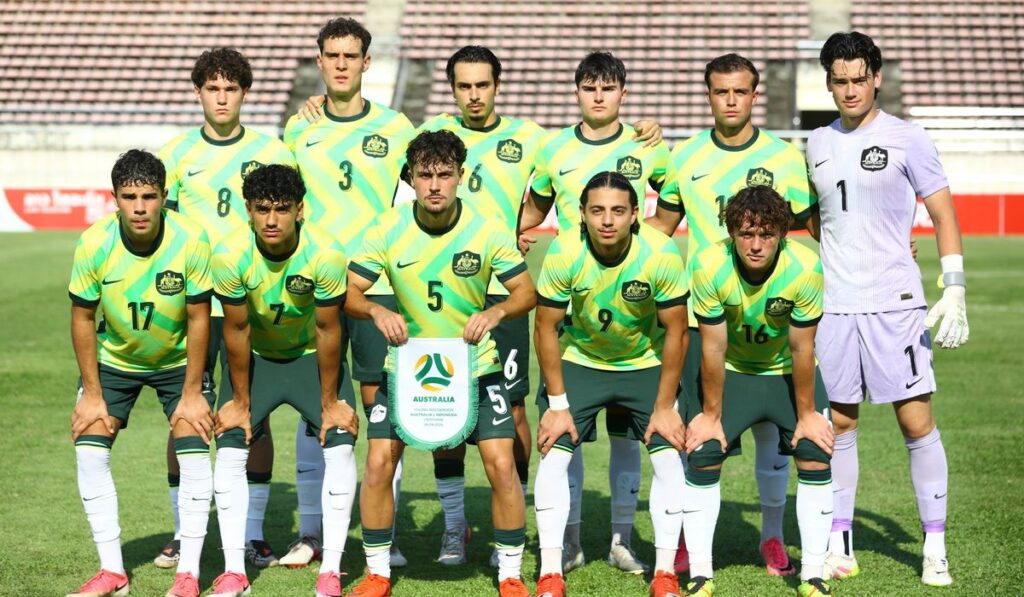
The Young Socceroos failing to qualify for the 2027 AFC U20 Asian Cup is the latest example.

Australia finished third in its qualification group after a 2-0 defeat to Indonesia, failing to qualify for a tournament it won in 2025.

The result itself was disappointing. But the circumstances around the squad selection were arguably more so.

Several A-League players were unavailable because their clubs did not release them for the qualification campaign. Melbourne City’s Lawrence Wong and Medin Memeti and Adelaide United’s Amlani Tatu were among those affected.

The reason is straightforward. The U20 qualification tournament fell outside a FIFA international window, meaning clubs were not obliged to release players. A previous agreement between Football Australia and A-League clubs had allowed national teams to select domestic players outside those windows, but that arrangement expired.

That leaves a much bigger question than whether three players should have been available.

Why was there not a structure in place that could resolve this conflict before it became a problem?

One game, multiple priorities

The answer is partly structural.

Football Australia is responsible for the national teams and the broader national framework. The APL operates and commercialises the A-Leagues. State federations oversee their own competitions and development structures, while clubs have their own commercial, sporting and player-development priorities. Meanwhile, the PFA represents the players.

Football Australia’s own governance outline acknowledges the unbundling of Football Australia and the APL was completed at the end of 2020, while noting the two organisations still need to collaborate across areas including pathways, community football and national teams.

On paper, that separation makes sense.

In practice, difficulties emerge when the model is tested and conflicts of interest emerge.

A club has an obligation to its competition and its squad. Football Australia has an obligation to its national teams. Players have career considerations, while the APL has commercial and scheduling interests. State bodies have their own competitions and pathways.

None of those interests in isolation are necessarily unreasonable.

The problem comes when they point in different directions.

The cost of fragmentation

This is not the first time the club-versus-country question has reared its head.

The same issue has affected Australia’s youth pathways before. In 2012, then-national technical director Han Berger acknowledged the particular difficulty Australia faces because many young players are overseas and youth international tournaments are often held outside FIFA windows, meaning clubs are not obligated to release their players.

And there is a broader irony here.

Australian football is producing young players good enough to attract serious international interest. A-League clubs are increasingly important development environments, with 15 A-League players included in Australia’s 2025 U20 World Cup squad.

Yet the system seems to struggle coordinating those same players when the national team needs them.

That is not necessarily a club problem.

It is a system problem.

Who gets the final say?

The answer cannot simply be that Football Australia should have more power.

Nor should clubs be expected to sacrifice their own interests whenever national teams come calling.

The real issue is whether Australian football has clearly defined the points at which the interests of the national team, professional clubs and players intersect and importantly, where they take priority.

If it has, those rules need to be understood and consistently applied.

If it hasn’t, this should be the catalyst to fix them.

Because the consequences extend beyond one U20 tournament.

Australia’s youth national teams are part of the country’s player-development pathway. International tournaments provide players with experience, exposure and opportunities to progress. The U20 Asian Cup also serves as a pathway towards the FIFA U20 World Cup.

Missing that pathway matters.

At the same time, A-League clubs are investing in academies, recruiting young players and trying to build sustainable professional businesses. They cannot simply operate as talent suppliers for national teams without considering their own competitive and commercial interests.

That tension is natural, and not going away.

Australian football needs alignment, not another power struggle

The answer may therefore be less about deciding who is in charge and more about establishing who is responsible for what.

Football Australia, the APL, clubs, state federations and the PFA do not need identical objectives.

But they do need a common framework for the moments when those objectives collide.

That could mean clearer player-release agreements, longer-term scheduling coordination and defined mechanisms for resolving disputes before squads are announced.

The alternative is a cycle of arguments.

Clubs blame national team scheduling. National teams point to player availability. Players find themselves caught between employers and country. Fans are left wondering why a supposedly connected football system cannot agree on something as fundamental as making Australia’s best young players available for an international tournament.

That is why the Young Socceroos’ failure to qualify should prompt a bigger conversation than whether three A-League players were released.

Australian football has spent years building separate professional, national and community structures.

The next challenge is making those structures work as one.

Because when nobody has the authority or responsibility to resolve the competing interests, everyone can have a legitimate position and Australian football can still lose.

Most Popular Topics

Editor Picks

Send this to a friend