



FIFA announces major multi-tournament partnership with Airbnb

FIFA and Airbnb Join Forces in Groundbreaking Multi-Tournament Deal

FIFA has announced a new major partnership with online accommodation marketplace Airbnb, spanning over three tournaments.

As part of the deal, Airbnb becomes a top-tier official partner for the FIFA Club World Cup, which kicked off in the U.S. on the 13th of June.

The company will also join FIFA’s official supporter tier for the 2026 Men’s World Cup, taking place across the U.S., Canada, and Mexico, as well as the 2027 Women’s World Cup in Brazil.

In its new role, Airbnb will be FIFA’s official platform for booking alternative accommodations and local experiences.

That means fans traveling to host cities will be able to find unique places to stay and book memorable activities during the tournaments.

Some of the first experiences available during the Club World Cup include a private training session with former U.S. men’s national team goalkeeper Tim Howard, the chance to watch a match with his former teammate Cobi Jones, and an exclusive pre-game analysis session led by a senior expert from FIFA’s technical study group.

Airbnb took its first big step into sports sponsorship in 2019 when it partnered with the International Olympic Committee (IOC) to become a TOP sponsor of the Olympic Games.

Building on that momentum, the company was recently announced as an official partner of the Tour de France for the next three years, following this summer’s Games in Paris.

Now, Airbnb is expanding its presence in sports through a new partnership with FIFA, echoing its previous deals by focusing on one-of-a-kind experiences and encouraging fans to use the platform to book places to stay during the events.

To support the launch of the FIFA partnership, a new study by Deloitte estimates that over 380,000 Airbnb guests will travel to the 2026 Men’s World Cup, potentially contributing around US$3.6 billion (AUD$5.01 billion) to the economies of host cities.

Airbnb has also pledged US$5 million (AUD$7.66 million) to a Host City Impact Program for the 2026 tournament.

Through this initiative, it will work with local governments to fund projects that boost economic development and enhance the visitor experience.

Airbnb CEO Brian Chesky said the company is proud to partner with FIFA to offer unique fan experiences and help host hundreds of thousands of guests during the 2026 World Cup, while also supporting local economies.

“The World Cup brings the world together – and so do we,” Chesky said in a press release.

“Airbnb is proud to partner with Fifa to offer fans once-in-a-lifetime experiences during the tournaments – while welcoming hundreds of thousands of guests during the 2026 Fifa World Cup and driving meaningful economic impact for local communities.”

Airbnb’s latest move into sports sponsorship comes at a time when the company is seeing a dip in demand in the U.S., which it has attributed to broader economic uncertainty.

With North America making up 45% of Airbnb’s US$11.1 billion (AUD$17 billion) in revenue in 2024, the upcoming major tournaments in its home market present a valuable opportunity to boost engagement and bring more users back to the platform.

Airbnb joins a growing list of sponsors for the FIFA Club World Cup, alongside long-time FIFA partners like Coca-Cola, Visa, and Adidas, as well as Saudi Arabia’s Public Investment Fund (PIF).
Previous ArticleNext Article

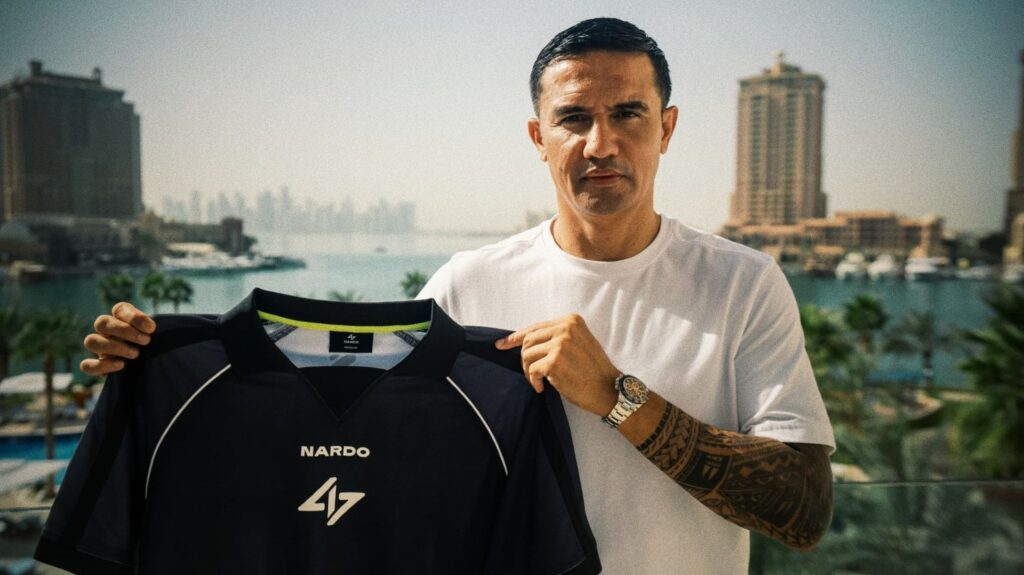
Tim Cahill Backs Nardo as Startup Secures $1 Million Investment Round

Australian football icon Tim Cahill has joined sports technology platform Nardo as both an investor and strategic partner, helping the company close a $1 million pre-seed funding round aimed at accelerating international growth. The investment will support Nardo’s expansion into key markets including the United States, United Kingdom and Middle East.

Founded to simplify apparel and teamwear management for grassroots and semi-professional sporting organisations, Nardo’s platform streamlines the often-complex process of ordering, distributing and managing sportswear. The company believes its technology can reduce administrative burdens on clubs while improving efficiency across community sport.

Cahill’s involvement adds significant credibility to the venture. One of Australia’s most recognisable sporting figures, the former Socceroo has long advocated for the growth of grassroots football and community participation. His investment reflects growing confidence in sports technology solutions that address operational challenges faced by clubs and sporting organisations.

The announcement also highlights the increasing appetite for sports technology investment across Australia, with startups seeking to modernise everything from fan engagement and performance analysis to club administration and equipment management. For football in particular, where participation continues to grow nationwide, digital solutions aimed at supporting grassroots infrastructure are becoming an increasingly important part of the sport’s ecosystem.

As Nardo prepares for its next phase of expansion, Cahill’s backing provides both commercial support and industry expertise, positioning the company to pursue opportunities beyond the Australian market while maintaining a strong focus on serving community sport.

A Structural Fix or Stoppage? Will FQ’s New Referee Pipeline Solve its Shortage?

Football Queensland‘s newly launched club referee framework is being presented as a game-changing solution to one of the most persistent operational problems in grassroots football: the chronic shortage of match officials. Will democratising and lowering the bar for entry saturate the gap, or exacerbate a skills shortage?

What the framework actually does

The core of the announcement is a free, 30-minute online module that certifies players or club members as club referees, creating a new category of match official below the formal FQ referee pathway. The stated goal is a 1 referee per team ratio within clubs, with these club-level officials intended to fill the gap at the grassroots end while the formal pathway continues operating above them.

Referee shortages at community level are not primarily caused by a lack of interest in officiating at the elite end. They are caused by the structural reality that organising and staffing fixtures for hundreds of junior and community matches each weekend requires a volume of officials that a centralised recruitment and accreditation model simply cannot generate fast enough. A club-embedded approach that lowers the barrier to entry addresses that supply problem at the point where it actually exists.

The framework’s strongest element is its acknowledgment that referee development is not a single pipeline but a layered ecosystem. By creating a supported entry point within clubs, the program recognises that people are more likely to begin something when the initial ask is modest and the environment is familiar.

The 30-minute online module removes cost and time as barriers, which are consistently among the most cited reasons people do not take up officiating. The integration with FQ’s broader resources and the explicit framing of club officiating as a stepping stone into the formal pathway is also structurally intelligent. A club referee who develops confidence and competence at the grassroots level is a more likely candidate for formal accreditation than someone approached cold by a recruiting drive.

Where the questions remain

The framework’s weaknesses are largely the weaknesses of any supply-side solution to what is partly a demand-side problem. Referee shortages exist not only because there are not enough officials but because the experience of refereeing is sufficiently unpleasant that retention rates are poor. Verbal abuse, sideline behaviour from parents and coaches, and the lack of adequate support structures mean that many referees who enter the system do not stay in it.

A 30-minute module and a club-based support structure does not directly address those conditions. If a newly certified club referee’s first experiences on the pitch involve the same patterns of behaviour that drive experienced officials out of the game, the framework risks building a pipeline that feeds into an environment that consumes referees rather than retaining them. Football Queensland’s existing Protect Our Game initiative and Three Strike Policy are relevant here, but the announcement makes no explicit connection between the new referee framework and the behavioural standards clubs will be expected to maintain around their own officials.

There is also a question of quality consistency. A 30-minute online certification, by design, provides a basic level of preparation. At the youngest junior levels, where match outcomes are secondary to development, that may be entirely adequate. But the framework’s success will depend on clubs implementing the structured learning and support it promises in practice, not just in principle. Clubs vary enormously in their administrative capacity, volunteer bandwidth and culture. A framework that works well in a well-resourced metropolitan club may deliver inconsistent results in a smaller regional association operating with a single administrator.

The broader structural implication

Perhaps the most significant question the framework raises is whether it represents a genuine investment in the referee pathway or a pressure valve designed to relieve immediate operational strain without addressing underlying conditions.

If the club referee model is understood as the entry ramp to a properly resourced and well-supported development pathway, it is genuinely valuable. Football Queensland’s 10-point referee plan, of which this forms one element, suggests the intent is systemic rather than cosmetic. The investment in Alex King as Head of Advanced Match Officials, the all-female referee courses and the appointment of Casey Reibelt as Australia’s first full-time female referee all point to an organisation that is thinking seriously about the full arc of official development.

But frameworks announced with language like “game-changing” and “record investment” carry an expectation of accountability that should be tracked. The meaningful measure of this initiative is not how many club referees are certified in its first season but how many are still officiating two and three seasons from now, and how many progress into the formal FQ pathway.

A referee pipeline is only as useful as its retention rate. That number will tell the real story.

Most Popular Topics

Editor Picks

Send this to a friend