

Australia’s Urban Sporting Landscape changing with smart surfaces

At the National Sports & Physical Activity Convention (NSC25) innovations in synthetic, natural, acrylic, and hybrid sports surfaces will be central in response to tackling pressing environmental and health concerns.

The convention is set to kick off on June 25-26, 2025 at Melbourne’s Convention & Exhibition Centre.

The event is dedicated to Sports Surfaces and it highlights it will showcase how cutting-edge surface technologies are revolutionising public spaces, creating durable, safe, inclusive and sustainable environments that get communities moving.

Some innovations on show include Polytan, which has unveiled eco-friendly long pile turf solutions engineered for intensive use whilst slashing environmental impact through sugar cane-based polymers rather than traditional petroleum derivatives.

Hybrid systems such as POWERgrass’s approach combine natural grass with synthetic reinforcement, delivering enhanced traction, comfort, and can withstand up to 30 hours of weekly play.

Meanwhile, acrylic surfaces versatility allows multiple sports to share the same surface with exceptional durability, making them perfect for pocket parks.

Despite their advantages, synthetic surfaces face scrutiny over environmental and health implications, particularly concerning microplastics and heat retention.

The NSW Chief Scientist’s comprehensive report identified critical knowledge gaps, sparking industry-wide moves toward alternative materials.

Martin Sheppard, Managing Director of Smart Connection Consultancy and author of the ‘Smart Guide to Synthetic Sports Fields,’ emphasises the importance of evidence-based decision making.

“These surfaces will address common perceptions and challenges associated with synthetic surfaces, providing evidence-based insights into player safety, environmental impacts, and surface playability,” Sheppard explained via National Sports and physical activity convention media release.

NSC25’s keynote presentation, ‘Designing Active Urban Places,’ will explore comprehensive strategies for future-proofing cities to promote healthy, active lifestyles.

The session features Kristen Clark from the Heart Foundation, who will unveil the fourth edition of the ‘Blueprint for an Active Australia,’ alongside Professor John Cairney from the University of Queensland, discussing movement-friendly urban design principles.

The convention’s PitchFEST session will showcase practical innovations including acrylic pocket parks, multi-sport surface designs and environmentally conscious long pile turf solutions.

These initiatives address a concerning reality: only 17 per cent of Australian youth currently meet recommended physical activity guidelines.

The focus on creating opportunities for youth recreation and unstructured play reflects growing recognition that accessible, well-designed sporting infrastructure plays a crucial role in community health outcomes.

Through collaboration between government agencies, industry leaders and community stakeholders Australia is becoming a world leader in building healthier, more active communities whilst maintaining environmental stewardship.

As urban density continues to reshape our cities, these surface innovations offer hope that every Australian can access quality sporting facilities, regardless of where they call home.
Previous ArticleNext Article

Arncliffe Aurora’s Riverine Park investment creates a platform for growth

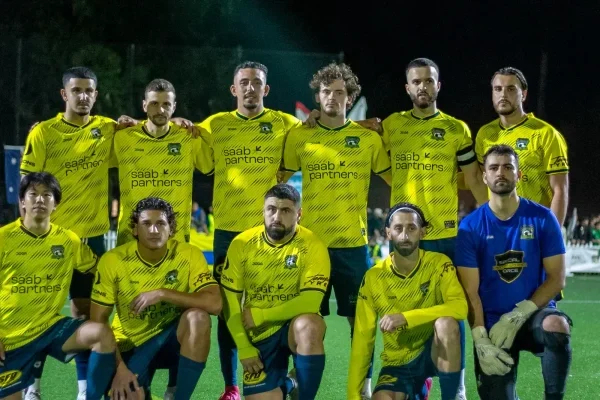
Arncliffe Aurora Football Club has started a new chapter with the launch of Riverine Park, creating a larger platform for football, community engagement and long-term growth in Sydney’s St George region. More than 2,500 people attended the community opening on 8 August, marking the club’s first matches at its new home and showcasing a significant upgrade in its operating capacity.

Riverine Park provides two full-size natural turf football fields, modern player and community amenities, and a new clubhouse. The additional capacity responds to strong growth in Arncliffe Aurora’s football programs, particularly at junior level. The club has also highlighted a $2.5 million investment in facility upgrades. Together with its existing Arncliffe Park base, Riverine Park gives Aurora two homes and a stronger physical platform for its football operations.

More capacity allows the club to accommodate more teams, players and programs, while updated facilities can support stronger member retention and recruitment. They create more opportunities for coaching, development programs, events and community activities. The new site can also strengthen the club’s commercial proposition; a modern facility gives sponsors greater visibility and provides more opportunities to activate partnerships around football and community events. It can also help the club build relationships with schools, community organisations and football bodies. That matters as grassroots clubs increasingly operate as community hubs rather than simply sporting organisations.

Riverine Park also creates opportunities for the wider football ecosystem. Football St George has identified the facility as a platform to grow participation and provide opportunities for players of different ages, abilities and backgrounds. Bayside Council’s project includes upgraded change rooms, toilets, canteen facilities, lighting, seating and solar panels, adding further functionality to the precinct.

For Arncliffe Aurora, the investment is therefore about more than adding fields. It creates infrastructure that can support participation, player development, community programs and commercial activity over the long term. The challenge now shifts from construction to utilisation. The club must maximise the new capacity, maintain the assets and convert greater participation into a sustainable operating model to benefit the community long-term.

The Young Socceroos exposed one of Australian football’s biggest problems

Australian football has spent years trying to create a clearer structure for the game.

But one question keeps resurfacing: who is actually responsible when the interests of Australian football collide?

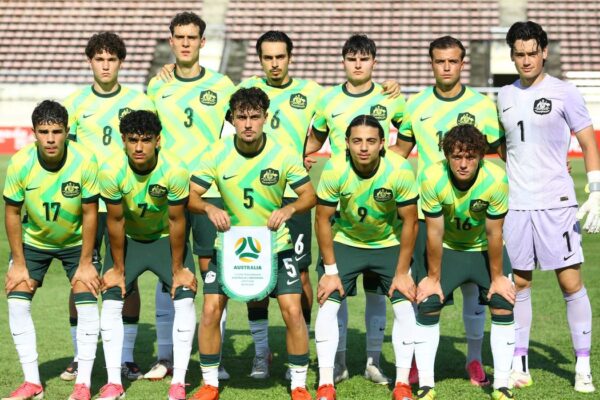
The Young Socceroos failing to qualify for the 2027 AFC U20 Asian Cup is the latest example.

Australia finished third in its qualification group after a 2-0 defeat to Indonesia, failing to qualify for a tournament it won in 2025.

The result itself was disappointing. But the circumstances around the squad selection were arguably more so.

Several A-League players were unavailable because their clubs did not release them for the qualification campaign. Melbourne City’s Lawrence Wong and Medin Memeti and Adelaide United’s Amlani Tatu were among those affected.

The reason is straightforward. The U20 qualification tournament fell outside a FIFA international window, meaning clubs were not obliged to release players. A previous agreement between Football Australia and A-League clubs had allowed national teams to select domestic players outside those windows, but that arrangement expired.

That leaves a much bigger question than whether three players should have been available.

Why was there not a structure in place that could resolve this conflict before it became a problem?

One game, multiple priorities

The answer is partly structural.

Football Australia is responsible for the national teams and the broader national framework. The APL operates and commercialises the A-Leagues. State federations oversee their own competitions and development structures, while clubs have their own commercial, sporting and player-development priorities. Meanwhile, the PFA represents the players.

Football Australia’s own governance outline acknowledges the unbundling of Football Australia and the APL was completed at the end of 2020, while noting the two organisations still need to collaborate across areas including pathways, community football and national teams.

On paper, that separation makes sense.

In practice, difficulties emerge when the model is tested and conflicts of interest emerge.

A club has an obligation to its competition and its squad. Football Australia has an obligation to its national teams. Players have career considerations, while the APL has commercial and scheduling interests. State bodies have their own competitions and pathways.

None of those interests in isolation are necessarily unreasonable.

The problem comes when they point in different directions.

The cost of fragmentation

This is not the first time the club-versus-country question has reared its head.

The same issue has affected Australia’s youth pathways before. In 2012, then-national technical director Han Berger acknowledged the particular difficulty Australia faces because many young players are overseas and youth international tournaments are often held outside FIFA windows, meaning clubs are not obligated to release their players.

And there is a broader irony here.

Australian football is producing young players good enough to attract serious international interest. A-League clubs are increasingly important development environments, with 15 A-League players included in Australia’s 2025 U20 World Cup squad.

Yet the system seems to struggle coordinating those same players when the national team needs them.

That is not necessarily a club problem.

It is a system problem.

Who gets the final say?

The answer cannot simply be that Football Australia should have more power.

Nor should clubs be expected to sacrifice their own interests whenever national teams come calling.

The real issue is whether Australian football has clearly defined the points at which the interests of the national team, professional clubs and players intersect and importantly, where they take priority.

If it has, those rules need to be understood and consistently applied.

If it hasn’t, this should be the catalyst to fix them.

Because the consequences extend beyond one U20 tournament.

Australia’s youth national teams are part of the country’s player-development pathway. International tournaments provide players with experience, exposure and opportunities to progress. The U20 Asian Cup also serves as a pathway towards the FIFA U20 World Cup.

Missing that pathway matters.

At the same time, A-League clubs are investing in academies, recruiting young players and trying to build sustainable professional businesses. They cannot simply operate as talent suppliers for national teams without considering their own competitive and commercial interests.

That tension is natural, and not going away.

Australian football needs alignment, not another power struggle

The answer may therefore be less about deciding who is in charge and more about establishing who is responsible for what.

Football Australia, the APL, clubs, state federations and the PFA do not need identical objectives.

But they do need a common framework for the moments when those objectives collide.

That could mean clearer player-release agreements, longer-term scheduling coordination and defined mechanisms for resolving disputes before squads are announced.

The alternative is a cycle of arguments.

Clubs blame national team scheduling. National teams point to player availability. Players find themselves caught between employers and country. Fans are left wondering why a supposedly connected football system cannot agree on something as fundamental as making Australia’s best young players available for an international tournament.

That is why the Young Socceroos’ failure to qualify should prompt a bigger conversation than whether three A-League players were released.

Australian football has spent years building separate professional, national and community structures.

The next challenge is making those structures work as one.

Because when nobody has the authority or responsibility to resolve the competing interests, everyone can have a legitimate position and Australian football can still lose.

Most Popular Topics

Editor Picks

Send this to a friend