

Progress underway in Geelong’s push for a regional football hub

Regional Football Hub in Geelong: A New Era

Football Victoria has welcomed recent engagement with Deputy Prime Minister the Hon Richard Marles MP, as well as ongoing discussions with State Member for Lara Ella George MP, City of Greater Geelong Councillor Eddy Kontelj, and other key regional stakeholders, as part of a growing movement to establish a dedicated Regional Football Hub in Geelong.

Recent advocacy has underscored Geelong’s rapid population growth and rising football participation rates. Current data reveals a clear infrastructure gap, with no high‑quality, multi‑pitch venue capable of hosting major events and programs, unlike other key regional centres.

State Member for Lara, Ella George MP, voiced her strong backing for the proposed hub, stating:

“We’ve seen massive growth in football across Geelong in recent years – particularly as the Matildas continue to inspire the next generation of women and girls!”
She added,
“One opportunity is a future Regional Football Facility in Geelong – a world class sporting facility that could support more statewide community competitions and deliver elite football events to Geelong. And I’d love to see this in Geelong’s North!”

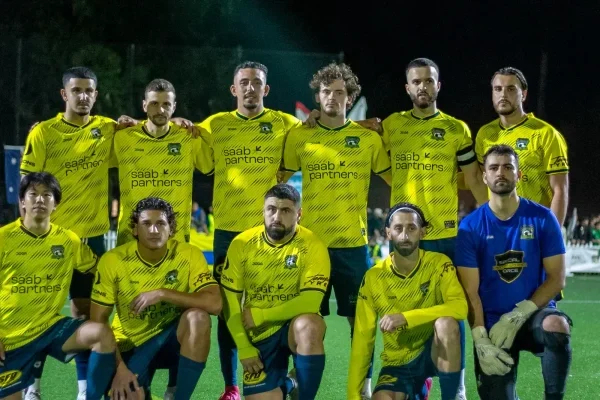
Football Geelong Chair Mike McKinstry and Deputy Chair Rob Palmaricciotti continue to rally support from the local football community, drawing the attention of Cr Eddy Kontelj, who remarked on the “support, enthusiasm and commitment to deliver such an important piece of infrastructure in the north of Geelong [as] extremely encouraging.”

Beyond the Regional Hub, Football Victoria’s advocacy extends to ensuring long-term, sustainable local infrastructure that meets growing demand, from grassroots programs and community football to talent development pathways.

Planning continues in partnership with the City of Greater Geelong, including early-stage master planning and consultation for key sites in Geelong’s south such as the new Coastside Drive Recreation Reserve and future upgrades at Sovereign Drive Reserve. These projects add to the upcoming delivery of works at Drysdale Sports Precinct and the new Devlin’s Road Reserve, developments partly funded following the recent federal election.

As these new sites come online, Council’s ongoing support will be critical in addressing demand across Geelong’s high-growth corridors and creating opportunities for the next generation of footballers.

“We’re excited to be working with all levels of government and local leaders who recognise the role football plays in bringing communities together,” said Football Victoria’s Head of Government Relations & Strategy, Lachlan Cole. “Our shared vision alongside the City of Greater Geelong is about more than just pitches – it’s about delivering inclusive, accessible, and future-focused facilities for people to referee, coach, play, and connect.”

With continued collaboration and united advocacy, Geelong is positioning itself to meet the needs of its thriving football community, now and into the future.
Previous ArticleNext Article

Brazil is coming. But what is the real price of bringing football’s giants to Australia?

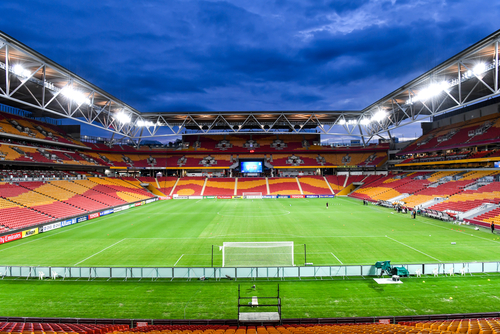
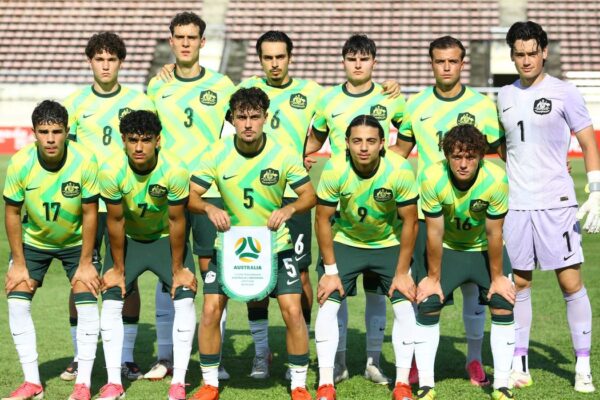
There is something undeniably exciting about Brazil coming to Australia. The five-time World Cup winners will face the Socceroos twice in Queensland from Friday, with Townsville and Brisbane set to host the blockbuster fixtures.

For Australian football, these are the kind of games that should be anticipated, celebrated and capture the public’s attention. But they also raise questions: how much should Australian football pay to bring the world’s biggest nations here, and when does the bill become too big? 

The cost of bringing the big names

Australia has always paid up to bring big names down under. Last week’s NFL game in Melbourne, at a cost of between $10 and 15 million dollars to the Victorian Government, is just the latest example.

It could cost the same amount to bring Brazil to Queensland. A report in The Sydney Morning Herald last year revealed Brazil was reportedly seeking around $7.5 million per match to play in Australia. The fee is in line with other major international events; Western Australia reportedly faced a bill of around $12 million in taxpayer funding for the recent Perth Italian Football Festival.

I’m worried Football Australia won’t get return on investment to make this particular event worthwhile. The enormous fee to bring Brazil to Australia can’t immediately be justified as an investment in our footballing future. Instead, Football Queensland and the state government could have put these funds into grassroots facilities. Part of Football Queensland’s scrapped state headquarters investment plan was to spend $8.5 million to refurbish fields, lights, drains and irrigation at Mappas and Meakin parks. Instead of these plans to invest in the state’s youth players and academies, money has been spent on two international friendlies.

So ahead of the fixtures, the question remains: will these games inspire the future generation, and will participation grow? The NFL match was impossible to ignore: a sold-out MCG and a live audience of 2.1 million on free-to-air, not even including those watching on ESPN and Netflix. Football Australia is not simply buying 90 minutes of football; it is buying the attention that comes with Brazil. So let’s see if they can maximize returns. 

Ticketing Tells a Story

Ticket sales provide insight into the interest in the fixture. Brisbane has sold much quicker than Townsville, but neither have sold out as yet. The fact these games didn’t immediately sell out may be considered surprising as there is a genuine appetite in Australia for elite international football at the moment, evidenced by SBS’ World Cup viewership numbers of 17.1 million.

Brazil is bringing some of its brightest stars: Vinicius Junior, Raphinha, Bruno Guimaraes, Marquinhos and Endrick are among the headline names in their squad. The star power is there. So why haven’t these matches sold out? There’s a chance it comes down to the competition and the visibility of the event.

The viewing problem

The timing of this fixture could raise eyebrows amongst fans. As much as Australia and Brazil will draw huge crowds, both games fall on either side of the AFL Grand Final. The 2024 AFL Grand Final, which involved Queensland’s Brisbane Lions, drew over 4 million viewers on free-to-air. Brisbane, who have won the last two premierships, will feature once again on Grand Final day. Therefore, fans who could’ve attended may instead be making the trip to Melbourne.

Then comes the strangest part: one of the fixtures Australia will play will not even be available on free-to-air television. The Townsville match will be shown free on Network 10 and 10 Streaming, as well as Paramount+. The Brisbane match, however, will be available exclusively on Paramount+. That creates a disconnect. If governments and football administrators are spending millions to bring a global sporting brand to Australia, why should a large section of the Australian public need a subscription to watch the second match?

The Brisbane game is behind a paywall, limiting the national reach of the event. Reach is surely part of the justification for spending big on Brazil, it’s not just that 50,000 people get to sit inside Suncorp Stadium. It is that millions of Australians get exposed to the spectacle and if that audience is restricted, the value of this fixture is limited.

A solution could be to spend the money on advertising the match to the public to try to generate interest across streaming and free-to-air. With less than a week until the first game I don’t believe the advertising has done enough to generate enough interest to justify a $15 million price tag for the two game series. 

The Brazil friendlies will be spectacular. They should attract big crowds, create memories and give the Socceroos an excellent test against one of football’s most recognisable nations. But for the appropriate return, attention must be measured. Does this fixture carry on the Socceroos hype and keep the eyeballs of the general public on our sport? I’m not convinced. However, if these matches bring new fans to football, strengthen the national team and create lasting investment in the sport, the enormous price tag could still be justified. But if they simply produce two nights of football before the attention disappears, then Australian football has paid a premium for a very expensive show.

Adelaide United renews StudyAdelaide partnership for Asian campaign

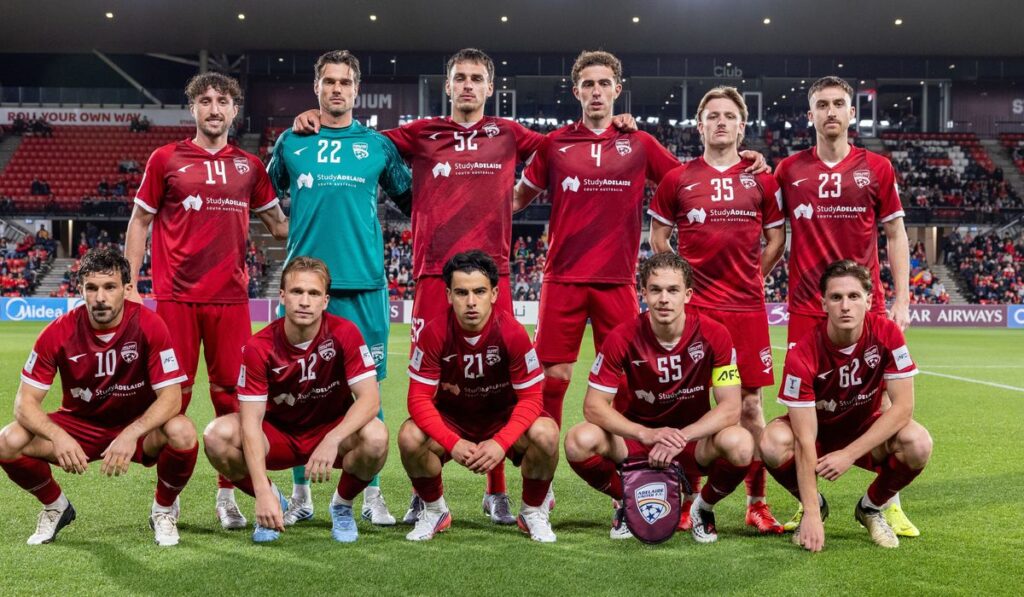
Adelaide United has brought back a familiar commercial partner for its return to continental competition, with StudyAdelaide signing on as front-of-shirt sponsor for the club’s 2026/27 AFC Champions League Two campaign.

The partnership reconnects two South Australian organisations after StudyAdelaide previously featured on Adelaide United’s shirt during their 2010 AFC Champions League campaign.

Adelaide commenced their six-match group-stage campaign on Thursday at Hindmarsh, defeating Hong Kong’s Tai Po 3-0.

For StudyAdelaide, the value of the partnership extends beyond traditional football sponsorship. The organisation, a partnership between the South Australian Government and more than 50 education institutions, is using Adelaide United’s Asian competition to promote South Australia as an international study destination.

The club’s continental schedule provides exposure in several key Asian markets, with Adelaide travelling to face BG Pathum United in Thailand and Lion City Sailors in Singapore during the group stage.

StudyAdelaide chief executive Jane Johnston said the partnership would provide a great opportunity to connect with young people across Asia.

“Having StudyAdelaide featured throughout this international competition is a unique platform to connect with young people across Asia and highlight the many reasons South Australia is their best option to study, live and build a career,” Johnston said.

The deal illustrates how football’s international competitions can provide commercial value beyond traditional brand exposure, particularly for organisations looking to promote to a specific or new region.

The Reds’ ACL Two campaign continues against BG Pathum United in Thailand on October 15.

Most Popular Topics

Editor Picks

Send this to a friend