
Heidelberg United’s extends partnership with Prime Plastic Bags

Heidelberg United and Prime Plastic Bags have announced their partnership has been extended for the 2026 season, displaying once again the commitment and hard work of both parties to support endeavours on the pitch and in the community. 

Longstanding grassroots support 

With the partnership’s roots going all the way back to 2012 and showing no signs of stopping, the recent announcement reflects how a commercial partner can grow to become an essential element of a club’s support system. 

“We would like to sincerely acknowledge the continued support of Prime Plastic Bags, a steadfast partner at the home of Heidelberg United FC. Their ongoing commitment plays a vital role in helping us achieve and grow our vision, both on and off the field,” the club said via a social media announcement on Tuesday. 

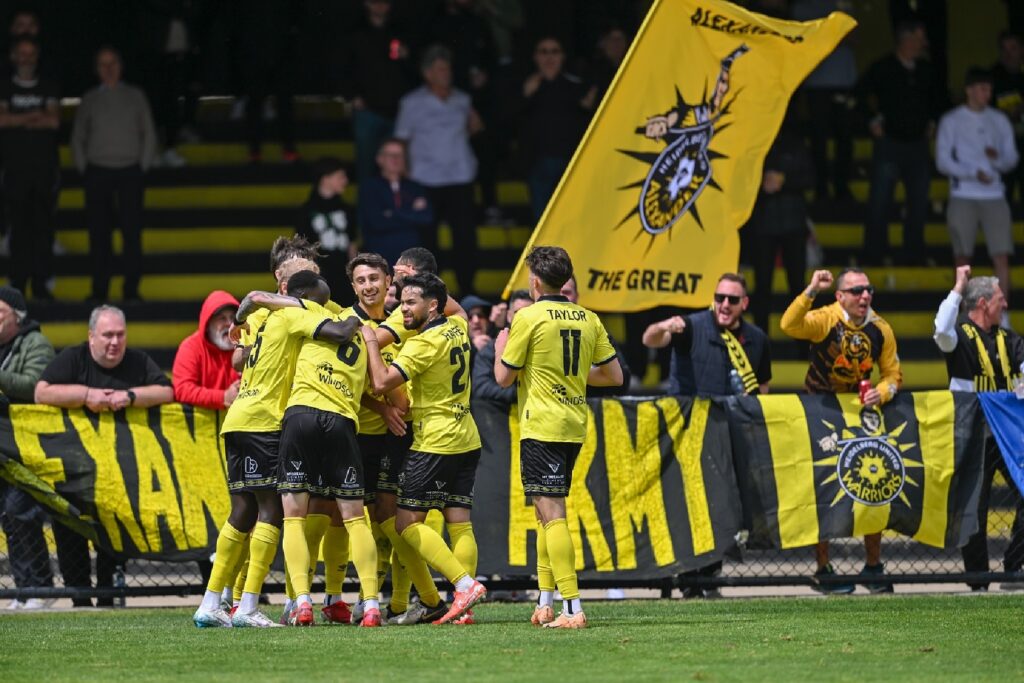
It is clear that Heidelberg’s ambition moving forward will be to encourage even more success and silverware in the coming seasons, a vision made possible with the backing of its partners. With Heidelberg’s men’s team winning the Victoria Championship last season, and the women’s team achieving back-to-back championships in 2024 and 2025, the club is proving that excellence and dedication off the pitch invariably leads to sporting prowess on it. 

Yet what remains alongside Heidelberg United’s ambitions and objectives for both the men’s, women’s and junior teams, is the consistent and steadfast backing of Prime Plastic Bags. And having been with the club throughout its rise up the NPL table, it is clear that their work with Heidelberg United holds a unique formula for success. 


Ambitious objectives, steadfast partners 

Managing Director at Prime Plastic Bags and Director at Heidelberg United, Bill Pargas, spoke to Soccerscene about the recent announcement and about the partnership’s success throughout the last 13 years.

“We’ve had a partnership now for over 12 years. I believe in what the club is doing not only on the field but also [regarding] building purposes. We’re developing, we’re progressing the landscape of the club,” Pargas said. He also explained that the club’s projects are not merely about achieving short-term success, but about building sustainably for the future by investing in junior teams and club infrastructure.

“We’ve long supported clubs and entities that look forward to junior progression and senior success, along with women’s development,” Pargas continued.      

While their collaborative efforts have already seen impressive achievements in recent seasons, it remains important to both parties that working together can lead to constant development. As a hugely ambitious club looking to defend their Victoria Championship crown this season, it is no wonder why Heidelberg United were eager to continue working with Prime Plastic Bags. 


More than a commercial partner

Since its beginnings in 1958, Heidelberg United has been an essential part of the local community and of Victoria’s football landscape. With thousands of loyal supporters and club members backing the team with each passing season, establishing and sustaining connections off the pitch become all the more valuable. 

Such connections are deeply rooted within the club, embodied by leaders like Pargas who balance industry experience with a love for the game. Discussing why Prime Plastic Bags continues to support Heidelberg United and grassroots football, he revealed that being a fan of Heidelberg was a major influence on his continued desire to help the club.

“I’ve always been a fan of the club. I’ve always been a fan of Heidelberg going back to the NSL days, watching the likes of Gary Cole play for the club. I was able to sponsor and help out and that’s what we decided to do. We’re helping out our club,” Pargas said. 

This is why commercial partnerships can – and should – represent far more than short-term financial endeavours. As connections are solidified with local businesses and supporters, clubs gain the backing and guidance they need to withstand the inevitable challenges of climbing the football pyramid. In this way, commercial partners can transform into vital components of a club’s inner workings and identity. 


Final thoughts

While Heidelberg United continue their pre-season preparations, fans, coaches and players alike will be anticipating another trail-blazing year on and off the pitch. With plans to continue developing the junior teams and club infrastructure for current and future players, 2026 promises to be another exciting year for Heidelberg United.

And although results in football are never guaranteed, The Bergers’ fanbase can be safe in the knowledge that their beloved club has the backing of loyal partners like Prime Plastic Bags, helping them reach new heights in the NPL Victoria. 
Previous ArticleNext Article

Build a home, create a culture: How do we secure the Socceroos as global competitors?

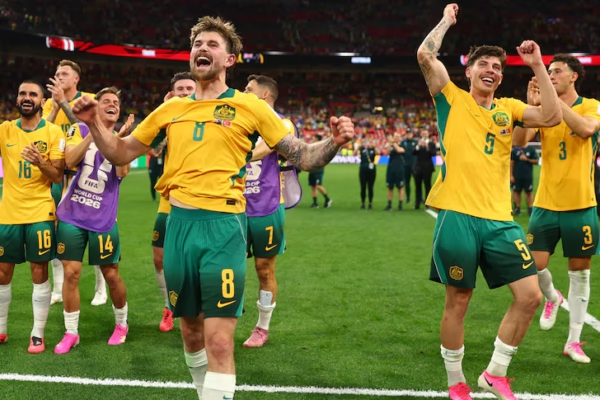
The Socceroos kicked off their World Cup campaign with a convincing 2-0 win over Turkey. It was an important win for their tournament ambitions, but also a statement about their quality on the world stage. It is time that we built a facility to ensure this quality is nurtured, not stifled.

Otherwise, we risk falling behind.


One of four…

Australia’s Men’s National Team currently sits as the 23rd-ranked team in the world in the official FIFA rankings. The Matildas, meanwhile, are the 15th highest-ranked women’s team.

This year is also the sixth consecutive FIFA Men’s World Cup featuring the Socceroos, confirming their position as a regular competitor in the most prestigious tournament in world football.

So why is it, despite these undeniably positive reflections of Australia’s growth in international football, that the Socceroos are still homeless?

At the 2022 FIFA Men’s World Cup in Qatar, Australia was one of four competing teams (a list featuring Denmark, Poland and Senegal) without a national base. In 2024, former Socceroos coach Graham Arnold described the team as “homeless” ahead of the World Cup qualifiers.

But four years on from the tournament’s last edition, the situations remains the same. And the world is taking notice.


A letter to the PM

In April this year, FIFA reportedly wrote to Australian Prime Minister, Anthony Albanese, encouraging the construction of a permanent home for football in the country.

The letter reflects concerns within the governing body that Australia, despite being so present in international football throughout the past 25 years, may fall behind the rest of the pack.

When we look at the talent in the current squad, Australia is by no means an emerging football economy. But commercial and infrastructural limitations in the landscape mean this talent is under-appreciated.

Nevertheless, it is a nation which regularly proves it can compete – and win – on the biggest stage. This we saw only a few days ago.

Which is why the players, coaches and staff representing the nation deserve a permanent facility which reflects, nurtures and inspires talent and competition. The survival of the landscape depends on it.


The investment question

Investment into football – from grassroots to professional levels – continues to be at the crux of national debate on how to secure football’s future in Australia.

In a conversation between Soccerscene and Melbourne-based community club, Sunbury United FC, infrastructure and facility-sharing challenges emphasised common grievances for many grassroots clubs.

The issue, therefore, is spread across the nation’s football pyramid. And prompts an uncomfortable question about future investments:

If even the Socceroos continue to share their current base, Leichhardt Oval, with various teams across rugby league and soccer, how can we ever expect clubs further down the pyramid to avoid similar fates?

The past few years, however, have fortunately seen improved investment into the women’s game in Australia – particularly embodied by the ‘Home of the Matildas’.

The result of a $101.1 million investment by the Victorian Government in collaboration with La Trobe University and the Federal Government, the facility boasts elite training features including premium FIFA-standard pitches, multiple changing rooms, a high-performance gym, a sports science lab and more.

This was a welcome and vital boost ahead of the 2023 FIFA Women’s World Cup which took place in Australia. Now, ever-increasing participation and pride are synonymous with women’s football, and the numbers confirm it.

In 2023, women and girls represented 190,746 participants across social, outdoor, fustal and registered football. In 2025, this increased to 231,435. It proves that, with the arrival of purposeful investment at the top, comes the spread of a football culture across the nation.


Aligning practical and cultural benefits

But what would a potential facility for the Socceroos actually look like? And what are the benefits?

When considering similar projects, we can look to both Japan and England as distinct examples of how a national base for football can unite practical, social and cultural benefits.

St George’s Park – England

Built in 2012, England’s base at St George’s Park is a masterclass in using facilities to establish a centre for industry cohesion and community impact.

As a centre of excellence, St George’s Park holds 14 outdoor pitches, a fustal arena, and hosts coaching and medical courses. It welcomes 28 teams across men’s, women’s, youth and para football, representing a place of unity and alignment for the entire football community.

Furthermore, the ‘Play Like the Pride’ program offers grassroots participants and school students the chance to experience the elite facilities for a day, showing how facilities can serve to connect young players to the world of their professional idols and foster real passion for the game.

JFA J-Village – Japan

The J-Village – beyond being a state-of-the-art football training centre – shows why a home for football can positively impact the community.

After being used as a support base for the nuclear power plant accident following the 2011 Great East Japan Earthquake, the venue now holds a deeply important place in the memory of Fukishima. As a result, upon resuming full operations in 2019, the facility – and the football development within it – represented a sense of perseverance, reconstruction and unity.

And through hotels and public transportation links, the J-Village also welcomes tourists and business travellers, encouraging more people to step into the world of football in Japan.

One venue, therefore, can give rise to an essential part of a thriving football landscape: culture. A culture for participation, community outreach, and elite development.


Final thoughts

The focus of the summer will no doubt be how the Socceroos perform on the pitch. And with homes, offices, and public spaces brimming with enthusiastic support, the sense of national pride is irresistible.

But for all the positive sentiment currently taking hold of the nation, there will come a time when Australia’s World Cup run is over, at which point an all-important question must be asked:

How do we move forward?

We move forward by transforming buzz into an aligned vision, commitment to nurturing talent, and a desire to establish a real footballing culture across the nation.

The first step to building this culture? Building a home from which it can thrive.

Futsal receives major boost in NSW through new partnership

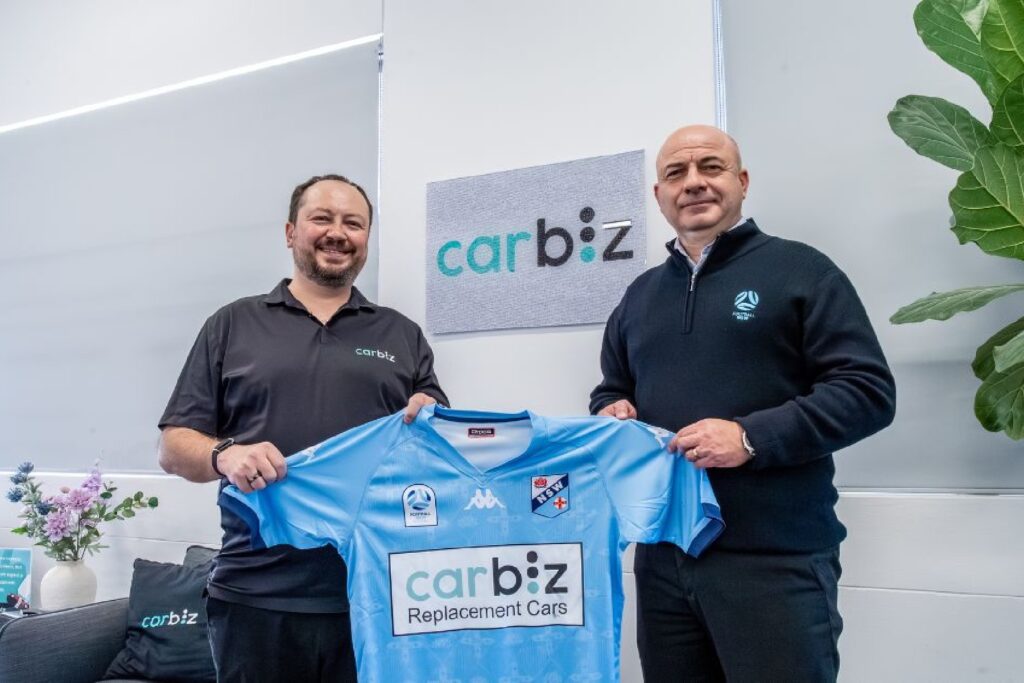
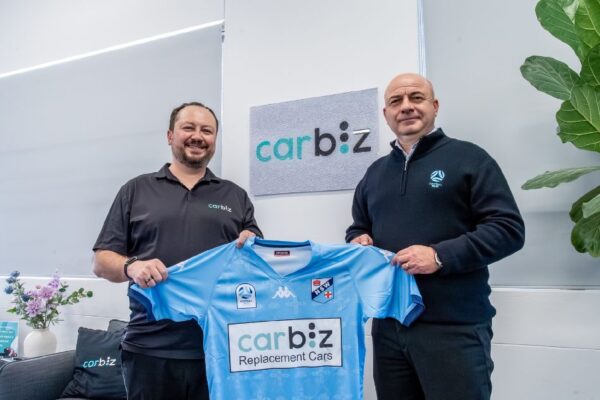
Carbiz will become the new Naming Rights Partner of Football NSW‘s premier futsal competitions in a deal set to run for two years.


Committed to growth

From its beginnings as a second-hand car dealership in 2016, Carbiz has seen incredible growth over the past decade. It now operates as Australia’s leading replacement car provider with over 12 branches, 200 staff and 500 partnerships.

No strangers to progress, hard work and community support, the Carbiz family is now aligning itself with one of Australia’s fastest-growing sports. Through this partnership, Carbiz will support the continued rise of futsal across New South Wales and the broader Australian football landscape.

“This is a fantastic partnership for Football NSW and for futsal in our state,” said Football NSW CEO, John Tsatsimas, via press release.

“Carbiz is a brand built on service, resilience and community values, which strongly aligns with our own vision for football and fustal in New South Wales.”

In 2022, futsal participants across Australia reached 58,453 – an 8% increase on the previous year. In 2025, however, this number rose to 63,425. Numbers in NSW also saw growth in this period, increasing from 4,682 to 5,230.

So with the highly-regarded and community-driven Carbiz backing the game’s development in NSW, futsal will launch into an exciting future.


Community connection

Competition and the desire to win are key aspects of any game – especially football.

But at the heart of the grassroots game is a fundamental wish to unite the local community. Thus, finding partners who understand this commitment – and are eager to match it – is so essential.

Furthermore, Carbiz CEO, Alex Rodov, outlined why the company aligns so well with Football NSW’s futsal future.

“At Carbiz, we’ve always believed that strong communities are built through connection, opportunity and teamwork.”

“Sport plays a vital role in bringing people together, and futsal is one of the fastest growing and most exciting forms of the game.”

“As a proudly Australian owned business, we’re excited to support a competition that creates opportunities for young athletes, strengthens local communities and inspires the next generation.”

The agreements will see the newly-named Carbiz Futsal Premier League and Carbiz Futsal Premier League 2 become key environments which support talent development, local participation and engagement with futsal as a whole.

Most Popular Topics

Editor Picks

Send this to a friend