Football Victoria Announces 2026 Country Championships To Be Held in Geelong

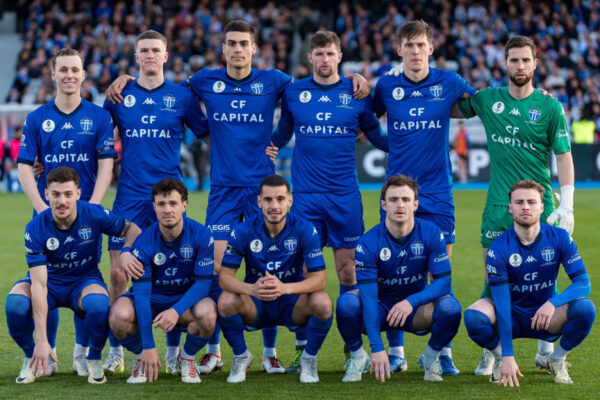
Football Victoria (FV) is delighted to confirm that the 2026 Football Victoria Country Championships will be staged in Geelong from June 6-8, 2026.

Over three days, the state’s top regional footballers will compete at Stead Park and Myers Reserve, home to Geelong SC and Geelong Rangers.

The Championships enter their second year under FV’s direct management. This marks the first event since the new regional football model launched in December 2025. Last year, Albury-Wodonga set a new standard. The event drew 4,000 visitors, 69 teams, and more than 1,200 players from across Victoria.

This year, eight regions converge at Geelong. Players, coaches, officials, and families will gather for one of the most anticipated tournaments in the competition’s 40-year history. The Championships remain central to FV’s talent identification strategy. Regional players have a prime opportunity to impress FV’s Talent ID team.

Regional Development Manager Lauren Stevens said she is proud to oversee the event for a second year. “This is the biggest annual celebration of regional playing talent. We’re thrilled to bring the Country Championships to Geelong in 2026,” Stevens said. “With great venues and strong support from the City of Greater Geelong, Football Victoria Geelong, Geelong SC, and Geelong Rangers, this will be an enormous event. We look forward to welcoming every region for a special weekend of football.”

CEO Dan Birrell highlighted the Championships’ vital role for regional football and the FV talent pathway. “This tournament remains one of Victoria’s longest-running football events. It’s a key pillar in our talent identification program. I look forward to celebrating another outstanding Championships with the regional football community.”

Previous ArticleNext Article

Football SA Extends Sammy D Foundation Partnership Into Third Year for Violence Prevention Round

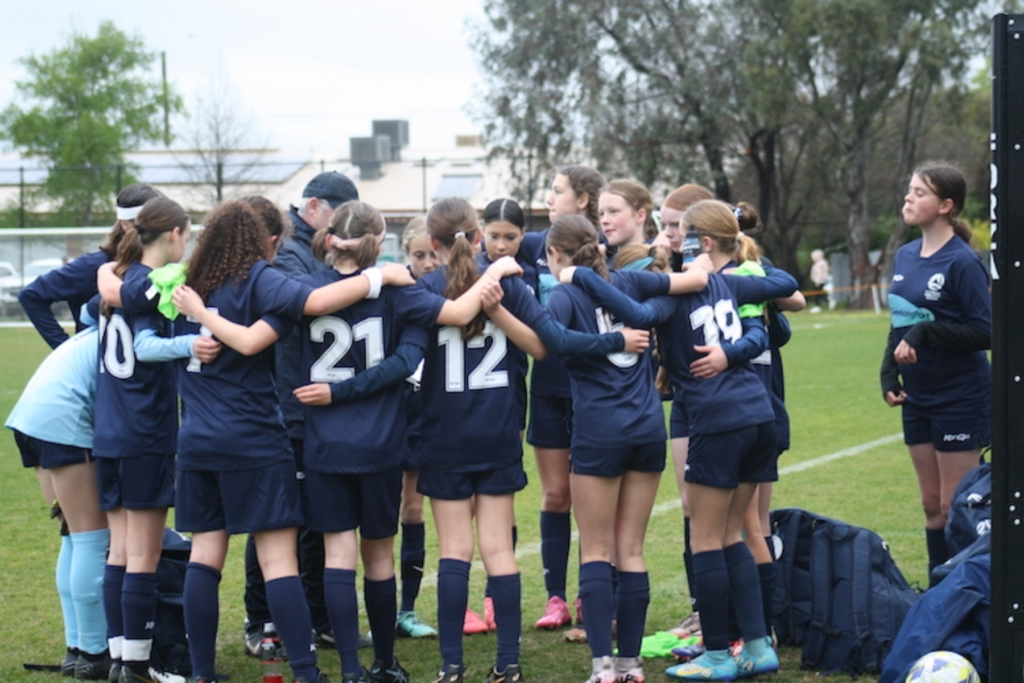
Football South Australia will run its fifth consecutive Violence Prevention Round in partnership with the Sammy D Foundation from 3 to 5 July, with junior teams again asked to wear blue armbands throughout the weekend.

The arrangement was formalised in March 2022, when Football SA and the Foundation signed a three-year agreement, funded by SA Power Networks, to deliver the Foundation’s Monkey See, Monkey Do program to more than 7,500 junior members across 52 clubs.The program is a 90-minute session delivered by Sammy D Foundation facilitators focused on changing players’ attitudes toward bullying and violence and educating parents and club members about the impacts of inappropriate sideline behaviours, built around the story of Sam Davis, the 17-year-old South Adelaide junior footballer whose death in a one-punch assault in 2008 led his parents to establish the Foundation.Football SA general manager George Georganas and Foundation chief executive Brigid Koenig confirmed the partnership at its 2022 launch, framing it as a mechanism for improving club culture from junior sidelines upward.

The round has run every season since, expanding in 2023 to incorporate the Federation Cup Final at ServiceFM Stadium,a weekend Football SA dedicated as the Sammy D Violence Prevention Round alongside the Federation Cup Final Day continuing through the 2024 season,when it was again scheduled as a designated round ahead of that year’s Federation Cup Final and shifting from an early blue tape design to the blue armbands used in 2025 and again this year.

A prevention model funded outside government

The Foundation’s programs, including its work with Football SA, are financed through corporate and philanthropic support rather than recurring government funding. Its rollout with Football SA was backed by SA Power Networks, and separate school-based programs in the state’s Far North have relied on grants from philanthropic trusts.Both the Perpetual Foundation’s Kevin Barnes Gift Fund Endowment and the Fred P Archer Charitable Trust have funded the Foundation’s work in that region.

The State Government’s response to the Royal Commission into Domestic, Family and Sexual Violence, released in December 2025, commits $674 million over ten years to a 136-recommendation reportstructured around themes spanning structural reform, workforce and community education, crisis response, and establishing a foundation for prevention, delivered by Commissioner Natasha Stott Despojaafter four women were killed in the state within a single week in November 2023. The Commission’s focus on domestic, family and sexual violence is distinct from the youth bullying and alcohol-related violence at the centre of Sammy D Foundation programs, but its response includesan expansion of abuse prevention programs to support behavioural change for people who use violence, alongside prevention and awareness activities aimed specifically at young people.

Separately, the Department for Education’s own violence prevention program, developed after a 2022 ministerial roundtable, has directed a $6 million Safe and Supportive Learning Environments Plan of Action toward schools, afterreported violent incidents in South Australian public schools rose 50 per cent in 2023, with more than 13,000 critical incidents recorded that year. The department has since reportedits first decline in secondary school critical incidents in 2024, a 4.5 per cent reduction from 2019 levels, along with a 7.3 per cent fall in suspensions and a 20.8 per cent fall in exclusions in 2025. It also noted thatviolence in primary schools has continued to rise since the pandemic, and that physical violence against teaching staff, the large majority involving primary-aged students, climbed from 273 incidents in 2021 to 662 in 2024.

Evidence from earlier rollouts

Sammy D Foundation programs delivered through junior sport have previously reported strong self-assessed outcomes. An earlier three-year rollout of a related program through SANFL Juniors, a separate competition to Football SA,reached up to 12,800 young players and their families, with 98 per cent reporting increased awareness of the impact of one-punch violence and 89 per cent reporting they avoided a violent situation because of the program.

A national evidence guide on preventing violence through sport, compiled by Our Watch, notes that69 per cent of Australian children and 87 per cent of adults took part in sport or physical activity over a twelve-month period, while also pointing toa lack of research assessing the effectiveness of such approaches, and the need for more robust evaluation of primary prevention programs within sport settings.

Clubs taking part in this year’s round have again been supplied with blue armbands for junior teams, with Football SA and the Foundation asking clubs to share images from the weekend under the round’s official hashtag.

Victorian Labor commits $500,000 to Thornbury Football Facility as State Election Advocacy Intensifies

The Victorian Labor Party has confirmed $500,000 in 2026-27 State Budget funding to upgrade facilities at Mayer Park in Thornbury, with Northcote MP Kat Theophanous joining Darebin United juniors for a training session earlier this month to mark the commitment. The funding follows a public campaign by Football Victoria highlighting the ground’s deteriorating conditions, and lands within an escalating advocacy effort by the sport ahead of the next Victorian election.

The money will go toward upgrading the playing surface and planning a new pavilion at a ground that has received no infrastructure investment in over a decade, according to Football Victoria, despite participation at Darebin United more than quadrupling in that time. The club fielded five teams in 2021. It now fields more than 20, with over 300 players including more than 130 children under 12 and over 70 female players.

That growth has collided directly with the limits of the ground itself. Mayer Park has no drainage and no synthetic surface, and Football Victoria reported that Darebin United lost 23 training sessions in 2024 alone due to unsafe, waterlogged conditions. Club President Michael Slaughter described a pitch that was uneven and at times dangerous, particularly for junior and female players.

“I have been there for six years, and the club is at a stage now that we need something new,” Slaughter said in comments to Football Victoria earlier this year. “There’s only so many training sessions you can cancel, and then there’s the cost of finding alternative grounds indoors or outdoors, which isn’t ideal.”

A campaign that found its target

Football Victoria published a dedicated article in March calling on Darebin City Council to urgently prioritise redevelopment of Mayer Park, explicitly linking the club’s case to its broader Level the Playing Field campaign. Three months later, the funding arrived, not from council, but from the state government, attached to the local member’s name and delivered with a photo opportunity on the training pitch.

A club’s need becomes visible through governing body advocacy, a local member adopts the cause, and the funding is announced as a direct response to community need rather than as a line item in a broader budget process. Theophanous’s own account of the announcement makes the local framing explicit, describing the investment alongside free public transport, school upgrades and registration discounts as part of what she has billed as “easier, safer and more affordable” support for Northcote.

“Community sporting clubs bring Northcote locals together,” Theophanous said in her budget statement. “Through our Get Active Kids voucher program, we’re making sure the cost of fees and equipment doesn’t keep kids from playing the sport they love. And we’re also investing to make local clubs even stronger.”

Earlier this year, Avondale FC secured $500,000 for lighting at Avenger Park and Hume City FC received $250,000 for upgrades at Nasiol Stadium, both delivered through the same budget cycle and both paired with local member announcements. Mayer Park follows the same pipeline, a state government commitment, a local seat, a community club whose growth has outpaced its facilities, and a governing body using the win as evidence in a larger campaign.

The equity dimension

What distinguishes the Mayer Park case is the explicit role gender and accessibility played in Football Victoria’s advocacy. The governing body noted that unsafe pitch conditions were particularly dangerous for junior and female players, and highlighted that Darebin United maintains 40% female representation on its committee with seven female coaches, alongside its status as one of Darebin’s first 2-Star Club Changer accredited clubs, a Football Victoria program recognising clubs that actively remove barriers to female participation.

A club building one of the more credible female participation pathways in the municipality was, until this announcement, doing so on a ground its own administrators described as unsafe. Infrastructure investment of this kind does not simply improve playing conditions. It determines whether programs explicitly designed to grow women’s and girls’ football can function as intended, or whether they remain constrained by the same ageing facilities that have shaped community football for a decade.

What it means for the campaign ahead

Football Victoria has framed the Mayer Park outcome as one data point within its Level the Playing Field campaign, which continues to call for more equitable government investment in football relative to other codes. The organisation has indicated further football-related announcements are expected from the 2026-27 Victorian State Budget, with the upcoming state election positioned as the decisive moment for the sport’s broader infrastructure future.

For Slaughter, the immediate outcome is more concrete. “The funding is extremely important,” he said. “It allows us to deliver our football program and to grow. This will give them a place to come, to have fun and to enjoy their soccer”.

Whether that template, governing body advocacy, local political adoption, budget announcement, repeats consistently enough to address the scale of Victoria’s grassroots facilities gap remains the open question Football Victoria’s campaign is designed to keep in front of both major parties as the election approaches.

Most Popular Topics

Editor Picks

Send this to a friend