

Arsenal x Meta: The Tech-Driven Fan Revolution You Didn’t See Coming

The current Premier League leaders announced last week the start of a new partnership with Meta, which will see WhatsApp and Facebook unite fans across the world.

A global partnership

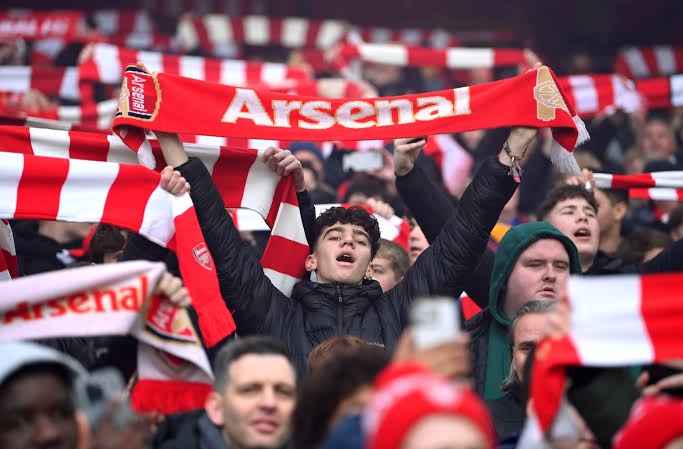
The partnership between Arsenal and Meta will aim to bring fans together from across the world in digital spaces.

While WhatsApp and Facebook are already popular platforms for football fans to talk, review and connect over the course of a season, the new initiative will build on this existing engagement.

Head of Marketing for Meta Consumer Apps, Vivian Odior, outlined why a partnership with Meta contributes to the overall fan experience.

“We know that being an Arsenal supporter doesn’t start at kick-off and end at the final whistle,” Odior said via Arsenal’s Official Website.

“WhatsApp and Facebook are where that year-round passion lives – the transfer speculation, the tactical debates, the shared memories and hopes for next season.”

Indeed, as Arsenal looks to clinch a first league title since 2004, there will be plenty of discourse and conversation between fans in the coming weeks.


What can fans expect?

The digital space presents endless opportunities for football supporters to connect across continents.

Arsenal fans will be able to access an extensive range of new digital experiences, as well as activations at the Emirates Stadium throughout April.

But beyond the unique offers and experiences the partnership provides, there is a fundamental sense of community and family driving the project. Chief Commercial Officer at Arsenal, Juliet Slot, explained the importance of having digital spaces to allow fans to feel a part of the Arsenal family.

“Our partnership with Meta builds on how our supporters already come together, wherever they are in the world, and will create more ways to feel closer and more connected to our club,” Slot said via Arsenal’s Official Website.

“As we continue to compete to win major trophies, partnerships like this play an important role in supporting that ambition and strengthening our connection with supporters.”


The modern game

Furthermore, the expansion of digital spaces for Arsenal fans highlights a new era for the game as a whole.

As social media grows, the game must keep pace. And with so many fans across the world engaging with digital spaces, establishing a partnership with Meta is a step into the future where football and social media intersect more than ever.
Previous ArticleNext Article

Mizuno’s Australian gamble: can a 120-year-old brand break through?

When Mizuno unveiled a mural of Socceroos captain Harry Souttar on a Richmond wall during the 2026 World Cup, the company’s name did not appear on the artwork. The artist, Rory Ledge, painted Souttar as the “Minister of Defence” behind a brick wall. Channel 7 and Channel 9 turned up. The Herald Sun ran it in their Saturday edition. Mizuno’s brand director called it “mainstream awareness” without paid media.

The mural sat within a broader push by the Osaka-based company to expand in Oceania. For the fiscal year ending March 2026, Mizuno reported sales of ¥259 billion, up 7.8 per cent year-on-year, with net income of ¥18.4 billion representing 20.5 per cent growth . Operating profit rose to ¥22.6 billion. The Asia and Oceania segment is central to the company’s medium-term plan, which targets net sales of ¥290 billion by fiscal 2027.

The growth imperative

Australian football has not historically been kind to specialist boot brands. Nike, Adidas and Puma dominate retail shelves. A-Leagues collective bargaining agreements and club deals have locked in incumbents. For a brand without the marketing budgets of its competitors, the path to relevance runs through the players.

Mizuno has grown its Australian ambassador base from one athlete to around 20 across the A-Leagues in recent seasons. Melbourne City’s Tolgay Arslan, who played in the Bundesliga and Serie A before arriving in Australia, told Front Page Football: “If I discovered these boots ten years ago, I would wear these boots overseas in my career.” Western United midfielder Angus Thurgate called them “the comfiest boots I’ve ever worn”.

The mural moment

Richmond was chosen for the mural because of its location. The suburb sits at the centre of Melbourne’s sporting precinct, five minutes’ walk from the MCG and AAMI Park. It is already home to murals of AFL players. Rowena Corner Store owner Con, who agreed to host the artwork, had previously welcomed murals of Dusty Martin and an AFLW player.

“We didn’t have access to Harry because he was in the US competing,” brand director Rishi said. “We couldn’t do a photoshoot. So we had to be clever. The best ideas come from real time, aligned with what the public discourse looks like. Once we saw his Wikipedia page updated to refer to him as the Minister of Defence, we knew we could play into this.”

Ledge incorporated an existing window into the design to create a net behind Souttar’s figure. The mural appeared the morning of the Paraguay match, when Australia’s clean sheet sent them into the knockout phase.

The World Cup provided a massive backdrop. The Socceroos’ run captivated the nation: 4.84 million Australians tuned in to the Paraguay match, making it the most-watched World Cup match in SBS history at the time, with an average audience of 3.086 million . The final reached 5.26 million viewers, and cumulative tournament reach hit 18.04 million— 64 per cent of Australia’s population. SBS director of sport Ken Shipp said: “We’ve never seen engagement at this level.” Mizuno spent comparatively little and had Channel 7 and Channel 9 on site.

The commercial question

For a brand with limited marketing firepower, organic PR coverage is the prize. The question for the company’s Oceania division, still in growth mode, is whether a mural and a handful of player endorsements can convert into sustained commercial traction. Retail partnerships with Ultra Football, which has created a dedicated Mizuno space at its Melbourne store, suggest the company is thinking beyond campaigns.

Mizuno’s European expansion has taken a different path. The company signed a five-year deal to become AS Monaco’s technical equipment partner from the 2025-26 season, its first entry into Ligue 1. It already has a presence in Germany’s Bundesliga and Italy’s Serie A. In Australia, institutional partnerships are harder to secure. The approach has been slower: build through athletes, then through community, then through culture.

The Queensland government signed a Memorandum of Understanding with Mizuno in March 2026 to explore the Japan-Australia Sports & Health Innovation Exchange (JASHIE), a two-year partnership focused on sport and health innovation . The agreement supports Queensland’s preparations for the 2032 Olympic and Paralympic Games.

The mural campaign reflected a broader trend in sporting brand marketing, where IP restrictions and athlete availability increasingly demand creative solutions. “I love what Levi’s did because they were able to lean into their brand codes and tell what I believe to be the most memorable advertising story from the World Cup,” Rishi said. “This is a different page out of fundamentally the same playbook.”

Mizuno’s boots are not cheap. The Made-in-Japan models retail well above competitors’ offerings. The brand’s pitch rests on quality and heritage, not price or volume. That is a harder sell in a country where discounting dominates and cost-of-living pressures are squeezing households.

The Souttar mural will eventually fade or be painted over. Mizuno is betting that by the time it does, enough Australian football fans will have noticed the three stripes’ quieter rival.

Kansas City Current receive financial backing for stadium expansion

The CPKC Stadium, home to NWSL side KC Current, will see a major financial injection transform its capacity from 11,500 to 18,000.


Leading by example

Amid the excitement, chaos and attention on the FIFA World Cup this summer, the football industry in the US has, once again, come into the spotlight.

But one story which truly represents the progress and development of football in the US is not within the men’s game, but the women’s.

Kansas City Current – a team who privately funded the world’s first purpose-built football stadium for a women’s professional team – is once again leading by example for women’s football in the US.

Only this time, their stadium plans will have the backing not just of the club, but of the Kansas City Council. A recently approved package of AUD 336 million (USD 235 million) will add 6,500 seats to the venue, an expansion which comes as a welcome development for fans who regularly fill the CPKC Stadium to capacity.


Big investment, fast expansion

The CPKC Stadium, however, is little over two years old, having reached its project completion in 2024. But after matches consistently sold out, expansion was always the next step in the inspirational journey of the KC Current.

Co-founders and co-owners, Angie and Chris Long, outlined what the coming investment will mean for both club and community.

“We are proud to continue investing in Kansas City’s future and grateful for the partnership that makes this chapter possible,” the Longs said.

“The success of the Current and the Riverfront benefit our entire community, and we are honoured to help create a lasting legacy for a city that has given so much to us.”

The public funding for the project takes it to AUD 2 billion (USD 1.4 billion). Such financial commitment, of course, reflects the welcome backing from the Kansas City Council.

Yet, more importantly, it shows that women’s football is one of the most rapidly growing industries in the sporting world. In just a few years, the KC Current went from a 3,200 capacity stadium to one which boasts 18,000.

Who knows, in the coming seasons, where this rapid rise will lead to next.

Most Popular Topics

Editor Picks

Send this to a friend