


Juan Mata Commits to Melbourne Victory’s Future with Ownership Stake

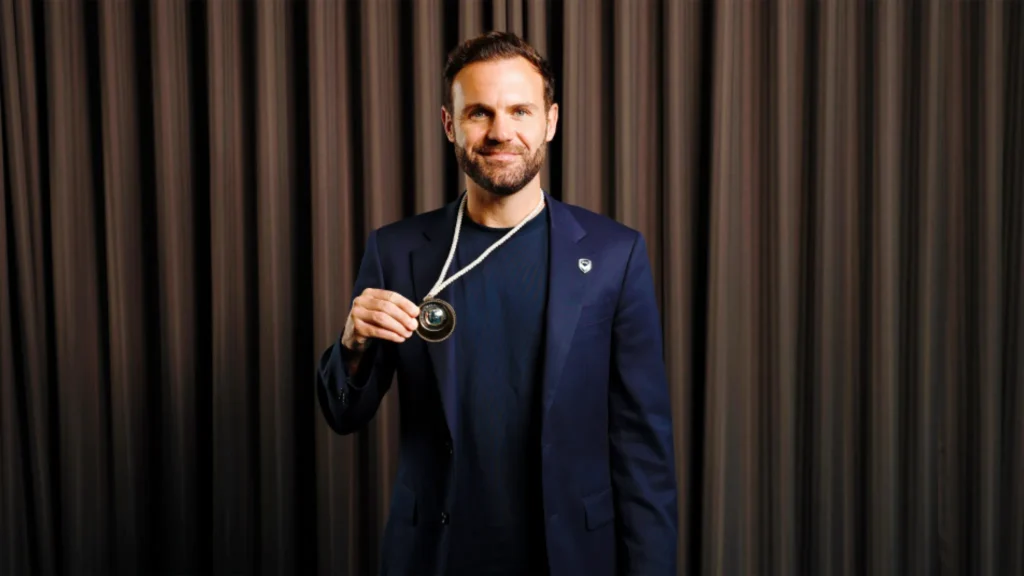
Melbourne Victory has announced that Spanish football icon Juan Mata has joined the club’s ownership group, marking one of the most significant investment moves by a current international footballer in Australian football history.

The agreement sees Mata acquire an ownership stake in Victory while continuing to weigh up whether he will extend his playing career beyond the 2025/26 A-League Men’s season. The investment is separate from any future playing contract and reflects a long-term commitment to both the club and the wider Australian football landscape.

Should Mata eventually retire from professional football, he will also take on a leadership role by chairing a newly established football committee at Melbourne Victory, helping shape the club’s football operations and strategic direction.

More than another football investment

While former elite players have increasingly entered football ownership around the world, Mata’s decision stands apart because he is investing directly into the club he currently represents.

The move places Melbourne Victory among a growing list of clubs benefiting from investment by globally recognised football figures. However, unlike celebrity ownership groups where players often become passive investors after retirement, Mata is embedding himself within the club while still competing at the highest domestic level.

Commercial terms of the transaction remain confidential, although the investment has been described as a significant long-term minority stake designed to strengthen the partnership between Mata and the club well beyond his playing career.

A vote of confidence in Australian football

Perhaps the most significant aspect of the announcement is what it says about the perception of Australian football internationally.

After arriving in Australia following spells with some of Europe’s biggest clubs, including Manchester United, Chelsea and Valencia, few would have predicted that Mata would choose to invest his own capital into an A-League club.

Instead, the 2010 FIFA World Cup winner has described Australian football as a competition with genuine long-term potential.

“Australian football has a future I genuinely believe in,” Mata said.

“From the moment I arrived at Melbourne Victory, I’ve felt the passion of this club and the potential of the A-Leagues, and I want to be part of building what comes next—not just for a season, but for the long term.”

Mata added that becoming a shareholder represented “the natural next step” after enjoying his first season at Victory.

Rewarding an outstanding first season

The investment follows what has been one of the finest individual campaigns by a marquee player in recent A-League history.

The 38-year-old registered five goals and 13 assists across 25 appearances during the 2025/26 season, earning the Johnny Warren Medal as the league’s best player while also claiming Melbourne Victory’s Player of the Year honours. His performances helped guide Victory back into the Finals Series and demonstrated that his influence extends far beyond his reputation.

Rather than treating Australia as a final destination before retirement, Mata has instead become increasingly involved in shaping the game’s future.

A growing portfolio of sporting investments

Melbourne Victory is not Mata’s first venture into sports ownership.

The Spaniard already holds ownership interests in Major League Soccer expansion club San Diego FC and Formula One outfit Alpine Racing. He has also invested in Mercury/13, the multi-club ownership group focused on developing women’s football globally.

These investments reflect a broader trend among modern footballers who are leveraging their experience and networks beyond their playing careers. For Melbourne Victory, securing someone with Mata’s global football knowledge, commercial experience and international connections represents an opportunity that extends well beyond the pitch.

Landmark moment for Melbourne Victory

Victory Chairman John Dovaston described Mata’s investment as a significant endorsement of both the club and the A-Leagues.

According to Dovaston, Mata is a discerning investor with stakes in elite sporting organisations worldwide, making his decision to back Melbourne Victory a strong signal of confidence in the club’s direction and the league’s future.

Managing Director Caroline Carnegie echoed those sentiments, describing the announcement as “genuinely groundbreaking” and highlighting Mata’s combination of world-class football intelligence, investor mindset and long-term commitment.

A statement beyond Melbourne

Australian football has long sought greater international credibility. Not only through marquee signings, but through meaningful long-term investment.

Mata’s decision represents something arguably more valuable than a headline player signing. By committing financially to Melbourne Victory, he is effectively betting on the future growth of both the club and the A-Leagues.

At a time when Australian football continues to pursue increased investment, stronger governance and greater global relevance, having one of the game’s most respected figures choose to become an owner may ultimately prove to be one of the competition’s most powerful endorsements.
Previous ArticleNext Article

Sydney FC bolsters business strategy with third-year ABCC partnership

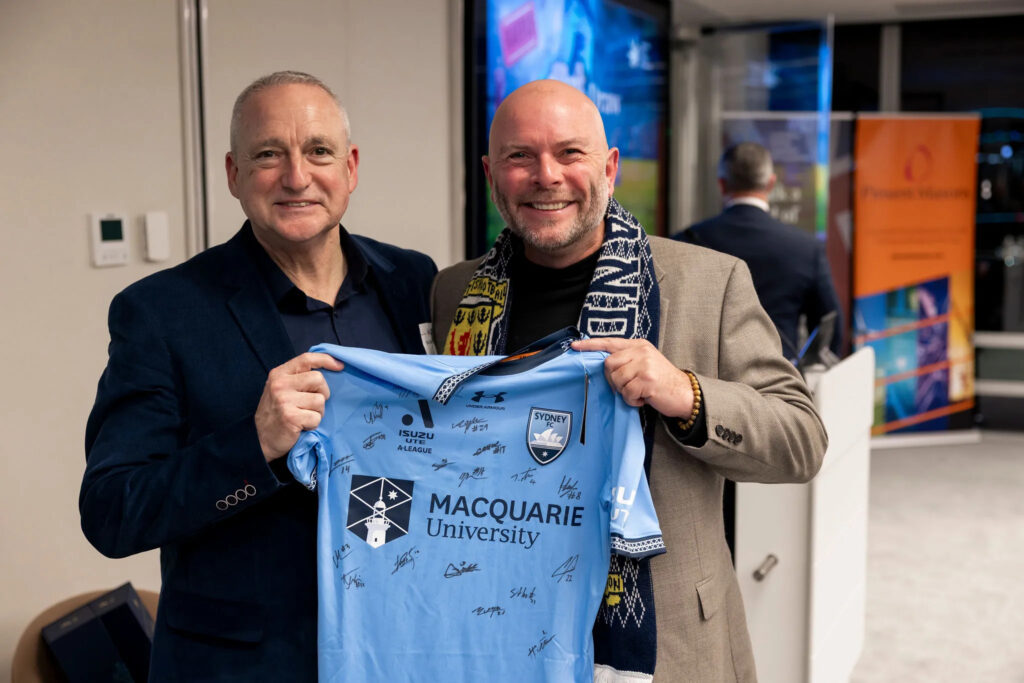
Sydney FC is extending its partnership with the Australian British Chamber of Commerce (ABCC) for a third year, strengthening the connection between the club’s corporate network and the wider business community.

The partnership will give ABCC members access to Sydney FC’s Business Club, it’s new The Collective networking platform and a range of events throughout the 2026/27 season.

ABCC members had already been attending Sydney FC matches and networking through hospitality, and last season the organisations built on that connection by collaborating on a pre‑World Cup business event featuring former players and football industry figures.

ABCC Chief Commercial Officer Paul Wright said the partnership had provided members with opportunities to engage with the club and its business community.

“We are delighted to continue the strong partnership between the Australian British Chamber of Commerce and Sydney FC for the third consecutive year,” Wright said.

Sydney FC Commercial and Marketing General Manager Matt Pound said the relationship was creating opportunities beyond traditional matchday hospitality.

“There’s a large appetite for collaboration between the Sydney FC business club and those within the ABCC, with numerous partnership opportunities being developed through this collaboration,” Pound said.

The continued partnership will also see Sydney FC benefit from member introductions through the ABCC, while the club will contribute speakers to selected Chamber events and feature in its quarterly magazine.

For Sydney FC, the partnership provides another established business network through which to develop its broader commercial strategy, following the recent launch of The Collective.

The club is increasingly positioning its corporate relationships around networking and business development, using football and its existing commercial community as a platform for connections beyond sponsorship and matchday hospitality.

Football must set financial rules of engagement following FIFA Forward Enterprise crisis

Never before has football had such deep access to capital, or faced such complex questions about what that means for the future of the sport.

Private equity firms are investing in clubs, institutional investors are moving into stadiums and sports infrastructure, and clubs are looking beyond broadcasting and matchday revenue towards property, hospitality, entertainment and technology.

The question is no longer whether football needs investments. It’s what happens when investment starts influencing the way the game is run.

The issue came sharply into focus this year when FIFA proposed creating FIFA Forward Enterprise, a new FIFA-owned subsidiary that would bring together its commercial and event operations. The concept would effectively place the World Cup, the crown jewel of global football and FIFA’s blue chip stock, inside an investable structure. 

The proposal envisaged raising up to $6 billion by selling minority, non-controlling stakes in the subsidiary to external investors, based on an initial valuation of $29 billion. FIFA said the additional capital would help increase development funding for its 211 member associations.

The proposal triggered a governance crisis, while major questions about Gianni Infantino’s tenure as FIFA President continue.

UEFA, CONCACAF and (to a lesser-extent) the AFC were among the confederations to object, variously stating they had learned about the proposal through media reports rather than through FIFA’s own consultation process.

Amid a firestorm of criticism, the proposal was ultimately abandoned.

Now, Gianni Infantino has proposed an independent review of the organisation’s governance framework for major strategic initiatives, including how responsibility is divided between the president, Bureau, Council and Congress.

That makes this bigger than one investment proposal.

It’s a debate about who should control football’s commercial future.

Capital isn’t the enemy

There is an obvious argument in favour of private investment.

Football is an expensive business.

At club level, the relationship between capital and football is becoming increasingly sophisticated and complex.

RC Lens recently brought infrastructure investor Entrepreneur Equity Partners into its ownership structure, with the club saying the investment will fund development around the Stade Bollaert-Delelis and help create new revenue opportunities beyond matchdays.

Alas, there is a cost that comes with the capital. 

Investors ultimately expect a financial return. This won’t always conflict with supporters’ interests, but it can create different priorities.

Whereas a supporter might value affordability, identity and competitive success, an investor might instead look at property development, hospitality, commercial growth and the long-term value of an asset.

Neither perspective is inherently wrong.

But problems begin when financial objectives and football objectives stop overlapping and start pointing in different directions.

The ownership question

Chelsea provides a useful example of how quickly football ownership can change.

Clearlake Capital has now taken full control of the London club after acquiring the stakes previously held by Todd Boehly and Mark Walter, in a transaction that values the club at around $9.5 billion including debt. Todd Boehly only invested in the club four years ago.

That does not mean Chelsea’s new ownership structure is better or worse than before.

It demonstrates something important about modern football.

Football is becoming an asset class

That is perhaps the biggest change.

Football is no longer simply something wealthy individuals buy because they love the sport.

It is increasingly being viewed by institutional investors as an asset class with multiple potential revenue streams.

That means the investment opportunity can extend beyond owning a club.

There is private capital in stadiums, infrastructure, media rights, technology, sponsorship businesses and surrounding property.

It also explains why the FIFA proposal was so significant.

FIFA was effectively exploring whether the enormous commercial value of its competitions could be packaged into an investable structure.

FIFA argued investors would hold minority positions and would not receive control over sporting decisions or governance. It also argued the additional commercial value could increase funding available to football associations around the world.

That is a legitimate commercial proposition.

But once an asset is valued in the billions and external investors are being invited to participate, questions about control inevitably follow.

Who decides which commercial opportunities are pursued?

What happens when investors want one thing and football stakeholders want another?

And perhaps most importantly, who ultimately gets the benefit from football becoming more valuable?

The danger isn’t investment. It’s misalignment.

Football should not pretend it can grow without capital.

Football today requires enormous amounts of it.

The challenge is ensuring investment strengthens the sport rather than gradually redefining what the sport means to fans.

There are good reasons for clubs to develop their stadiums, diversify revenue and attract institutional capital.

There are also good reasons for supporters, players, federations and communities to ask what they receive in return.

FIFA’s recent episode demonstrates how quickly these questions can become political as well as financial.

The fact FIFA is now considering an independent governance review following such backlash shows the debate is not simply about whether the investment proposal was commercially sensible, but also about how decisions of that scale should be made.

That may be the most important question for football’s next financial era.

Private capital is here to stay. The tap isn’t turning off.

So, it’s critical football determines its rules of engagement before the next billion-dollar proposal lands on the table.

Most Popular Topics

Editor Picks

Send this to a friend