
Time for Australian football to reassess its direction

On Tuesday morning, the A-League followed in the footsteps of the NRL and AFL and postponed its season.

There were last ditch attempts to bring all teams into New South Wales and play the remaining matches of the season there, but ultimately those plans were impossible to pull off due to the impact of the COVID-19 situation.

The FFA will further assess their decision on April 22, in the hope of completing the season later in the year.

The J-League is one of the first football competitions to announce they will aim to restart their competition on May 9. Fans will be allowed inside the stadium; however, every second seat is to be left empty.

While the health of the community is the biggest priority, like other sporting organisations and businesses as a whole, Australian football will face financial problems and uncertainties.

According to the Australian, if the season was entirely cancelled it would allow Fox Sports to send the FFA a breach letter which gives them 10 days’ notice of the cancellation of their deal, because there was “no seamless continuity of services”.

Under the deal, the FFA must provide Fox Sports with a 27-round season as well as a finals series.

If the season is abandoned, these provisions allow Fox Sports to terminate the current $57 million dollar a year contract or break the deal and re-negotiate a much lower price for the rights.

These will be options that Foxtel will continue to explore as they try to address a loss of sports subscribers due to the suspension of the NRL, AFL and A-League.

Speaking to SBS TWG, head of consultancy at Global Media and Sports, Colin Smith, explained:

“The reality is that this is as tough for Fox Sports as well since they’re about to lose most of their Kayo subscribers because there’s literally no content, both locally and internationally.

“They’ll be looking to make savings and won’t be paying rights fees to any sport (NRL and AFL included) while there’s no content.”

Smith also predicted the end could be near for the A-League on Fox Sports.

“In terms of the A-League, I would suggest firstly they won’t get any new payments and secondly, I understand, Fox Sports have the right to withdraw altogether (from the final three years of the six-year $346 million deal).

“They might not embark on that course right now – but I think they’ll be keeping their options open to say ‘thank you, we won’t continue to broadcast … feel free to go with anybody you want to’.

“I would imagine they have Force Majeure clauses and everybody will be going back to read the fine print.”

Smith claims the A-League clubs would have to expect a lower broadcast fee in the future, whether they are with Fox or a service like Optus Sport.

“It’s clear Fox Sports is in cost-cutting mode – and if they were to walk away from football, in the current circumstances you would fully understand it,” he added.

“I think the A-League will need to plan not only for a life without Fox Sports but for a significantly lower rights fee, whomever they deal with (in the future).”

So, how will the possible loss of the Fox Sports deal affect the A-League?

In its current setup, the A-League would be unviable without the Fox contract.

A smaller rights fee (from wherever it comes from) would mean the current A-League model needs significant re-modelling as it can’t be so reliant on a single revenue source from a broadcaster.

The signs are definitely there, that change is needed.

Australian football needs to adapt to a true global standard and think long term, rather than focusing on short term reactionary fixes.

FFA CEO James Johnson knows this. His stand out line in his opening press conference referred to the need to act local and think global.

Plan for a sustainable whole of football pyramid, embrace those participants, clubs, volunteers who know how to operate within their own means.

Give them the opportunity to play at the highest level in Australia.

The possible collapse of the current A-League model will hurt Australian football right now, but an overdue re-build will be successful if the direction is there.

Of course, it will be difficult, it’s easier said than done.

Money will always be a question mark, but the game will always be there.

Previous ArticleNext Article

The A-Leagues Final Series important status also a secret hinderance

The Isuzu A-League finals series is a huge event in the footballing calendar, though its contribution to stagnant attendance numbers in the league is something to be said.

If the 2025/26 finals series follows similar patterns to those before it, it will gather huge traction and strong ticket sales.

It is the largest event for the domestic league, bringing in massive amounts of viewership through media and gate receipts.

Finals series from years past have shown this, with the 2024/25 final, a Melbourne derby, being sold out within 48 hours and gathering significant viewership online.

The idea of a finals series lies within the Australian sporting ethos; the other sporting codes have had this tradition for most of their existence, especially in recent history.

Football, though, is different from the rest of the sporting codes in Australia, unique even. This has historically contributed to its inability to integrate into the same supported status as other codes.

Many in the Australian footballing community, supporter groups, players, coaches, and even the new Director of Football Australia, have voiced concerns over fan numbers in the league competition.

It wouldn’t be absurd to say that maybe, though profitable now, the finals series is actually taking away from the league itself.

Consider the media image: the league winner is called the “minor premiership,” and ticket sales and viewership figures reveal a huge disparity between the two parts of the A-League.

It must be said that an alternative that could work in unison with the league and possibly increase viewership of the league itself would be a great advantage.

It would allow the league to gain more jeopardy and drama, which could build greater interest in attending league games.

One alternative is already here.

No other sporting code in Australia has both a league competition and a cup competition. Football in Australia does.

The Hahn’s Australia Cup is our equivalent to the FA Cup in England or the Copa del Rey in Spain.

These are competitions that offer a finals option in a different competition entirely. They generate huge traction while never diminishing the importance of the league and, therefore, its popularity.

These cup competitions cannot be discussed without acknowledging some obvious differences.

They don’t face the same popularity issues that football does in Australia. It’s obvious the Hahn’s Australia Cup doesn’t yet gain the traction that the finals series does.

However, for a healthy footballing environment with increasing fan numbers, it should.

The idea of elevating the Hahn’s Australia Cup and scaling back the finals series is a complex question, one that is treated like a “no-go zone” by many in the Australian footballing community, and that is understandable.

Though big changes like this might, in the end, be credible options for the future of the sport in this country.

Larger plans must be set in motion, strategies that can be worked towards and refined along the way. It is the process by which all large organisations, business models and even national governments build their strategies.

Such a shift will be scrutinised and pushed back against.

Though with further fine-tuning and smart investment in development, not to mention the introduction of promotion and relegation and the possibility of changing the footballing calendar.

It could replicate the success that these two-competition models already enjoy in other leagues.

The added importance that the premiership would gain, the reality that every game matters, could alongside other strategies entice fans to more games, increase viewership and ticket sales, and create more dedicated fan bases. It works in other nations, very well in fact.

The possibility of two teams lifting a trophy, rather than one single event defining it all, sounds like a strategy that could deliver more engagement over longer periods of time.

Maybe Australian football doesn’t need to answer this question just yet. It is complex, difficult and it would require a great deal of work, including significant investment into the game, which is another issue entirely.

Yet as low attendance numbers persist in the A-League, even alongside increased media viewership, something needs to change for football in Australia.

The rise in popularity of this game and its dedicated community deserves bold ideas and forward thinking.

Ideas like this could eventually begin to change the landscape of the beautiful game in Australia for the better.

Media Mega-Mergers, Minor Leagues: Why Global Consolidation Should Be a Wake-Up Call for Australian Football

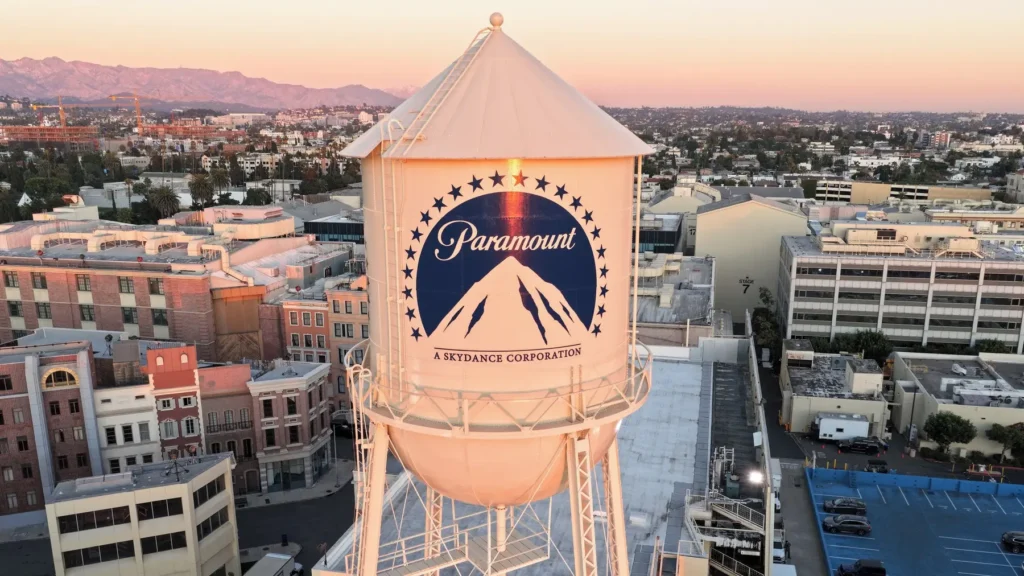
The approval of a reported $113 billion merger between Warner Bros. Discovery and Paramount Global is being framed as the creation of a “next-generation media and entertainment company.”

But beyond Hollywood headlines, the deal signals something far more consequential for sport: a global media landscape rapidly consolidating into fewer, more powerful hands.

For Australian football, particularly the A-League, this is not just background noise. It is a structural shift that could define the league’s future.


A shrinking marketplace, a growing imbalance

The merger brings together an enormous portfolio of assets, such as film studios, broadcast networks and streaming platforms, under a single corporate umbrella. It reflects a broader industry trend: scale is no longer an advantage in media, it is a necessity.

Yet with that scale comes concentration. Fewer buyers now control more platforms, more audiences, and more capital. Critics of the deal have warned that such consolidation risks reducing competition and narrowing the range of voices in global media.

For sport, the implications are immediate.

Broadcast rights are no longer negotiated in a diverse, competitive market. Instead, leagues are increasingly competing for space within vertically integrated media ecosystems. This is because decisions are driven not just by audience demand, but by global strategy, bundled content offerings and long-term platform growth.


Why the A-League is particularly exposed

This shift lands unevenly across the sporting landscape.

Leagues like the Australian Football League (AFL) and National Rugby League (NRL) remain dominant domestic products, commanding billion-dollar broadcast deals and consistent mass audiences.

The A-League, by contrast, operates from a more fragile commercial base.

Despite its global game status, the league continues to face:

  • Inconsistent crowd figures
  • Fluctuating visibility
  • A comparatively modest broadcast deal with Paramount

In a fragmented media environment, this is manageable. In a consolidated one, it becomes a vulnerability.

Because as the number of broadcasters shrinks, so too does the margin for leagues that are not seen as “must-have” content.


From open market to closed ecosystem

The critical shift is not just economic, it is also structural.

In the past, leagues could leverage competition between broadcasters to drive rights value. Now, with fewer but larger players, the balance of power tilts toward the platforms.

Content is no longer simply acquired, it is curated.

And in that environment, only properties that deliver one (or more) of the following will thrive:

  • Guaranteed audiences
  • Global scalability
  • Year-round engagement
  • Strategic value within a broader content ecosystem

This is where the A-League faces both its greatest challenge—and its greatest opportunity.


The overlooked strength of Australian football

While often positioned as a “developing” product domestically, football offers something no other Australian code can replicate: global alignment.

As the world’s most popular sport, football operates within an international ecosystem that extends far beyond national borders. Australia’s geographic position, bridging Asian and Western markets, adds further strategic value.

For a global media entity like Paramount, this matters.

The A-League is not just local content. It is potentially exportable, scalable and aligned with global football narratives. It also taps into younger, more digitally engaged audiences, who are increasingly driving subscription-based streaming growth.

In a media environment defined by platform expansion, that is not a weakness. It is an underutilised asset.


Why consolidation should drive MORE investment

The instinct in a consolidating market is often caution by tightening budgets, focusing on proven performers and minimising risk.

But for Australian football, that approach is self-defeating.

Because without investment:

  • Production quality stagnates
  • Storytelling weakens
  • Audience growth plateaus
  • Commercial value declines

And in a system that rewards scale and engagement, stagnation is equivalent to irrelevance.

Instead, consolidation should be seen as a trigger for strategic investment:

  • Elevating broadcast presentation
  • Strengthening club identities and narratives
  • Expanding digital and streaming integration
  • Positioning the league within the broader global football conversation

In short, making the A-League indispensable, rather than optional.


The real risk: being left behind

The emergence of media giants like a merged Warner Bros. Discovery and Paramount Global signals a future where content is filtered through fewer, more powerful gatekeepers.

In that world, leagues that fail to assert their value risk being sidelined, not because they lack potential, but because they fail to meet the evolving demands of the platforms that distribute them.

For the A-League, the danger is not collapse. It is marginalisation.

A slow drift into irrelevance while larger codes capture the attention, investment, and audiences that define modern sport.


Conclusion: a defining moment

This merger is not about Hollywood. It is about power.

Power over distribution. Power over audiences. Power over what gets seen and what does not.

For Australian football, the message is clear.

In a world of media consolidation, visibility is earned through value, not assumed through presence.

And if the A-League is to secure its place in that future, investment is no longer optional.

It is existential.

Most Popular Topics

Editor Picks

Send this to a friend