


AIFF announces new motto and direction

India’s national sporting body for football, the All India Football Federation (AIFF) has announced a new motto – ‘Indian Football. Forward Together’ along with a new direction for the organisation.

The new motto and direction represent the core views of the organisation which are to promote, grow and develop football within India. The AIFF also said that the motto links up with the key values of the organisation – passion, respect, leadership, teamwork, integrity, professionalism and inclusivity.

The AIFF launched four key pillars as a part of the new brand direction. The key pillars are -developing the game, progressive, modern and driven and ambitious.

The new motto also represents the AIFF’s goals of driving development of football forward, from the lower levels of competition up to the national representative teams.

“The entire country is going through a period of lull especially when it comes to sport. AIFF has already taken the first step to bring back sporting activities in the country and it is only becoming possible because all the stakeholders are working seamlessly and tirelessly in this direction,” President of the All India Football Federation, Praful Patel said in a statement.

“With the new motto in place, our objective is to streamline these efforts in our communication with all the stakeholders. Even the smallest unit in the chain plays an important role.”

The first pillar of developing the game affirms the AIFF’s commitment to the development of football. The AIFF said that this includes coaches, referees, clubs, leagues, regional federations and tournaments.

The second pillar is ‘progressive organisation and team’. The federation said that this pillar represents a forward thinking mindset along with an intent to work with fans and stakeholders as well as being inclusive.

The third pillar focuses on the federation wanting to be a modern organisation with the AIFF wanting to move forward via technology.

The last pillar, ‘driven and ambitious’ represents a commitment to the AIFF developing the sport on and off the field.

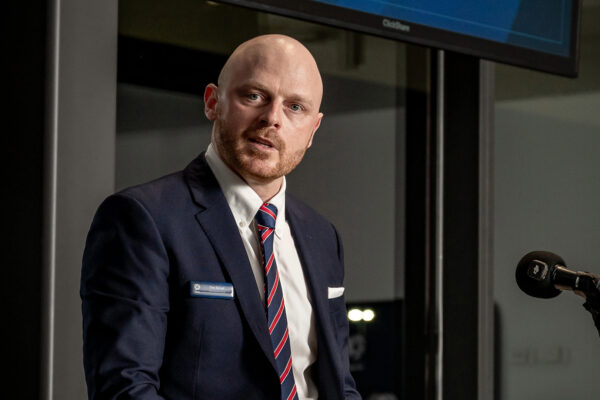
“We have been doing an immaculate amount of work starting from developing grassroots to the national teams. Slowly but gradually, by working together, I am sure we will be able to achieve great things while establishing a pipeline of young talent for the Indian football team. Forward Together is the most inclusive way of defining it,” General Secretary of the AIFF, Kushal Das said about the new direction.

The new motto and brand direction was launched on Monday.

Previous ArticleNext Article

1200 players to descend on Geelong for Football Victoria Country Championships as Regional Football Enters New Era

More than 1,200 junior footballers from across regional Victoria will converge on Geelong this weekend for the 2026 Football Victoria Country Championships, with players representing eight regions competing across the King’s Birthday long weekend at Stead Park and Myers Reserve.

The tournament, which has been running since 1978 and has grown into one of the largest junior football events in the country, takes on additional significance this year. It marks the first Country Championships since Football Victoria announced a restructured regional football model in December 2025, making this edition an early measure of how that new framework translates into competitive outcomes at the representative level.

Sixty-seven teams will compete across Under-11 to Under-16 age groups for both boys and girls, with finals day scheduled for Monday. All fixtures and results will be available through the DRIBL app.

More than silverware

FV Regional Development Manager Lauren Stevens said the tournament represented something beyond the competitive results it produces.

“The Country Championships are an exciting opportunity for players from across regional Victoria to come together, represent their region and create lasting memories both on and off the pitch,” Stevens said. “This tournament has a rich history and continues to play an important role in bringing regional football communities together while providing players with the chance to experience a high-level representative environment and talent identification opportunity.”

That dual function is central to what makes the Country Championships structurally significant. For many players travelling to Geelong this weekend, a regional representative tournament is the highest level of football they have experienced. For some, it will be the environment in which they first come to the attention of Football Victoria’s technical staff and pathway programs.

The talent identification dimension carries particular weight at a moment when Football Victoria’s participation numbers are at record levels and the pipeline from community football to elite competition has never been more closely scrutinised. The 2025 Annual Report documented a 14 percent overall participation increase, with junior football among the fastest-growing segments. Tournaments like the Country Championships are where that growth begins to translate into representative opportunity for players who live outside metropolitan Melbourne.

Regional football in transition

The timing of this year’s Championships against the backdrop of Football Victoria’s regional restructure adds a layer of context that will be watched closely by administrators and clubs. The December 2025 announcement of the new regional model represented the most significant structural change to regional football governance in the state in some years, and the process of transitioning Life Members from regional associations into the Football Victoria honour roll at last month’s AGM reflected the scale of that change.

How the eight regions perform this weekend will offer an early indication of whether the restructured model is serving regional communities effectively.

The Corrie Koppen Fair Play Award, introduced last year to celebrate the life and legacy of the late Cornelius Koppen, adds a dimension to the competition that sits alongside the on-field results. The award is given to the region judged to have played and conducted itself in the spirit of the game, a recognition that how communities behave at a junior tournament is as meaningful as what they win.

Football West and Cook Government extend $960,000 mental health partnership through to 2027

Football West will host its fourth annual Think Mental Health Round across all leagues and competitions on 25-26 July, backed by a renewed state government commitment worth $960,000 to support mental health and wellbeing programs in Western Australian football.

The Cook Government has extended its Healthway partnership with WA Football until 2027, with funding directed toward initiatives including Talk to a Mate BBQs, mental health education and training across both men’s and women’s competitions.

The round, run in partnership with Healthway’s Think Mental Health campaign, invites clubs to participate through events, signage, social media messaging and facilitated wellbeing sessions. Football West is also organising a series of mental health and wellbeing sessions for clubs in partnership with A Stitch in Time, with details to be confirmed. The partnership also supports an expansion of the Footy Fundamentals program, which targets fundamental movement skills in early childhood.

A Fixture in the Football Calendar

Think Mental Health Rounds have featured in the WA football calendar since 2022, following an earlier rollout in country competitions. This year’s metropolitan round aligns with Round 11 of the West Australian Football League and Round 12 of the West Australian Football League Women’s, placing mental health messaging at the centre of both competitions simultaneously.

For club administrators, the round offers a low-barrier activation opportunity. Clubs can register and access resources through Football West’s online portal, with options ranging from hosting a BBQ to completing the True Sport eLearning module on mental health and wellbeing awareness.

Sport and Recreation Minister Rita Saffioti said the partnership reflected the reach of football across Western Australian life.

“So many Western Australians have links to local football, whether they play, volunteer or support from the sideline, so this is a fantastic partnership and great way to generate awareness about this important issue,” Saffioti said.

Mental Health Minister Meredith Hammat said football clubs were well-positioned to shift the conversation around seeking support.

“WA Football’s upcoming Think Mental Health Rounds serve as a reminder of how important it is to check in and support one another, and make sure no one faces their struggles alone,” Hammat said.

Preventative Health Minister Sabine Winton said the government’s goal was to build capacity at club level.

“Through Healthway’s partnership with WA Football, we are equipping clubs with the tools and knowledge to champion mental health and wellbeing, build resilience and create stronger communities,” Winton said.

Just an awareness campaign?

Beyond the health outcomes, rounds like this carry practical significance for the football ecosystem. Clubs that foster psychologically safe environments tend to retain players and volunteers at higher rates, a factor that matters in a state where grassroots football competes for participants across a crowded sporting landscape.

Volunteer burnout and player dropout are persistent pressure points for football administrators across Australia. Programming that addresses mental health at club level, rather than directing participants elsewhere, positions clubs as genuine support structures within their local areas. That reputation has tangible effects on registration numbers, family engagement and the willingness of people to take on coaching and administrative roles.

The $960,000 commitment across two years also signals that the state government views football infrastructure as more than turf and floodlights. Embedding health initiatives within the competition calendar gives federations and clubs a degree of programming certainty, reducing the reliance on ad hoc grant applications to fund welfare activities.

For Football West, the extension means mental health support sits within a funded, multi-year framework through the back half of the decade, rather than being renegotiated season by season. In a state as geographically dispersed as Western Australia, where clubs in regional areas often operate with limited resources, that continuity carries weight beyond the metropolitan competitions it most visibly supports.

Most Popular Topics

Editor Picks

Send this to a friend