
Doug Hodgson: The ‘forgotten Aussie’ and the importance of a mature transfer system

Although they embody far more, at their very core, every football club is essentially a business entity. Countless variables makeup a club’s balance sheet including sponsorships, merchandising, broadcast deals and ticket sales, but one major income stream that Australia is yet to fully exploit is the one that draws the most public interest – player transfers.

The cash injection received from player transfers can do wonders for a club, regardless of their stature and size. In addition to allowing clubs to reinvest the funds into their facilities and development pathways, a mature transfer system also encourages coaches to develop their youth instead of relying on proven talent.

As one of Australia’s early international football exports, Doug Hodgson was one of a group of young guns who caught the eye of international scouts and paved the way for many others to follow. His story is one of frustration and overcoming challenges, but ultimately shows that young players need resilience to make it in what is one of the world’s most competitive industries.

“As a player you have a small window and opportunity, you have to take it with two hands and make sure you have the desire and passion to succeed,” Hodgson said.

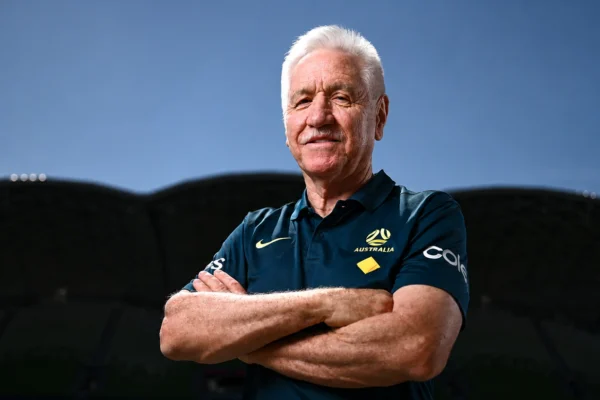
In 1994, Hodgson moved from Heidelberg United to Sheffield United for an upfront fee of £30,000, a figure which rose to approximately £70,000 with add-ons based on appearances. He was also joined by fellow Aussie, current Adelaide United Head Coach Carl Veart (pictured in top photo) in a deal worth £250,000.

Doug Hodgson making headlines for scoring on his debut for Northampton Town.

But despite earning a dream move to England, Hodgson’s path to the top was far from easy.

Following a car accident as a teenager, Hodgson was told by doctors he may never play again. A few years and a lot of hard work later, as a 20-years old he won Heidelberg United’s Best and Fairest award, earning a loan move to Sunshine George Cross where he was managed by Hull City legend Kenny Wagstaff.

“Kenny organised a trial with Hull City and I worked and worked to be prepared for it. At the end of the trial I was offered a two-year contract worth £450 per week. The club offered Heidelberg £20,000 but there was a transfer break down as Heidelberg wanted £140,000,” Hodgson recalls.

“As you would imagine, there was anger, disappointment, and frustration. I thought, here is a club that paid nothing for me, and I had serviced them as best as I possibly could. I won the Best and Fairest only for them to slap a price tag on me that wasn’t realistic.”

“I understand business and maybe they thought that was a fair price, but as a young kid, there was a lot of bitterness as I knew these opportunities didn’t come up often.”

It would take another two years for Hodgson to get another chance at his dream move. While playing in Western Australia (although still under contract at Heidelberg), Sheffield United came down under for a post-season tour. After seeing him play, Blades manager Dave Bassett was so impressed with the young Aussie that he offered him to join his team for the remainder of the tour as a trial, resulting in a deal being struck.

Hodgson possessed the talent and mental steel to become a quality player in England, and although his career was heavily injury affected, he still managed to make almost 150 senior appearances, most of which with Sheffield United and Oldham Athletic.

One honour that eluded Hodgson, perhaps due to injuries, politics or just plain bad luck was earning a Socceroo’s cap. This has led to him being dubbed the ‘forgotten Aussie’ in some circles.

“At one stage, while playing for Sheffield United in England’s first division I played 14 games straight and I won player of the month. Similarly, at Oldham in the second division I was voted player of the month when I was 29 and probably playing the best football of my career,” Hodgson said.

“There was an Australian national team camp happening in London at the time. I’m not saying I should of played because that’s unfair on the other players, but I should have been given the opportunity to go to camp. Not being able to represent my country was the biggest disappointment in my career. I eventually walked away from the game in England with 12 months left on my contract due to injuries.”

Despite the injuries and frustrations he faced, Hodgson built strong relationships in England and maintains connections with many of his former teammates and coaches today.

This is an enormous factor in international transfers that is seldom mentioned. Players who venture overseas often get the opportunity to network and learn from the brightest football minds in the world, eventually bringing that knowledge back to Australia.

“I coached the U-15s at Northampton Town and the Sheffield United Reserves. Neil Warnock was grooming me to become the next manager of the club but mentally I found it hard to accept the way my career ended,” Hodgson said.

Since returning to Australia, Hodgson has brought back a raft of knowledge which he has used to teach the next generation. Some of his key accomplishments include coaching seniors and juniors at the NPL level, being involved with New South Wales’ youth program, and leading an U-14 youth team to the Victorian championship.

“I have contacts and will open a door for someone if I can if they are good enough. We need to remember though that different kids develop at different ages and its important to focus on education and make sure they are always moving forward,” Hodgson added.

Five of the 10 largest outbound transfers occurred during the NSL era.

On the flipside of the coin, for Heidelberg United, the windfall received from Hodgson’s sale meant covering debts and ensuring the club’s financial viability during a tumultuous time.

“In those days, most clubs were running on overdrafts and volunteer work. We had small sponsorships but really relied on the community to raise funds. There weren’t many player transfers, but we had some success with guys like Doug Hodgson, John Anastasiadis, and before that, Yakka Banovic who joined Derby County,” said former Heidelberg President Peter Tsaklis.

“We were paying about $60,000 per year just for registration into Australia’s top league and there weren’t any grants or assistance from the government at the time. The transfer fees were much needed but we barely able to use the funds to improve facilities at the club, as most of it just went towards running costs,” Tsaklis added.

This was the norm at the time, where if a club was lucky enough to receive a large transfer fee, the funds were often used to balance the books. Or, if they were in a stronger financial position, used to make sorely needed investments and upgrades that they otherwise would not have been affordable.

One example of this occurring was the sale of Socceroos legend Mark Viduka, who was famously transferred to Dinamo Zagreb from the Melbourne Knights. The fee helped the club fund its stadium redevelopments and officially named its grandstand in his honour, a grandstand which today still houses one of the NPL’s most passionate fanbases.

Although Viduka’s exact transfer fee is unlisted, incredibly, five of the top 10 largest transfer fees ever received by Australian clubs occurred during that era.

To add to this, despite the mammoth deals regularly taking place around the globe, the $1.7 million Leicester City paid for Zeljko Kalac in 1995 still remains the largest transfer fee received by an Australian club.

These statistics are not emphasised to criticise the current league or administration, but they do highlight what an enormous opportunity exists in Australian football.

Australia’s transfer system has fallen far behind the rest of Asia’s key players.

Much of the rest of Asia seems to have evolved in their abilities to produce and sell talent. According to data gathered by Optus Sports, Australia’s outbound player sales in 2019 totalled $2.698 million, a number dwarfed by our rivals Japan ($49.39 million) and South Korea ($37.45 million).

If the game’s administrators can over time build an ecosystem that incentivises player transfers, the prospect of adequate financial reimbursement could lead to more clubs focusing on developing players rather than looking for short-term results, ultimately leading to more opportunities for youth and clubs tapping into one of the most lucrative income streams of all.

Previous ArticleNext Article

Beyond the Pitch: Miyuki Kobayashi on the Real Challenges Facing Japan’s Women’s Game

Last week, Soccerscene spoke to pioneer of women’s football in Japan, Miyuki Kobayashi, about the game’s development in Japan and the intersection between sporting and social change in the country.


Talent, quality and recent silverware

After Japan’s recent AFC Women’s Asian Cup victory in the final against Australia, the women’s national team solidified its standing as the No.1 team in Asia.

Throughout the last 15 years, Japan’s women’s national team has grown into a formidable opponent, boasting a World Cup trophy, an Olympic silver medal, as well as three AFC Women’s Asian Cups.

The talent is undeniable. The quality is unwavering. And the team shows no signs of slowing down.

But these victories and trophies on the world stage wouldn’t be possible without the leaders behind the scenes – none more so than Miyuki Kobayashi, former WE League Board Member and current JEF United Ladies Scout and Academy Chief.


Laying the foundations

Kobayashi has led the charge for women’s football in Japan, promoting not only a sport which values success, but one which empowers female footballers across the nation.

“At university, not many girls were playing and we didn’t have an official team. I went to the US and the environment was so different,” Kobayashi explained.

“That opened my eyes – women can play. That’s how I started the women’s soccer league when I came back: to make an environment for girls to play.”

Thus, accessibility and opportunity became driving factors behind Kobayashi’s work, not only for those on the pitch, but for those in the dugout.

“I got involved at the JFA (Japanese Football Association) to promote women’s football. We wanted to create the opportunity for women to be coaches.”

“They are coached by men all the time, so even when the top players leave the football world, they never think to be involved.”

Furthermore, as a former coach of JEF United Ladies Youth and General Manager, Kobayashi was intent on employing as many female coaches as possible. It was not merely a personnel change, but a challenge to widespread social attitudes.

“When I started to employ female coaches, the girls’ parents asked why the coach wasn’t a man. But gradually, we started to make it equal – they didn’t talk about the gender, but about the quality of the coach.”


The mission to empower

In 2011, the same year Japan’s women won the World Cup, the domestic league was yet to become professional. Known as the Nadeshiko League, players would work during the day and train in the evenings.

The transition from an amateur to the current professional league required time, resilience and a change in perspective.

“The sports world in Japan is more traditional – it is dominated by men,” said Kobayashi.

“If you want to make the environment even, or (want) more women to come into the (football) world, you can change the mind of the players.”

Since 2021, the WE League has embodied a sense of growth and positive change for the women’s game. In name and nature, it looks to empower players, coaches and all involved in the industry.

“I was in charge of mission achievement for women’s empowerment. We wanted to educate the players, to inspire girls and women who watch the game.”

However, the drive to empower women in football was not without backlash and challenges.

“Some people don’t like that word: ’empowerment’. It’s too strong for them. Some women really appreciate it, but it’s not easy to change the mind of society through football,” Kobayashi admitted.


Growing and attracting talent

Although WE League clubs are accelerating youth development and expanding pathways across U15, U18 and first team football, Kobayashi acknowledged that the overall product must improve to bring foreign players to Japan and entice homegrown talent to stay.

“Most of the national team players go to Europe or North America. I don’t say it’s a problem, but from a young age, girls who can play in the WE League want to go abroad,” Kobayashi outlined.

Indeed, when looking at the starting XI in last month’s AFC Women’s Asian Cup final, only one player – Hana Takahashi – plays in the WE League.

But the key to attracting domestic and international players to the WE League, is aligning financial investment and industry attitudes.

“The reason why women’s football has developed in European countries is the social thinking – you have to be equal and have the same opportunities as men in football. The Japanese way of thinking, especially in the football world, is not that at all,” Kobayashi continued.

“When I speak to people at Spanish clubs, women’s football is not a charity, but an investment.”

“We have assets. We have good, young players, but we’re exporting them, so we need to import too.”

Indeed, Spain is a perfect example of what can happen when investment becomes intentional, not optional. Back-to-back UEFA Women’s Nations League titles, 90% television viewership increase since 2016, and record-breaking crowd numbers reflect what can happen when the industry aligns in vision and commitment.

Japan has the players to compete against any nation in the world. Purposeful investment, combined with its overall quality of players and style, could transform the WE League into a true, global powerhouse.


The vision for the future

Moving forward, Kobayashi hopes that girls progressing through JEF United’s academies develop confidence and resilience, whether as players or people.

“We want to make the girls – even if they aren’t in JEF United – continue playing football and continue to be leaders,” Kobayashi said.

“Some of them have a dream to be a coach or a leader off the field too, so that’s one of the attributes we want to develop.”

This resilience, reflected by the club’s ‘never give up’ philosophy, is testament to the vision of empowerment championed by Kobayashi across the women’s game.

Even in the face of social obstacles and a lack of financial investment, perseverance and hard work is at the bedrock of women’s football in Japan. It is not just that these values exist, but that they are consistently manifested on and off the pitch, which can show future generations that football is a sport for all – men and women alike.


Final thoughts

There is no limit to what the WE League and the national team can achieve if given the resources it deserves. All the ingredients are there: individual quality, a distinct playing style, football philosophy and ambitions to grow.

By following the example of industry leaders like Kobayashi, women’s football in Japan can hopefully continue to make waves of impact – in the sporting landscape and society as a whole.

How Sunbury United Is Defying the Odds to Keep Grassroots Football Alive

Sunbury United stands as a cornerstone of the local community in Melbourne’s outer northwest. But for all the hard work given by local families and volunteers, the lack of funding continues to prohibit a level of growth which matches both ambition and potential.


Consolidating growth across the club

Soccerscene recently spoke to Club President, Sherridan Long, about the club’s ambitions going forward, the family-oriented culture, and the challenges of operating at grassroots level in Australia.

“It’s gone really well in retention of players from 2025, [and] recruiting some players who have been really keen to come to the club and are really contending over just a small handful of spots,” explained Long.

“That’s been really rewarding to see the popularity of our programme and what the team is trying to develop in terms of culture and performance, to be somewhere that people want to go to.”

Furthermore, Sunbury United’s reputation in the community continues to inspire waves of prospective junior players, who are lining up for squad vacancies.

“We’ve got waitlists for almost every age group,” Long continued.

“We’ve seen a growth in interest coming into the club and girls wanting to play football, but also lots of families wanting to move to Sunbury and join our club, or move from other clubs.”

Sunbury United is ensuring that its culture and matchday atmosphere remains a safe, welcoming place for those who matter most in grassroots football: families, players and volunteers who sustain it every week.

Planning for success on and off the pitch

Despite solidifying a successful culture off the pitch, Sunbury United are refusing to slow down. From the senior men’s team to junior age groups, high-performance remains a key objective.

“Everyone is trying to win leagues – this is something we’ve been working towards for a few years,” said Long.

“Each little milestone across the year means we’re getting closer to a senior men’s promotion or championship – it’s been over ten years since a promotion or championship at the club.”

Although several years have passed since Sunbury United saw success in the form of silverware, the club’s progress in recent seasons may yet lead to a trophy in the very near future.

But reaching this goal requires not only a cohesive effort from players and coaches, but from all stakeholders and participants within the club space. To this end, Sunbury United underwent a strategic plan set-up to align their operations with the ambitions and thoughts of everyone involved.

“We undertook some survey and stakeholder analysis through our members to understand what it is they love about Sunbury United, why they participate, where they see the club going and how they can be a part of that.”

“It was nice to hear exactly what they wanted, what they thought of and what they felt by being part of United. So that shaped our strategic plan in terms of performance, community and working together as a team.”

Ultimately, it is this balance of performance, teamwork and trust in the community which can set clubs up for success. Whether at grassroots or professional level, if everyone involved operates under shared values and vision, the silverware becomes a question of when, not if.


Challenges of the grassroots game

As with any club or organisation in sport, progress inevitably encounters barriers, hiccups and challenges along the way. Facility access, infrastructure quality and investment are common issues not just for Sunbury, but for all in the grassroots space.

“Most places share winter and summer sports so you can only use your space a certain amount of months a year before it turns to the summer sport,” Long outlined.

“It means that there’s no space for juniors to conduct a proper pre-season, so they’re doing it at other reserves in Hume Council and not actually at our home.”

Indeed, we have seen already the lack of investment directed towards the football community. Soccerscene recently looked into The City of Hume’s current budget, which revealed a 10:1 funding imbalance between AFL and the beautiful game. For Sunbury United, and many other clubs, the impact is undeniable.

“We can’t fill the second or third women’s team because there’s no infrastructure to facilitate changing between boys and girls changing room on the flick of a dime. You’re not only balancing access between two squads and gendered safe spaces, but also junior and senior spaces,” Long explained.

“We’re limited by aspirations being within the lines and being within the physical building that we have. Investment in football infrastructure would be a game-changer.”

It’s a common theme in Australia’s grassroots landscape. Clubs with loyal supporters, interested players and a desire to develop, continue to be restricted by the boundaries of their facilities.

It is not about demand. It’s about necessity. If clubs like Sunbury United are to continue working towards player development and squad expansion, external investment is a must-have.


Fighting for the future

As Sunbury United continues to strengthen bonds with the surrounding community and within the club, the foundations are ready for the seasons to come. From youth teams to seniors, the club continues to emphasise connection as a fundamental principle.

“We sit under one umbrella. We’re not two separate committees or two clubs,” Long revealed, expressing the idea behind a connected senior’s and junior’s set-up.

“It’s important to the long-term sustainability and longevity of our club, not just to the performance side, that everyone’s invested and feels a part of something, and that they can be involved.”

One club, one philosophy and one family. Grassroots football will continue to throw its challenges for years to come, but Sunbury are, and will be, more united than ever.

Most Popular Topics

Editor Picks

Send this to a friend