

Attiki Returns As Women’s and Girls’ Team Sponsor For Bentleigh Greens SC

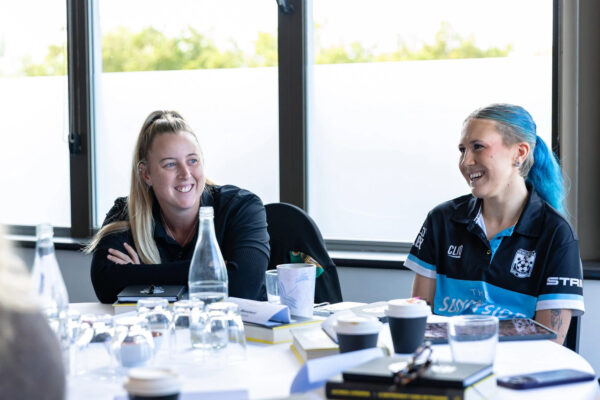
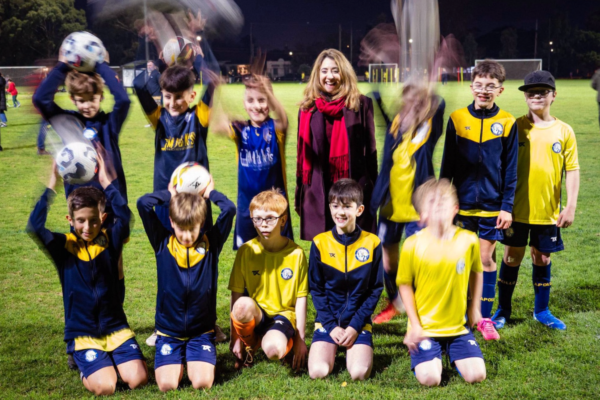
Bentleigh Greens SC have announced a returning sponsorship with Attiki for their Women’s and Girls’ teams ahead of the 2026 NPL season.

Attiki is a construction company who specialise in renovations and extensions of residential buildings like kitchens, bathrooms and adding rooms.

Since first being sponsored, Attiki have support the football club’s commitment to grow women’s and girls’ sports, and the pursuit to build a strong future for female footballers at Bentleigh Greens.

Bentleigh Greens Soccer Club President, Abraam Gregoriou confirmed this by saying the renovation company wanted specifically to sponsor the women’s and girls’ teams at Bentleigh Greens.

“It is encouraging to see local businesses take a keen interest in women’s football at a time where sponsorship is harder and harder to come by and all the media attention is fixated on the men’s game,” he said to Soccerscene.

“Having sponsors like Attiki on board mean we can invest in our girls, be it new equipment, strength and constituting or improved opportunities for our coaches.

“We encourage all our families, if you are planning your next renovation why not choose a business that supports our community like Attiki.”

The Increased Participation of Women’s Football

The increase in girls’ and women’s football popularity and investment has steadily grown since gaining national attention from the FIFA Women’s World Cup 2023, though football clubs like Bentleigh Greens SC have been supporting female teams long before the event.

The 2024 National Participation report published by Football Australia claimed they saw an increase in women and girls participation of 221,640 participants in outdoor, social and registered Futsal, with an increase of 16 percent compared to the previous year.

Therefore, sponsorships used to support just women’s and girls’ teams, including the deal between Bentleigh Greens and Inner Athlete allow for the players and the club to play at their most efficient level, as well as with the correct resources and equipment.

Next year, the Women’s Asian Cup will be held in Australia which will boost the cultural awareness and excitement of the sport of Football as it did in 2023.

Previous ArticleNext Article

Northern NSW Football’s Leadership Program Reaches 98 Graduates as Sport Moves Toward 2027 Gender Parity Targets

Northern NSW Football has concluded its 2026 Women’s Leadership Program, with 13 participants taking the total number of graduates to 98 women across the region since the program launched in 2023. The five-week program combined online modules with a two-day conference at Rydges Resort in the Hunter Valley, bringing together club volunteers, committee members, administrators and NNSWF staff from Newcastle, Macquarie, Northern Inland and Football Mid North Coast zones.

The program’s growth has been uneven year to year. It launched with two intakes in 2023, drew 25 scholarship recipients in 2024,then settled to 12 in 2025, which brought the cumulative total to 85 before this year’s cohort of 13.

The program was facilitated by Ann Odong, who founded The Women’s Game, Australia’s first dedicated women’s football website, in 2008,and later spent six years as Football Australia’s Media and PR Manager steering the Matildas’ program through multiple World Cups and Olympic Games,before moving into independent consulting work.

A pipeline built against a 2027 deadline

The program fits within a wider set of national targets football and the broader sport sector have committed to reaching within the next twelve months. Football Australia’s Our Game initiative, launched in 2021, set a goal of 50:50 gender parity across players, coaches, administrators and referees by 2027.Separately, the federally backed National Gender Equity in Sport Governance Policy requires all funded national and state sporting bodies to reach 50 per cent women or gender-diverse board directors by 1 July 2027, with funding to be withheld from organisations that fall short.As of the most recent Australian Sports Commission data, 22 per cent of chief executives and 25 per cent of board chairs across 65 federally funded national sporting organisations were women.

Programs built around confidence, networking and committee-level skills, the model NNSWF has run since 2023, are the mechanism most sporting bodies are relying on to close that gap, since board and executive vacancies typically draw from an organisation’s existing pool of committee members, volunteers and administrators rather than external recruitment.

This year’s cohort

University of Newcastle FC’s Charlotte Carey, one of this year’s participants, said the program had given her the confidence to pursue a career in football while developing skills applicable across other areas of her life. Fellow participants included representatives from Cooks Hill United, Westlakes Wildcats, Newcastle Olympic, Lake Macquarie City FC, Western Wolves, Gunnedah and District Soccer Association, Wauchope FC and Stockton Sharks, alongside three NNSWF staff members.

NNSWF Participation and Women’s Football Officer Jamie Bressan said the program had continued to provide women across the game with an opportunity to connect and build leadership skills, with topics covering effective communication, personality styles and team dynamics. Bressan pointed to the network the program builds among participants, drawn from clubs and committees across the region, as one of its central functions rather than the training content alone.

The 2026 cohort’s spread across four zones, Newcastle, Macquarie, Northern Inland and Football Mid North Coast, continues a pattern of the program drawing participants from outside the Hunter region’s largest population centres, consistent with its original design to make the conference and online components accessible to women in regional and remote parts of northern NSW through funded travel and accommodation.

Spain’s Liga F receives history-making investment into women’s football

The deal, worth AUD 91 million (€55 million) across four seasons, represents a monumental investment into Liga F and women’s football by Gasol16 Ventures and Fortified Partners.


Setting the pace

The investment comes as a hugely signficant moment in the history of women’s football not just in Spain, but across Europe.

But, given Spain’s commitment to growing the women’s game in recent years (and the world-beating teams it produces as a result), it is hardly a surprise that Liga F is at the centre of this milestone.

In the 2024-25 season, Liga F distributed AUD 28 million to its clubs, as well as doubling television audiences across two years.

The rate of growth is astounding, and shows no signs of slowing down.

“Women’s football in Spain has made a spectacular leap in recent years: audiences have almost doubled in two seasons, and stadiums are incresingly full,” explained Founder and President of Gasol16 Ventures, Pau Gasol.

“Therefore, this is not a sentimental commitment to women’s sport. It is an investment decision based on data, market trends, and the conviction that women’s football represents a growth opportunity with enormous potential for value creation.”

Thus, Gasol’s motivation reveals much about his own reasons for investing, as well as about the current status of women’s football in Spain.

The landscape does not want, or need, sentimental commitment. It is a financial and sporting powerhouse in its own right, and one which can grow to new heights year-on-year.


Securing a successful future

Furthermore, the long-term nature of the deal (set for the next four seasons from the 2026-27 campaign) shows vision and ambition for what the league can become.

“This agreement allows us to look further ahead and equip ourselves with the necessary tools to continue building an increasingly strong, more competitive league with greater capacity to generate value for our clubs,” outlined President of Liga F Beatriz Álvarez Mesa.

“What excites me most about this alliance is not just the investment it brings, but the message it sends: there are people and institutions who believe in the potential of Liga F and want to be part of its growth.”


Final thoughts

This is in stark contrast to the current situation of the A League Women in Australia, which PFA Chief Executive Beua Busch described as at a “tipping point”.

The problems remain the same as they were several years ago. Investment, player satisfaction and attendances are well below other major leagues. The key is creating a product which presents the immense value of clubs, players and commercial opportunities.

Because when intentional investment comes, the question stops being ‘who will invest?’ but ‘who wouldn’t?’ .

Most Popular Topics

Editor Picks

Send this to a friend