


Family, Football, and Ambition: Manny Spanoudakis’ Return to St George City FA

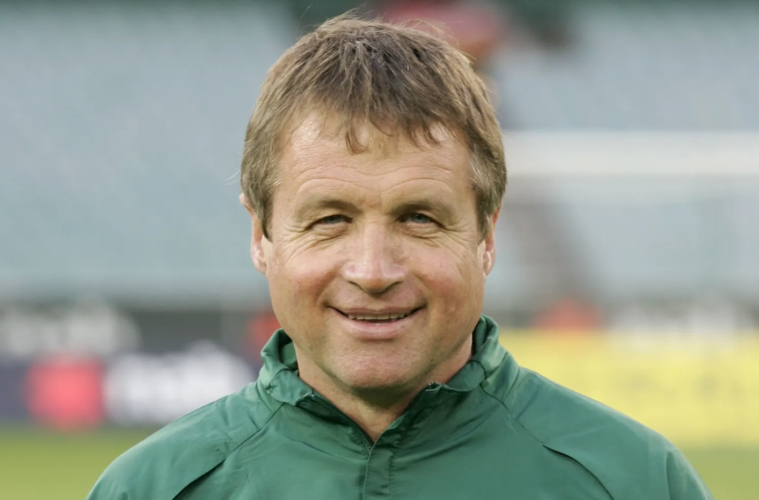
Manny Spanoudakis is a name synonymous with success in NSW football, both as a player and a manager. Now, he’s returning to familiar territory as the new head coach of St George City FA, a club he first led during their inaugural season nine years ago.

Recently, Spanoudakis served as an Assistant Coach and Technical Analyst at Marconi, working alongside Manager Peter Tsekenis and Assistant Peter Papoythis—a unique role for him, as it marked his first coaching stint outside of a managerial position. His time with the Stallions ended on a high, securing a dominant 3-0 victory over Rockdale llinden in the 2024 NPL Grand Final.

Now at St George City, Spanoudakis reunites not only with the club but also with his son James, who will be the assistant coach under his guidance. James has honed his coaching skills under some great names at St George, including experienced football director Aytek Genc.

In an interview with Soccerscene, Spanoudakis reflects on his recent experience at Marconi, his unique father-son coaching dynamic with James, and his ambitions as the new manager of St George City FA in the NSW NPL1.


Manny and his squad celebrate the premiership and promotion.

Theo Athans 

Having just completed your stint at Marconi and it ending with great success after a grand final win, what was it like working under experienced coaches and what was your highlight?

Manny Spanoudakis

My tenure at Marconi was the first time ever in my coaching career where I wasn’t the head coach. I was very appreciative of the opportunity presented to me by Peter Tsekenis and embraced the project, using it as a platform to enhance my own leadership. The thought process being that ultimately, when I go back to being a head coach, I will have lived life through the lens of a staff coach.

My experience at Marconi was very enjoyable, there was a very good bond and a mutual respect with the head coach (Peter Tsekenis), I had known him and the assistant Peter Papoythis very well, add that to my history and successes as a head coach, we had a real instant connection with a common goal and that goal was to win a trophy for the club.

It was very good to go to a club in that capacity (as a staff coach) and also great to work at such an iconic club like Marconi, what I call a proper football club. I believe Marconi is one of the biggest in the country when it comes to infrastructure and resources that the club has.

Many highlights during my time but you can’t go past winning the Grand Final this year to cap off what was a really enjoyable stint at the club.

T.A.

You’re joining your son James at St George City, it’s a very unique father/son coaching story. How exciting is this opportunity for you but also how has James’ coaching journey been like since he stopped playing?

M.S.

It is unique and that uniqueness was a key component of me making the decision to accept the offer at St George City FA. I did have other offers in NPL1 but ultimately, I have a connection with the club, we started the club in 2016 when Aytek Genc, the Head of Football, called me this time nine years ago and said, ‘I’m working on a new project, please don’t accept an NPL1 job until I run you through it.’

He shared with me a vision of St George City FA and that vision was what has happened right now, the club has spent the last two seasons in NPL1. I’m very proud of my role in the foundational years of the club, my objective was to get the club from NPL4 to NPL2 as quick as possible and I was very lucky to be able to do that within three seasons, winning two trebles along the way.

On that journey my son James was a player. I had limited interaction with him three years prior to that when I had won the treble in NPL2 with St George FC. James was a young player and he did earn a few 1st grade caps under me during that season.

So as a player he has been a part of the teams I have coached and won championships in NPL2, 3 and 4. Unfortunately James suffered very bad knee injuries, had multiple surgeries and was told at 25 or 26 years of age that his knee won’t be able to hold up playing football.

Manny and James share a special moment after a goal.

One thing my dad told me all those years ago when I was playing in the National League was focus on your education so you have a contingency plan and James took our advice and finished a business degree majoring in sports management but at the same time started all his coaching badges.

He made a soft transition at St George City FA and thanks to Aytek’s mentorship, James has developed a very astute football brain. He has coached u16’s into the 18’s into the 20’s and this year was the 1st Grade assistant coach working closely with Mirko Jurilj. At the same time, the club has been supporting him and he’s finishing his A licence next month so he’s on the right trajectory to be, with a little bit of luck, a very good football manager in the future.

So when the opportunity was presented to me to go back to a club I helped start and had an emotional connection to, and the opportunity to do something I had spoken to my father about before he passed in April which is to work with my son in a coaching capacity, it made the decision very easy for me and I accepted the offer from Aytek.

T.A.

What are your ambitions with St George City FA and how special would it be to win a trophy with them?

M.S.

Aytek and I worked together over 20 years ago in the NSW NPL when I was head coach at St George Saints FC. He was my assistant, and we only had one ambition and that was to win trophies. As much as we all want to win things, we want to build a football program that leaves a legacy and underpins success into the future. When you think of clubs in NSW like Blacktown City, they’re always contenders every year.

We don’t have the financial resources of other clubs so we need to build our football program and the next evolution of that program, or at least that’s what I have been charged with, to make us a contender.

There’s no magic wand or multi-millionaire president so there’s a process we’re going to go through and that process hopefully will allow us to build on the really good work that the club has done in the first two years in NPL1. As a community club, our aim is to build something that’s sustainable and can grow organically particularly now with rule changes around grassroots and home-grown players.

We need to leverage the foundation we already have at the club, add to that, evolve, and then build a football program that has us as a top 2 or top 4 contender every year. That’s the ultimate goal, for St George City FA to be recognised as a ‘club of choice’ for aspiring players. The club has built a strong reputation and a brand that allows us to attract really good young talent, take them through the development pathway and deliver them as first team players, ultimately putting them on the shopfront for A-League and beyond.

And if we can win trophies along the way, that’s fantastic!
Previous ArticleNext Article

Chelsea FC partners with Strava in landmark lifestyle partnership

The London-based giants announced the launch this week, marking a first-of-its-kind partnership for both the Premier League and Women’s Super League (WSL).

Connecting with fans

As clubs across the world look to find new and exciting ways of connecting with fans, Chelsea are showing that the answer – more often than not – already exists.

Strava is a running and fitness platform with over 195 million users across the globe. But the app represents more than just tracking speed – it is a social and lifestyle symbol through which users can connect.

And with presence in 185 countries, the app has the power to unite users from all over the world, making it a perfect fit for the globally-followed Blues.

“We are always looking at ways we can use our global brand to bring people together, often in unexpected ways,” said Brand Director for Chelsea Football Club, Scott Fenton.

“By working with Strava and becoming the first Premier League and BWSL teams to establish an official presence on Strava, we can lean into participation culture, understand where our fans are while offering new experiences for them and strengthen the bonds that unite our global community.”

Two brands with a huge international presence. One partnership which promises to encourage community, movement and healthy-living.


The intersection between sport and lifestyle

At first glance, Chelsea FC and Strava appear an unconventional partnership. Indeed, it is the first time a club has established an official presence on the app.

But at its core, the two organisations serve similar purposes: uniting people with a common passion for sport.

At its beginnings in 2009, Strava promised to replicate the feeling of team sports and unlocking new achievements, making a deal with Chelsea FC – one of the world’s most successful teams in recent years – a true full-circle moment.

“Chelsea FC joining Strava as the first Premier League and BWSL team to establish a global club on the platform is a powerful demonstration of how brands are engaging with their communities,” explained Director of Athlete and Community Partnerships at Strava, Mel Jarrett.

“We believe shared passion for movement creates real connections, and this collaboration brings that to life for Chelsea’s global fanbase.”

Juan Mata Commits to Melbourne Victory’s Future with Ownership Stake

Melbourne Victory has announced that Spanish football icon Juan Mata has joined the club’s ownership group, marking one of the most significant investment moves by a current international footballer in Australian football history.

The agreement sees Mata acquire an ownership stake in Victory while continuing to weigh up whether he will extend his playing career beyond the 2025/26 A-League Men’s season. The investment is separate from any future playing contract and reflects a long-term commitment to both the club and the wider Australian football landscape.

Should Mata eventually retire from professional football, he will also take on a leadership role by chairing a newly established football committee at Melbourne Victory, helping shape the club’s football operations and strategic direction.

More than another football investment

While former elite players have increasingly entered football ownership around the world, Mata’s decision stands apart because he is investing directly into the club he currently represents.

The move places Melbourne Victory among a growing list of clubs benefiting from investment by globally recognised football figures. However, unlike celebrity ownership groups where players often become passive investors after retirement, Mata is embedding himself within the club while still competing at the highest domestic level.

Commercial terms of the transaction remain confidential, although the investment has been described as a significant long-term minority stake designed to strengthen the partnership between Mata and the club well beyond his playing career.

A vote of confidence in Australian football

Perhaps the most significant aspect of the announcement is what it says about the perception of Australian football internationally.

After arriving in Australia following spells with some of Europe’s biggest clubs, including Manchester United, Chelsea and Valencia, few would have predicted that Mata would choose to invest his own capital into an A-League club.

Instead, the 2010 FIFA World Cup winner has described Australian football as a competition with genuine long-term potential.

“Australian football has a future I genuinely believe in,” Mata said.

“From the moment I arrived at Melbourne Victory, I’ve felt the passion of this club and the potential of the A-Leagues, and I want to be part of building what comes next—not just for a season, but for the long term.”

Mata added that becoming a shareholder represented “the natural next step” after enjoying his first season at Victory.

Rewarding an outstanding first season

The investment follows what has been one of the finest individual campaigns by a marquee player in recent A-League history.

The 38-year-old registered five goals and 13 assists across 25 appearances during the 2025/26 season, earning the Johnny Warren Medal as the league’s best player while also claiming Melbourne Victory’s Player of the Year honours. His performances helped guide Victory back into the Finals Series and demonstrated that his influence extends far beyond his reputation.

Rather than treating Australia as a final destination before retirement, Mata has instead become increasingly involved in shaping the game’s future.

A growing portfolio of sporting investments

Melbourne Victory is not Mata’s first venture into sports ownership.

The Spaniard already holds ownership interests in Major League Soccer expansion club San Diego FC and Formula One outfit Alpine Racing. He has also invested in Mercury/13, the multi-club ownership group focused on developing women’s football globally.

These investments reflect a broader trend among modern footballers who are leveraging their experience and networks beyond their playing careers. For Melbourne Victory, securing someone with Mata’s global football knowledge, commercial experience and international connections represents an opportunity that extends well beyond the pitch.

Landmark moment for Melbourne Victory

Victory Chairman John Dovaston described Mata’s investment as a significant endorsement of both the club and the A-Leagues.

According to Dovaston, Mata is a discerning investor with stakes in elite sporting organisations worldwide, making his decision to back Melbourne Victory a strong signal of confidence in the club’s direction and the league’s future.

Managing Director Caroline Carnegie echoed those sentiments, describing the announcement as “genuinely groundbreaking” and highlighting Mata’s combination of world-class football intelligence, investor mindset and long-term commitment.

A statement beyond Melbourne

Australian football has long sought greater international credibility. Not only through marquee signings, but through meaningful long-term investment.

Mata’s decision represents something arguably more valuable than a headline player signing. By committing financially to Melbourne Victory, he is effectively betting on the future growth of both the club and the A-Leagues.

At a time when Australian football continues to pursue increased investment, stronger governance and greater global relevance, having one of the game’s most respected figures choose to become an owner may ultimately prove to be one of the competition’s most powerful endorsements.

Most Popular Topics

Editor Picks

Send this to a friend