
Football Australia announces new format and October 2025 start date for National Second Tier

Football Australia has officially announced the launch of the National Second Tier (NST) competition, a key milestone in its commitment to advancing domestic club football in Australia.

Following extensive workshops and consultations with the eight NST Foundation Clubs, Football Australia confirmed the NST will kick off in October 2025, highlighting the best in Australian club football through a modern and sustainable competition model.

Key Aspects of the 2025 NST Competition:

Commitment to Play: Football Australia, the NST Foundation Clubs, and stakeholders are committed to launching the NST in 2025, aligning with the strategic goal of connecting Australia’s football pyramid and elevating iconic clubs to a national level.

Competition Structure: The NST will feature 16 teams, starting with group-stage matches and culminating in an elimination Finals Series. This structure is designed to balance sustainability with competitive integrity and commercial appeal.

Team Composition: The eight NST Foundation Clubs will gain automatic entry and be joined by eight invitational clubs, selected from the Member Federation NPL State Premiers, forming a truly national competition.

Season Timeline: The NST season will run annually from October to December, featuring nine match day rounds and concluding with a Championship Final in early December. This timeline aligns with the Domestic Match Calendar, ensuring optimal scheduling for players, fans, and stakeholders.

Brand Launch: Football Australia will unveil the competition’s official name, brand identity, marketing materials, and trophy design in the coming months, setting the stage for a memorable inaugural season.

Football Australia CEO James Johnson shared his excitement about the NST: “The introduction of the National Second Tier is a landmark moment for football in Australia. Following productive discussions with our eight Foundation Clubs and consultation with other stakeholders, we are committed to creating a competition that not only elevates our game but also enriches the football community at all levels. The National Second Tier will provide a new platform for iconic clubs to showcase their talent and connect with fans nationwide.”

Football Australia will continue collaborating with NST Foundation Clubs, Member Federations, and stakeholders to finalise the operational details for the competition.

Over the past year, Football Australia has conducted two detailed Request for Proposal (RFP) processes to select NST clubs. With advisory support from BDO, 14 clubs across six states and territories have met the technical requirements for the NST RFP process.

Of these 14 clubs, six did not meet the financial requirements for a standalone NST home-and-away league before the June 2024 deadline. Football Australia will monitor these clubs as they strengthen their proposals.

National Second Tier
Marconi Stallions announced as a founding club of the National Second Tier.

Additionally, Football Australia will initiate a third NST RFP selection process, extending eligibility to clubs outside the initial Expression of Interest and focusing on underrepresented regions to identify additional foundation clubs.

The eight clubs announced in November 2023—APIA Leichhardt FC, Avondale FC, Marconi Stallions FC, Preston Lions FC, South Melbourne FC, Sydney Olympic FC, Sydney United 58 FC, and Wollongong Wolves FC—remain central to the NST’s future and will continue as foundation members.

The six additional clubs that have met the NST RFP technical criteria are Adelaide City FC, Caroline Springs-George Cross FC, Gold Coast United FC, Gungahlin United FC, South Hobart FC, and Sunshine Coast FC.

Further updates will be provided as the NST evolves, with a standalone NST home-and-away league remaining a key strategic goal once minimum requirements are met.


Previous ArticleNext Article

Capital Football Introduces Pink Armband to Protect Junior Referees

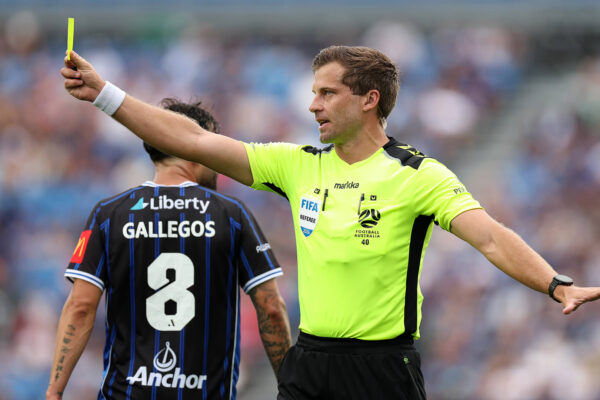
Capital Football has launched a visible identification program for referees under 18, requiring them to wear a pink armband during matches. It’s intended to build awareness surrounding the concern across Australian football about the abuse driving young officials out of the game.

The Pink Armband Initiative, effective immediately across Capital Football’s competitions in the ACT and surrounding region, makes junior referees identifiable to players, coaches and spectators. The federation says the marker is designed to set clear behavioural expectations and signal that many match officials are minors still developing their skills.

Capital Football acknowledged a referee crisis as far back as 2022, at which point it restructured its entire referee department in partnership with Football Australia. The pink armband program is the latest layer of that response; this time by targeting the cultural conditions on match day rather than systems of recruitment and pay.

A problem that spans codes and states

Research has consistently linked referee abuse to declining retention rates, with officials quitting in growing numbers due to sustained mistreatment, a trend researchers warn will reduce the pool of skilled match officials available at all levels of the game. Studies also show that young, less experienced referees are disproportionately likely to be subject to abuse.

Capital Football is not alone in reaching for a visible solution. Similar programs operate across Football Queensland, Football South Australia, Football South Coast and several other federations, while Basketball Victoria and Basketball South Australia have adopted comparable measures through the Green Whistle initiative. The spread of these programs across codes and states reflects a shared administrative problem: many grassroots referees are teenagers and volunteers who do not officiate for money but because they love the game, and abuse is eroding that foundation.

For a federation overseeing nearly 29,000 registered players, fewer referees means fewer matches. Fewer matches means reduced participation. The pink armband is a low-cost intervention with structural consequences if it works.

Compliance and competition: Everton ordered to pay compensation following major verdict

In a landmark decision by the Premier League Independent Disciplinary Commission, Everton must now pay Burnley upwards of AUD 66 million (£35 million) after breaching financial rules in the 2021-22 season.

Behind the verdict

Playing in the Premier League is, in itself, one of the most lucrative positions for a club to be in. This year’s Championship Play-off final – a contest deemed ‘the richest match in football’ – guaranteed winners Hull City a revenue uplift of AUD 389 million (£205 million) according to Deloitte’s Sports Business Group.

It is no wonder, therefore, why teams are so desperate to stay at the top of the pyramid, especially given that relegation can lead to heavy financial hits in revenue, wage reduction and transfer spending power.

Competition is certain – and the football is all the better for it. But when this competitive edge overtakes compliance, what happens off the field is just as impactful.

In 2023, the Premier League charged Everton with breaching financial rules during the 2021-22 season – the same season which saw the Toffees finish just four points above relegated Burnley. Everton received an initial 10-point deduction, which ultimately decreased to six points on appeal.

That season, Everton stayed up. But for Burnley, had the points deduction come at an earlier date, their survival in the top-flight may have been secured.


What did the ruling find?

In its verdict, the Premier League’s Independent Disciplinary Commission deemed that Everton gained a competitive advantage over Burnley as a result of financial breaches.

Burnley will now receive AUD 66 million (£35 million) in compensation from Everton, although the Merseyside club will appeal the  commission’s decision.

“This ruling sets a dangerous and unworkable precedent for English football, given it is constructed on a principle that a club can be in breach of financial rules at any point in a financial year,” Everton said via an official club statement.

Burnley, on the other hand, reaffirmed its position that the case was a question of fair play and ensuring a level playing field.

“Our action has always been about making football fair,” the club said via an official statement.

“Clubs that comply with the rules deserve to compete on a level playing field. Fans deserve it. The sport demands it.”


The impact of the case

This is a landmark decision which may have profound effects on the future of financial compliance in English football.

In the past, financial breaches remained within the realm of just that – finances. But with the ruling between Everton and Burnley, it now opens up further questions on what compliance is actually worth in the game.

And whether future investigations may lead to similar – or even higher – compensation packages to affected clubs.

Most Popular Topics

Editor Picks

Send this to a friend