


Football West Belt Up partnership strives for road safety awareness

Football West Belt Up

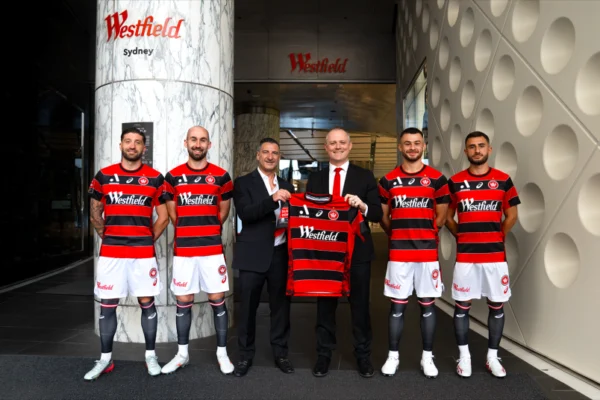
Football West has celebrated the renewal of its longstanding partnership with the Insurance Commission of Western Australia.

Together, the two organisations have committed to a new agreement which will see the Commision support Football West for the next three years, until the end of 2027.

As a part of the deal, the Commision’s Belt Up campaign will feature prominently across West Australian football leagues to help spread road safety awareness, and will become a name partner for the following key competitions:

  • Belt Up Amateur Night Series
  • Belt Up Men’s Amateur, Metro, and Masters leagues
  • Belt Up Men’s Amateur, Metro, and Masters cup finals
  • Belt Up Amateur, Metro and Masters Awards

Additionally, the yearly Regional Festival of Football will be rebranded to the Belt Up Regional Festival of Football.

The Insurance Commision of West Australia will also become a pivotal backer of a range of important initiatives across Football West, including the Belt Up NAIDOC Ball Design Competition and Belt Up Round.

Through their previous work with Football West over the last seven years, the Insurance Commision of West Australia has delivered over 16,000 footballs to clubs across West Australia with Belt Up advertising. Their new renewed partnership will see the Commision continue to provide over 2,000 balls a year.

Football West CEO Jamie Harnwell expressed the importance of the collaboration for the organisation and West Australian football.

“It is fantastic that the Insurance Commission is committed to extending its support for grassroots football in Western Australia through the Belt Up campaign, helping us share the important road safety message in metro and regional WA,” he said via press release.

“We have seen how our clubs have benefited from our agreement, with the Belt Up ball distribution providing them with thousands of footballs each year.

“It is also exciting to have the Belt Up campaign across the Regional Festival of Football, giving further exposure to the campaign.”

Insurance Commission General Manager Governance and Stakeholder Relations, Alison Wilson, outlined how the deal would help improve the delivery of the Belt Up campaign’s messaging.

“The Belt Up campaign is an important initiative to encourage the use of seatbelts every time you get into a car to reduce preventable injuries and fatalities resulting from crashes. Each year, around 100 people are killed or seriously injured in crashes as a result of not wearing a seatbelt.” she said in a press release.

“Our partnership with Football West helps share the important Belt Up message across the football community, and we’re pleased to continue our sponsorship of Football West with an additional focus on regional areas. We’d much rather see you on the pitch than end up as a statistic. Play it safe and Belt Up!”

Through their collaboration, Football West and the Insurance Commission of West Australia will continue to support community football and preach road safety.
 

Previous ArticleNext Article

Europe Is Packing Out Stadiums – Is Australia Missing the Bigger Picture?

More than 60 million fans attended matches across Europe’s five major domestic leagues during the 2025/26 season, with average attendances rising 2.4 per cent to 34,402 spectators per game.

On the surface, the figures paint a picture of a healthy ecosystem. Stadiums are fuller than ever, supporters continue to attend in large numbers and live football remains one of the most compelling entertainment products in the world.

But headline crowd figures only tell part of the story.

The more revealing measure is stadium utilisation how much of a venue’s capacity is actually being filled and the structural factors influencing those numbers.

For clubs, higher attendances don’t simply mean more ticket sales. Every additional supporter creates revenue opportunities across hospitality, food and beverage, merchandise and memberships. Modern stadiums are increasingly designed to maximise revenue per visitor, making infrastructure investment as much a commercial decision as a football one.

Attendance growth needs context

In Germany, the Bundesliga reclaimed its position as Europe’s best-attended league, averaging more than 42,300 spectators per match following a 9.4 per cent increase on last year’s figures.

However, much of that growth was driven by the return of traditional powerhouses Hamburger SV and 1. FC Köln. Both clubs continued to attract crowds of more than 50,000 despite spending recent seasons in the second division.

Their promotion didn’t suddenly create new supporters.

It returned two of German football’s biggest fan bases to the top flight, demonstrating how promotion and relegation can significantly influence league-wide attendance trends.

Everton shows how new stadiums can unlock demand

While the Premier League recorded another increase in average attendance, much of that growth can be traced to Everton’s move into the new Hill Dickinson Stadium. The larger venue added almost 13,000 spectators per home match compared with Goodison Park, accounting for more than half of the league’s overall attendance growth during the season.

Rather than generating new demand, the project unlocked demand that already existed.

That distinction matters.

Attendance should be viewed alongside stadium utilisation because many clubs have effectively reached capacity.

A stadium averaging 98 per cent capacity tells a very different story to one averaging 60 per cent, even if the latter attracts more spectators overall.

High utilisation suggests strong demand, pricing power and a compelling matchday experience, while lower utilisation can indicate untapped potential or a venue unfit for its market.

Capacity is becoming a strategic issue

In competitions where grounds are regularly close to full, future growth will depend less on attracting new supporters and more on expanding or redeveloping stadiums.

Elsewhere, the opportunity lies in making better use of existing capacity.

Spain illustrates how infrastructure can also temporarily suppress attendances. Barcelona’s continued absence from the Spotify Camp Nou during its redevelopment has limited crowd numbers despite strong demand.

Real Madrid’s renovated Santiago Bernabéu, meanwhile, demonstrates how modern stadium investment can increase not only capacity but also commercial revenue through premium hospitality.

League structures also shape attendance trends

Ligue 1’s growth over recent seasons has coincided with its reduction from 20 clubs to 18, concentrating a greater number of well-supported clubs within the competition and lifting average attendances as a result.

Stadium investment, league composition, promotion and relegation, and long-term supporter culture all play a role.

Taken together, the figures suggest that attendance growth is rarely driven by a single factor.

The lesson for Australian football

Crowd figures are often viewed as the primary indicator of a league’s health, but European football demonstrates that context matters just as much as the headline number.

The recent Australia Cup fixture between South Melbourne and Preston Lions provides a good local example. While the official attendance was 6,673, the packed grandstands, active supporter groups and television presentation created an atmosphere that felt far larger than the raw figure suggested.

It was a reminder that fan engagement, venue utilisation and matchday experience can often say more about the health of a competition than attendance alone.

A sold-out 15,000-seat stadium may indicate stronger demand than a half-full 30,000-seat venue, while investment in infrastructure can unlock thousands of additional supporters without changing underlying interest in the game itself.

As clubs continue to invest in new stadiums and redevelop existing venues, attendance should increasingly be measured not simply by how many people are watching, but by how effectively football is meeting supporter demand.

The crowds may be rising, but the real story is why.

FIFA’s U15 World Cup continue to seek secretive external investment

FIFA’s inaugural U15 World Cup has raised fresh questions about transparency after private investors were reportedly involved in plans to finance and commercialise the tournament. According to reporting from The Athletic, FIFA President Gianni Infantino discussed a potential investment worth more than US$250 million without informing members of the FIFA Council about the external investment talks.

The proposal involved Todd Boehly’s Eldridge Industries. Boehly owns Chelsea in the Premier League. It reportedly targeted a global U15 tournament involving all 211 FIFA member associations. The discussions included broadcast rights and a potential hosting location near Disneyland before being scrapped. The investment discussions add another layer to FIFA’s growing push to bring private capital into football.

Council oversight questioned

The biggest issue is not simply the size of the proposed investment. It’s that this was planned in late 2025 without the FIFA Council being included. Several FIFA Council members reportedly said they were unaware that external investors were being approached. They learned about the discussions after the reporting emerged.

FIFA has disputed the suggestion that the process breached its governance rules. The organisation said its administration was developing funding options for the tournament and that the Council would consider formal proposals when required. However, the distinction matters. A tournament involving children, FIFA’s global brand and long-term commercial rights creates significant governance responsibilities.

A new commercial model

The proposal also shows how FIFA could use new competitions to create commercial properties. The reported investment model explored revenue from broadcasting, sponsorship and licensing. The intention to use a youth sporting tournament for external commercial benefit and to create value with all 211 nations represented adds another layer to FIFA’s questionable actions.

The proposal was reportedly dismissed just before this year’s FIFA World Cup. This could have been due to FIFA’s extensive proposal to introduce the FIFA Forward Enterprises (FIFA), which received major backlash as the governing body attempted to sell stakes in its major tournaments. The agreement with Eldridge Industries could’ve been a conflict with those existing FFE plans.

A different direction

For FIFA, they ultimately went against the proposal ideas. The U15 World Cup will be held in October in Azerbaijan from October 22nd to 31st. But once again, transparency and FIFA become an issue. The lack of consultation around specifically a youth tournament with the wider footballing community raises questions if FIFA is developing the game only for financial gain.

The U15 project may eventually create a valuable global football property. But the way FIFA handles its commercialisation could determine whether that value strengthens the organisation — or creates another governance problem.

Most Popular Topics

Editor Picks

Send this to a friend