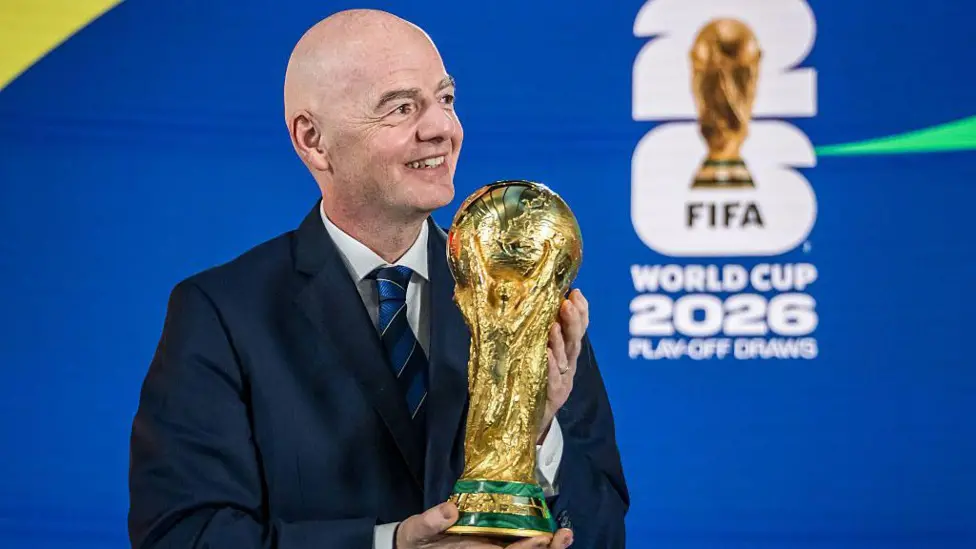
In a shock announcement made on Tuesday this week, FIFA revealed plans to create a subsidiary known as FIFA Forward Enterprise (FFE) to manage commercial and event operations for major competitions, including the World Cup. FIFA promises to reinvest all benefits back into the game, but the plan is receiving widespread criticism from governing bodies and governments around the world.
“Unleashing” football’s commercial power
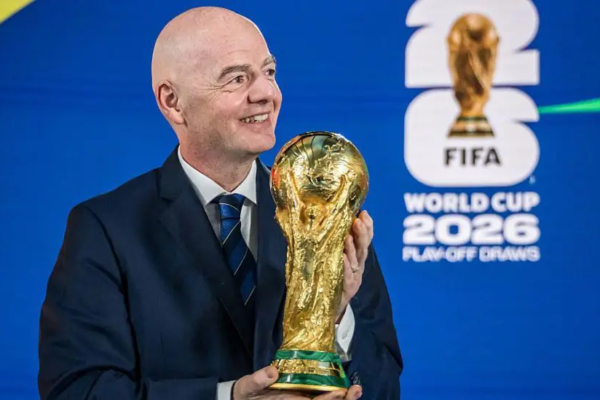
Following the huge financial success of this summer’s FIFA World Cup, FIFA President Gianni Infantino indicated plans to “unleash the commercial potential and opportunity” at FIFA’s disposal.
Indeed, it appears Infantino is wasting no time in capitalising on the tournament’s success, which generated AUD 21 billion (USD 15 billion) for FIFA.
An eye-watering number. A tournament record. And, apparently, still not enough.
Tuesday’s announcement made clear the intention to bring commercial rights under a new subsidiary, FIFA Forward Enterprise (FFE). This, according to FIFA, could generate AUD 6 billion (USD 4.2 billion) of initial capital with all net benefits going back into grassroots and infrastructure development for Member Associations (MA) through the FIFA Forward programme.
The money would be raised by selling minority stakes in FFE to private third-party investors, although FIFA has outlined that it will retain “sole control of FFE”.
The venture has a reported valuation of AUD 29 billion (USD 20 billion), prompting questions and backlash from around the world over who will actually benefit from the finances – and whether anyone should benefit at all.
What are critics saying?
On the surface, the principle of generating more money for MAs and investing into grassroots, coaching, women’s and youth football is a worthwhile ambition.
Currently, each MA receives AUD 11.5 million (USD 8 million) per year from FIFA Forward. FIFA affirms that, should the proposal go through, this funding would increase to AUD 29 million (USD 20 million) between 2027-2030.
However, several governing bodies, including UEFA, Concacaf and the English FA, are adamantly fighting the plans.
“This crosses a line that football’s governing institutions should never cross,” UEFA said via an official statement on social media.
“The soul and governance of football are not assets to trade especially with zero transparency as to who gains financially,” UEFA continued.
“None of us are the owners of football. It is not FIFA’s to sell.”
Concacaf also expressed deep concern over the reports, citing a distinct lack of warning and due process from FIFA prior to the announcement.
“We share the disappointment of many within our region and the game that this level of detail has been designed and shared publicly before any discussion with the relevant governance bodies and stakeholders has taken place,” Concacaf said via official statement.
“As leaders within football, we are custodians of the game. Collectively, FIFA, the Confederations and every Member Association have a responsibility to always act in the best interests of the sport.”
Further concerns also centre around the company set to lead the proposed investor group – Thrive Eternal. Founded by Joshua Kushner, the brother of US President Donald Trump’s son-in-law, Jared Kushner, Thrive Eternal’s role in the venture opens the door to potential conflicts of interests – and emboldens criticisms that Infantino’s relationship with the US President is compromising his leading role in football’s international governing body.
Football was never about the money
Investing into the game is vital to football’s sustained future, especially for nations without the financial power to fund it independent of football’s governing body.
Nobody will argue that supporting the entire football pyramid – from grassroots to professional, men’s and women’s, youth and para, playing and coaching – should benefit from the financial might of the sport’s elite.
And FIFA is promising such benefits for all – arriving in the form of tens of millions of dollars – and stemming from third-party investors intrigued by the commercial value of the beautiful game.
But this is exactly where the venture’s flaws start to appear.
Rhetoric about increasing football’s commercial power following the 2026 World Cup leads the governing body down a slippery slope to a sport which prioritises money over integrity, due process and the fans who uphold it week-in week-out.
Football – from its very first beginnings as a working class sport – was never about the money.
Although modern commercialisation has turned clubs into businesses and players into tradable assets, everyone within the pyramid is a custodian of the game.
The game is not a product to sell – especially by those entrusted to uphold its integrity.
What happens now?
FIFA stated its intentions to only proceed with the venture if it receives support from the majority of MAs. While many are already uniting in opposition to the proposal, there are national governing bodies who have vocalised their support, including the Czech FA.
UEFA, on the other hand, is set to hold an emergency meeting with its 55 members to discuss a potential boycott of future tournaments.
But with a deadline of September 19 for MAs to accept the proposal, and the promise of a payment worth AUD 57.5 million (USD 40 million) if they do, the next eight weeks will reveal the future of the game and the nature of its global governance.
FIFA’s plan, although laced with promises of investment, development and growth for all, has instead kicked off a contest to save the game’s soul – or change it forever.