


Football Australia 2022 Annual Review details bounce back from COVID

FA Annual Review

The way the Australian football community has responded to the post-COVID-normal life this year has been extraordinary and the 2022 participation figures are to be credited to the efforts of Member Federations, A-League Clubs, Associations, Zones, Community Clubs and the large number of volunteers.

The last three years has been a period of significant changes in football and also in the wider society of Australia and around the world, with 2022 being another year of taking the necessary steps to improving the game in the country by taking transformative measures towards the continued evolution and growth of the game.

In December of last year, Football Australia approved the successful completion of a transaction that saw 33.33% of the economic and voting interests within Australian Professional Leagues (APL) be provided to global private equity firm, Silver Lake.

Silver Lake is a leading global technology investment firm, with combined assets of more than $90 billion under management and committed capital along with a team of professionals based in North America, Europe and Asia.

The investment will propel technology enhancements and innovation targeted at improving the fan experience and driving the development of Australia’s premier professional men’s and women’s football competitions, the A-Leagues, along with providing Football Australia to deliver an exciting agenda for improvement of Australian football, as part of the aspiring 15-year vision.

Financial report:

The period for the year ending on 30 June 2022 (FY2022) saw Football Australia operations gradually saw resuming to the levels of the pre-COVID arrangement, the positive news that the restrictions of international travel and the ability to host the Socceroos match in round 3 of the FIFA World Cup Qatar 2022 Asian Qualifiers, and also the Matildas being able to host their matches in preparation for the FIFA Women’s World Cup in Australia and New Zealand 2023 – all were well received.

With the unbundling of the professional leagues officially occurring in July 2021, FY2022 was the first year of Football Australia’s operations with the A-Leagues entirely excluded.

The following results were achieved for Football Australia:

  • Operating deficit before grants and distributions for the
    year ended 30 June 2022 of $2.4 million
  • Grants and distributions for the year ended 30 June 2022
    totalling $1.3 million.
  • Net deficit before discontinued operations and
    extraordinary items for the year ended 30 June 2022 is
    $3.7 million.
  • Net surplus after discontinued operations and
    extraordinary items for the year ended 30 June 2022 is
    $3.6 million.
  • Net Members’ Equity at 30 June 2022 is $21.0 million.

Activity report:

A noteworthy grant revenue is linked to Football Australia’s blueprint of its Legacy ’23 plan to invest in the FIFA Women’s World Cup Australia and New Zealand 2023 – it has allowed the funding of $12 million over two years from the Australian Government.

This has provided the means of opportunity for an increased expenditure into the seniors of Australian Football and the Youth Women’s National Teams, as well as the original vigour of Football Australia’s national Club Development Program (Game Plan).

In relation to the technical development, a web application form was created to implement to assist coaches and technical directors to manage live scouting together with reports on the players potential and performances after the matches, which will support Member Federations technical staff to build resources to allow education for coaches in the future.

The five pillars of Legacy ’23 are participation, facilities, leadership and development, tourism and international engagement as well as high performance.

Participation:

As at 2021:

  • 356,607 female participants
  • 26.67% female participants

Facilities:

As at October 2022, the National Facilities Audit has identified that nationally, 40% of existing football facilities are classified as female friendly.

Leadership & development:

Currently, females represent:

  • 20% of active coaches
  • 13% of active referees
  • 50% of Football Australia Board members

Tourism and international engagement:

In August 2022, the federal government committed funding to the Pacific Women’s Player Pathway Program. This program is aimed at giving elite women footballers from Pacific regions the opportunity to participate in and benefit from Australian high-performance infrastructure, expertise, and competition.

High performance:

In 2022, Football Australia has provided our women’s National Teams as follows:

Generally speaking, football’s engagement from a political perspective and an electorate level through to the national office level secured $141.3 million in funding towards infrastructure projects into the sport, the highest of any sport, of which it included $47.4 million from the ALP.

MiniRoos is the foundational program of grassroots football in Australia, encompassing both the MiniRoos Club Football and MiniRoos Kick-Off programs for all participants in football aged 11 and under.

The MiniRoos Kick-Off saw participant numbers hit over 13,000, the highest number of participants in the program since 2019 (prior to COVID-19 disruption).

National teams:

The national stage for Australia’s Women’s team, CommBank Matildas, have turned their attention to building a squad full of depth ahead of the FIFA Women’s World Cup Australia and New Zealand 2023, while falling short in the continental championships earlier in the year with a quarter-final exit.

The following months that followed saw a list of highlights, counting the long-awaited homecoming in front of over 15,000 fans at CommBank Stadium in a well-deserved 3-1 win against Brazil, the excitement of new talent and the large turnout of crowds for home international matches.

With five players reaching a century of international appearances for the Matildas, four players were welcomed to the national team giving the platform to recognise their potential and gift for years to come.

Meanwhile for the Subway Socceroos, after a strong and persistent qualification of matches played away from home due to travel restrictions during the COVID-19 pandemic, they had not hosted a game on home soil since October 2019 playing against Saudi Arabia in a tough and tight affair that finished goalless.

Playing two rounds of qualification against the UAE and Peru, the Men’s national team persevered in the end by qualifying for a fifth successful World Cup that will be remembered as one of the great Australian sporting moments in the country’s history.

Competitions:

Formerly known as the FFA Cup, the Australia Cup, broke records that saw A-League Men side Macarthur FC defeating NSW National Premier Leagues Sydney United 58 2-0 at CommBank Stadium almost breaking the record Cup attendance playing in front of 16,461 passionate fans.

The highlights of the Australia Cup 2022 were known for various reasons such as a record of 742 club entries across the country, achieving record crowds and breaking broadcast audiences, along with a highly successful tournament capturing the heart and minds of the Australian football community throughout 2022.

The Magic of the Cup displayed fairy tale moments such as Sydney United 58 triumphing over A-League sides Western United and Brisbane Roar, with Oakleigh Cannons also claiming a hard-fought win against Sydney FC.

However, when Oakleigh Cannon’s 13-year-old reserve goalkeeper Ymer Abili was subbed on late for his side against Macarthur FC, attracting worldwide attention was arguably the highlight of the tournament and undoubtedly for years to come.

The Annual Review can be viewed in full here.
Previous ArticleNext Article

Inter Academy expands operations into two major Australian cities

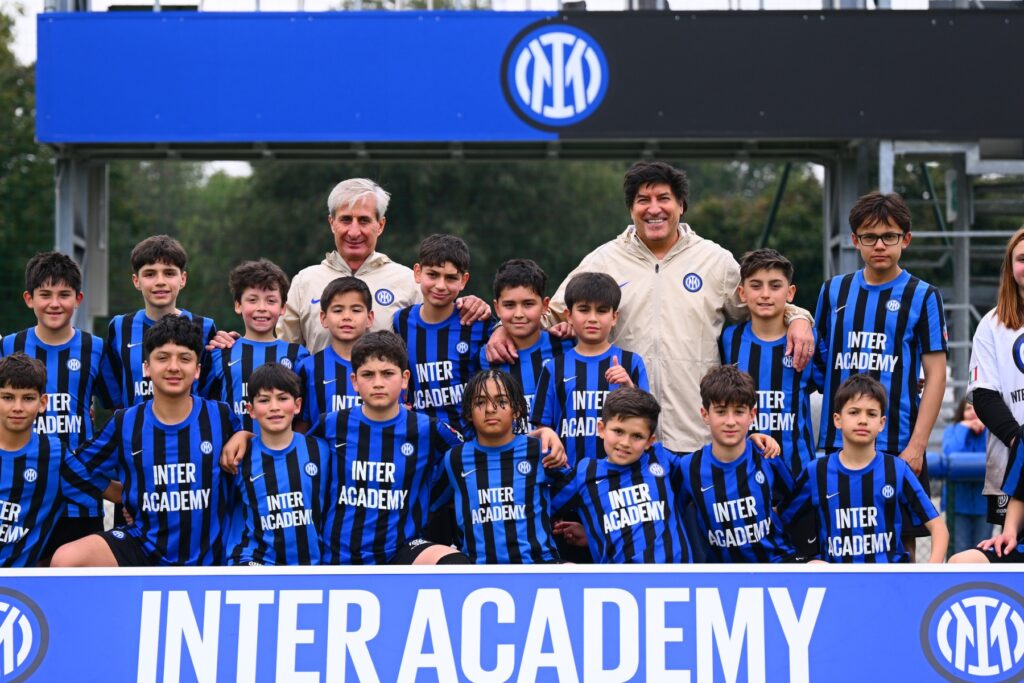
FC Internazionale Milano announced last week that their academy network has expanded into Sydney and Adelaide. The projects will be implemented alongside Christian Brothers High School (CBHS) in Lewisham, NSW and with semi-professional club, Adelaide Blue Eagles. 


A milestone for all parties

The announcement marks another impressive development for Inter Academy, which continues to expand its global network of elite training academies across the globe. 

With bases already established in Canada, Chile, Turkey, Italy and more, the club has now extended its operations and expertise to Australia. With activities set to commence in April in Sydney and Adelaide, the new partnerships will seek to embolden and progress football development across New South Wales and South Australia.

 The organisation expressed their pride at the newly-forged partnerships, outlining several factors which the project will bring. 

“FC Internazionale Milano is pleased to announce the opening of Inter Academy Sydney and Inter Academy Adelaide, extending the Nerrazzuri project to Australia,” the club said via social media announcement. 

“The two new Inter Academies in Australia will offer a football development programme based on Inter Academy’s training methodology, while also focusing on the personal growth of the players.” 

The alliance indicates an exciting future for the rising stars looking to link up with the academy programmes, as well as for the coaches and local clubs eager to gain insight into how this European powerhouse operates. 

It is an immense milestone for all involved. On one hand, Inter can help develop a nation of passionate and eager young footballers looking for a quality football education. On the other, coaches and professionals across Sydney and Adelaide now have access to the expertise and training methods of the most decorated football academy in Italy. 


Who will partner with Inter Academy? 

Inter Academy Sydney and Inter Academy Adelaide will both collaborate with local organisations, with whom their values and passion for the game are shared. 

Christian Brothers High School Lewisham

Inter Academy Sydney will receive the backing of Christian Brothers High School (CBHS) Lewisham, an educational institution with over 100 years of history in Sydney’s western suburbs.

While academic excellence is highly valued, the school strives to provide its students with an experience built on meaningful relationships, discovering passions, and building confidence. 

Adelaide Blue Eagles

On the other hand, Inter Academy Adelaide will work in conjunction with semi-professional club, Adelaide Blue Eagles (Azzurri Sports Club). 

Founded in 1958 (with inaugural members hailing from Italy), the club has grown into both a successful sporting organisation and a cornerstone of the community. The club is committed to nurturing talented boys and girls in the area through the Elite Eagles Academy. 


Balancing the player and the person

It is evident why Inter Milan wanted to strike up partnerships with CBHS and the Adelaide Blue Eagles. Whether on the pitch or in the classroom, these institutions dedicate themselves to achieving excellence. 

All three parties refuse to compromise on providing an environment in which players and students can develop as people. Brand and Marketing Director of Inter Milan, Luca Adornato, also emphasised the importance of building such partnerships on common values. 

“Opening these two academies in Australia represents an important step in the global growth of our project,” Adornato said via official press release.

“There is huge potential in collaboration with CBHS Lewisham in Sydney and Adelaide Blue Eagles in Adelaide. Both partners share our commitment to the development of youth sports and we are pleased to embark on this journey together.”

Although Inter Academy holds an outstanding reputation in the football world for its elite sporting standards and achievements, it refuses to compromise on developing the person behind the player. This holistic approach, in which footballing excellence comes hand-in-hand with personal growth, will be of immense value to the future generations across Sydney and Adeliade seeking to join the programmes. 


Connecting Australian talent with European pathways

Inter Academy joins an extensive list of European clubs including Juventus, Olympiacos and CF Villarreal who have established academies and football programs in Australia. Primarily operating in major cities like Sydney and Melbourne, these programs help connect coaches and young players in Australia with the expertise and training methods of Europe’s elite.

By forging partnerships of this nature and bringing their expertise into local communities, we can bridge the gap between Australian talent and the world stage.

When given the opportunities to perform, Aussies continue to receive the plaudits. Whether we look at Antonio Arena scoring on his debut for AS Roma at just 16 years-old, or Mo Touré scoring a hatrick on his first start for Norwich City FC in the English Championship, Australia is clearly able to produce players of the highest quality.

Therefore, as Inter Milan begins to implement academy programs in Sydney and Adelaide, the future looks bright for players and coaches seeking elite footballing educations.

The passion and talent is here in abundance. All it needs is the leadership and environment to grow.


Clifton Hill FC Set for New Era as Pavilion Upgrade Nears Completion

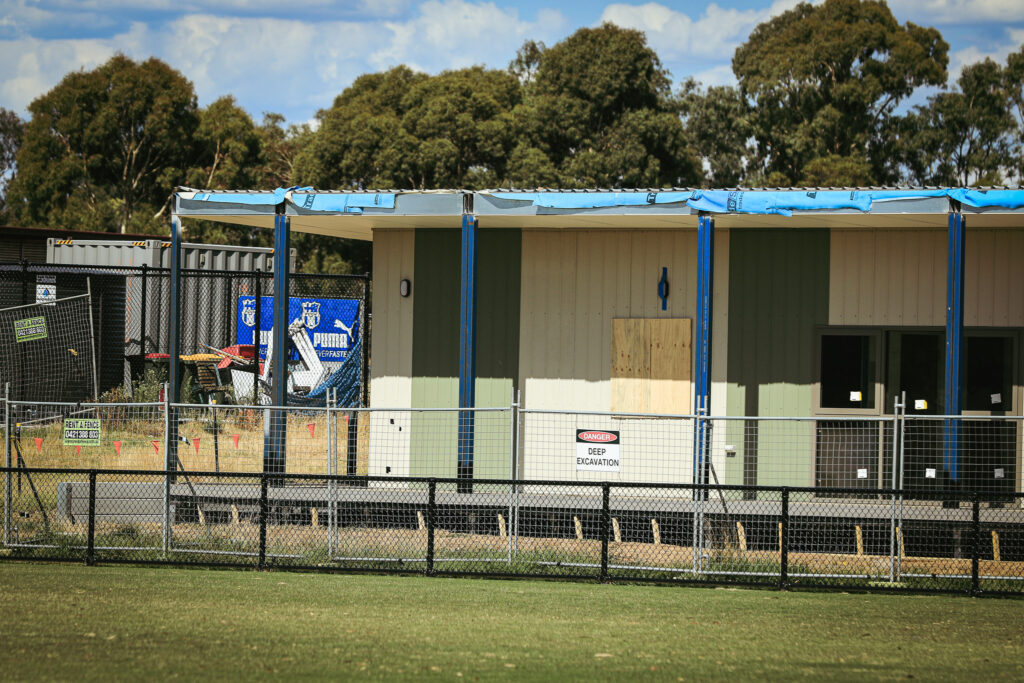
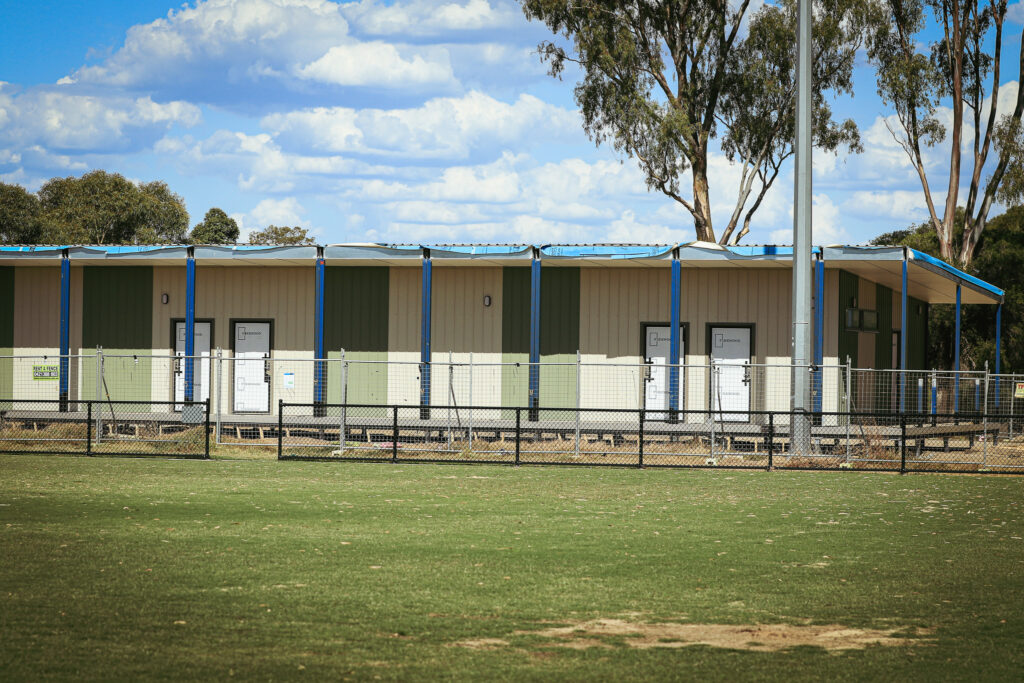
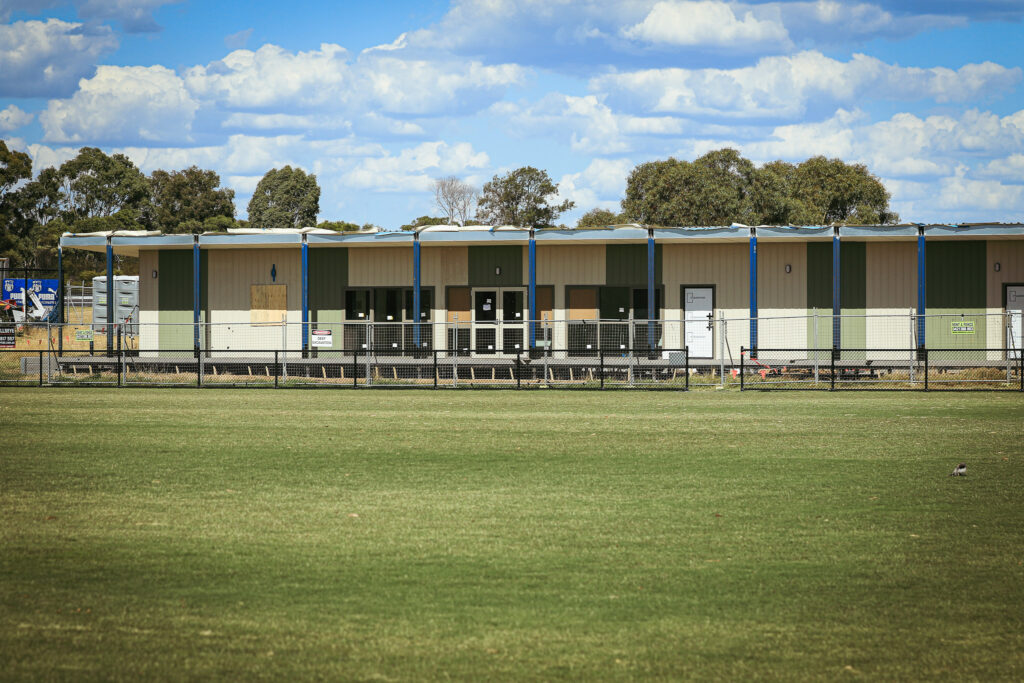
Community football in Melbourne’s inner north is set for a major boost, with Clifton Hill FC preparing to usher in a new chapter following the redevelopment of its pavilion at Quarries Park.

The upgraded facility, delivered with support from Yarra City Council, is expected to significantly enhance the matchday and training experience for players, families, and volunteers while supporting the club’s continued growth.

A long awaited upgrade for Clifton Hill FC

Club President Michael Tyrikos said the redevelopment represents a long-awaited milestone for the grassroots club.

“We’ve been waiting close to 10 years for this,” Tyrikos told SoccerScene. “I’ve been involved with the club for over two decades and improving the facilities has always been a major goal for us.”

The new pavilion replaces previously limited amenities, with the club formerly operating with just two change rooms and minimal communal space. The upgraded facility will provide modern change rooms, social areas, and improved spectator amenities.

Supporting growth in participation

Tyrikos explained the redevelopment will be particularly significant in supporting participation growth, including the club’s expanding girls’ program.

“Previously, we only had two change rooms, which made it difficult as our girls’ program continued to grow,” he said. “Now players can feel comfortable using proper facilities with access to showers and dedicated spaces, which is something we simply didn’t have before.”

Image Credit: One-Nil Media

Beyond player development, the pavilion is also expected to strengthen the club’s role as a community hub. The addition of indoor social spaces will allow families to engage more closely with the club environment, particularly during Melbourne’s winter months.

“Parents can now sit inside and watch games, and we can finally host club events, kids’ parties, and social gatherings,” Tyrikos said. “Before, we just didn’t have the capacity to bring people together like that.”

A new era at Quarries Park

Tyrikos also acknowledged the broader infrastructure improvements delivered alongside the pavilion redevelopment, including new lighting towers and an upgraded playing surface, highlighting the importance of council support in driving the project forward.

Clifton Hill FC is hopeful the new pavilion will be operational in time for its anticipated first home fixture scheduled for mid-May, marking the beginning of a new era for the community-focused club.

Image Credit: One-Nil Media

Most Popular Topics

Editor Picks

Send this to a friend