



Kognia Sports: Using artificial intelligence to advantage

Kognia Sports

The implementation of artificial intelligence (AI) in sports, especially in football, has integrated rapidly and effectively, with the emergence of Kognia Sports helping coaches acquire better insights by elevating performance and making improvements to training sessions, in what is a time-consuming and requiring intensive labour activity.

Utilising AI to execute it in the analysis of player performance has been an innovation in technology that coaches have been crying out for, in helping teams reach their full potential. This data also provides assistance for coaches by picking out a player’s strengths and weaknesses, and to upgrade strategies of the game for efficiently deploying performance outcomes.

The procedure of machine learning is training algorithms to make prognosis or decisions based around input data. The plan is to deploy an algorithm to automatically adapt to various patterns in the data, in place of explaining it in great detail of programming the system with rules.

The innovative software wields both AI and machine learning to fabricate automatic tactical examination in football matches based around on state-of-the-art football know-how to identify the strategic foundations from videos and involves no extra data to be broken down, differentiating from other markets.

One of the main technologies that are applied at Kognia is computer vision, a feature of AI that allows video footage of athletes to be analysed, giving the analysts and coaches to track a team or a player’s behaviours.

By removing manual coding and other low-quality duties, the sports technology company is replacing them with superior-quality jobs such as an evaluation of the performance for the coaching team or player – in return assisting off-the-pitch as well as on-the-pitch calculated decision-making.

CEO and Co-founder of Kognia, Maurici A. Lopez-Felip, is the former Head of Research in the Methodology Division at FC Barcelona – an expert behavioural scientist, who in the past was engaged in Ecological Physics and acquired a PhD from the University of Connecticut. His experience combines into a practice-oriented approach into both science and football, leading to the evolution of the system.

Last year in December, Swedish club AIK signed a partnership with Kognia Sports to use the tool across the seniors and youth teams at the club. The analysis system aligns with the approach to coaching advancements for the Stockholm-based football club, along with the research and development and applying it to AIK’s child and youth departments.

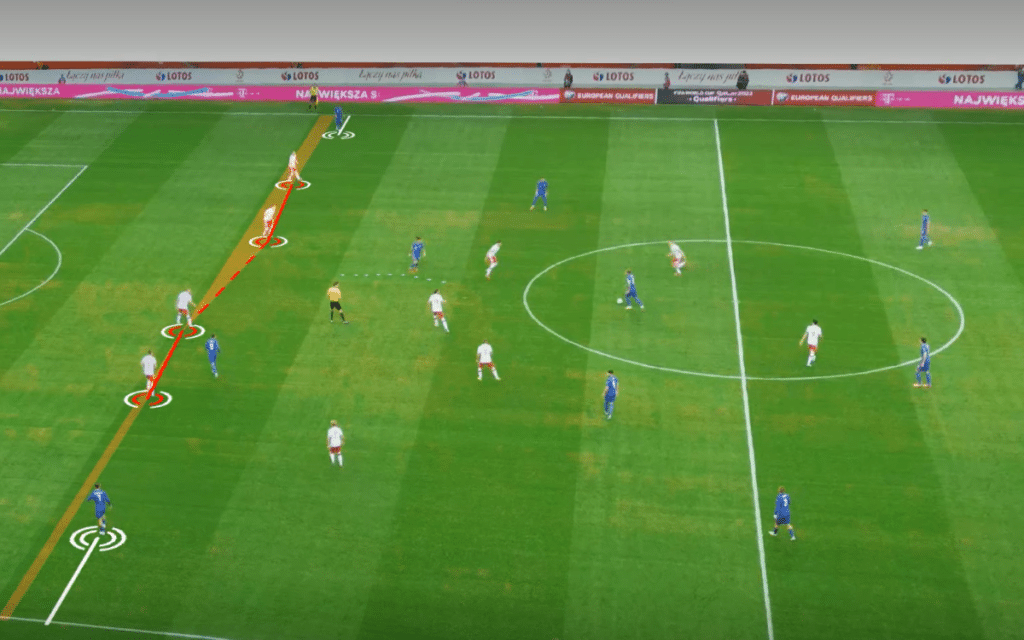
The cutting-edge technologies provided by the company help them to focus on the more important areas – some of the features include but are not limited to is online video manager, single game timeline view and customised tactical overlays.

Currently in use at some clubs in La Liga such as FC Barcelona and Villarreal CF, with both teams using them for men’s and women’s squads supports their traditional methods by integrating modern technology internally.

Revolutionising the world of football analysis by taking it towards the direction of making it quicker and cost-efficient, Kognia wants to break down the limitations in football that still exist despite having been hugely developed in by making major strides in recent years.

The system that has been implemented will be hugely beneficial for young and upcoming players. The programme will not only be able to detect patterns, but will also have the ability to produce an automatic concept of opportunities for action in relevant contextual environments, making the tool much more powerful.

The ability to determine all the details that seem too qualitative to measure, such as the reception of the ball in between the lines, and changing position for the striker in the back of the lines, were only appreciated by the sight of the manager. Now, the technology will be able to capture exactly that.


Previous ArticleNext Article

Project ACL: The initiative leading the way on injury research

Launched in 2024, the research project recently welcomed two US-based organisations: the National Women’s Soccer League Players Association (NWSLPA) and National Women’s Soccer League (NWSL).


About Project ACL

Led by FIFPRO, PFA England, Nike and Leeds Beckett University, Project ACL aims to research ACL injuries and understand more about multifactorial risk factors.

After piloting in England’s Women’s Super League (WSL), Project ACL will expand to the NWSL in the US, reflecting the global importance of the project’s research and outcome.

“We are incredibly excited to bring the NWSLPA and NWSL to Project ACL,” said Director of Women’s Football at FIFPRO, Dr. Alex Culvin, via official press release.

“Overall, we believe that player-centricity and collaboration with key stakeholders are central to establishing meaningful change in the soccer ecosystem and that players, competition organisers and stakeholdersaround the world will benefit from Project ACL’s outputs and outcomes.”

Interviews with over 30 players and team surveys across all 12 WSL clubs provided the project’s research team with valuable information about current prevention strategies and available resources.

Furthermore, the project tracks player workload and busy schedule periods during the season through the FIFPRO Player Workload Monitoring tool, therefore gaining insights into the link between scheduling and injury risks.


Looking to the data

Project ACL’s partnerships with the WSL – and now the NWSL – are immensely valuable for the future of player welfare in women’s football.

Although ACL injuries affect both male and female athletes, they are twice as likely to occur in women than men. However, according to the NWSL, as little as 8% of sports science research focuses on female athletes.

In Australia, several CommBank Matildas suffered ACL injuries in recent years: Sam Kerr was sidelined from January 2024 to September 2025, Ellie Carpenter for 8 months after suffering the injury while playing for Olympique Lyonnais, and Holly McNamara came back from three ACL’s aged 15, 18 and 20.

And this is just the tip of the iceberg. The 2025/26 ALW season saw several ACL incidents, including four in just two weeks.


Research, prevent, protect

Injury prevention and research are vital to sport – whether professional or amateur.

But when the numbers are so shocking – and incidents are so common – governing bodies must remember that player welfare comes above all else. Research can inform prevention strategies. Prevention means players can enjoy the game they love.

The work of Project ACL, continuing until 2027, will hopefully protect countless players across women’s football from suffering long-term or recurring injuries.

How Husqvarna Is Helping Stadiums Cut Costs Without Cutting Quality

At a time when operational costs are rising across global sport, stadiums and football clubs are being forced to rethink one of their most overlooked expenses: turf maintenance.

From diesel consumption to labour hours, maintaining elite playing surfaces has traditionally been both resource-intensive and environmentally taxing. But new data emerging from venues like CBUS Super Stadium suggests a smarter, more sustainable model is already taking hold.

Leading that shift is Husqvarna, whose autonomous turf technology is quietly reshaping how professional venues manage their playing surfaces. Their product delivers measurable cost savings without compromising quality.

Cutting fuel consumption costs

At CBUS Super Stadium, the introduction of Husqvarna’s CEORA™ robotic mowing system has reduced diesel usage by approximately 20–30 litres per week. Over the course of a season, those savings compound into a significant reduction in both fuel spend and carbon emissions. This is particularly efficient for stadiums hosting regular fixtures and large-scale events.

CBUS Super Stadium General Manager Kristian Blundell said the robotic mower was a game-changer for the venue:

“This technology is not replacing staff but rather giving our grounds team the ability to do what they do best by helping to improve turf management processes, better manage fatigue and decrease our environmental footprint”

But the impact goes beyond fuel.


Time efficiency

By automating routine mowing, Husqvarna’s technology enables grounds teams to focus on higher-value maintenance tasks, from pitch recovery to detailed surface management. The result is not only greater operational efficiency but also improved turf consistency, which is an increasingly critical factor in elite football performance.

The benefits are being mirrored beyond stadium environments. At Oatlands Golf Club, Husqvarna’s autonomous mowing has delivered savings of up to 60 litres of fuel per week while freeing up staff for precision work. Quiet, round-the-clock operation also ensures surfaces are maintained without disrupting play—an advantage that translates directly to multi-use stadium settings.

Image Credit: Husqvarna

Importantly, Husqvarna’s lightweight robotic systems reduce the wear and tear typically caused by traditional heavy machinery. This not only protects the integrity of the playing surface but also reduces the need for costly repairs over time.

Football clubs navigating tight budgets at grassroots and semi-professional levels could benefit from such cost savings.

With rising energy prices, increasing sustainability expectations, and limited staffing resources, the ability to cut costs while improving performance is no longer optional. Solutions like Husqvarna’s CEORA™ are positioning clubs to operate more efficiently today, while preparing for a more environmentally accountable future.

As the sports industry continues to evolve, one thing is becoming clear: the next competitive edge may not just come from what happens on the pitch—but how it’s maintained.

Most Popular Topics

Editor Picks

Send this to a friend