


Saudi Pro League’s TikTok deal: A media blueprint for Australia

The Saudi Pro League (SPL) has confirmed a new partnership with TikTok for the 2024/25 season, designating the short video platform as its official digital partner.

This collaboration aims to enhance digital engagement for football enthusiasts both regionally and internationally.

As part of the agreement, TikTok will unveil a dedicated ‘SPL Exclusive Hub,’ offering fans access to a wealth of content from the league’s clubs and partners.

This exclusive content will feature behind-the-scenes footage, in-depth player interviews, and other unique insights into the SPL.

Additionally, TikTok will provide its creators with special opportunities to engage with the league.

This includes access to training sessions, matchday experiences, and interactions with players, allowing for a richer and more immersive fan experience.

The SPL is determined to solidify its position as one of soccer’s premier domestic leagues. While high-profile signings like Cristiano Ronaldo have captured headlines, the TikTok partnership is set to amplify the league’s global visibility.

TikTok’s involvement in football is extensive, with previous partnerships including UEFAfor  Euro 2024 and Women’s Euro 2022, Major League Soccer (MLS), and the Confederation of African Football (CAF).

The platform is also deeply embedded in other sports, including the Paris 2024 Paralympic Games and UFC, and recently extended its multi-year partnership with the National Football League (NFL) to include long-form content.

Saudi Arabia ahead of the game again

Saudi Arabia is leading the way in sports marketing by leveraging apps like TikTok.

Their strategic use of these platforms enhances global visibility and engagement for the Saudi Pro League, showcasing a commitment to innovative digital strategies that connect with a broad, international audience and elevate their brand on a global stage.

It is clear that the SPL’s ambition is to be ‘bigger than the top European Leagues’ per a statement from newly appointed CEO Omar Mugharbel.

Mugharbel mentioned enhancing the product after recent signings Ivan Toney and Joao Cancelo capped off a relatively quiet summer window for the league and hinted at ‘advancing the league’s brand off the pitch with new deals (TikTok) to create a more attractive proposition for star players and fans abroad.’

Everything the SPL do is for attention and they are close to designing a social media juggernaut that is ready to shake the traditional European football landscape, even if some may find it incredibly unpopular. It is certainly working.

How a deal like this would benefit Australian football

Capitalising on the fantastic viewership and engagement from the younger generation is the key to success for the A-Leagues’ future.

According to YouGov Sport in 2023, between the ages of 18-34, the A-League is the second most engaged league in the country, sitting only behind the AFL.

The data showed that 15% of Australian sports fans aged 18-34 regularly streamed the A-League Men whilst 19% of the demographic follow the league on its respective social media channels.

Improving the content on these channels, which is certainly required, has been on the mind of the league for a while and KEEPUP’s failure gives them a blueprint on what not to do this time around.

A deal with TikTok would almost certainly benefit all stakeholders given the league’s lack of engaging, behind-the-scenes content and lacklustre highlight reels leaving many dissatisfied at the overall product.

Now with international marquee signings like Juan Mata and Douglas Costa, the A-Leagues can try and attempt to do what Saudi Arabia do, albeit on a much smaller scale, in terms of leveraging these big names to draw bigger crowds and engagement on social media.

The ability to nail short, bite-sized content is almost essential with the increasingly shorter attention spans and hunt for easily digestible videos that don’t require too much brain power.

In 2024, the A-Leagues must improve in this area and ensure they don’t fall behind the 8 ball again with this sport getting back on its feet.
Previous ArticleNext Article

Media Mega-Mergers, Minor Leagues: Why Global Consolidation Should Be a Wake-Up Call for Australian Football

The approval of a reported $113 billion merger between Warner Bros. Discovery and Paramount Global is being framed as the creation of a “next-generation media and entertainment company.”

But beyond Hollywood headlines, the deal signals something far more consequential for sport: a global media landscape rapidly consolidating into fewer, more powerful hands.

For Australian football, particularly the A-League, this is not just background noise. It is a structural shift that could define the league’s future.


A shrinking marketplace, a growing imbalance

The merger brings together an enormous portfolio of assets, such as film studios, broadcast networks and streaming platforms, under a single corporate umbrella. It reflects a broader industry trend: scale is no longer an advantage in media, it is a necessity.

Yet with that scale comes concentration. Fewer buyers now control more platforms, more audiences, and more capital. Critics of the deal have warned that such consolidation risks reducing competition and narrowing the range of voices in global media.

For sport, the implications are immediate.

Broadcast rights are no longer negotiated in a diverse, competitive market. Instead, leagues are increasingly competing for space within vertically integrated media ecosystems. This is because decisions are driven not just by audience demand, but by global strategy, bundled content offerings and long-term platform growth.


Why the A-League is particularly exposed

This shift lands unevenly across the sporting landscape.

Leagues like the Australian Football League (AFL) and National Rugby League (NRL) remain dominant domestic products, commanding billion-dollar broadcast deals and consistent mass audiences.

The A-League, by contrast, operates from a more fragile commercial base.

Despite its global game status, the league continues to face:

  • Inconsistent crowd figures
  • Fluctuating visibility
  • A comparatively modest broadcast deal with Paramount

In a fragmented media environment, this is manageable. In a consolidated one, it becomes a vulnerability.

Because as the number of broadcasters shrinks, so too does the margin for leagues that are not seen as “must-have” content.


From open market to closed ecosystem

The critical shift is not just economic, it is also structural.

In the past, leagues could leverage competition between broadcasters to drive rights value. Now, with fewer but larger players, the balance of power tilts toward the platforms.

Content is no longer simply acquired, it is curated.

And in that environment, only properties that deliver one (or more) of the following will thrive:

  • Guaranteed audiences
  • Global scalability
  • Year-round engagement
  • Strategic value within a broader content ecosystem

This is where the A-League faces both its greatest challenge—and its greatest opportunity.


The overlooked strength of Australian football

While often positioned as a “developing” product domestically, football offers something no other Australian code can replicate: global alignment.

As the world’s most popular sport, football operates within an international ecosystem that extends far beyond national borders. Australia’s geographic position, bridging Asian and Western markets, adds further strategic value.

For a global media entity like Paramount, this matters.

The A-League is not just local content. It is potentially exportable, scalable and aligned with global football narratives. It also taps into younger, more digitally engaged audiences, who are increasingly driving subscription-based streaming growth.

In a media environment defined by platform expansion, that is not a weakness. It is an underutilised asset.


Why consolidation should drive MORE investment

The instinct in a consolidating market is often caution by tightening budgets, focusing on proven performers and minimising risk.

But for Australian football, that approach is self-defeating.

Because without investment:

  • Production quality stagnates
  • Storytelling weakens
  • Audience growth plateaus
  • Commercial value declines

And in a system that rewards scale and engagement, stagnation is equivalent to irrelevance.

Instead, consolidation should be seen as a trigger for strategic investment:

  • Elevating broadcast presentation
  • Strengthening club identities and narratives
  • Expanding digital and streaming integration
  • Positioning the league within the broader global football conversation

In short, making the A-League indispensable, rather than optional.


The real risk: being left behind

The emergence of media giants like a merged Warner Bros. Discovery and Paramount Global signals a future where content is filtered through fewer, more powerful gatekeepers.

In that world, leagues that fail to assert their value risk being sidelined, not because they lack potential, but because they fail to meet the evolving demands of the platforms that distribute them.

For the A-League, the danger is not collapse. It is marginalisation.

A slow drift into irrelevance while larger codes capture the attention, investment, and audiences that define modern sport.


Conclusion: a defining moment

This merger is not about Hollywood. It is about power.

Power over distribution. Power over audiences. Power over what gets seen and what does not.

For Australian football, the message is clear.

In a world of media consolidation, visibility is earned through value, not assumed through presence.

And if the A-League is to secure its place in that future, investment is no longer optional.

It is existential.

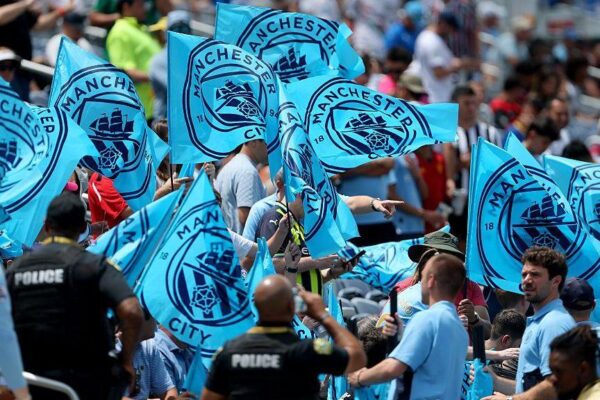
Melbourne City expand youth program with Hallam Secondary College

The school will join the City Futures Program in its mission to consolidate pathways and community bonds for students.

From pupils to players

Hallam is the latest school in Melbourne’s South-East to join the City Futures Program. Also backing the program’s ambitions are Narre Warren South P-12 College, Gleneagles Secondary College and Timbarra P-9 School.

Partnerships between professional clubs like Melbourne City and local schools help to promote community connection, as well as providing pathways from the classroom to the stadium.

“City Futures is about creating genuine opportunities for young people to stay engaged in their education while feeling connected to something bigger,” said Head of Community, Sunil Melon, via press release.

“By bringing the Club into schools and providing access to our environment, we’re helping students build confidence, explore future pathways and see what’s possible both within football and beyond.”

Gone are the days when young players must choose between football and education. Through the City Futures Program, they can enjoy both worlds and still have the opportunities to develop.


What City Futures provides

Hallam sudents will be at the centre of the benefits provided by the connection to Melbourne City.

For example, high-quality coaching sessions delivered twice a week will instill confidence and teamwork skills into young participants. And as Melbourne City coaches are set to deliver the sessions, the students will truly learn from the best in Australia’s footbal landscape.

Furthermore, participants can visit Casey Fields, home to the City Football Academy, where they can experience the ins and outs of how an A-League club operates and trains.

“We’re proud to be part of the City Futures Program,” outlined Acting Principal at Hallam Secondary College, Shelly Haughey.

“Seeing our students come together and commit to their training is setting them up for success both on and off the pitch, and we look forward to building a strong and lasting partnership with Melbourne City FC.”


The future of football pathways

This isn’t the first – nor will it be the last – partnership to connect football and education in Australia.

Earlier this year, Queensland-based John Paul College embarked on an exciting journey with Spanish outfit, RCD Espanyol, to provide unique coaching support, player education, and pathway opportunities.

But these partnerships aren’t merely about giving young talents a place in the starting XI.

They are designed to ensure all participants develop into confident young people – whether their future lies on the pitch, in the dugout or in the boardroom.

Most Popular Topics

Editor Picks

Send this to a friend