STATSports leading the way for GPS tracking

Big-name Premier League clubs have chosen to partner up with STATSportswho are industry leaders in providing GPS tracking systems and analysis. 

Up to five of the top six in the league have already made the switch to STATSports, including Liverpool, Manchester United, Arsenal, Manchester City and Tottenham Hotspur – while the service is used by the majority of fellow Premier League sides.

These Premier League clubs have worked closely with STATSports as they developed Sonra 3.0 and Sonra Live which is the latest software upgrade that the Premier League will be set to receive – featuring marketing-leading analysis platforms and further improvement on athlete monitoring.

STATSports are widely regarded across professional football – in addition to their big-name Premier League clients, they also push further into the English FA and abroad across the world, venturing out to the likes of Paris Saint Germain and Juventus. 

STATSports were involved in the Project Restart by informing the Premier League with a Player Proximity Report, using their data to show which type of sessions would cause players to come to together more often. STATSports offers a quick and time-effective process, with download times four times faster than any platform. It means receiving results from a typical session for a squad of players would take under two minutes. 

For elite clubs, Sonra 3.0 is the ideal go-to solution and it further streamlines and enhances performance with a host of new features that will make a difference. Sonra 3.0 is the brand-new product launch by STATSports and the latest offering for anyone looking to acquire their very own GPS tracking and analysis. 

Among the key inclusions, session planning features have been added to the calendar, allowing club performance departments to map up training cycles for weeks in advance. Video integration in the Video Manager has been developed further while adding a full squad 2D positioning. There is also a Scientific Calculator, allowing practitioners to create bespoke custom metrics based upon their own requirements.

Users are now able to choose between ‘Light’ and Dark’ modes as they can customise their preferred theme when on the app. 

The launch of Sonra 3.0 has coincided with the introduction of a new iPad application called Sonra Live, enabling coaches to monitor training in real-time. 

Sonra Live’s real-time data has been independently validated to form a perfect correlation with downloaded data, making this the most accurate live-monitoring solution of its kind. Coaches can then make instant, informed and impactful decisions for anything they intended to achieve. 

Sonra Live features team-level reporting, detailed individual-player dashboards, drill cutting for precise session analysis, post-session reporting via PDF/CSV and synchronisation to desktop applications for further analysis. 

STATSports’ on-board metric processing means there will be no data drop-out and they are the only provider in the industry to give 100% identical live and post-session download data quality.  

With flawless results, this puts the power in the end users’ hands to make immediate decisions with confidence no matter what they want to do. Coaches can set multiple thresholds for individual players or full squads, while multiple coaches can each monitor their own iPads simultaneously. 

“This is an exciting day for STATSports and the many teams we work with. This is another major advancement in the level in which coaches and managers can monitor their players,” STATSports co-founder, Sean O’Connor said. 

“Technology is now truly integrated into the game and we have played our part in that. We have worked closely with those teams during lockdown and also used the time to finalise the development of our new Sonra platform – we’re confident that our clients will further benefit from working with us through the introduction of this.” 

The creation of both Sonra 3.0 and Sonra Live reaffirms STATSports’ commitment to being the industry leader in GPS tracking and innovations for this space, supplying this resource to world-renowned clubs. 

“We have really enjoyed developing this new software platform. Time is a key commodity for clubs,” STATSports co-founder, Alan Clarke said. 

“The quicker they can make decisions with reliable and accurate feedback, the greater the edge they have on their competition.  

“We will continue to push the boundaries of what is possible and ensure athletes can do the same on the training pitch and the competitive environment.” 

For more information on STATSports, you can find it here.

Previous ArticleNext Article

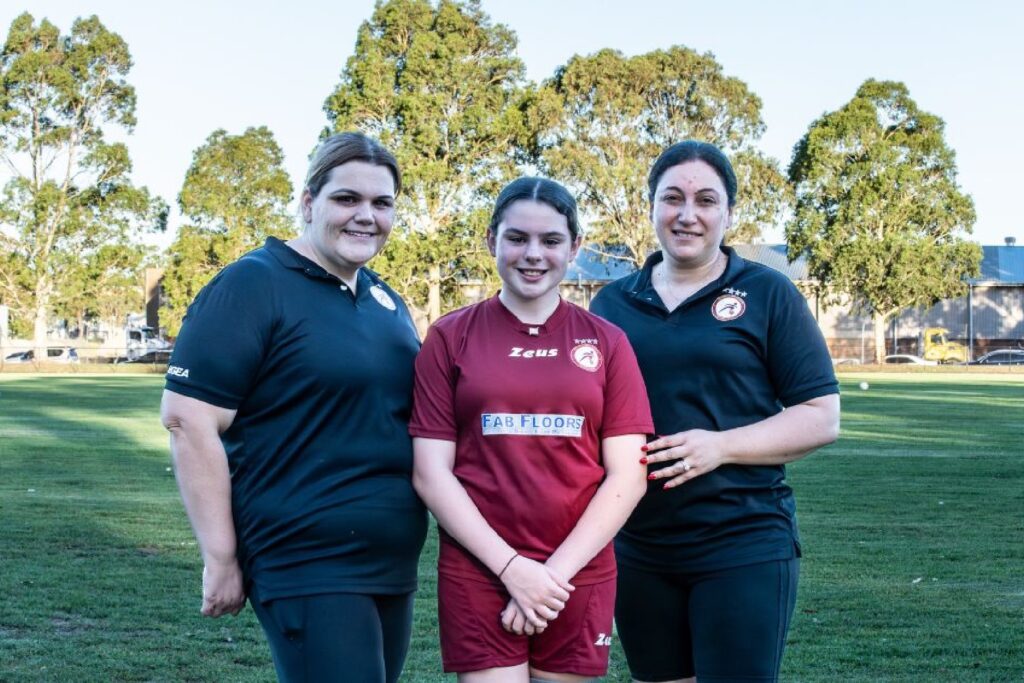
Regents Park Saints FC’s women’s game in 2026 and beyond

The New South Wales club has outlined that current facilities are not well-adapted for women and girls engaging with local football, putting long-term participation at risk. 


Keeping pace with rapid growth 

With participation numbers in women’s football rapidly increasing across New South Wales, appropriate infrastructure becomes all the more essential. And for the women and girls looking to join local teams like Regents Park Saints FC, there is growing concern that facilities are struggling to keep up with the modern game. 

Outdated infrastructure, lack of privacy and minimal space in changing rooms have been highlighted as the main issues currently facing the upcoming generations of young female footballing talent. 

Regents Park Saints FC Club Secretary, Vanessa Thorburn, emphasised the benefits to having updated facilities for all players associated with the club. 

“Any updates to our changing rooms are going to benefit our players, but also any other players that use our club,” Thorburn explained via video press release issued Monday. 

Of course, the proposals are not just about addressing present concerns, but about planning for the future of the women’s game and establishing the right environment to nurture young talent.

“The Matildas did a great job of promoting girls in football and I think that it’s something that has really taken off and you see so much more interest in it. We like to think that our club will grow the future Matildas one day,” Thorburn continued. 


How can the 2026 AFC Women’s Asia Cup play a role? 

With the 2026 AFC Women’s Asia Cup just around the corner, the next few months represent a pivotal point for the development of the women’s game in Australia. 

In the past, participation and match attendance has increased following major tournaments like the 2023 FIFA Women’s World Cup. For example, between the 2022/23 and 2023/24 season, average attendances at ALW matches shot up from 1,233 to 2,117. It is clear that the Matildas can play in creating nationwide support for women’s football. 

As Australia will host the tournament this upcoming March, there is potential for it to act as a springboard for change across the nation’s football pyramid. 

What remains important to remember is that creating buzz among fans is not enough to sustain long-term progression. The football-fever which will arise when the Matildas kick off in March this year will hopefully infect not only future stars, but the current governing bodies with the power to implement real change in the women’s game. 


Mito, Nagasaki and Chiba step up: will they prove themselves in J1 football?

The Meiji Yasuda J1 100-Year Vision League begins in a matter of weeks.

Mito Hollyhock, V-Varen Nagasaki and JEF United Chiba will all feature in Japan’s top flight following their second-tier campaigns last season.

Mito’s historic breakthrough and Nagasaki’s return

For Mito, it marks uncharted territory. The Ibaraki outfit have never played first-division football, having operated exclusively in J2 since their founding 26 years ago. Last year’s title, secured on goal difference after a 70-point haul, changes that.

Arata Watanabe anchored their attack despite an injury-interrupted season. He netted 13 times and created seven more. Sho Omori provided width and service from left-back, appearing in every match and registering the team’s highest totals for passes and crosses.

Nagasaki return after an eight-year absence. Their second-place finish came in their inaugural campaign at PEACE STADIUM Connected by SoftBank. Takuya Takagi, who previously guided them into J1 in 2017, regained control midway through last season. His side dropped just one match in 19 under his leadership. 

Matheus Jesus carried the attacking burden. The Brazilian struck 19 goals and was named J2 Player of the Year. His output alone accounted for much of Nagasaki’s upward trajectory.

Chiba’s journey back has taken 17 years. Once part of the J. League’s inaugural cohort in the early 1990s, relegation in 2009 began a prolonged exile. Third place in the regular season sent them into the play-offs.  A 4-3 comeback from three goals down against RB Omiya Ardija in the semi-final preceded a 1-0 victory over Tokushima Vortis in the final. Carlinhos Junior’s winner in the final capped one of the most dramatic promotion campaigns in recent J. League history.

Each club brings distinct narratives into the top flight. For Mito, Nagasaki and Chiba, survival will mean validating years of ambition, while success could redefine their place in Japanese football. Momentum from promotion campaigns will be tested when fixtures commence in early February.

Most Popular Topics

Editor Picks

Send this to a friend