




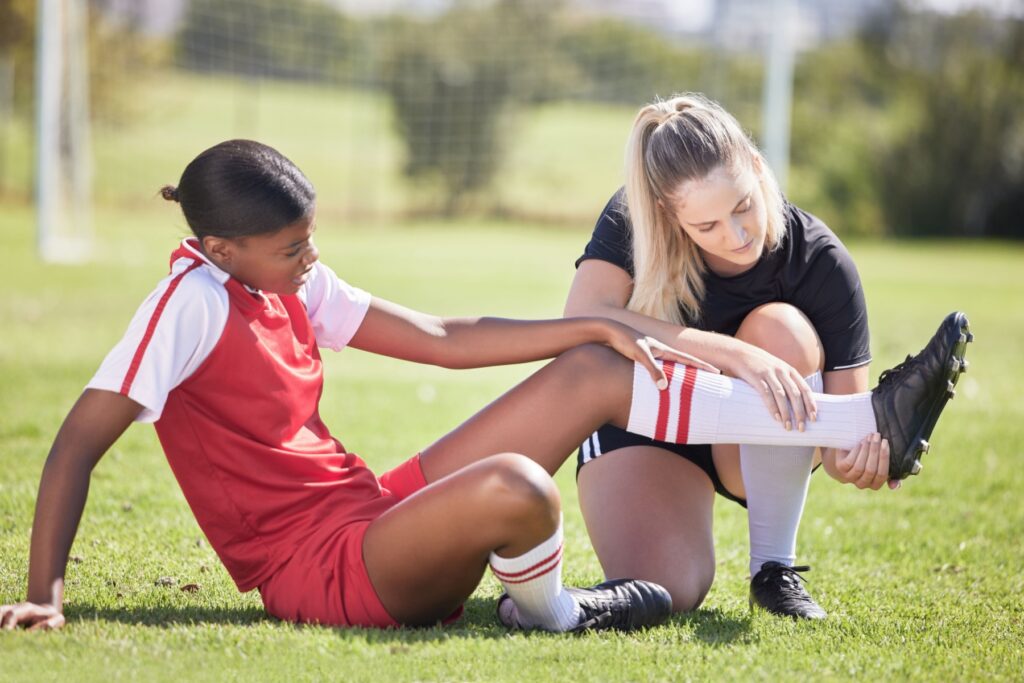
In a previous article where Soccerscene spoke with a member of a localclub about playing pitches, they commented on stress fractures being an issue when their younger teams played on the hard fields every season. Though they were not quoted in the story, the thought of young athletes sustaining life-changing injuries due to preventable factors is quite serious.
Stress fractures (or hairline fractures) occur when the bone is being overused, leading to the body being unable to repair the hard tissue over a period of time, resulting in a break in the bone. For this to happen, a person would have to repeatedly perform the same action where the injury is located, which is more likely to be in the foot and ankle and shin bones.
Knowing now how stress fractures occur and what leads them to occur in the first place. Is it the pitches or something else?
The Pitches
Football pitches and outdoor sports grounds are usually regulated by the governing body and state government in Australia; however, bodies like FIFA have larger control over the sport in a larger area. This includes what type of pitch is used.
Artificial footballpitches (or synthetic turf pitches) are common in sports grounds due to their versatility. The pitch can be used year-round and is independent of the seasons and weather and is used in both professional and amateur league sports grounds. Most artificial pitches are made of plastic fibres sewn to rubber matting to help with shock absorption.
Installing artificial turf also means the grounds do not have to be maintained as much as if it were natural grass. However, in the Premier League, several instances and complaints about player conditions on artificial fields have resulted in player injuries due to their mobility.
Though FIFA has conducted several research and development projects to create the perfect artificial turf since 2015, and recent academic papers have proven players are less likely to be injured on artificial turf, sustaining injuries could be from changes in the types of training and playing surfaces athletes are used to.
In Australia, major sports grounds will have artificial turf installed, while outdoor areas will have natural grass, which is what most of the young-aged teams usually play on.
In the Sports Injury Survey 2024/25, 41 per cent of leg and ankle/foot injuries which resulted in hospitalisation were fractures; the second were soft-tissue injuries like muscle sprains. Boys aged 10 to 19 were more likely to be hospitalised by their injuries than girls aged the same.
The Other Factor(s) of Football Injuries
It is true the conditions of a soccer pitch, like all sports grounds, affect how a player will perform; it isn’t the only issue, according to Sam Turner, podiatrist and founder of ThatFootballPodiatrist, who has worked with athletes in the AFL and the A-League Men’s and Women’s.
He told Soccerscene there are many factors which go into why athletes develop injuries like stress fractures.
“What is the player’s history? Are they having the right nutrition? There are many factors,” he said to Soccerscene.
Sam believes simply blaming hard sports grounds for athletes sustaining injuries can be a bearing on the cause, but factors like how players recover from previous injuries, strength training, and the inappropriate size and condition of soccer boots are just as important.
“Is it the smoking gun? Probably not.”
At the start of September this year, Sam posted on Instagram an open letter to the Professional Football Association to aid the financial burden of soccer players who cannot afford to buy the recommended three to four pairs of boots to meet the physical demands of the A-League.
“The AFL collective bargaining agreement provides the player five pairs of shoes total, which can be things like boots and runners,” he said.
“When I go to Western United, especially to the women’s, they have no idea that it is possible for clubs to provide these entitlements.”
Though the club’s allowance for uniform and other expenses depends on sponsorships, some soccer player are paid as little as $40,000 annually after tax.
After paying for amenities and other expenses, given the choice of new boots costing hundreds of dollars or trying to extend the lifespan of boots that need replacing after training four times a week plus matches, players are more likely to choose the latter.
“Being comfortable can help players play better for 90 to 100 minutes of performance,” Sam said.
Besides having the correct and appropriate footwear, recovery and ‘listening to your body and acting on it’ may counteract the negative effects of exacerbating the injury, and in some serious cases, Relative Energy Deficiency in Sport, a syndrome found more in women athletes than men.
However, hard surfaces have proven time and time again to be detrimental to the health of players across all sports, and this needs to be considered by leagues around the country.