




The Future of AI Motion Analysis: From Biomechanics Research, to the ISS, to Juventus Forward

In the fast-evolving field of sports technology, KineMo’s trajectory in early 2026 reflects a piece of a wider movement- one powered by AI, single-camera biomechanics, and a drive to democratise motion tracking across sport, rehab, and even astronaut training.

For Australian club administrators, physios, coaches, and technology partners, KineMo’s recent engagement with Juventus Football Club and the European Space Agency offers both a reflection and a challenge on where athlete monitoring and performance development are heading.

In Turin: Juventus’ Bet on Startup-Led Innovation

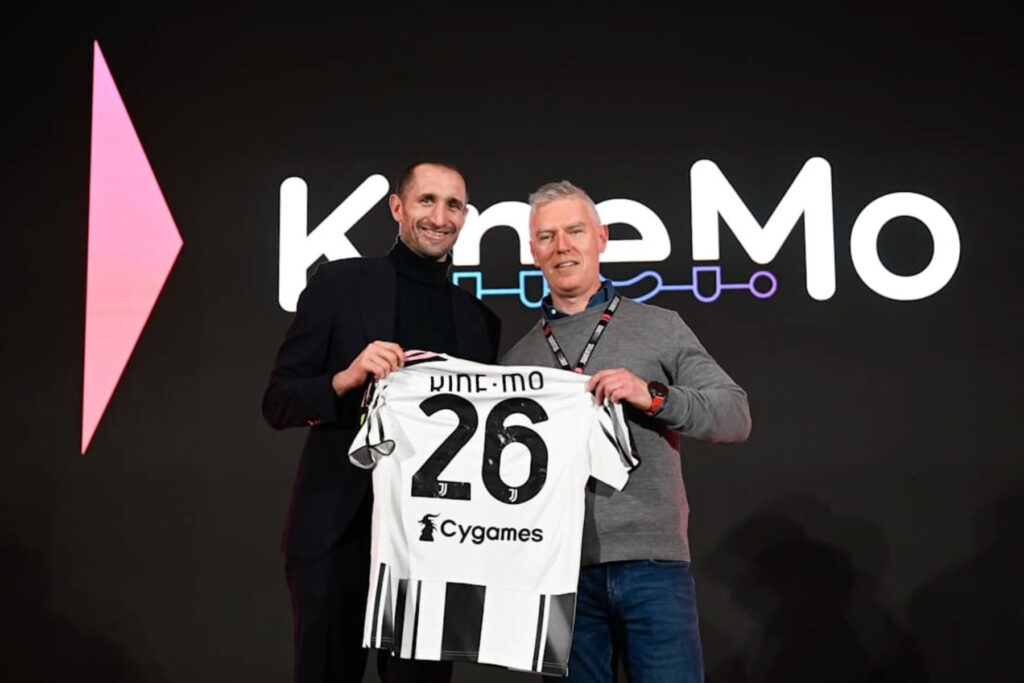
The whirlwind started in Turin. KineMo was announced as part of the inaugural cohort of the Juventus Forward innovation program, a next-generation initiative positioning the iconic Italian club as a hub for open innovation in elite sports. The launch event put KineMo’s founders beside Juventus legends and leading sports strategists, confirming the club’s intent to overhaul performance workflows by welcoming global tech startups directly onto the stadium floor.

As part of the initiative, Juventus Forward embeds startups across athlete development, content creation, and guest management, with the club’s staff collaborating in a “live fire” model that lets technology address complex problems in athlete health, rehabilitation, and skills progression. KineMo’s mandate within this environment is clear: deliver scalable, on-demand 3D functional movement screening from ordinary mobile video, no matter the athlete’s level or setting.

For Australian football, especially at NPL or A-League level, this open-access model holds specific appeal. The legacy of expensive, marker-based lab systems has left grassroots teams and independent physios excluded from best-practice movement analysis, a gap that often translates into missed talent, misdiagnosed rehab, and higher injury risk. KineMo levels this by bringing a clinically validated platform, only requiring a phone and no wearables or calibration. The technology delivers peer-reviewed kinematics across a 33-joint skeleton in 3D, turning club footage, rehab videos, or match film into actionable data for coaches and medical staff.

Expanding the Ecosystem: Milan, Irish Tech, and Global Collaboration

KineMo’s Italian tour continued in Milan, where the team joined other standout Irish sports tech businesses for a market mission tied to Fondazione Milano Cortina 2026. The event, led by Enterprise Ireland, gave KineMo direct access to Olympic officials, ministry representatives, space medicine researchers, and leading kinematics academics.

What began within Trinity College Dublin, as a research thread exploring rugby head injury assessment, now breathes a spectrum of disciplines. The KineMo core AI, capable of extracting force and joint movement from video, is being iterated for use cases in yoga, pilates, gym, remote physiotherapy, and broadcasting. These are not just lateral moves; they’re part of a grander vision to break the silo of high-performance motion tracking and return it to the everyday athlete, rehab professional, or remote coach.

ESA BIC Ireland: Space Medicine Meets Sport Science

Perhaps most symbolically, KineMo recently joined the ESA BIC Ireland incubation program, making its single-camera motion platform part of European astronaut screening, in-flight exercise monitoring, and post-mission rehabilitation. Partnering with the European Space Agency moves KineMo’s AI out of the sports hall and onto the International Space Station, where every movement pattern is a data point in keeping astronauts safe and healthy over long-duration missions.

ESA’s Space Medicine Office described the collaboration as an advance in “resource-efficient assessment of pre, in and post-mission astronaut movement patterns.” For KineMo, and by extension, for every coach or clinician monitoring movement in football or rugby, it’s both validation and opportunity: if the tech is good enough for space medicine, it’s likely robust and adaptable enough for club athlete care.

The Science: Validated Motion Analysis at Scale

KineMo’s published work reinforces its credibility. Trials using multicamera setups for contact scenarios and single-camera video for common strength and rehab exercises showed error margins comparable to gold standard lab outputs. Applying open-source pose estimation and proprietary learning algorithms, the platform can lift 2D joint markers into 3D space. Tests with Vicon systems and mobile phones returned small errors in knee angle and torso metrics, confirming the tech’s accuracy and reliability out in the field.

For sports like football, where injury patterns, return-to-play decisions, and load management are all contingent on movement quality, KineMo’s model enables clubs to run mass screenings, establish robust kinematic baselines, and maintain objective tracking throughout an athlete’s career. For Australia, whose geographically dispersed talent pipeline often makes in-person testing unfeasible, remote video-based motion analysis could spell a revolution in player welfare and recruitment.

The Road Ahead: Integrations, Gamification, and Scaling

Looking ahead, KineMo has positioned itself to integrate directly with partner platforms, offering longitudinal tracking, remote consults, gamified skill monitoring, and population-level screening for youth and senior athletes. Its ability to quantify and visualise movement is already influencing rehabilitation protocols and talent frameworks in European football, but also in allied sectors like healthcare, broadcasting, and at-home fitness.

For Australian football, the lesson is clear. Open innovation isn’t just for the Champions League. Its application has become increasingly relevant for every club, physiotherapy clinic, and federation seeking efficient, scalable athlete monitoring. KineMo’s rise signals a new era where peer-reviewed, lab-grade movement analysis is as close as your smartphone.

Clubs willing to invest now in these solutions will not only improve athlete health but will be at the forefront of a transformation. Objective data will be what underpins all key decisions about player recruitment, return to play, and long-term athlete development. The next decade of sport will belong to those ready to act, test, and iterate and it’s up to clubs in Australia whether to embrace the change or fall behind.

Previous ArticleNext Article

Grassroots Clubs Want to Grow – But They Need the Tools to Do It

Across Australia, grassroots football clubs are doing extraordinary work to keep the game alive in their communities. Volunteers line fields, coordinate registrations, organise sponsorships and manage finances – often all at once. But new survey insights suggest something deeper: clubs want to grow commercially, yet many lack the knowledge and systems required to do so.

The results point to a clear reality. Community football’s commercial potential exists, but it remains largely untapped.

When asked about their club’s commercial strategy, confidence was strikingly low. Half of respondents (50%) said their club has only a limited commercial strategy, while 25% admitted there is no clear strategy at all. Only 25% described their approach as somewhat confident, and notably no respondents felt “very confident” about their club’s commercial direction.

Image Credit: One-Nil Media

For a sport that prides itself on being the most participated in Australia, that figure should give administrators pause.

Community clubs are often expected to behave like small businesses – raising revenue, managing stakeholders and investing in infrastructure. Yet the data suggests many are navigating these expectations without a clear roadmap.

The question then becomes: where are clubs currently generating revenue?

The survey shows that sponsorship and memberships dominate equally, each accounting for 50% of the primary revenue sources identified by respondents. Events, often seen as a key opportunity for community engagement and fundraising, accounted for 0% of responses as the main income generator.

Image Credit: One-Nil Media

This reliance on two core streams highlights a structural vulnerability. Sponsorship and memberships are important pillars, but they are also susceptible to economic pressures and local community fluctuations. Without diversified revenue, such as events, partnerships, digital engagement, or merchandising, clubs risk stagnating financially.

However, perhaps the most revealing insight from the survey relates to the barriers clubs face in expanding their commercial capabilities.

A significant 75% of respondents identified a lack of commercial knowledge as the biggest barrier to growth. The remaining 25% pointed to volunteer capacity.

Image Credit: One-Nil Media

This distinction is crucial. It suggests the issue is not simply about manpower, but also expertise.

Volunteers remain the lifeblood of grassroots football, but expecting them to also function as marketing managers, sponsorship strategists and commercial analysts may be unrealistic without proper support. In many cases, passionate community members are asked to perform professional-level commercial tasks with limited guidance.

That challenge becomes even clearer when examining how clubs track their commercial performance.

Only 25% of respondents said their club tracks return on investment consistently, while 75% said they do so only sometimes.

Image Credit: One-Nil Media

Without consistent measurement, it becomes difficult for clubs to demonstrate value to sponsors, justify investments, or refine strategies. In modern sport, data-driven decision making is not a luxury; it is essential.

For community clubs competing for attention and funding in crowded local markets, the ability to measure impact could be the difference between securing long-term partnerships and losing potential sponsors.

Encouragingly, the survey also highlights where clubs believe solutions may lie.

When asked what support they need most to grow revenue, 50% of respondents identified commercial education as the priority. Meanwhile 25% called for better commercial tools, and another 25% highlighted the need for stronger media and content capabilities.

Image Credit: One-Nil Media

Taken together, these responses paint a consistent picture: grassroots clubs are not asking for handouts, they are asking for knowledge, systems, and support.

This presents a major opportunity for football’s governing bodies, commercial partners and industry stakeholders.

If the sport is serious about strengthening the foundations of the game, investing in commercial capability at the community level must become part of the strategy. That could mean workshops for volunteers, accessible sponsorship toolkits, digital platforms that simplify partnership management or better storytelling frameworks that help clubs showcase their value to local businesses.

The demand clearly exists.

Community football already delivers enormous social return by bringing people together, supporting youth development and strengthening local identity. The challenge now is ensuring clubs have the commercial frameworks required to sustain that impact.

Because the truth is simple: grassroots clubs are willing to do the work.

They just need the tools.

And if Australian football wants to unlock the full potential of its largest participation base, empowering community clubs commercially may be one of the most important investments the game can make.

Five Matildas figures recognised Among Australia’s Most Influential Women in Sport

Code Sports‘ annual list of the 100 most influential women in sport is one of the more closely watched measures of where women’s sport in Australia stands. This year’s edition, released against the backdrop of a record-breaking home Women’s Asian Cup, features five women connected to Australian football across its top 100. Their collective presence on the list reflects a sport that is, by almost any measure, in the midst of a significant moment.

Mary Fowler has been ranked the most influential woman in Australian sport for the second time in three years, topping Code Sports’ annual list of 100 as the CommBank Matildas compete in a home AFC Women’s Asian Cup that has already rewritten the record books for women’s football globally.

Fowler’s ranking comes after a year defined as much by what happened off the pitch as on it. An ACL injury in April 2025 threatened to rule the Manchester City forward out of a home tournament with ten months to recover. She returned to club football in February 2026, was named in Joe Montemurro’s squad, and scored on her first start for Australia in 332 days, finding the net in a 4-0 win over Iran at Stadium Australia in front of a capacity crowd.

Sarah Walsh, ranked 14th, has been central to that shift as Chief Operating Officer of the AFC Women’s Asian Cup 2026 Local Organising Committee. The former Matilda has overseen a tournament that has surpassed 250,000 tickets sold, demolishing the previous all-time record of 59,910 set across the entire 2010 edition in China. The opening match in Perth drew a record-breaking attendance of  44,379 fans at a Women’s Asian Cup. It lasted one week before 60,279 people filled Stadium Australia on International Women’s Day for Australia versus Korea Republic.

Those numbers carry weight beyond the scoreboard. They make the commercial and strategic case for continued investment in the women’s game in a way that advocacy alone cannot.

From the Pitch to the Boardroom

Captain Sam Kerr enters the list at 17, having returned from a 634-day ACL absence to score two goals in the tournament, including the opener in Perth on the first night. Kerr’s presence in the squad, and her continued ability to perform at the highest level, reinforces the argument that the Matildas’ 2023 World Cup run was not a ceiling.

Heather Garriock arrives at number seven having become the first woman to lead Football Australia, appointed Interim CEO in 2025 before transitioning into a newly created Executive Director of Football and Deputy CEO role following the appointment of Martin Kugeler as permanent CEO in February 2026. The role was designed to retain her influence within the organisation. With the Socceroos preparing for a sixth consecutive FIFA World Cup and the Matildas mid-tournament, Garriock’s position at the executive level of the sport’s governing body is not incidental.

At number 84, Lydia Williams enters the list in retirement. A proud Noongar woman and recent recipient of Professional Footballers Australia’s Alex Tobin Medal, the organisation’s highest honour for career-long contribution, Williams made her international debut in 2005 and retired in 2024 with more than 100 caps, becoming the first Australian female goalkeeper to reach that milestone and only the second Indigenous footballer after Kyah Simon to do so. She now sits on the board of the Australian Sports Commission.

The transition from player to policymaker matters because the decisions shaping Australian sport in the next decade will be made in rooms that have not always had people like Williams in them. Her presence there is part of the same story the rest of this list is telling.

Most Popular Topics

Editor Picks

Send this to a friend