





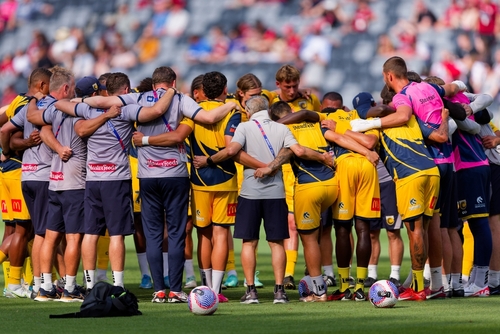
South Melbourne’s push to enter the A-League has reopened an old debate about who gets to play at the top level of Australian football. Beneath the arguments about history, identity and sporting merit sits a more consequential business question: what should a place in the competition actually cost?
Following its Australia Cup triumph, the debate and discussion around South Melbourne’s bid to enter the A-League has reignited. Co-president Bill Papastergiadis has indicated the club is open to discussing a licence fee, while arguing it does not need an equity stake in the Australian Professional Leagues (APL).
The question is whether entry to the A-League should be treated purely as a commercial asset to be purchased, or whether it should also provide a pathway for clubs capable of bringing genuine value to the competition.
The Price of Admission
A licence offers access to a national platform, broadcast exposure, sponsorship opportunities and the country’s highest domestic competition. The APL is entitled to protect that value and ensure any new entrant has the financial resources, infrastructure and governance to sustain a professional operation.
South Melbourne should not receive a free pass because of its history, supporter base or Australia Cup success. Winning a knockout competition is not the same as demonstrating the capacity to operate a professional club across an entire season.
But a licence fee should not become a barrier that protects the competition’s existing membership at the expense of its future.
There is also a risk that licence fees become little more than short-term sugar hits for the competition, delivering an immediate injection of cash without addressing the longer-term challenge of building sustainable clubs, growing audiences and increasing recurring commercial revenue.
Assessing the Value of Established Clubs
South Melbourne is not starting from scratch. It has an established supporter base, a home at Lakeside Stadium and a storied history in Australian football. Its profile and recent success give the APL a tangible proposition to assess, rather than a business plan built entirely around projected growth.
Nor is South Melbourne necessarily alone. Other established Australian clubs may have the supporters, facilities, community connections and ambition to make a credible case for joining the professional ranks. Not all would be ready, and maybe not all would strengthen the A-League. But that is precisely why the league needs clear, consistent criteria to assess potential entrants on their financial capacity, infrastructure and commercial potential as well as what they could contribute to the competition.
That contribution should count. New audiences, local rivalries, sponsor appeal and stronger connections between community and professional football all have value. An established club may offer a different proposition from launching a new team and trying to build a supporter base from the ground up.
There are, of course, significant costs involved. South Melbourne would need to demonstrate how it could fund professional men’s and women’s programs, generate sustainable revenue and protect its existing operations. A licence fee must be considered alongside the rights, obligations, access to central revenue and commercial opportunities that come with entry. The price cannot sensibly be separated from what a club receives in return.
The Promotion and Relegation Question
This is also where the debate connects to the lack of promotion and relegation. If the system is considered financially unviable under the A-League’s current structure, clubs and supporters deserve a clear explanation. What are the specific financial, stadium, broadcast or governance barriers? What would need to change to make it possible? It is simply down to the licence fees that have already been paid by the existing A-League clubs?
Promotion and relegation is clearly not an immediate or realistic solution, and introducing it would not automatically create a healthier competition and ecosystem. But if it remains off the table, Australian football needs to offer ambitious clubs something more tangible than an uncertain promise of expansion.
Providing a Clear Pathway
A transparent licensing process, published entry criteria and a clear explanation of what clubs must demonstrate would at least provide a pathway to work towards. Clubs investing in players, facilities and academies need to understand what it takes to reach the top. Supporters deserve to know how their clubs can progress, too.
The A-League needs entrants capable of surviving and investing for the long term. It also needs to recognise the value that established clubs can bring. If the price of entry is focused primarily on extracting the largest possible payment, the league risks overlooking opportunities to grow its audiences, strengthen rivalries and deepen its connection with Australian football.
South Melbourne’s bid is an opportunity to test that balance. The question is not whether the club should simply be handed a place in the A-League, but whether Australian football can develop a licensing model that rewards financial responsibility while recognising the value of clubs that have already built something worth bringing to the national stage.
It seems a licence must have a price. But if the A-League wants to grow sustainably, it must also explain what that price is designed to achieve and provide a clearer answer to clubs and supporters asking how the pathway to the top is meant to work.