


Young Kiwi talent shines at Auckland FC’s first development camp

Auckland Talent

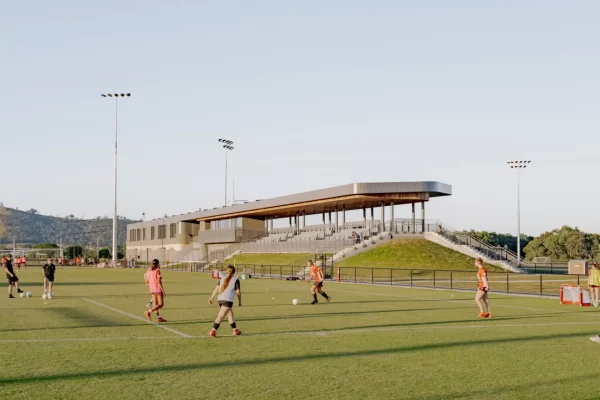
New Zealand A-League club Auckland FC has hosted its first Development Centre training camp as the club continues to elevate the standards of New Zealand football and foster young talent.

Through Auckland FC’s Youth Development Club Partnership programme, the training camp ran welcomed 26 players aged 14-16 from 12 partner clubs to participate in a three-day programme.

Auckland’s Youth Development Club Partnership aims to guide young players and build relationships with communities across New Zealand’s Northern and WAIBOP regions. Via this, clubs affiliated with the club’s Talent Devlopment Programme (TDP) from Auckland and areas such as Hamilton and Tauranga were represented at the training camp.

During the training camp, players had the opportunity to experience a professional sporting environment as they competed. Additionally, players were involved in educational workshops which relayed key information about fitness, mental resilience and Auckland’s Black Night Football philosophy.

Furthermore, players also met and learnt from senior coaches and players.

Head of player recruitment Doug Kors explained how important the training camp was for both the young players and the club.

“It was great for us to get at a look at the young players coming through. We’re a club dominated by local talent, it’s part of who we are and what we set out to do in terms of providing pathways into the game. I don’t see that changing anytime soon,” he said in a press release.

“For players it provides them a chance to understand what it takes to make it professionally.

“Yes, it requires skill and talent, but also eating right, a tactical understanding of the game, as well as level of mental resilience. We try a provide all the players who come through with a basic understanding of that.”

Auckland FC CEO Nick Becker highlighted how valuable the Youth Development Club Partnership was for the club.

“There is a huge amount of untapped talent in New Zealand,” he said via press release.

“Thanks to the relationships we have with partner clubs, Auckland FC can become a vehicle that helps talented young boys and girls realise their potential and make it at a professional level, right here in Auckland. That’s huge for the development of the game.

“Beyond that, our ownership structure means the connections exist to for the most talented of professionals to try to make it in Europe.”

The first of Auckland’s development camps represents an impressive series of development for the A-League’s youngest team.

Last month the club celebrated its first birthday and currently leads the A-League Men’s ladder with a solid four-point lead.

Key to the club’s success has been its ability to extract the best out of local talents, reinforced by the callup of six players to the All-Whites in the most recent international window, double that of cross-country rivals Wellington Phoenix.

If Auckland is to continue to rely on home stars, then continued investment in local football is necessary.

Auckland FC first launched the Youth Development Club Partnership in October 2024, creating the first step for athletes to become professional footballers via a defined pathway of the Rebel Sport Development Centre, reserves and then the first team.

Now, the programme unites 18 TDP clubs in fostering emerging talents. In creating partnerships with clubs across the country, Auckland FC is building a network of valuable win-win relationships that allow each organisation to develop and play the best talent available.


Previous ArticleNext Article

Further fragmentation for Aussie football fans as DAZN & Disney split UEFA competition rights

British over-the-top streaming platform DAZN are set to win the Australian UEFA Champions League rights for the next four seasons from 2027/28, while Disney will acquire the rights for the Europa League and Conference League competitions.

According to SportBusiness, Disney will hold exclusive rights for all three tiers of UEFA club competition in New Zealand.

The Champions League has been broadcast on Nine’s Stan Sport platform since 2021, while DAZN has held the rights in New Zealand.

It marks the second time in four seasons the rights for the competition have changed hands in Australia, indicating that top level European football is indeed a desirable asset for broadcast companies.

Paramount+ had been favoured to win the Champions League rights to supplement their football offering, having acquired the rights from next season in the USA, Canada, the UK & Germany among other markets, but opted against placing a bid in Australia.

The news is yet another blow to the consumer; the splitting of UEFA competitions means yet more fragmentation for Australian football fans. Seperate subscriptions are already required to watch the English Premier League (Nine), the domestic A-Leagues and national teams products (Network 10/Paramount+), while the Championship has a free-to-air home on SBS.

The news comes just months after Nine paid AUD 800 million to extend it’s deal to show the Premier League; they will be banking on the majority of its audience to favour the top English domestic league as opposed to watching Europe’s finest clubs in Real Madrid, Barcelona et al.

Data from the Australian Government 2023 Census Survey on Online Copyright Infringement showed that 39% (four-in-ten) of Aussies said they illegally streamed live sports on the internet.

With rising costs to streaming football imminent, there is a good chance these numbers rise again.

Thornaby FC’s community commitment leads the way, but football fans continue to suffer

The cost of living crisis has impacted people and businesses worldwide and football is no different.

Football fans globally – and especially top flight British supporters – are being priced out of the game they created, and by the teams they have supported their whole lives.

In the 2024/25 season, 19 of 20 Premier League clubs raised their ticket prices. The highest single jump was a 28% increase, and additionally an 11% hike on tickets for children. Between 1990-2025, football fans in the UK have seen their ticket prices increase by an immense 800%. 

The fan reaction has been continually damning. Via the UK-based Football Supporters’ Association, over one hundred supporter groups campaigned for Premier League clubs to freeze ticket prices at home games for two seasons, as part of the Stop Exploiting Loyalty Campaign.

An FSA statement reads: ‘Football is for everyone. Rising prices are making it harder for regular fans, especially younger generations and working-class communities to attend matches.’ 

With fans of clubs from right across the country united on the matter, their position was clear: stop taking football from the people.

One club that did heed the message were North Yorkshire non-league side, Thornaby FC. This season, they are offering free season tickets to local residents for both men’s and women’s games.

Over 20,000 people are eligible thanks to the partnership between the club and the local council. With the club awarded AUD 12,000 (GBP 6,500), the initiative aims to bring the community together and drive locals to games.

This is not seen as a final solution, but certainly a major step in gaining support and interest for the team; in turn it will hopefully drive local investment, revenue and growth via the community that supports it, as opposed to investment groups that potentially hold less interest in the health of the club and its community. 

The Stop Exploiting Loyalty Campaign has also gained the support of MPs in Parliament. In March, they recognised the problem and as part of an Early Day Motion stated: ‘working-class and young supporters are being priced out; squeezing out local and dedicated fans poses an existential threat to the culture and community of football.’

While those words may be encouraging, what they can change in their current systematic position feels minimal.


The World Cup is another example of football fans suffering greatly at the hands of commercial interests.

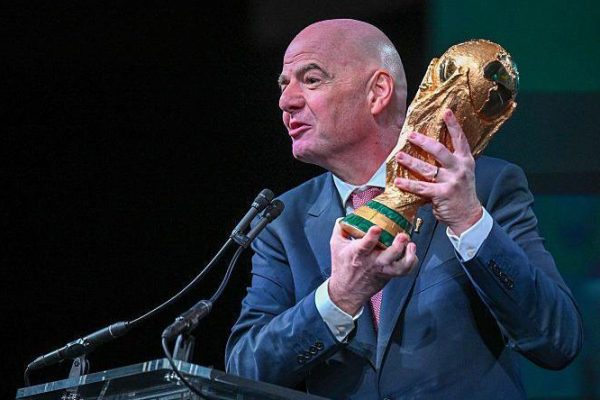
On the grandest stage, where fans from around the world gather en masse to support their nations and the spirit of the game should in theory be at its most authentic, fans are deliberately exploited by FIFA.

According to Forbes Middle East, the 2026 edition in the USA, Canada and Mexico saw a rise in ticket prices for 90 of the 104 matches compared to the previous edition in Qatar.

Football is being held up by investors and governing bodies like a puppet on strings. They deem growth to be the only measure of success.

Growth is of course a key requirement of success, but what good is that when it sees the interests of local communities, including loyal football fans, pushed to the side? When it comes to modern day football, good deeds – such as those committed by Thornaby FC – are rarely seen as time well spent.

The pursuit for growth is also not just financial. Human attention is a newly monetised market; from streaming views to social-media engagement to email sign-ups. As football continues its global push into lounge rooms and onto smartphones, it is at major risk of overlooking those who commit their time and resources to stand in the terraces or sit in the stands.

Most Popular Topics

Editor Picks

Send this to a friend