

Fox Sports exits the room but bright times ahead for Australian football’s broadcast future

Last Sunday’s A-League Grand Final between Melbourne City and Sydney FC signalled the end of Fox Sports’ 16-year broadcast partnership with Australian football.

Over the course of this time, Fox Sports have had a substantial influence in showcasing historic moments that shaped this crucial period in Australian football, whether that was through the A-League, W-League, FFA Cup or Socceroos and Matildas matches.

For many years they developed these products effectively and these moments were given the appropriate coverage. However, in recent times their commitment to the game waned due to dropping linear TV ratings and a further shift to focusing on their ‘marquee’ sports in Rugby League, Cricket and Australian Rules.

Due to these multiplying factors, the Australian Professional Leagues (APL), a relatively new body who have now separated from the FA and effectively run the A-League and W-League, flexed their muscle and were first to announce a new broadcast partner in recent weeks in the form of ViacomCBS.

The US media company own Channel 10 in Australia and under the new deal an A-League game will be broadcast on the main channel of a commercial free-to-air station for the first time, every Saturday night (with a game in the W-League to be shown on a secondary channel every week).

The rest of the A-League and W-League games will be shown on new streaming platform Paramount+, which is set to launch in August of this year.

The deal presents an opportunity for the APL to make the domestic professional leagues appeal to the mainstream and tap into the young demographics that are prevalent across Network 10 programming.

Since the announcement of the deal, which also includes ViacomCBS purchasing a minor stake in the APL, we have seen snippets of cross promotion between A-League and W-League players on Channel 10’s flagship programs.

Michael Zullo and Jenna McCormick were featured prominently on The Project speaking about the game’s future, whilst Archie Thompson, a Melbourne Victory legend, will be a contestant on Celebrity MasterChef when the show airs later this year.

Efforts such as this, in normalising the sport and its heroes across the network, will ramp up in the months to come when the contract officially begins at the start of August.

Finally, the stories of our players will be told to a wider audience, in primetime slots, whether through variety shows or the pre-match lead-in program which will air before the A-League game every Saturday.

Alongside this, the APL administration are lining up a $30 million marketing strategy to grow the audience of the game, which is set to culminate in the creation of a digital hub for Australian football fans with expected content such as written stories, video content, news clips, behind the scenes footage and more.

While details remain scarce on the digital strategy, APL MD Danny Townsend told the Australian: “The digital product will be the biggest investment the game has ever made in itself. It is not just for A-League fans, it will be for football fans, participants, coaches, managers of grassroots clubs, members of A-League clubs, digital fans of other leagues around the world and so on.”

The focus of the strategy looks to incorporate the whole football pyramid, not just the professional game, but the question of how exactly NPL content will be included in the offering lingers unanswered.

Currently state and territory federations across Australia live-stream their NPL content through their Facebook or YouTube pages, or in Football NSW, Football Queensland and Football SA’s case through NPL.TV.

Will live-streaming of these matches now be broadcast on this new digital hub funded by the APL? That remains up in the air, but a nationally unified approach for NPL content may be more commercially appealing.

Townsend told this publication earlier in the year that talks have occurred to find the best solution: “We are up for working with the NPL and helping them grow the consumption of their content. They’ve got NPL.TV which is a fantastic initiative. How we work with that, with APL and our content, is important in bringing that unity back to the game.”

What will certainly help the APL’s mission of unity in the game was the follow-up announcement that the remaining Socceroos, Matildas and FFA Cup broadcast rights have also been snaffled up by ViacomCBS, with games to be shown on Channel 10 and Paramount+.

In a boost for the profile of the competition and the local clubs all across Australia who partake in it, the FFA Cup Final will for the first time be shown on free-to-air television.

The rest of the games in the Round of 32 onwards will be shown on Paramount+, with the competition set for a new name and fresh production values on the streaming platform.

The Socceroos and Matildas will also find a regular broadcast home on Channel 10 for games outside of the World Cup, after finding themselves on various free-to-air channels in the past few years.

Australian football may have departed from Fox Sports after a long-standing partnership, but significant investment from a new broadcast partner and stakeholders should push the game towards its potential.
Previous ArticleNext Article

Football QLD to team up with Restore Function Physiotherapy

Football Queensland announced last week it will be partnering with Restore Function Physiotherapy in a multi-year collaboration.

Elite preparation and performance

By establishing a long-term partnership with a business dedicated to supporting athletes in the region, Football Queensland are showing their commitment to supporting current and future players in their physical preparation.

Furthermore, by ensuring injuries are kept at bay through physiotherapy, strength and conditioning services, Restore Function Physiotherapy will help Football Queensland to keep their most talented players fit and firing throughout the season.

Football Queensland CEO, Robert Cavallucci, expressed his delight at establishing the alliance and what it means for Football Queensland’s football development going forward.

“Our partnership with Restore Function Physiotherapy is a key step in continuing to raise the standard of FQ Academy and State Team programs,” Cavallucci said via press release.

“Restore Function Physiotherapy will deliver a range of services across our boys’ and girls’ pathways, including training and match coverage, injury screening, rehabilitation and high performance support,” he continued.

“The experience everyone at Restore Function Physiotherapy bring from elite sport will help to further professionalise our programs and support the long-term development and wellbeing of Queensland players.”


Supporting long-term development

As Football Queensland looks to build a sustainable footballing future across the region, prioritising players’ health will be essential. With training partners like Restore Function Physiotherapy, clubs can help their players become elite athletes, ultimately improving the footballing standards on the pitch.

Restore Function Physiotherapy Owner and Founder, Miranda O’Hara, revealed her pride at having established an alliance with Football QLD for the upcoming season and beyond.

“We’re proud to partner with Football Queensland and support its Academy and State Team players with high quality, evidence-based physiotherapy and high performance programs,” O’Hara said via press release.

“Our role is to work closely with players and staff to deliver injury prevention, rehabilitation and S&C programs that support sustainable high performance and long-term athlete development.”

It is clear that the impact of a partnership between Football QLD and Restore Function Physiotherapy goes far beyond a mere commercial venture. It is an alliance which can help a local business, as well as nurture future talents coming through the Football QLD system.

Ultimately, by providing Queensland players with elite training and support networks, a distinct culture of excellence and professionalism is created before they step onto the pitch.


Read more about Restore Function Physiotherapy and the services they provide here.


Two CEOs, One Code: Why Alignment Between Football Australia and the A-Leagues Matters More Than Ever

The NSL didn’t fail because of football. It failed because of structure, money and misalignment. With new CEOs at Football Australia and the A-Leagues, the sport now stands at a crossroads it has faced before.

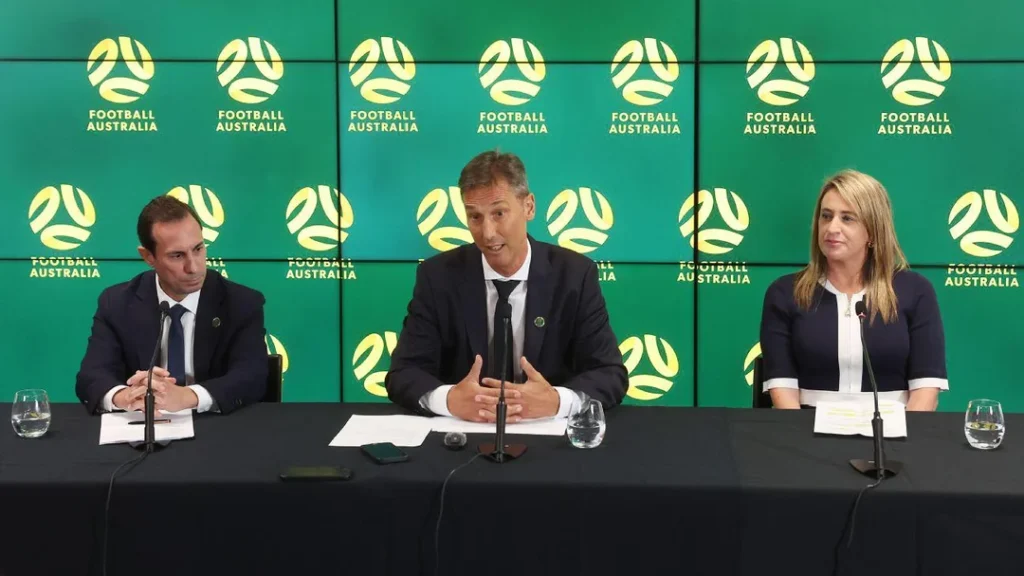
Australian football finds itself at a rare inflection point. Not because of a single appointment, but because of two. With Martin Kugeler set to commence as CEO of Football Australia on 16 February 2026, and Steve Rosich now installed as CEO of the Australian Professional Leagues, the code has, perhaps for the first time in a long while, a genuine opportunity to align governance, commercial ambition and strategic execution across its two most powerful institutions.

This moment matters. Not symbolically, but structurally.

Kugeler arrives at Football Australia with a background that is markedly different from many of his predecessors. As former CEO of Stan and a senior leader across finance and strategy roles, he brings a media-native, commercially fluent mindset into a federation grappling with modern realities. Football Australia’s most recent financials tell a complex story: record revenues of $124 million, alongside a record $8.5 million loss. Chair Anter Isaac has been clear that grassroots programs and national teams will not be impacted, and projections suggest a return to surplus by 2026. But the message beneath the numbers is unmistakable: football can no longer rely on participation alone to sustain its future.

This is where Kugeler’s skillset becomes relevant. His mandate is not simply to steady the ship, but to modernise how Football Australia thinks about audiences, digital platforms, commercial partnerships and long-term value creation. Increasing commercial revenue, improving digital engagement and strengthening the federation’s market relevance are not optional objectives; they are existential ones.

Crucially, Kugeler does not inherit Football Australia in isolation. His tenure begins alongside Steve Rosich’s leadership of the A-Leagues, and that duality could become Australian football’s greatest advantage, if handled correctly.

Rosich, as previously outlined in my last CEO opinion, is not a caretaker. He is a commercial operator forged in high-pressure environments: the AFL, the Melbourne Cup Carnival and elite corporate sport. He understands sponsorship activation, broadcast value, governance discipline and the language of major brands. Where Kugeler brings media and platform intelligence, Rosich brings commercial deal-making and entertainment-led strategy.Together, they represent something Australian football has often lacked: complementary leadership at the federation and league level.


View this post on Instagram


A post shared by Soccerscene (@soccerscene.au)

For too long, the relationship between governing bodies and professional leagues has oscillated between tension and tolerance.

The recent Football Australia AGM made clear that, at least publicly, the relationship with the APL is currently characterised by “complete cooperation and collaboration.”

That sentiment must now be operationalised, not merely stated.

The $4.1 million expected credit loss linked largely to monies owed by the APL is a reminder that financial alignment, transparency and shared accountability are not abstract governance ideals. They are practical necessities. Disagreements over historical balances cannot be allowed to morph into structural dysfunction. Kugeler and Rosich must treat alignment not as diplomacy, but as strategy.

The real test of that alignment may arrive sooner than expected in the form of the Australian Championship.

The inception of a national second-tier competition is, in principle, a positive and necessary evolution for the game. But early signs should concern anyone paying attention. Clubs have already borne the brunt of operational and travel costs. Broadcast timings have been questionable, with examples such as Heidelberg United playing 1pm Sunday matches that clash directly with family and community priorities. There has been no major commercial sponsor announced, no broadcast-led narrative strategy, and no licensed merchandise program attached to the competition.

This is not sustainable.

Australian football has lived this movie before. The National Soccer League did not fail because of a lack of passion or history. It failed because of structure, economics and misaligned responsibility. The Crawford Report in 2003 was unequivocal in its findings: when Soccer Australia directly controlled the NSL’s operations, funding and commercial arrangements, inherent conflicts emerged. The governing body lacked the specialist commercial expertise to run a financially viable league, while the league itself became a financial burden that distracted from core responsibilities such as governance, development and national teams.

The solution then was clear: a licensed, semi-independent league model, aligned but not controlled. The A-Leagues were born from that logic.

The Australian Championship must not drift into the same structural grey zone that doomed the NSL. Kugeler will need to assess, early and decisively, where this competition sits within the ecosystem. Who carries the commercial risk? Who controls broadcast strategy? How are clubs protected from cost blowouts? And critically, where does the revenue model come from?

This is where alignment with Rosich becomes essential. Football Australia should not be attempting to commercialise a national competition in isolation, just as the APL should not be expected to absorb costs without strategic clarity. Joint sponsorship frameworks, coordinated broadcast planning and shared commercial storytelling are not nice-to-haves. They are safeguards against repeating history.

More broadly, the opportunity for knowledge-sharing between Kugeler and Rosich extends well beyond one competition. Both bring deep corporate networks. Both understand boardrooms, not just dressing rooms. Both speak the language of partners who expect return on investment, not goodwill.

If leveraged properly, this dual leadership can reshape how football presents itself to government, broadcasters, sponsors and global stakeholders ahead of the 2026 World Cup cycle. It can also restore confidence internally, among clubs, administrators and fans who have grown weary of fragmented strategy and reactive decision-making.

The warning is simple: alignment must be intentional. History shows that Australian football suffers most when roles blur, responsibilities overlap and commercial logic is secondary to sentiment. The promise, however, is equally clear. With Kugeler focusing Football Australia on governance, national teams and commercial modernisation, and Rosich driving the A-Leagues as a serious entertainment product, the code finally has the chance to operate as a coordinated system rather than competing silos.

Two CEOs. Two institutions. One code.

If they learn from the past, share expertise openly and resist the temptation to repeat structural mistakes, this period could mark not just a reset, but a genuine maturation of Australian football.

The opportunity is there. The question now is whether the game is ready to take it.

Most Popular Topics

Editor Picks

Send this to a friend