

Subway Country Director Shane Bracken: “The history behind this code is something that we’re extremely proud to be involved in”

Subway Socceroos

Ahead of the Socceroos’ Centenary clash with New Zealand, Football Australia unveiled Subway as the new naming rights partner of the country’s Senior Men’s National Football Team.

The record-breaking, three-year partnership is the largest ever national team sponsorship deal in Australian football history and sees the world’s largest sandwich chain – with more than 37,000 locations globally – secure the naming rights of the Subway Socceroos, Subway Olyroos, Subway Young Socceroos, and Subway Joeys.

As part of the game-changing deal, Subway also becomes an Official Partner of the CommBank Matildas and the Australia Cup, the largest knock-out competition in Australia with over 700 teams from all corners of the country entering each year. Subway will have exclusive category rights for the Socceroos, CommBank Matildas, men’s and women’s youth national teams, and the Australia Cup.

Subway Australia & New Zealand Country Director Shane Bracken attended the Socceroos’ Centenary Gala and spoke on behalf of the leading multi-national fast food restaurant franchise.

He addressed a room filled with Socceroos legends and Team of the Century inductees, as well as representatives from Football Australia amongst a wide range of Australian football’s various stakeholders.

“Spending a couple of hours in this room tonight you hear words like ‘family’. And you hear words like ‘team’. And you just know the history behind this code is amazing and it’s something that we’re extremely proud to be involved in,” Bracken said.

“I’m honoured to be here tonight with Chris Nikou, James Johnson, and so many legends of the game. It’s special to be here on a night where we’re celebrating the centenary, and we get the honour of being able to kick-off the Subway and Football Australia partnership. We recognise that this is a very important moment as football takes its place in the Australian sporting community.

“Subway has a long and proud Australian history and we’re delighted to unite these two green and gold brands. To us it’s a perfect fit; we love what football represents in Australia, particularly the 700+ community clubs. We’re extremely excited about the national and international scale of the Socceroos and Matildas, but we can’t wait to participate at the community level.

“Our business is a franchise business, with 1200 restaurants across Australia. And we form part of a community in just about every suburb in Australia. So, for us it’s extremely important to match our values and vision with Football Australia’s. And we’ve seen that very quickly already in the short time we’ve been involved.

“We value a fresh and healthy approach to food and we feel that Subway has that opportunity to fuel teams and individuals on a game day as well.

“Thank you for welcoming us into the football family and on behalf of everyone at Subway I wish the Subway Socceroos all the best for a successful World Cup campaign in Qatar and beyond.”

The event was followed by the Socceroos and New Zealand match at the same venue of Suncorp Stadium, where 25,392 fans showed their support.
Previous ArticleNext Article

Football West runs Indigenous pilot program during NAIDOC Week’s 50th anniversary

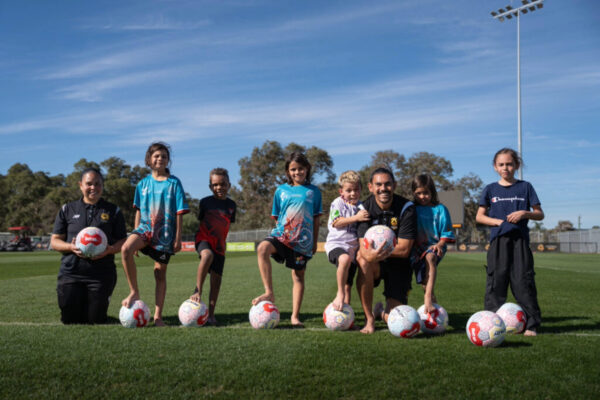
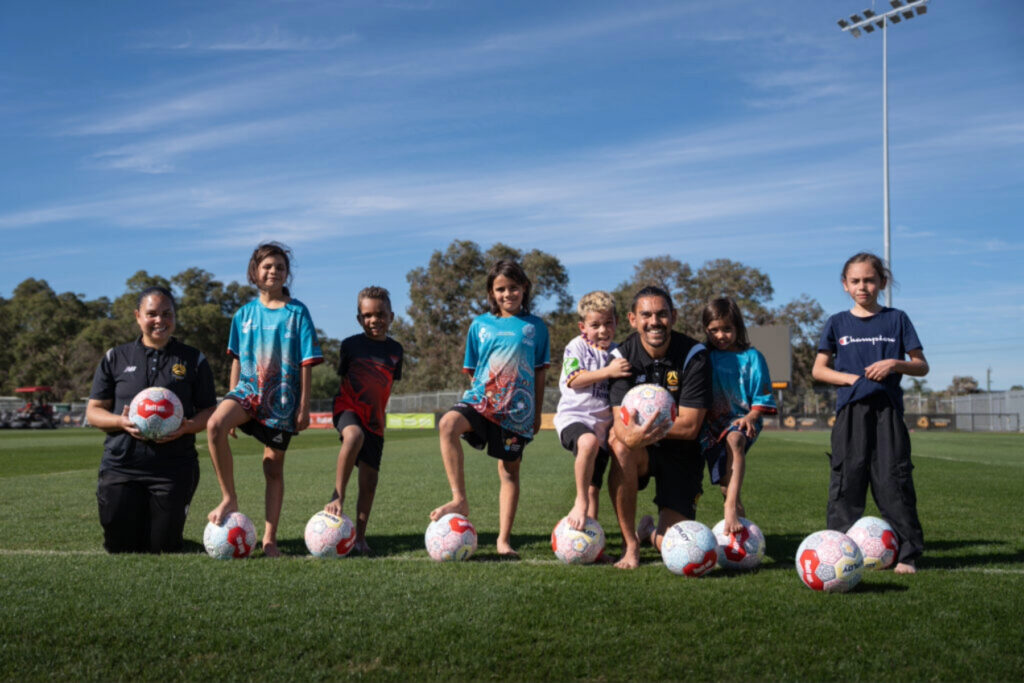
Football West ran a pilot program for Indigenous children at the Sam Kerr Football Centre during NAIDOC Week’s 50th anniversary. Former Socceroo David Williams delivered the session.

This year’s national NAIDOC theme, “50 Years of Deadly,” marks five decades since the movement began. It honours the Elders, artists and communities who built it.

“Having these young indigenous kids here at the Sam Kerr Football Centre was great to see,” Williams said. “The feeling they got running around the same pitch the Socceroos and Matildas have trained on was special for them and me.”

A player turned administrator

Williams retired from professional football in November 2025 after a career-ending ACL injury. As a teenager he trained with Club Brugge and Liverpool, and coach Miron Bleiberg once described him as the “best Australian prospect since Harry Kewell.”

He went on to become the first Indigenous player to represent Melbourne City, scored in the UEFA Cup against Eintracht Frankfurt, and won the Indian Super League with ATK.

Since retiring, Williams has moved into administration at Football West. He also sits on the Indigenous Football Australia Council, which oversees the grassroots initiative John Moriarty Football.

A name with its own history

Football Australia named Williams head coach of the Charles Perkins XI last year, the governing body’s national Indigenous youth team. Football Australia renamed the side in 2025 in honour of Dr Charles Perkins AO, following endorsement from the Perkins family and the National Indigenous Advisory Group.

Perkins, an Arrernte and Kalkadoon man, played for Adelaide Croatia and Pan Hellenic in the 1950s. He went on to become the first Aboriginal Australian to graduate from university and a leader of the 1965 Freedom Rides.

Football Australia has described the renamed team as reflecting a commitment to embedding cultural identity and leadership within its high-performance pathway for Aboriginal and Torres Strait Islander youth.

What happens next

“After living out my dream as a professional player, to now being able to offer experiences like this and hopefully inspire the next generation of young Indigenous footballers is very rewarding,” Williams said. “There is also a lot of talent that we can tap into.”

He said running the session during NAIDOC Week let Football West mark two things at once. “Creating a fun session for these kids during NAIDOC Week meant we could celebrate culture and sport in one go,” he said.

Williams wants the session to become a regular fixture rather than a single event. “Going forward, I would love to put on more of these programs throughout the year and get more indigenous youngsters playing football,” he said.

Football West has not yet confirmed funding or a schedule for further sessions.

FIFA sparks widespread backlash with private investment proposal

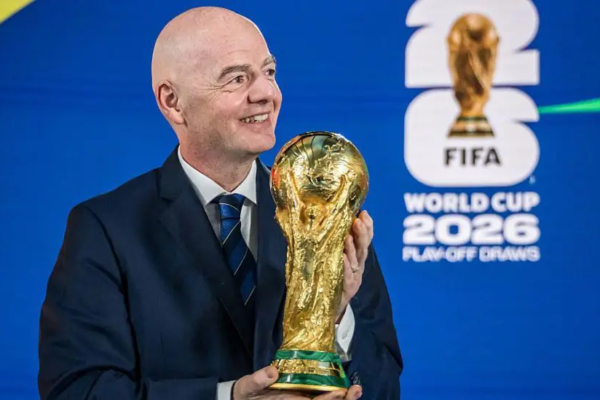
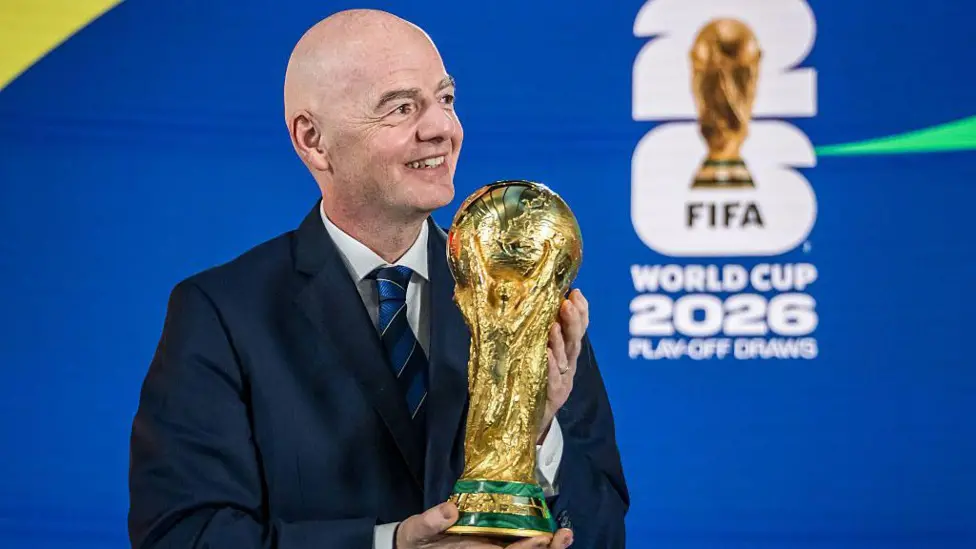
In a shock announcement made on Tuesday this week, FIFA revealed plans to create a subsidiary known as FIFA Forward Enterprise (FFE) to manage commercial and event operations for major competitions, including the World Cup. FIFA promises to reinvest all benefits back into the game, but the plan is receiving widespread criticism from governing bodies and governments around the world.


“Unleashing” football’s commercial power

Following the huge financial success of this summer’s FIFA World Cup, FIFA President Gianni Infantino indicated plans to “unleash the commercial potential and opportunity” at FIFA’s disposal.

Indeed, it appears Infantino is wasting no time in capitalising on the tournament’s success, which generated AUD 21 billion (USD 15 billion) for FIFA.

An eye-watering number. A tournament record. And, apparently, still not enough.

Tuesday’s announcement made clear the intention to bring commercial rights under a new subsidiary, FIFA Forward Enterprise (FFE). This, according to FIFA, could generate AUD 6 billion (USD 4.2 billion) of initial capital with all net benefits going back into grassroots and infrastructure development for Member Associations (MA) through the FIFA Forward programme.

The money would be raised by selling minority stakes in FFE to private third-party investors, although FIFA has outlined that it will retain “sole control of FFE”.

The venture has a reported valuation of AUD 29 billion (USD 20 billion), prompting questions and backlash from around the world over who will actually benefit from the finances – and whether anyone should benefit at all.


What are critics saying?

On the surface, the principle of generating more money for MAs and investing into grassroots, coaching, women’s and youth football is a worthwhile ambition.

Currently, each MA receives AUD 11.5 million (USD 8 million) per year from FIFA Forward. FIFA affirms that, should the proposal go through, this funding would increase to AUD 29 million (USD 20 million) between 2027-2030.

However, several governing bodies, including UEFA, Concacaf and the English FA, are adamantly fighting the plans.

“This crosses a line that football’s governing institutions should never cross,” UEFA said via an official statement on social media.

“The soul and governance of football are not assets to trade especially with zero transparency as to who gains financially,” UEFA continued.

“None of us are the owners of football. It is not FIFA’s to sell.”

Concacaf also expressed deep concern over the reports, citing a distinct lack of warning and due process from FIFA prior to the announcement.

“We share the disappointment of many within our region and the game that this level of detail has been designed and shared publicly before any discussion with the relevant governance bodies and stakeholders has taken place,” Concacaf said via official statement.

“As leaders within football, we are custodians of the game. Collectively, FIFA, the Confederations and every Member Association have a responsibility to always act in the best interests of the sport.”

Further concerns also centre around the company set to lead the proposed investor group – Thrive Eternal. Founded by Joshua Kushner, the brother of US President Donald Trump’s son-in-law, Jared Kushner, Thrive Eternal’s role in the venture opens the door to potential conflicts of interests – and emboldens criticisms that Infantino’s relationship with the US President is compromising his leading role in football’s international governing body.


Football was never about the money

Investing into the game is vital to football’s sustained future, especially for nations without the financial power to fund it independent of football’s governing body.

Nobody will argue that supporting the entire football pyramid – from grassroots to professional, men’s and women’s, youth and para, playing and coaching – should benefit from the financial might of the sport’s elite.

And FIFA is promising such benefits for all – arriving in the form of tens of millions of dollars – and stemming from third-party investors intrigued by the commercial value of the beautiful game.

But this is exactly where the venture’s flaws start to appear.

Rhetoric about increasing football’s commercial power following the 2026 World Cup leads the governing body down a slippery slope to a sport which prioritises money over integrity, due process and the fans who uphold it week-in week-out.

Football – from its very first beginnings as a working class sport – was never about the money.

Although modern commercialisation has turned clubs into businesses and players into tradable assets, everyone within the pyramid is a custodian of the game.

The game is not a product to sell – especially by those entrusted to uphold its integrity.


What happens now?

FIFA stated its intentions to only proceed with the venture if it receives support from the majority of MAs. While many are already uniting in opposition to the proposal, there are national governing bodies who have vocalised their support, including the Czech FA.

UEFA, on the other hand, is set to hold an emergency meeting with its 55 members to discuss a potential boycott of future tournaments.

But with a deadline of September 19 for MAs to accept the proposal, and the promise of a payment worth AUD 57.5 million (USD 40 million) if they do, the next eight weeks will reveal the future of the game and the nature of its global governance.

FIFA’s plan, although laced with promises of investment, development and growth for all, has instead kicked off a contest to save the game’s soul – or change it forever.

Most Popular Topics

Editor Picks

Send this to a friend