

Victoria University researcher Robert Aughey on football technology: “It will be an accepted part of the game very quickly”

Robert Aughey

Robert Aughey, a researcher and professor from Victoria University, has collaborated with FIFA for several years on leading-edge football technologies.

Late last year, Victoria University was confirmed as the first university in the world to be an official FIFA Research Institute, focussed on football technologies.

Among those innovations, Aughey (pictured at Sevilla FC) has collaborated on video-assistant refereeing (VAR), semi-automated offside technology and an inertial sensor that collects spatial positioning data in real-time that have played a major role in the World Cup in Qatar.

Aughey discusses how the newest and improved innovations introduced to the world game can be implemented for decision-making in the finest of margins, making it much easier and quicker. He spoke exclusively to Soccerscene regarding where the technology is sitting, how it works and what to expect.

Are there technologies planned for the following years to come in football? If so, what sort of technologies can we expect to see?

Robert Aughey: I’m not sure that there’s things specifically planned necessarily but l know that the manufacturers of current technology are always improving their products, so the semi-automated offside technology for example tracks a certain number of parts of the body using an optical tracking system and l know they are looking to greatly expand the number of parts of the body that are tracked so that will further increase the accuracy of it.

Can you briefly explain how the different technologies work?

Robert Aughey: There are a number of technologies – in the ball for example at the World Cup, they have what are called inertial sensors and it can basically measure the amount of force applied to the ball, which can be from the foot kicking it or the ball hitting the ground – or the ball not hitting Ronaldo’s head in the case of the World Cup recently. They also have gyroscopes in the ball which can measure spin rate on the ball which is something that hasn’t really come into broadcast yet, but l think it will come in soon.

The actual tracking of athletes and the determination of offside using the semi-automated offside technology that uses a number of cameras that are installed in the stadium are pretty impressive computer vision technology, to take those images and turn them into the effective location of the different parts of the body on the pitch and they do that around 50 times per second.

What has been the reaction to the different technologies that have been implemented?

Robert Aughey: I think it has been overwhelmingly positive. As the technology improves further and likewise the speed of decision-making, that it will be an accepted part of the game very quickly, like hawk-eye is in tennis of the Australian Open or LBW decision-making in cricket – it will just be a normal part of the game.

How did ball sensors identify that a goal first attributed to Cristiano Ronaldo was in fact scored by a teammate?

Robert Aughey: Because they measure the force applied to the ball, so the sensor in the middle of the ball reacts when force is applied to it and it was clearly evident in the data that there was no force applied by Ronaldo’s head, so clearly he didn’t touch it.

Why was the Japan goal allowed to stand against Spain despite video-assistant refereeing (VAR) ruling it had not crossed the line?

Robert Aughey: The goal was allowed to stand because the ball did not fully leave the field of play. The goal line camera which is used for the goal line technology clearly showed the part of the ball was still within the field of play and not fully outside the field, so the correct decision was made in the end.

How does the ball work together with cameras to determine offsides?

Robert Aughey: The thing you obviously need with offsides is that you need to know exactly when the ball was kicked. The cameras take 50 images per second but the ball is sampling information at 500 times per second so you get a much more precise timing of when the ball was actually kicked, so that the two data sets are synchronised and you can then determine offside from there.

Any chance these technologies can be wrong?

Robert Aughey: Not wrong as such, as there’s levels of precision in any measurement system including referees, so we know how accurate the systems are and if they are used within the decision-making, they can’t be wrong as such. They could fail in theory in the sense that you could fail to have the technology available, but if that were to happen then the referee just does his or her job and we move on as if the technology wasn’t there.

Victoria University has released a video on some of the technology in action, which was conducted at Melbourne’s Marvel Stadium. You can view the vision and more words from Robert Aughey here.

Previous ArticleNext Article

Project ACL: The initiative leading the way on injury research

Launched in 2024, the research project recently welcomed two US-based organisations: the National Women’s Soccer League Players Association (NWSLPA) and National Women’s Soccer League (NWSL).


About Project ACL

Led by FIFPRO, PFA England, Nike and Leeds Beckett University, Project ACL aims to research ACL injuries and understand more about multifactorial risk factors.

After piloting in England’s Women’s Super League (WSL), Project ACL will expand to the NWSL in the US, reflecting the global importance of the project’s research and outcome.

“We are incredibly excited to bring the NWSLPA and NWSL to Project ACL,” said Director of Women’s Football at FIFPRO, Dr. Alex Culvin, via official press release.

“Overall, we believe that player-centricity and collaboration with key stakeholders are central to establishing meaningful change in the soccer ecosystem and that players, competition organisers and stakeholdersaround the world will benefit from Project ACL’s outputs and outcomes.”

Interviews with over 30 players and team surveys across all 12 WSL clubs provided the project’s research team with valuable information about current prevention strategies and available resources.

Furthermore, the project tracks player workload and busy schedule periods during the season through the FIFPRO Player Workload Monitoring tool, therefore gaining insights into the link between scheduling and injury risks.


Looking to the data

Project ACL’s partnerships with the WSL – and now the NWSL – are immensely valuable for the future of player welfare in women’s football.

Although ACL injuries affect both male and female athletes, they are twice as likely to occur in women than men. However, according to the NWSL, as little as 8% of sports science research focuses on female athletes.

In Australia, several CommBank Matildas suffered ACL injuries in recent years: Sam Kerr was sidelined from January 2024 to September 2025, Ellie Carpenter for 8 months after suffering the injury while playing for Olympique Lyonnais, and Holly McNamara came back from three ACL’s aged 15, 18 and 20.

And this is just the tip of the iceberg. The 2025/26 ALW season saw several ACL incidents, including four in just two weeks.


Research, prevent, protect

Injury prevention and research are vital to sport – whether professional or amateur.

But when the numbers are so shocking – and incidents are so common – governing bodies must remember that player welfare comes above all else. Research can inform prevention strategies. Prevention means players can enjoy the game they love.

The work of Project ACL, continuing until 2027, will hopefully protect countless players across women’s football from suffering long-term or recurring injuries.

How Husqvarna Is Helping Stadiums Cut Costs Without Cutting Quality

At a time when operational costs are rising across global sport, stadiums and football clubs are being forced to rethink one of their most overlooked expenses: turf maintenance.

From diesel consumption to labour hours, maintaining elite playing surfaces has traditionally been both resource-intensive and environmentally taxing. But new data emerging from venues like CBUS Super Stadium suggests a smarter, more sustainable model is already taking hold.

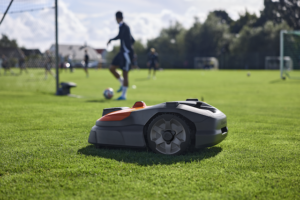
Leading that shift is Husqvarna, whose autonomous turf technology is quietly reshaping how professional venues manage their playing surfaces. Their product delivers measurable cost savings without compromising quality.

Cutting fuel consumption costs

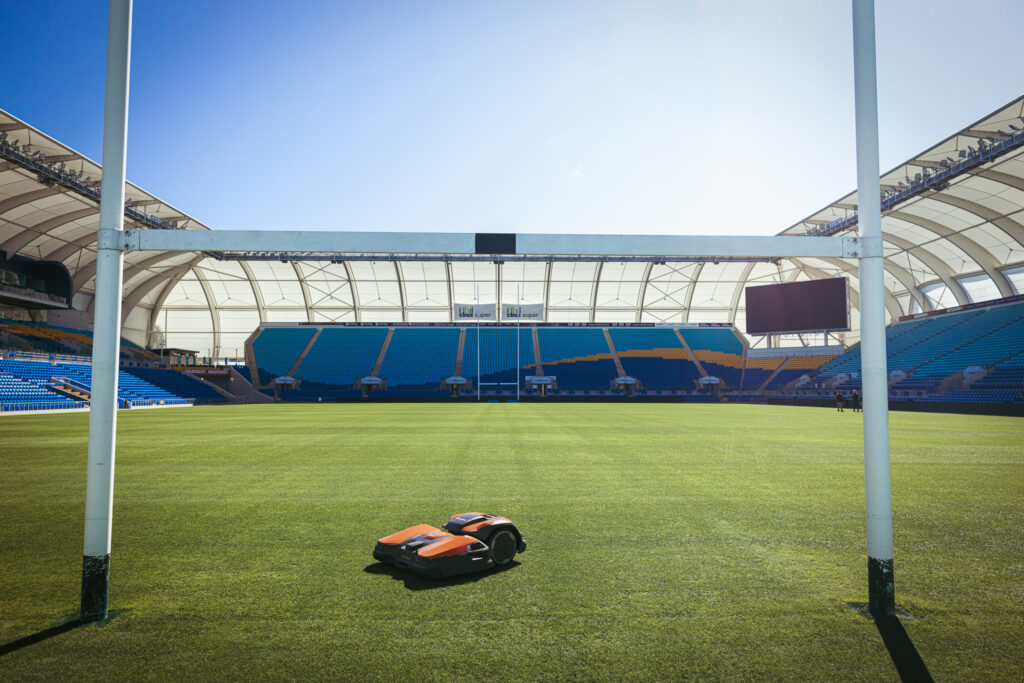
At CBUS Super Stadium, the introduction of Husqvarna’s CEORA™ robotic mowing system has reduced diesel usage by approximately 20–30 litres per week. Over the course of a season, those savings compound into a significant reduction in both fuel spend and carbon emissions. This is particularly efficient for stadiums hosting regular fixtures and large-scale events.

CBUS Super Stadium General Manager Kristian Blundell said the robotic mower was a game-changer for the venue:

“This technology is not replacing staff but rather giving our grounds team the ability to do what they do best by helping to improve turf management processes, better manage fatigue and decrease our environmental footprint”

But the impact goes beyond fuel.


Time efficiency

By automating routine mowing, Husqvarna’s technology enables grounds teams to focus on higher-value maintenance tasks, from pitch recovery to detailed surface management. The result is not only greater operational efficiency but also improved turf consistency, which is an increasingly critical factor in elite football performance.

The benefits are being mirrored beyond stadium environments. At Oatlands Golf Club, Husqvarna’s autonomous mowing has delivered savings of up to 60 litres of fuel per week while freeing up staff for precision work. Quiet, round-the-clock operation also ensures surfaces are maintained without disrupting play—an advantage that translates directly to multi-use stadium settings.

Image Credit: Husqvarna

Importantly, Husqvarna’s lightweight robotic systems reduce the wear and tear typically caused by traditional heavy machinery. This not only protects the integrity of the playing surface but also reduces the need for costly repairs over time.

Football clubs navigating tight budgets at grassroots and semi-professional levels could benefit from such cost savings.

With rising energy prices, increasing sustainability expectations, and limited staffing resources, the ability to cut costs while improving performance is no longer optional. Solutions like Husqvarna’s CEORA™ are positioning clubs to operate more efficiently today, while preparing for a more environmentally accountable future.

As the sports industry continues to evolve, one thing is becoming clear: the next competitive edge may not just come from what happens on the pitch—but how it’s maintained.

Most Popular Topics

Editor Picks

Send this to a friend