


PFA Co-Chief Executive Kathryn Gill on the discussions leading up to Collective Bargaining Agreement

Kathryn Gill

The Collective Bargaining Agreement (CBA) between Football Australia and Professional Footballers Australia (PFA) was recently formed for 2023-2027, bolstering the future for the Socceroos and Matildas.

The CBA will put a number of key changes and initiatives in place – namely payments, commercial partnerships, gender equality, work-life balance and life after football.

As a former Matildas captain, PFA Co-Chief Executive Kathryn Gill has been the perfect role model for those rising up through the ranks, and also in her leadership to turn this CBA into reality.

She spoke with Soccerscene to outline the key milestones achieved for the new CBA and what we can look forward to over the four-year duration.

The path towards the 50:50 payments and the key conversations that made it happen:

Kathryn Gill: Women’s football has undergone a global explosion over the past four to five years. When we signed the previous collective bargaining agreement in 2019, the women’s game was threatening to reach new heights, and our gender equal model reflected that trend.

In 2023, we needed the new agreement to reflect this new reality, and most players were comfortable moving away from a centralised contract structure to a meritocratic payment model, mirroring the Socceroos’ match payments.

Players provided direct feedback in player meetings, steering committee meetings, and in the negotiations with FA to share their views.

The outcome was that the players now have a payment model that incentivises performances, creates competitive tension within the team, and is a fit-for-purpose gender-equal payment structure in line with the Socceroos.

There is still work to do to increase player salaries in club football, but we are hopeful that it will continue to grow in line with global trends.

How revenues will benefit the Australian football community with programs for current and former players:

Kathryn Gill: Under the CBA, a percentage of the players’ share of revenue is redirected into player development support programs and services, which are vital to the ongoing support of players and ensure that football remains a sport of choice for Australian athletes. That money is to support the current national team players. However, for the first time, the CBA guarantees investment in our past players via legacy funding from the 2023 FIFA Women’s World Cup.

That funding will ensure our players can stay in their careers longer, help them to prepare for life after football, and enable the PFA and FA to invest in areas that will allow us to support our retired and former professional players better.

The importance of giving back towards the PFA Footballers’ Trust:

Kathryn Gill: Players are deeply passionate about many issues within football and society, from reducing the cost of football to climate change and human rights. Their aim is to make the Footballers’ Trust the most impactful sports charity in Australia. The CBA is a great vehicle to foster the players’ commitment by building a deeper level of impact on many existing and new initiatives across the next four years of the agreement.

There were 40 players in the negotiation process, was there anyone in particular that stood out in discussions?

Kathryn Gill: The CBA is the players’ agreement, so as many players as possible in and around the national teams provided their input into their deal.

The players were constantly at the table and in the negotiations, even though many had to join from overseas at various hours of the morning or evening.

Our Executive Committee Members in particular – Andrew Redmayne, Lydia Williams, Tameka Yallop, Elise Kellond-Knight, Jackson Irvine and Mat Ryan – were deeply involved given their representative roles with the union.

Previous ArticleNext Article

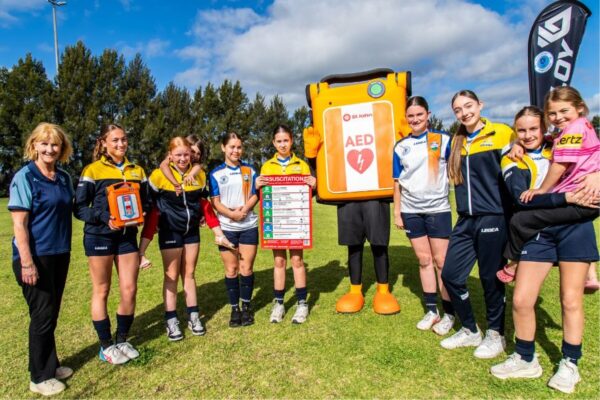
Community Spirit Shines on AFC Grassroots Football Day 2026

This week, Football Australia (FA) celebrated AFC Grassroots Football Day 2026, championing the people and communities who continue to hold up a safe, inclusive and supportive environment in the football landscape.

‘For all, for life’

In collaboration with Football NSW, Canterbury Football Association and community club, Balmain & District Football Club, the day reflected the very best of what football provides.

The event brought in participants of all ages – from 4-74 years-old – and reached a total of 400 people. Girls-only programs, all-abilities sessions and over-age football ensured all were catered for.

Such a diverse range of participants builds on a wider drive during FIFA World Football Week, which seeks to promote the sport not just as the dazzling lights of 100,000-seater stadiums, but as a way to foster community spirit and social development.

Furthermore, FA support through its Club Changer program was a welcome addition to the action, emphasising the organisation’s commitment to nurture a real love for the game across communities in Australia.

“Through Club Changer we support our clubs to provide a safe, fun and enjoyable environment where everyone is welcome; whether that be as a player, volunteer, referee or supporter,” explained National Program Manager Club Development at FA, Grace Lambourne.

“Everyone should feel they belong and are welcome to play, stay, and love the game.”


A welcome celebration

While the upcoming FIFA World Cup will no doubt inspire millions of future Socceroos and Matildas, events like the AFC Grassroots Football Day represent something beyond just inspiration.

It is a platform. An opportunity to express a love for football and to connect with others while doing so.

And connections between the professional and grassroots game is more important than ever if Australia is to nurture the next generation of talent.

This is particularly clear in the rise of women’s football across the nation. Since the FIFA Women’s World Cup, female participation rose by 32%, and registrations for the MiniTillies Program skyrocketed from 264 in 2023, to 1223 in 2024.

The professionals spark passion. But communities turn that passion into playing time.

That is why celebrating grassroots football – and the volunteers and families who sustain it – is a vital part of Australia’s football future. Together, FA and the AFC are creating strong foundations built on positivity, engagement, and inclusivity for all with a love for the beautiful game.

Heidelberg United denied qualification to AFC UCL 2

In an announcement made yesterday, Football Australia revealed that, in place of Heidelberg United, Melbourne Victory will now take the AFC UCL 2 spot.

A premature ending

In what is sure to be a disappointing verdict for Heidelberg’s fans, staff and supporters, the NPL VIC side will no longer compete in next season’s AFC CL 2.

The decision comes despite Heidelberg meeting the necessary criteria outlined in Football Australia’s National Club Licensing Regulations.

“We understand that this will be a disappointing outcome for everyone connected to Heidelberg United FC,” said FA Executive Director of Football, Heather Garriock, via press release.

“The club earned enormous respect through its performances this season and should be proud of what it achieved both on and off the pitch.”

Indeed, through defeating several A-League outfits en-route to the Australia Cup Final against Newcastle Jets, Heidelberg did earn widespread respect and admiration across the landscape. Football Australia also strongly advocated for the side’s place in the AFC CL 2 following Newcastle’s qualification to the AFC CL Elite.

But despite the determined efforts of the club’s board to meet all necessary criteria, the Asian Football Confederation (AFC) ruled the side ineligible to compete.


Victory emerge as replacements

Filling the now-vacant position in next season’s competition is Melbourne Victory, who finished 4th in the A-League this year.

As 3rd-place Auckland FC are based in New Zealand, thus falling under the Oceania Football Confederation (OFC), they are also ineligible to compete.

So while the AFC CL 2 will still be arriving in Melbourne next season, fixtures will no longer be built on the underdog success story of Heidelberg’s immense rise from NPL to AFC CL matchdays.

The club, however, will appeal the decision, and has written to Football Australia for further clarity on the Appeals Process.

It remains uncertain whether the appeal will be successful or not, but Heidelberg will undoubtedly enjoy the backing not just of its own staff and supporters, but of the entire Australian grassroots community.

Most Popular Topics

Editor Picks

Send this to a friend