

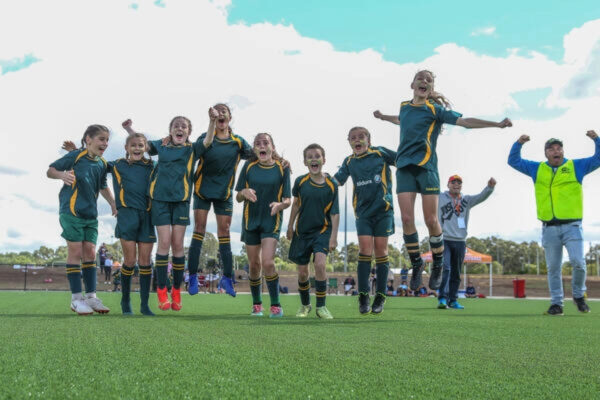

David Davutovic on Preston Lions’ rich history and ambitions for the future

At the recent Preston in Business event, media personality David Davutovic spoke about Preston Lions’ storied history, it’s incredible impact on football in Australia and the Club’s future as one of the eight foundation clubs in the emerging National Second Tier (NST).

The Lions are well known for their incredible fanbase, garnered over 77 years of history and have significantly broadened this over many years. This transition means that for the first time since 1993, Preston will be competing on the national stage of Australian football.

Davutovic, a special keynote guest, reflected on the Lions’ foundation and their growth to being one of the most popular NPL-based teams.

“The club has played a huge role in Australian football. The club had 30 pretty successful years prior to the NSL and there is a truly rich history at the club,” said Davutovic, Managing Director of Bruce Media.

“The club has been in the top division, in the NSL for 13 years and before that from 1947 onwards there have been some great players come through and represent the country.” he said at the event.

“More recently, Sasa Ognenovski came through in the post NSL era and was a product of this club. He was voted the best Asian player in 2010 and won an Asian Champions League over in South Korea then went on to play for the Socceroos.

“There’s no doubt this club is right up there in its contribution to Australian football, and we are all very excited to see what the future holds.”

The NST has been an attractive idea for many years but with very little action from Football Australia, it never really came to light until recently.

Preston Lions were one of the biggest drivers and immediately put their hand up to become one of the foundation clubs. The club’s strong performance in critical revenue streams like sponsorship, gameday ticketing and membership have helped the club get into a position to take on this financial hurdle with an opportunity to dream of achieving the impossible.

“It’s really exciting for the sport and it’s interesting as to how it’s all come about,” Davutovic said.

“It’s a bit like the A-League expansion project of five or six years ago. It happened somewhat organically because there was this groundswell of support, and Preston as a club have (arguably) played the biggest role in kickstarting this momentum that triggered the second division.

“When it kicks off next year it’s going to be huge. Preston had the courage to step forward and immediately say yes and obviously it’s a massive financial commitment for the club but they said ‘we’re doing it’ and credit to the club for that.

“The current situation is eight clubs in the second division but my understanding is that they are looking at an expansion to 10 or 12 teams, maybe more from Victoria and they can really grow this second division.”

Australian football cannot afford to waste the momentum gained from fantastic performances on the pitch in international tournaments.

With the fast-growing rates of participation and attendance at the national level, as well as the emergence of a few amazing young talents hitting their stride locally and in Europe, there has never been a better launchpad for growth within the community.

Davutovic spoke on the future of Australian football after fantastic Socceroos and Matildas international campaigns – adding to the emergence of the ever-important NST.

“The future of Australian football is really bright, evidently in the results from the Socceroos at the last World Cup then the quarter final exit at the Asian Cup to a very decent South Korea side,” he said.

“Of course, the Matildas with a brilliant campaign are growing women’s football, even the representation here at Preston is great.

“I can actually see football taking on the other codes, because all of a sudden, teams like Preston and all the other state league and NPL clubs are getting recognised. They have been treated disrespectfully from around 2004 onwards.”

“They are part of the system and have just as much of a right to compete in the top division and in the Asian Champions League as the A-League clubs because at the moment it’s a pretty closed shop.”

The opportunity for Preston to make an even bigger mark on Australian football has presented itself with the NST and the club clearly has every intention to grow because of it.
Previous ArticleNext Article

Premier League backs grassroots football in Singapore

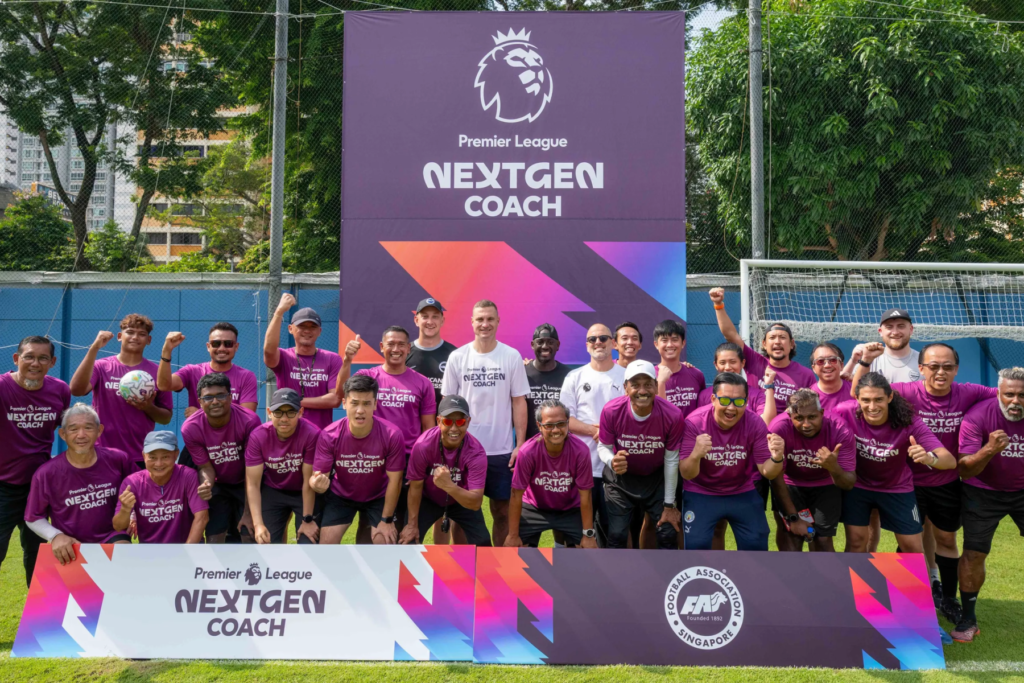
The NEXTGEN coach programme saw past legends and current coaches unite to deliver an activity intent on supporting grassroots football through high quality and inclusive coaching.


Creating new leaders

To reach the top in elite football requires tactical education, personal guidance and consistent support throughout the development journey.

Coaches therefore take on a great deal of responsibility for players seeking a top-flight dream.

Yet even for those who never make it to the top, there is always one coach who stands out. Not necessarily for the silverware achieved or results on the pitch, but for the way they helped build a person off the pitch to play better on it.

The Premier League’s NEXTGEN Coach programme in Singapore aims to equip coaches with the skills and knowledge to do exactly that: creating welcoming environments which nurture confidence and a love for the game.

“This will hugely benefit local coaches, providing them with expert training and skills that will cascade into the communities they coach in,” said Premier League Director of Community, Nick Perchard, via media release.

“After opening the League’s first international office in Singapore more than seven years ago, we are now building on our commitment to the country with a structured coach development programme.”


What does the programme include?

The programme initially saw Premier League coaches deliver training sessions to coaches from StarHub – the League’s broadcast partner in Singapore who engage with local community football.

Furthermore, the training was consolidated through stakeholder engagement events and talks from 150 students at the Institute of Technical Education about their careers in the game.

In total, the programme saw 30 coaches take part – all from diverse backgrounds selected by the Football Association of Singapore (FAS) to maximise community reach and positively impact as many young individuals as possible.

“Youth development is a key priority for FAS, and it starts at the grassroots level,” explained FAS General Secretary, Badri Ghent via media release.

“Coaches play a central role in shaping not just how young players learn the game, but how they experience it, building confidence, character and a lifelong connection to football.”

Through high quality programmes like NEXTGEN, grassroots football can grow to ensure future coaches and players are confident in themselves and their future roles in the game.

Football West’s Female Football Week draws record engagement from Metropolitan Perth to Remote Kunurra

Football West has wrapped up its 2026 Female Football Week with activations spanning metropolitan Perth, regional Western Australia and national online platforms, as participation data from the state’s most remote football association underlined the scale of demand for women’s and girls’ football beyond the city.

Kununurra Soccer Association, situated in the East Kimberley more than 3,000 kilometres from Perth, recorded 47 new female registrations aged 7 to 12 across the first two terms of 2026 through Football West’s Junior Girls United program, representing a 30 percent increase in female membership that coaches Hannah Grominsky and Evie Marchetti described as overwhelming.

“The support from the community has been simply awesome,” Grominsky said. “We’re up to nearly 50 registered girls now. The majority of them have never played before or aren’t part of our association, so it’s great to give them a positive football experience in a comfortable environment.”

The program, supported by the Federal Government’s Play Our Way grant, now runs every Wednesday and has extended football activity into the cooler months of the Kimberley calendar, a season when the association would not traditionally operate. The result is a cohort of players new to the game, in a region where access to organised sport has historically been constrained by geography, infrastructure and seasonality.

Recognition across the state

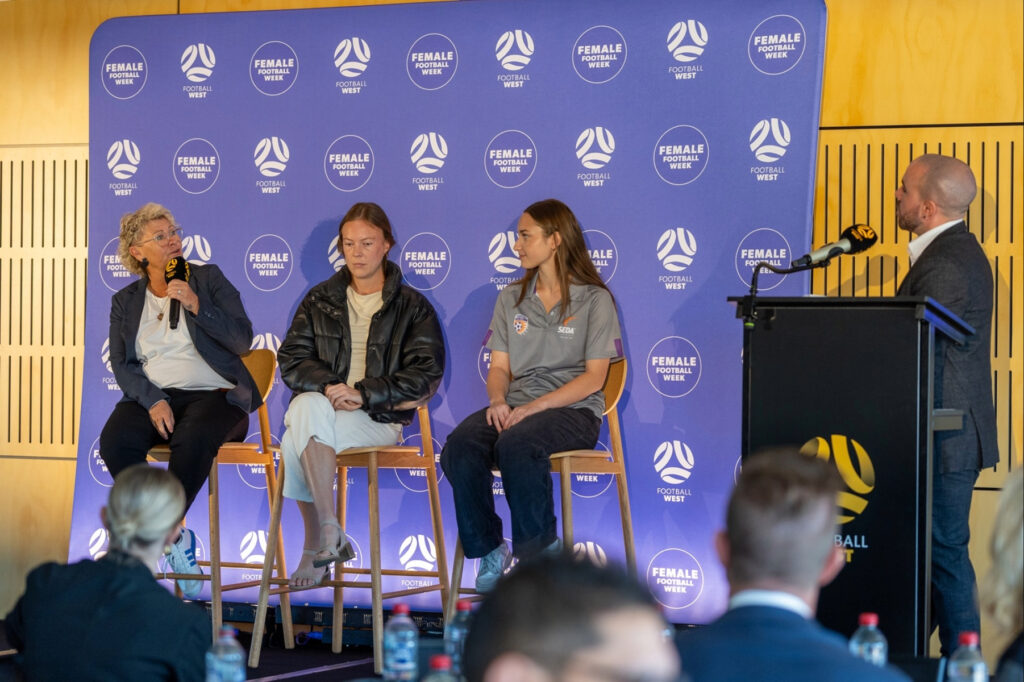
Back in Perth, Female Football Week’s centrepiece event was the Women in Football Celebrate You Breakfast at the Sam Kerr Football Centre, featuring two panel discussions covering officiating pathways, coaching development and advocacy for women in football.

Subiaco AFC NPL Women’s head coach Christine Coppin, who is one of few women coaching at her level in the region, said events like the breakfast were critical to making the pathway visible for others.

“I’d love to see more women coaches putting their hat in the ring, both at junior and senior levels, realising that there’s more to football than just playing,” Coppin said. “They can stay involved in the sport as they get older in different ways.”

A regional Women in Football Breakfast in Albany drew more than 30 attendees, while a Girls Day Out event in the same city attracted more than 50 participants aged 6 to 16 for a come-and-try introduction to the game, extending the week’s reach into the Great Southern and reinforcing Football West’s stated commitment to building women’s football outside metropolitan areas.

Recognising those who make it happen

The week’s awards, nominated by the WA public, recognised five individuals whose contributions to female football across the state were judged most significant over the past year. Cassandra Paxman of Albany Rovers FC was named Coach of the Year, Georgia Whitelaw of Great Southern JSA and Albany JSA took Referee of the Year, Karen Harris of Carramar Shamrock Rovers FC was named Volunteer of the Year, Georgia Aiesi of Mandurah City FC received the Player of the Year award, and Melissa Spillman of Football Futures Foundations was named Community Champion of the Year— a recognition she also received at the national level.

Football West Female Football and Advocacy Manager Sarah Carroll said the week had reinforced both the momentum and the responsibility facing the sport.

“Female Football Week continues to showcase the incredible passion and growing appetite for the women’s game,” Carroll said. “It’s a reminder of how important it is that we keep working together to drive the game forward.”

The contrast between a packed breakfast at the Sam Kerr Football Centre and a Wednesday afternoon program in Kununurra working around wet season schedules captures something essential about where women’s football in Western Australia actually lives. The growth is real, and it is happening in places the cameras do not always reach.

Most Popular Topics

Editor Picks

Send this to a friend