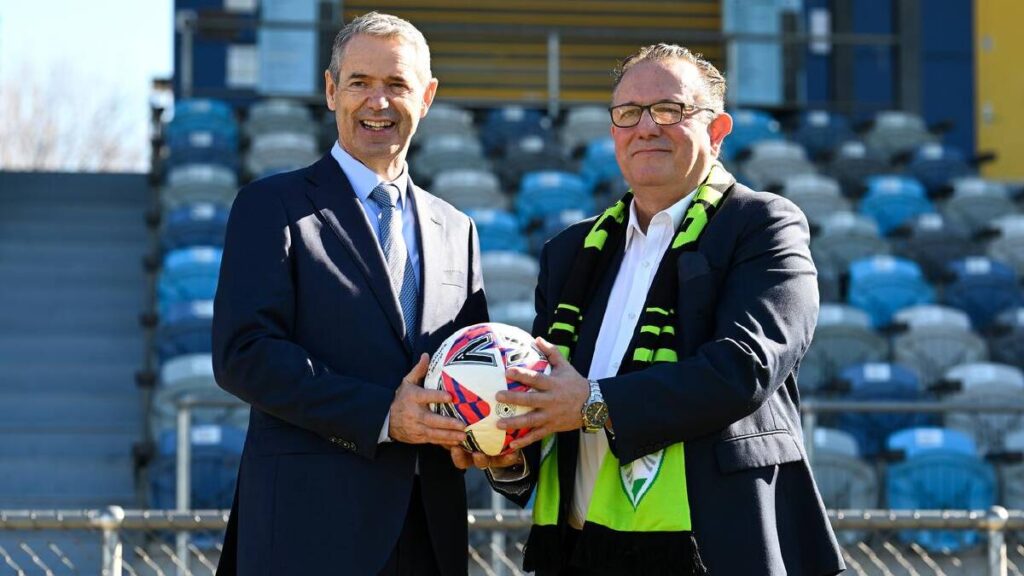

Filopoulos’ defence of football proves he is the right man to unite and lead the domestic game

PEter Filopoulos Football Victoria

In an administrative career spanning near a quarter of a century, CEO of Football Victoria Peter Filopoulos has forged a reputation as not only an effective but also one of the most respected figures on Australia’s sporting landscape.

Recently, and with the A-League’s newly granted independence, his name has been prominent in discussions around the people required to use the new financial freedoms gained to advance and transform the competition into what we have always hoped it would become.

Whilst other candidates will also have fair and valid claims on such a role, Filopoulos’ achievements in business and commercial and marketing strategy within the game of football make him a highly desirable candidate.

The short term future looms as a vital period of potential growth of the national league; a league so oft maligned yet one fundamental to the overall image of the beautiful game in Australia. Having the right people in place is the first and most important step in ensuring that prudent and visionary moves are made and not the reactionary and conservative decisions of the past made by Football Federation Australia.

Filopoulos has experience across a range of sports and thus, a keen understanding of the unique and saturated Australian sporting market. Experience in aquatics and stadium management add a depth to his arsenal of talents, yet it his 8 years of experience in AFL administration that came clearly into focus this week.

Long before the significant role he played in rescuing Perth Glory; as he guided the club through its horrid salary cap problems stemming from 2014/15, Filopoulos had spent eight years in AFL club land. Both Hawthorn and North Melbourne enjoyed the fruits of his labour.

Last Saturday, the Richmond Tigers defeated the Greater Western Sydney Giants to claim the 2019 Premiership and Tigers fans celebrated their second title in three years with some passionate demonstrations of both pride and ecstasy in the streets of Melbourne.

The images were compelling, widely spread on social media and brought no qualm or concern. Until, that is, Peter Filopoulos stated publicly and categorically what a number of football fans were thinking.

He tweeted;

“Clearly a different perspective by media on AFL fans celebrating with flares and fireworks in public streets to soccer fans doing similar in the past. One’s a ’party getting started’ & the other is ’soccer fans rioting’. The headlines are starkly different. #FairGoForFootball”.

The message was succinct and quite simple. Had Melbourne Victory or Western Sydney Wanderers fans been captured celebrating in the same manner and the captions featured underneath the images been substituted with the usually obtuse and ill-informed nonsense spun by main stream media, a hullabaloo would have no doubt broken out.

Using the images captured on Saturday night and adding a headline or caption such as the one the Nine Network expressed through their Sydney based anchor Peter Overton in 2018, would have changed the contextual impression of the scene and fuelled an inaccurate stereotype.

After a few Wanderers fans had become somewhat over-zealous at a Sydney Derby, Overton labelled the events as a “a night of soccer violence’. It is not surprising in the slightest that such a label was not given to the events of Saturday, despite numerous reports of fans assaulting Victorian police and what appeared to be rampant disorder after the game.

Filopoulos said what needed to be said. Taking things one step further and writing formally to media organisations, the Victorian Government, AFL House and the FFA, should be his next move.

Many have lauded his comments and rightly so. Possessing a clear, long term vision for football in Australia, Filopoulos realises that the public relations slap in the face the media continues to serve up to football, holds back that vision and the game.

 

Previous ArticleNext Article

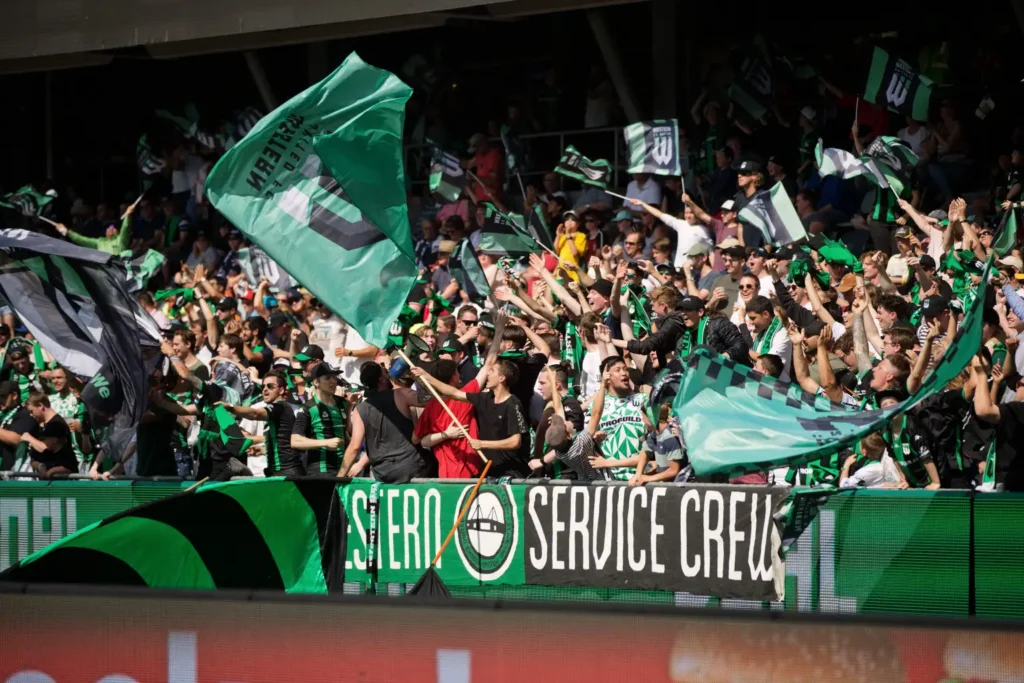
Western United ruled out of 2026–27 A-League season

Western United’s participation in the A-Leagues has officially been terminated, ending the club’s immediate pathway back into Australia’s professional football competitions.

The Australian Professional Leagues (APL) terminated Western United’s Club Participation Agreement on Monday, following months of discussions over the club’s future.

The decision comes after Western United’s attempt to secure a return to the A-League for the 2026–27 season was unsuccessful. Football Australia had previously determined that the club did not meet the requirements to retain its licence.

Western United has now turned its attention towards rebuilding the organisation under new ownership, with the club targeting a return to the A-League for the 2027–28 season.

In a statement, Western United said the termination creates an opportunity for “new custodians, new investment and a fresh start”, while emphasising the importance of maintaining the club’s identity in Melbourne’s west.

The club’s financial problems have been a major issue over the past two years with the club being placed into a conditional hibernation ahead of the 2025/26 A-League season.

The APL said its decision was made following the club’s breach of several obligations under the agreement, including compliance with Football Australia’s National Club Licensing Regulations.

The club’s proposed 2027–28 comeback will therefore depend on securing new investment, addressing its outstanding operational requirements and demonstrating that it can meet the conditions necessary to re-enter the A-Leagues.

While Monday’s decision brings an end to Western United’s current participation agreement, the club maintains that it is not the end for Western United.

Now, the club that won the A-League grand final just four years ago, will now turn its attention to restructuring the business and building a sustainable platform for a potential return to Australia’s professional football landscape.


Theo Fotopoulos outlines vision for Canberra United’s future

Professional football in the nation’s capital has entered a new era with Australian Sports Group (ASG) officially taking over Canberra United ahead of the 2026/27 season.

Led by Chairman Morris McAllister and CEO Theo Fotopoulos, ASG takes over a club whose future has been uncertain in recent years. Now, the focus has shifted from survival to building a sustainable future for football in Canberra.

Speaking to Soccerscene, Fotopoulos discussed why ASG chose to invest in Canberra United, the importance of preserving the club’s identity, and the roadmap for the chapter ahead for football in the nation’s capital.

Why Canberra?

The investment in Canberra United comes at an important time for the club. The beginning of the 2026/27 A-League Women season is just around the corner, and the prospect of an A-League Men side is drawing closer. Asked why ASG chose to invest in Canberra United and Canberra itself, Fotopoulos’ answer was simple.

“Canberra has stacks of football culture. It is a football city,” Fotopoulos said.

Speaking on the decision to retain the name Canberra United and not undertake a rebrand, Fotopoulos pointed to the club’s history and connection to the community.

“We retained the name, Canberra United, because of the history and the association. We felt there were more positives to retain the name,” Fotopoulos said.

The new ownership also wants supporters to play an active role in shaping the club’s future.

“The fans will be involved in making decisions,” Fotopoulos said.

Fotopoulos revealed that the club is already consulting with fans on the introduction of a nickname and is looking at developing a playing kit that is designed by the fans.

While Canberra offers a unique opportunity for professional football, Fotopoulos acknowledged the club will still compete for supporters’ attention alongside established sporting organisations such as the Canberra Raiders and ACT Brumbies.

Rather than viewing that as a disadvantage, he believes Canberra’s appetite for sport presents an opportunity to grow the club’s presence in the capital.

“It is something that allows us to accelerate the building of the brand in Canberra, Canberrans really love their sports,” Fotopoulos said.


The road ahead

The 2026/27 Ninja A-League season kicks off in October, and the priority for Fotopoulos and ASG at Canberra United is to ensure that Canberra is ready to compete not only next season, but sustainably for the years ahead.

“For us, it’s really stabilisation for the women’s. Build that and build the infrastructure around the women then translate that into an additional structure for the men’s program,” Fotopoulos said.

Infrastructure also forms a key pillar of ASG’s long-term vision. Fotopoulos said securing a long-term home at McKellar Park and improving football facilities across Canberra would play an important role in supporting future growth.

He believes better facilities will benefit not only Canberra United but football throughout the ACT and surrounding region.

Importantly, the takeover of the club included an option to introduce a team into the A-League Men’s competition from the 2028/29 season, which is something that ASG intends to pursue.

When speaking about the future of the proposed senior men’s side, Fotopoulos pointed to the quality within and around the organisation that will ensure its introduction.

“We’re quietly confident, the football department is very positive. There are a lot of quality people, both in Canberra and outside of Canberra, that have indicated interest in being part of the elite pathways academy structures that will be the foundation for a new A-League men’s team,” Fotopoulos said.


More than a football club

For Fotopoulos and ASG, this investment is about more than just owning and running a football club. The focus extends beyond results on the field to developing an integrated football structure and greater cohesion across the game.

In order to support a strong senior men’s and women’s side, Fotopoulos outlined the importance of establishing strong junior pathways for young players growing up in Canberra.

“One of the other big picture objectives is to finally get to establishing a permanent pathway,” Fotopoulos said.

Fotopoulos believes that these pathways will ensure long-term stability for Canberra United and help form the foundation of both senior playing groups for years to come.

However, it wasn’t just an investment in football in Canberra. It was a vote of confidence for women’s football in Canberra in particular.

While excitement is building around a potential expansion into the A-League Men, Fotopoulos believes that the current moment represents an even greater opportunity for the women’s game.

“If I was to look at any other time in history, this is probably the strongest time to invest in women’s football,” Fotopoulos said.


Most Popular Topics

Editor Picks

Send this to a friend