



Forever remembering Dylan Tombides and his story

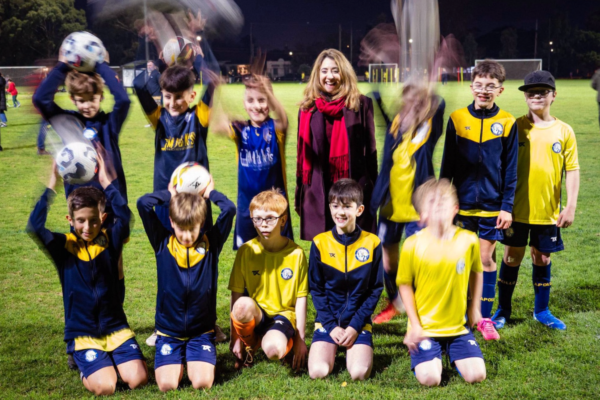
Recently it was the commemoration of a decade since Dylan Tombides’ passing, and the DT38 Foundation persists in honouring his legacy by their ongoing efforts within the football community.

In 2011, Tombides received a diagnosis of testicular cancer following a routine drug test during the Under 17 FIFA World Cup, which revealed a tumour in one of his testicles. Despite a courageous three year battle against the illness, he tragically succumbed at the age of 20 on April 18, 2014, surrounded by his loved ones.

Following his unfortunate passing, the DT38 Foundation was established in his honour, dedicated to promoting awareness of testicular cancer with the aim of saving lives.

Head of Media and Operations at DT38 Foundation, Donna Giuffre, said via press release:

“Our goal at DT38 is not only to raise awareness about testicular cancer but also to foster a culture of proactive health management within the community,” she said to The PFA.

“By partnering with clubs and supporters across the A-League and globally we aim to make a meaningful difference in the lives of young men, promoting early detection, and ultimately honouring Dylan’s legacy.”

The Foundation aims to bring together supporters, athletes, and localities, persisting in disseminating the importance of awareness and solidarity for individuals impacted by testicular cancer. Their endeavour is to leave a meaningful imprint in the ongoing battle against this disease.

Their core message emphasizes the urgency of timely action, underlining the importance of education for men, DT38 tirelessly strives to ensure that young men and their families are well-informed about the significance of regular self-examination and prompt medical attention upon detecting any irregularities.

Recently, the organisation has forged a partnership with their second A-League club, Brisbane Roar, while Perth Glory, the hometown team, remains their primary charity collaborator.

The clash between Brisbane and Newcastle Jets earlier this month marking the inaugural charity awareness matchday since the Roar joined forces with the foundation as a partner.

This marks the third triumphant charity awareness matchday, following Perth Glory’s encounter with Brisbane earlier this season and West Ham’s Premier League match against Fulham at the Olympic Stadium. Supporters from both sides paid tribute to Tombides’ legacy with a round of applause during the 38th minute.

These occasions have not only provided a stage to promote awareness regarding testicular cancer and the significance of early detection but have also served as a homage to Tombides’ dedication to football and his brave fight against cancer.

Tombides had a six-year tenure with the Hammers, having enrolled in their academy in 2008. He earned his debut for the first team in September 2012. Following his passing, the club retired his number 38 jersey, and West Ham honoured him during a match against Crystal Palace.

On that day, Mile Jedinak, a former Socceroo and patron of the DT38 Foundation, participated in the match and successfully scored a penalty, he reflects on that day to The PFA.

“The game was a special moment, knowing what it was representing and the Australian football community,” he said to The PFA.

“I was a young parent then, and all I could think about at the time was wanting to offer my condolences to his family. I could do it after the game, and from that moment, I stayed in touch with them. I was aware Dylan was making waves at West Ham.

“You don’t play for a club like that if you don’t have something about you. It would’ve been nice to play against Dylan but sadly it wasn’t meant to be. He was well on his way to becoming a big star in the game.”

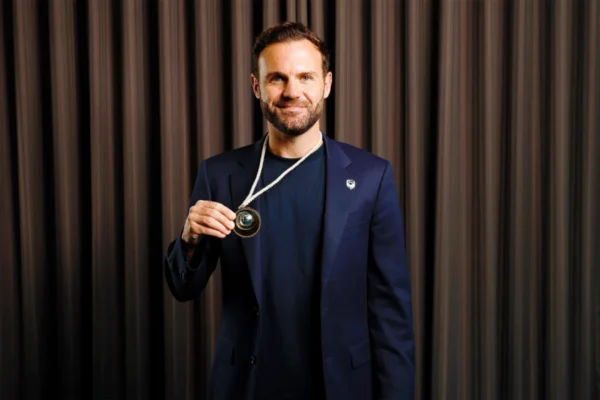
Introduced by The PFA and Football Australia in 2019, The Dylan Tombides Medal is bestowed upon a player chosen from the Under 17 (Joeys), Under 20 (Young Socceroos), and Under 23 teams.

The Medal is awarded to the player who best embodies the qualities of excellence, dedication, and bravery while representing Australia at the youth international level, paying tribute to the legacy of Dylan Tombides.

More information about the DT38 Foundation can be found here.
Previous ArticleNext Article

Inaugural 2026 UEFA Walking Football EURO Cup begins

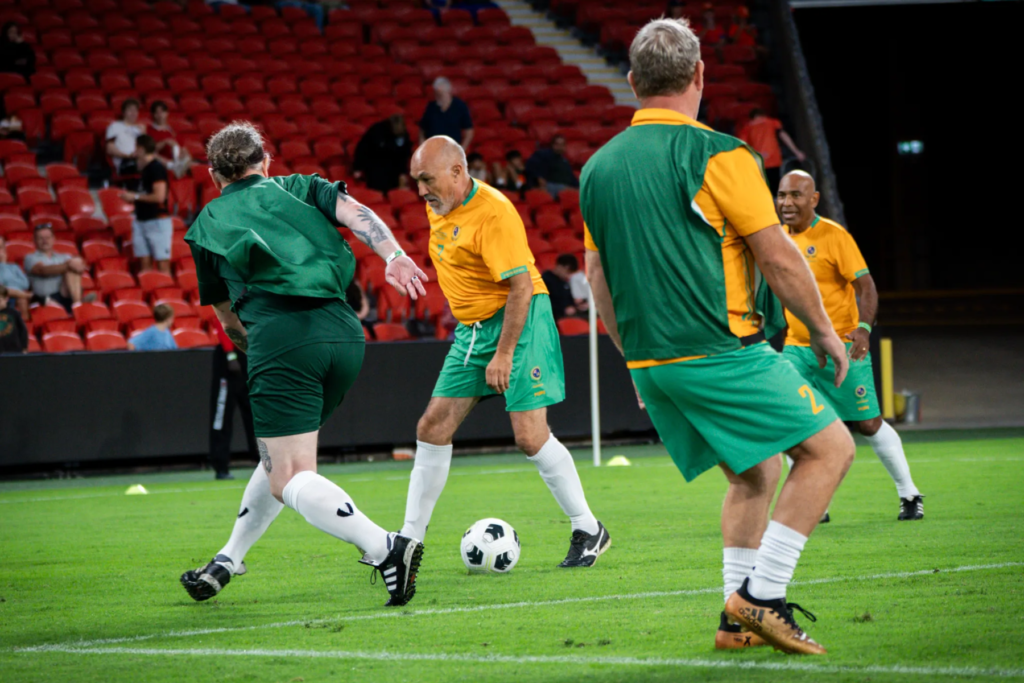
On 25 June, senior players from across Europe will take part in the first UEFA Walking Football EURO Cup at UEFA HQ in Lyon, Switzerland.


It’s everyone’s game

When thinking about football, fans tend to imagine the fast-paced, adrenaline-pumping action of the professional game. That is where excitement and drama is, usually, at its highest.

But growing within the wider football landscape is a version of the game which, rather than focusing on speed, instead champions enjoyment, health and participation for senior participants.

Walking football is proof that football truly belongs to everyone. UEFA’s commitment to staging the inaugral tournament on 25 June reflects the organisation’s understanding that a love for the beautiful game stays despite age, injury, or mobility issues.

Alongside the 2026 UEFA Walking Football Euro Cup is the release of the UEFA Walking Football Toolkit. This aims to provide more information about the game, benefitting associations, leagues and clubs and encompasses contributions from national associations of England, the Faroe Islands, France, Gibraltar, Portugal, Poland and Sweden.


A brief history of walking football – and its importance

From its beginnings in the UK in 2011, walking football has since expanded across Europe and the world to give senior players a chance to be socially and physically active – all within a safe, minimal-impact environment.

And the game – despite its more steady nature – is gathering real pace here in Australia.

In October 2021, Football Australia introduced the first ever Seniors Football Week. Also, just last month, Brisbane Roar hosted the 2026 IWFF Walking Football World Championships at Perry Park – the first time the tournament has taken place in the entire Southern Hemisphere.

The implication, therefore, is that walking football will continue to grow and welcome more members of the community with a desire to dust off their old boots and join a team.

From youth teams to walking football, everyone in the pyramid shares the same love for the game. And there is no reason why, when speaking about the cohesive football development, that walking football shouldn’t be included in future planning and strategic visions.

Beyond the Pitch: Miyuki Kobayashi on the Real Challenges Facing Japan’s Women’s Game

Last week, Soccerscene spoke to pioneer of women’s football in Japan, Miyuki Kobayashi, about the game’s development in Japan and the intersection between sporting and social change in the country.


Talent, quality and recent silverware

After Japan’s recent AFC Women’s Asian Cup victory in the final against Australia, the women’s national team solidified its standing as the No.1 team in Asia.

Throughout the last 15 years, Japan’s women’s national team has grown into a formidable opponent, boasting a World Cup trophy, an Olympic silver medal, as well as three AFC Women’s Asian Cups.

The talent is undeniable. The quality is unwavering. And the team shows no signs of slowing down.

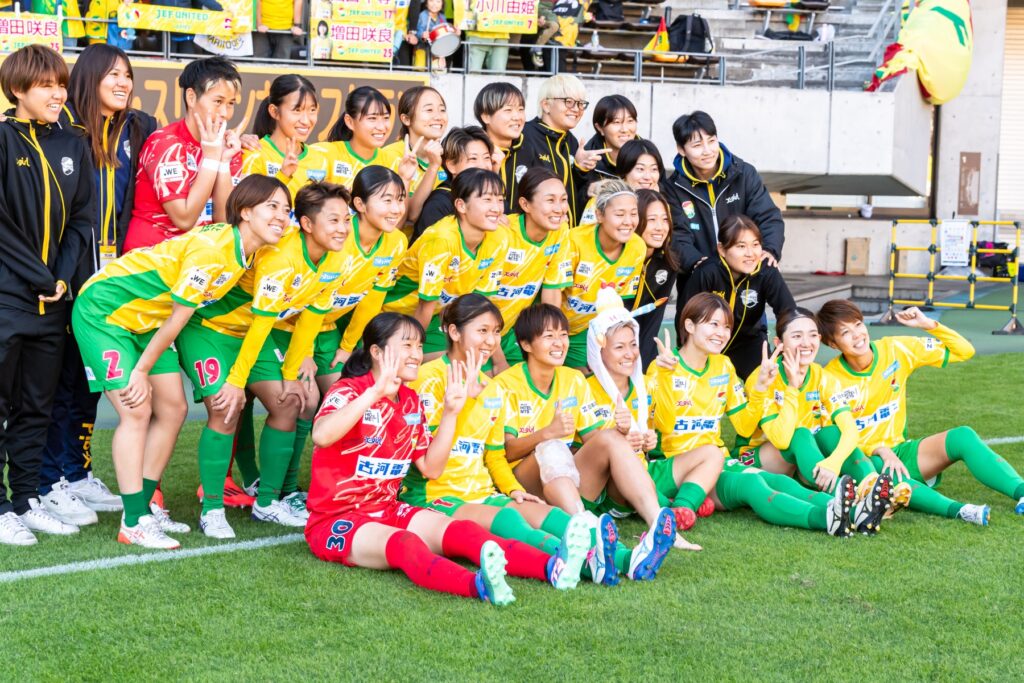
But these victories and trophies on the world stage wouldn’t be possible without the leaders behind the scenes – none more so than Miyuki Kobayashi, former WE League Board Member and current JEF United Ladies Scout and Academy Chief.


Laying the foundations

Kobayashi has led the charge for women’s football in Japan, promoting not only a sport which values success, but one which empowers female footballers across the nation.

“At university, not many girls were playing and we didn’t have an official team. I went to the US and the environment was so different,” Kobayashi explained.

“That opened my eyes – women can play. That’s how I started the women’s soccer league when I came back: to make an environment for girls to play.”

Thus, accessibility and opportunity became driving factors behind Kobayashi’s work, not only for those on the pitch, but for those in the dugout.

“I got involved at the JFA (Japanese Football Association) to promote women’s football. We wanted to create the opportunity for women to be coaches.”

“They are coached by men all the time, so even when the top players leave the football world, they never think to be involved.”

Furthermore, as a former coach of JEF United Ladies Youth and General Manager, Kobayashi was intent on employing as many female coaches as possible. It was not merely a personnel change, but a challenge to widespread social attitudes.

“When I started to employ female coaches, the girls’ parents asked why the coach wasn’t a man. But gradually, we started to make it equal – they didn’t talk about the gender, but about the quality of the coach.”


The mission to empower

In 2011, the same year Japan’s women won the World Cup, the domestic league was yet to become professional. Known as the Nadeshiko League, players would work during the day and train in the evenings.

The transition from an amateur to the current professional league required time, resilience and a change in perspective.

“The sports world in Japan is more traditional – it is dominated by men,” said Kobayashi.

“If you want to make the environment even, or (want) more women to come into the (football) world, you can change the mind of the players.”

Since 2021, the WE League has embodied a sense of growth and positive change for the women’s game. In name and nature, it looks to empower players, coaches and all involved in the industry.

“I was in charge of mission achievement for women’s empowerment. We wanted to educate the players, to inspire girls and women who watch the game.”

However, the drive to empower women in football was not without backlash and challenges.

“Some people don’t like that word: ’empowerment’. It’s too strong for them. Some women really appreciate it, but it’s not easy to change the mind of society through football,” Kobayashi admitted.


Growing and attracting talent

Although WE League clubs are accelerating youth development and expanding pathways across U15, U18 and first team football, Kobayashi acknowledged that the overall product must improve to bring foreign players to Japan and entice homegrown talent to stay.

“Most of the national team players go to Europe or North America. I don’t say it’s a problem, but from a young age, girls who can play in the WE League want to go abroad,” Kobayashi outlined.

Indeed, when looking at the starting XI in last month’s AFC Women’s Asian Cup final, only one player – Hana Takahashi – plays in the WE League.

But the key to attracting domestic and international players to the WE League, is aligning financial investment and industry attitudes.

“The reason why women’s football has developed in European countries is the social thinking – you have to be equal and have the same opportunities as men in football. The Japanese way of thinking, especially in the football world, is not that at all,” Kobayashi continued.

“When I speak to people at Spanish clubs, women’s football is not a charity, but an investment.”

“We have assets. We have good, young players, but we’re exporting them, so we need to import too.”

Indeed, Spain is a perfect example of what can happen when investment becomes intentional, not optional. Back-to-back UEFA Women’s Nations League titles, 90% television viewership increase since 2016, and record-breaking crowd numbers reflect what can happen when the industry aligns in vision and commitment.

Japan has the players to compete against any nation in the world. Purposeful investment, combined with its overall quality of players and style, could transform the WE League into a true, global powerhouse.


The vision for the future

Moving forward, Kobayashi hopes that girls progressing through JEF United’s academies develop confidence and resilience, whether as players or people.

“We want to make the girls – even if they aren’t in JEF United – continue playing football and continue to be leaders,” Kobayashi said.

“Some of them have a dream to be a coach or a leader off the field too, so that’s one of the attributes we want to develop.”

This resilience, reflected by the club’s ‘never give up’ philosophy, is testament to the vision of empowerment championed by Kobayashi across the women’s game.

Even in the face of social obstacles and a lack of financial investment, perseverance and hard work is at the bedrock of women’s football in Japan. It is not just that these values exist, but that they are consistently manifested on and off the pitch, which can show future generations that football is a sport for all – men and women alike.


Final thoughts

There is no limit to what the WE League and the national team can achieve if given the resources it deserves. All the ingredients are there: individual quality, a distinct playing style, football philosophy and ambitions to grow.

By following the example of industry leaders like Kobayashi, women’s football in Japan can hopefully continue to make waves of impact – in the sporting landscape and society as a whole.

Most Popular Topics

Editor Picks

Send this to a friend