


Simon Pincic talks upgrades at Somers Street and future of Melbourne Knights

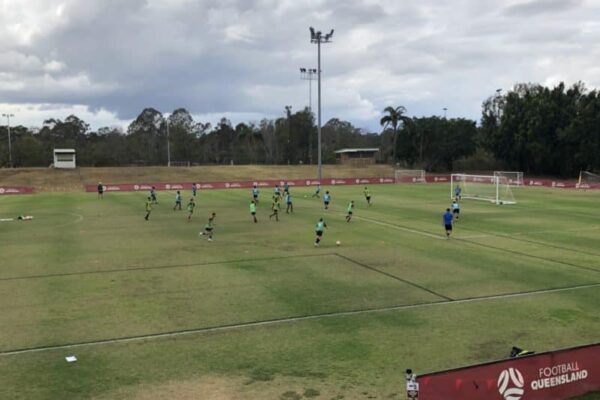
Knights Stadium facility upgrades are almost complete with new irrigation and drainage systems, perimeter fencing, turf for pitches 2 and 3 and an inaugural small-sided pitch 4.

Knights Stadium is one of the most iconic grounds in Australian football and has a storied history dating back to 1989, highlighting the longevity of the Knights’ success in Victorian football.

In an interview with Soccerscene, Melbourne Knights President Simon Pincic discusses the progress at Somers Street from its start in January, the clubs view on improving the women’s teams and how the Knights continue to focus on youth development at all ages.

The upgrades were confirmed in early January are part of a big plan by the Knights to ‘provide a leading sporting facility in Melbourne’s West.’

After the announcement of the upgrades in January, how are the developments coming along at Somers Street?

Simon Pincic: We’re now most of the way there, getting through the final stages and we hope the bulk of this project is completed by the end of next week.

It started out with doing a bit of pitch work just to make our playing surfaces better and we kind of adapted and evolved from what was a six week project to now a four month project.

We ripped up the existing surfaces then added drainage and irrigation to both pitches, levelling off the pitches then finishing it off by installing the turf.

Pitch 3 is down by the end of next week. It’s the training ground and now we’re able to make that a full size, community ground for the u18’s NPL side.

We were also able to add in a small-sided pitch for our younger age groups, so the u8’s and 9’s can play there.

In addition to that there is new perimeter fencing around those pitches, added footpaths, and then the final touch is installing new lighting for Pitch 3 but that probably won’t be until next year when we are planning on upgrading the lighting on Pitch 2.

The early stages of pitch works back in January.

The upgrades and your previous statements at events suggest there is an emphasis on youth development for the Knights. Has that been a big discussion point for the Knights board members?

Simon Pincic: The club have always prided ourselves on giving our juniors a chance. Every season or every second season we tend to push one or two of our junior players to the senior squad. They don’t always make it at the senior level, but we give them a couple of years in that space.

Recently we had [Luka] Kolic pretty much play two entire seasons as an 18 and 19 year old and then went on to sign for Melbourne Victory. As proud as we are of that sort of stuff, we think we can do better with the younger age groups.

Really putting a lot more emphasis into that real grassroots level so from the youngest ages of three to six and starting teams from the u7’s where we really drive home skill development and that sort of stuff.

The goal is trying to develop these players so we can have a crop of ten or twenty that come in from the u7 level and majority of them are still there when they get to the u18 or u23 level so instead of just poaching talent from elsewhere, we can utilise the players from our own set up.

Newly appointed Senior Men’s Head Coach, Ivan Franjic. Photo by: Mikko Robles/MKFC

What is the focus on women’s football now with the increased participation across the country? Is that a priority for the Knights?

Simon Pincic: With the youth set up, it’s not just with the boys but with the girls as well. We haven’t had much luck with that recently when we lost our senior women’s side a couple of years ago and we’re working on improving some facilities for them as well.

Part of the project includes adding girls and women’s changerooms and putting a big emphasis next season on growing the number of junior teams that we’ve got.

With these upgrades, we can have elite level facilities for women in the west which doesn’t exist at the moment so hopefully within a few years we can build that up, have most age groups and build an elite pathway for the girls to follow.

The stadium seems to be a part of a long-term goal to be one of the biggest clubs in the country. Are there any future ambitions for the club and the stadium that the Knights are focusing on?

Simon Pincic: We’ve got a master plan that we started around the start of Covid and have been campaigning for quite a while.

The southern end of our stadium will be flattened, the terracing behind that southern goal, which faces pitches two and three, will be removed and the new club house will be built there with some new terracing and stadium seating behind there.

Also the removal of the old clubhouse and the installation of the new synthetic pitch which is all part of a grand plan.

We obviously need a small amount of funding to get that started and we will breakdown how we complete these tasks and work around any issues.

There will be refurbishments to the clubrooms, changing rooms and stadium terracing to ensure we can host the bigger matches like the Brisbane Roar one again in the upgraded stadium.

There is quite a grand plan there and this year we are taking that first step to completing that clubroom plan.
Previous ArticleNext Article

Geelong Regional Football Hub vision one step closer to reality

A process five years in the making, the Geelong Regional Football Hub (GRFH) will now build its home at Sutcliffe Reserve in Corio.

A major advancement

The project promises to be a major boost for the football community in Victoria’s west.

But the approval isn’t just about addressing the current issues facing players in and around Geelong (with just one football pitch found per 6,971 people), it symbolises an all-important promise to players, coaches and supporters:

A promise to invest, support and grow.

So now, following an extensive process of potential site assessments and council approvals, Football Victoria (FV) will prepare to lay the physical foundations at Sutcliffe Reserve in Corio – ten minutes away from Geelong CBD.

“This is a brilliant result for the sport in Victoria and the start of something truly exciting for football in Geelong and the surrounding area,” said FV CEO, Dan Birrell, via press release.

But despite the obvious anticipation over site approval, there remains one more bridge to cross to bring this project from blueprint to building block: securing funding.


What is the GRFH?

Beyond a mere community football centre, the GRFH will become a world-class hub for playing opportunities, development pathways and venue for several of FV’s most popular competitions.

The proposed site will include five pitches, of which two will boast seated stands, as well as two pavilions, social spaces, kitchen and bar areas, media spaces, and facilities for players and match officials.

Such extensive, thorough infrastructure will therefore ensure the site can host an array of competitions for players across the landscape to showcase their talent. From supporting everything from school competitions to NPL VIC Men’s and Women’s games, the GRFH will be a place for player growth, opportunity and community engagement with the beautiful game.

And as Geelong Mayor, Stretch Kontelj, highlighted, the current demand requires investment of this nature as soon as possible.

“With more than 7,370 registered players across the Geelong region, the scale of demand is undeniable. A regional football hub would be genuinely transformational,” Kontelj said via press release.

“It would drive participation across all genders, abilities and levels of the game, strengthen education and development pathways, attract major events and tournaments and deliver lasting social and economic benefits for Geelong and the broader region.

The demand is there. The support is unwavering.

All that remains is the financial backing to bring about real, tangible results for those driving this vision forward.

Two NPL VIC clubs receive funding boost from State Budget

Following the announcement of the 2026 Victoria State Budget, Avondale FC and Hume City FC will both receive major backing for facility upgrades.


Valuable support for future projects

Avondale and Hume City now have immensely valuable financial support for infrastructure and facility upgrade projects.

Avondale will see an injection of $500,000 for lighting developments at its home ground, Avenger Park. Meanwhile, Hume City FC, will receive $250,000 to further improve its home ground, Nasiol Stadium, which opened in 2009.

Both clubs expressed their delight at the funding from the State Labor Government, and what the backing may bring to club facilities and overall development going forward.

“We are incredibly grateful to the Victorian Government and Sheena Watt for their support through this $500,000 lighting upgrade investment, which will have a lasting impact on our players, families and the wider Avondale community,” said Avondale Club President, Stephen Strano.

“We have hundreds of players across all age groups utilising these facilities each week, and these improvements will help create an even strong environment for excellence, participation, and community engagement,” outlined Hume City President, Ersan Gülüm.

As a result of these respective investments, both NPL VIC outfits appear set for incredibly opportunities to modernise, develop and strengthen their club infrastructure.


Lighting the path to a brighter future

The investments will see features such as lighting upgrades improve facility access for men’s and women’s teams, and LED scoreboards become part of a more modern matchday experiences going forward.

For both clubs, however, lighting upgrades are about more than keeping a pitch open late at night. Improved lighting is a means to a more accessible and supportive future in which both the men’s and women’s teams can utliise local facilities, and matchdays can take place in the excitement of playing ‘under the lights’.

And as Football Victoria CEO, Dan Birrell, highlighted, the improvements made to club facilities are benchmarks for the wider Victorian football community.

“Both Avondale and Hume City are pillars in the Victorian football landscape,” Birrell stated via press release.

“Professional level facilities like Avenger Park and Nasiol Stadium are critical for the development of Victorian football and Football Victoria welcomes the news that they will continue to improve thanks to the support of the Victorian State Government.”


More must follow

While the investments from the State Government come as welcome updates for these two clubs, there is still plenty more to be done to evenly develop facilities and infrastructure across Victoria’s football landscape.

Indeed, Avondale FC and Hume City FC are two fantastic community clubs who will no doubt put the funding towards impactful improvements.

But there are plenty more who still need external backing to build infrastructure not just for now, but for future seasons to come.

Most Popular Topics

Editor Picks

Send this to a friend