




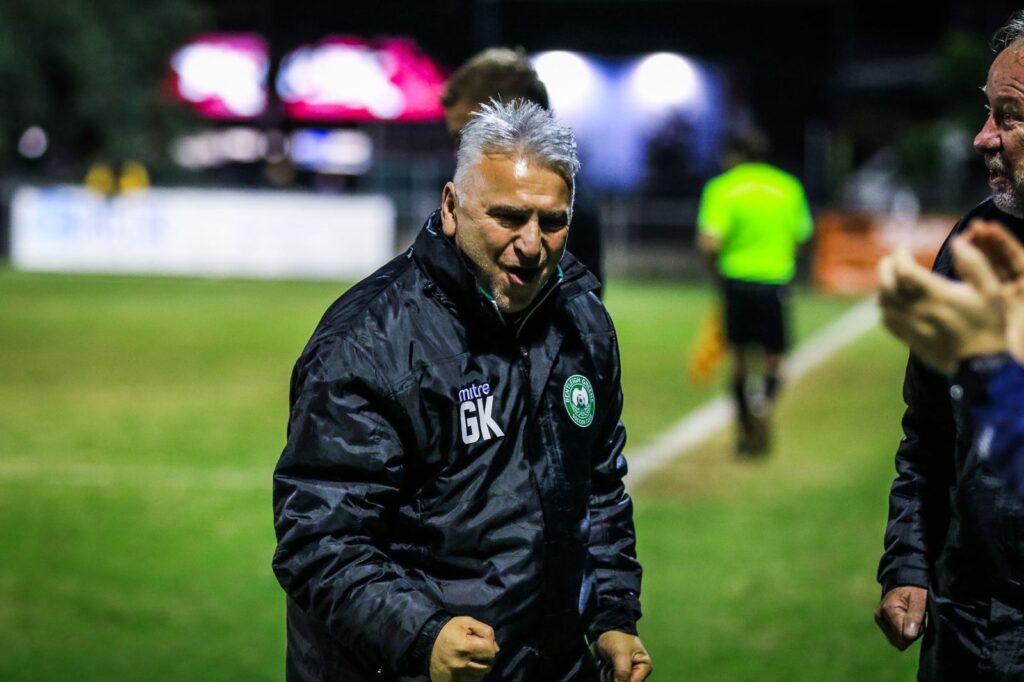
George Katsakis: Back in his element

George Katsakis’ 38-year coaching resume places him as one of NPL Victoria’s all-time greats.

From his playing career into the early stages of his coaching where he worked up the ranks at many clubs, there was always a passion for coaching at the highest level.

Of course, it’s his 18 years at Heidelberg United that cemented his legacy as one of the greats, where he won the 2017 NPL Victoria Men’s Coach of the Year award and spearheaded Heidelberg United’s golden era.

The golden era involved winning a coveted NPL Australian championship, a National Premier League title, a Charity Shield, a Dockerty Cup triumph in 2017 and securing a treble of NPL Victoria Premierships in 2017, 2018 and 2019.

In 2015, he led Heidelberg United to the FFA Cup Quarter Finals stage after a fairy tale run and managed to reach that same point two more times in 2017 and 2018. One of the most special cup moments for the Bergers was the 2017 FFA Cup run and the famous 1-0 win against Perth Glory at Olympic Village in the Round of 32.

In an interview with Soccerscene, Katsakis discusses his fantastic start at Bentleigh Greens, his philosophy on player development, the future of coaching in Australia and the attributes he had to become such a successful coach.

You joined Bentleigh Greens in March – it was a shaky start, but you have settled the ship. What brought you back to coaching through Bentleigh Greens?

Katsakis: This is my 38th year in coaching at all levels so first and foremost, I was missing it. I know it was only a short break, but I suppose what really inspired me to get back into it was the chain of events and the way I was released from Heidelberg that really made me think about where I am in football and where I need to be.

Obviously, I’m always aspiring to be at the top level but with Bentleigh Greens, I know the history of the club, I know their achievements over the last decade if not more and had some great teams, some great coaches.

After their phone call, they were convincing to me that they were looking to get promoted and back to the top flight, and I thought it was a no brainer. It inspired me to take a team that was struggling and hopefully steer the ship to a promotion or to a lot of improvement.

At the moment all we can say is that we’ve improved dramatically. Myself, the experience has come in and settled things that were not previously addressed earlier on and now obviously the results are flowing. It’s been a great transition for me.
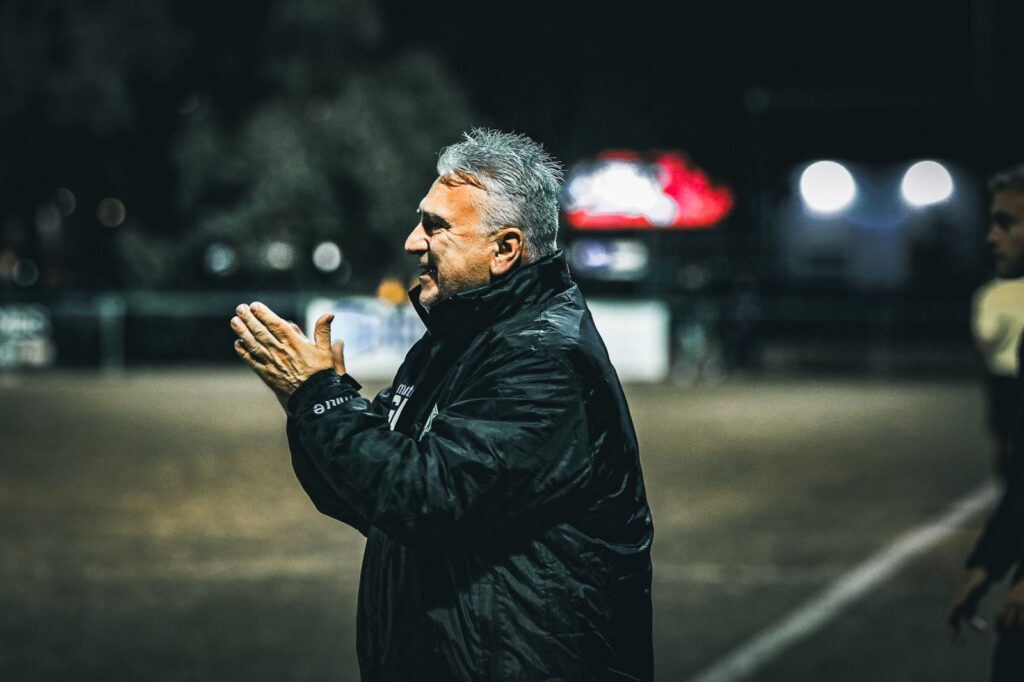
In terms of player development, how do you go about that as a head coach? 

Katsakis: I think this is a great topic at the moment in Australian football. A lot of my emphasis at Heidelberg over the last 18 or so seasons was to try and introduce a pathway to players through the senior team but also paying a lot of attention to our u18 and u23 programs.

It was important to blend what I could foresee being the future of the club with the senior players, try and bring them in through that avenue and make sure they’re steered one by myself and my assistants and two and very importantly, by the senior players.

One of the fundamentals of kids developing is their environment and the people around them. If you have got the right group, as I did at Heidelberg for many years, there will be success.

I had a group who bought into our culture and accepted the fact that young kids were going to come through and help them through that development. There’s quite a few that I can possibly name that have taken the next level and next step.

Looking at the current coaching ecosystem, do you see players transitioning well into coaching and do you see coaching improving in the future?

Katsakis: It’s exciting because I now know of maybe 10 or more young aspiring coaches that are coming through. A classic example is certainly Andrew Cartanos, but I also have to mention the likes of Nick Marinos who’s taken the reigns at Port Melbourne, Luke Byles who’s become my assistant, Steven Pace is at Eltham Redbacks. So there’s quite a few coming through.

It’s great because they’re just added value, away from their coaching they can actually relive their football through those youngsters, and it makes them understand what it takes to make it at the top level.

After all the success at Heidelberg United, for any aspiring coaches, what were the attributes you had that made you so successful as a coach?

Katsakis: When I first got into coaching a very experienced coach from England said a couple of things to me that I took on board. The most important thing for me is to be humble and to understand that at any point in your coaching career, whether you’re a 20, 40 or 70 year old, you’ve got to be able to accept the fact that you’re going to learn every day.

Every day there is something new that you’re challenged with as a coach and accepting the fact that you keep learning until the day you retire, I think is very important.

We all learn from each other and generally in life as well as in football, we’re not born to know it all. Accepting that your philosophy, or someone else’s philosophy, or their techniques, or the way they coach, or their persona, whatever they bring to the table. If you can take a little bit from everyone’s leaf and add it to your booklet, it’s probably the most important part of coaching.
Previous ArticleNext Article

FCA to Host Exclusive Two-Part Goalscoring Workshop Series with Dr Ron Smith

One of Australian football’s most respected coaching minds shares decades of research ahead of the FIFA Men’s World Cup.

Football Coaches Australia (FCA) has announced an exclusive two-part coach education series featuring renowned coach educator and football analyst Dr Ron Smith, offering coaches a rare opportunity to explore the evolving science of goalscoring through the lens of one of Australia’s most influential football thinkers.

The online workshops, scheduled for June 1 and June 8, will examine the historical development, modern trends and future direction of goalscoring in football, drawing on extensive research that formed the foundation of Dr Smith’s doctoral studies.

For FCA, the sessions represent the culmination of more than a year of planning and provide a timely opportunity for coaches to deepen their understanding of attacking play ahead of the FIFA Men’s World Cup.

“Ron’s work on goalscoring has been years in the making and continues to evolve,” FCA President Ian Greener said.

“We felt there was no better time to bring this knowledge to the coaching community than in the lead-up to the World Cup, when coaches around the world will be analysing the game’s best teams and players.”

Across the two sessions, Dr Smith will present findings from his extensive research into goalscoring patterns and trends, examining how the game has changed over time and what coaches can learn from football’s biggest tournaments.

Topics covered throughout the series will include:

  • Historical analysis of goalscoring trends
  • How goalscoring has evolved in the modern game
  • Key patterns identified through Dr Smith’s research
  • Scoring trends across the last six FIFA Men’s World Cups
  • Comparisons between men’s and women’s World Cup tournaments
  • The role of pressing, transition moments and direct play in creating goals
  • Practical coaching implications for improving attacking performance

The two-part structure has been intentionally designed to build upon itself. Session One will focus on the evidence, data and research underpinning Dr Smith’s findings, while Session Two will explore the practical applications and coaching interventions that can emerge from that analysis.

Football Australia has accredited both workshops with one Continuing Professional Development (CPD) hour each, allowing coaches to earn two CPD hours by attending both sessions.

Dr Smith’s coaching and coach education credentials span decades. He has worked extensively with Football Australia, the Australian Institute of Sport and the Socceroos, while also holding coaching roles internationally in Iceland and Malaysia, as well as within the A-League.

His contributions to coach development have helped shape generations of Australian coaches, making this series a valuable opportunity for coaches across all levels of the game.

Event Details

History and Future of Goalscoring – Session One
Date: Monday, June 1, 2026
Time: 7:30pm AEST
Format: Online
CPD: 1 Football Australia-accredited CPD hour

Following the completion of the FIFA Men’s World Cup, FCA is also planning a special panel discussion featuring leading Australian and international coaching voices to analyse the key tactical developments, trends and lessons emerging from the tournament.

Further details regarding that event are expected to be released later this year.

FCA members can attend the workshops free of charge, while guest registrations are available through Eventbrite.

Two NPL VIC clubs receive funding boost from State Budget

Following the announcement of the 2026 Victoria State Budget, Avondale FC and Hume City FC will both receive major backing for facility upgrades.


Valuable support for future projects

Avondale and Hume City now have immensely valuable financial support for infrastructure and facility upgrade projects.

Avondale will see an injection of $500,000 for lighting developments at its home ground, Avenger Park. Meanwhile, Hume City FC, will receive $250,000 to further improve its home ground, Nasiol Stadium, which opened in 2009.

Both clubs expressed their delight at the funding from the State Labor Government, and what the backing may bring to club facilities and overall development going forward.

“We are incredibly grateful to the Victorian Government and Sheena Watt for their support through this $500,000 lighting upgrade investment, which will have a lasting impact on our players, families and the wider Avondale community,” said Avondale Club President, Stephen Strano.

“We have hundreds of players across all age groups utilising these facilities each week, and these improvements will help create an even strong environment for excellence, participation, and community engagement,” outlined Hume City President, Ersan Gülüm.

As a result of these respective investments, both NPL VIC outfits appear set for incredibly opportunities to modernise, develop and strengthen their club infrastructure.


Lighting the path to a brighter future

The investments will see features such as lighting upgrades improve facility access for men’s and women’s teams, and LED scoreboards become part of a more modern matchday experiences going forward.

For both clubs, however, lighting upgrades are about more than keeping a pitch open late at night. Improved lighting is a means to a more accessible and supportive future in which both the men’s and women’s teams can utliise local facilities, and matchdays can take place in the excitement of playing ‘under the lights’.

And as Football Victoria CEO, Dan Birrell, highlighted, the improvements made to club facilities are benchmarks for the wider Victorian football community.

“Both Avondale and Hume City are pillars in the Victorian football landscape,” Birrell stated via press release.

“Professional level facilities like Avenger Park and Nasiol Stadium are critical for the development of Victorian football and Football Victoria welcomes the news that they will continue to improve thanks to the support of the Victorian State Government.”


More must follow

While the investments from the State Government come as welcome updates for these two clubs, there is still plenty more to be done to evenly develop facilities and infrastructure across Victoria’s football landscape.

Indeed, Avondale FC and Hume City FC are two fantastic community clubs who will no doubt put the funding towards impactful improvements.

But there are plenty more who still need external backing to build infrastructure not just for now, but for future seasons to come.

Most Popular Topics

Editor Picks

Send this to a friend