Soccerscene the only online publication dedicated to the Australian and international football industry. It serves as a practical guide for those involved in the business of running a football club and bringing readers up-to-date research and development across all football matters providing insights, discussion and information related to topics that matter.
Joe Montemurro’s move to Lyon showcases elite coaching talent from Australia
Joe Montemurro has become the first non-French coach to take over Olympique Lyon Women’s team in their 20-year history after a two-year deal was struck with the legendary Australian coach.
The former Juventus and Arsenal head coach takes over the reins from Sonia Bompastor who left at the end of the 2023-24 season to manage WSL club Chelsea.
Montemurro’s resume in the women’s game is truly unmatched, leading Juventus to five trophies over a three year stretch including a treble in his maiden season. Before that he had a revolutionary coaching spell at WSL giants Arsenal, with whom he claimed the 2018 League Cup and the Women’s Super League the following year.
Montemurro is just another of many top Australian coaches produced from home soil, with his youth squads and A-League Women’s experience in Melbourne shaping the genius he has become today.
However, a hot topic in the Australian coaching community has been the lack of opportunities abroad for many local coaches whether it be due to the lack of pathways up the ranks or the AFC/UEFA licencing issue that has locked out managers from going abroad.
In a country that has produced plenty of elite manager talent, there are 14 managers in head coaching roles abroad, with only four of those in Europe (Oxtoby, Postecoglou, Montemurro, and Wehrman). It’s simply not enough.
Names like Jeff Hopkins and Ante Juric, who have plied their trade in Australian women’s football with many titles each are left to ponder the opportunity of coaching abroad without their UEFA licence acquired.
Both Montemurro and Oxtoby in particular have been pioneers in the women’s game regarding the seamless transition from Australia to European success, and the consistent successes of the former will surely legitimise women’s football more in this country and increase opportunities for the next generation of coaches who start locally and experience early success.
With this move, Montemurro also unfortunately rules himself out of the coveted Matildas manager position that he was certainly one of the leading contenders for. It was a story of poor timing with Australia’s best ever women’s football coach left to wait too long for Gustavsson to make way.
Montemurro also ended up on the final three of the shortlist in the USWNT’s pursuit of a new manager with the Olympics arriving soon, however legendary Chelsea manager Emma Hayes was selected to take over.
However, it could be for the better, with Lyon’s sky high expectations something that Montemurro will be very familiar with because of his time at both Arsenal and Juventus.
Lyon have won the French league 17 times in the last 18 seasons, making the league title the minimum requirement for Montemurro, who has really been brought on board to get them back on top in Europe after they lost to Barcelona in last month’s Champions League final.
Montemurro’s move to Europe’s elite is another step forward in his career and again showcases an example of local coaching success translating into roles in Europe, something that has not been seen enough for football in Australia.
The A-League has just lost a Victorian club. The death of Western United and the suspension of its license by the Australian Professional Leagues (APL) on August 10th was inevitable. The club says it wants to rebuild and eventually return to the competition. That is unlikely to happen considering the search for new owners has to begin.
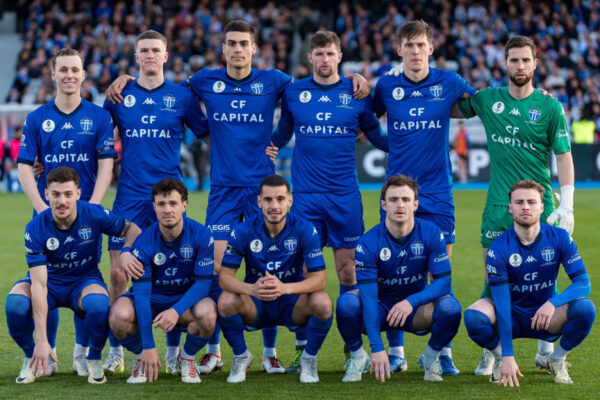
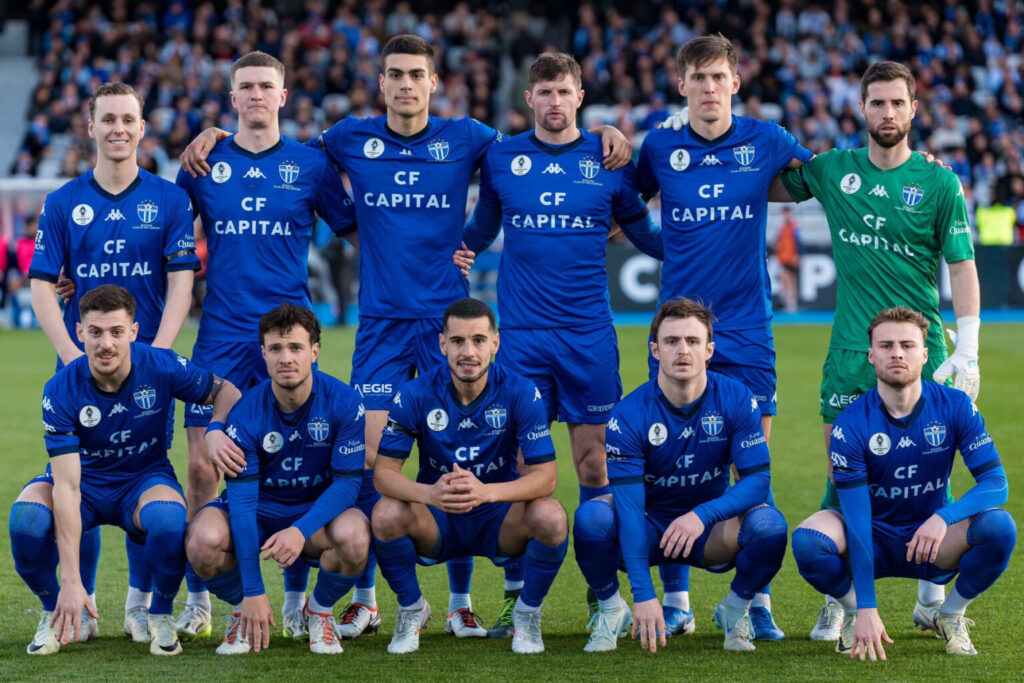
But one day after the announcement from Western United, South Melbourne stepped forward. The four-time NSL winners announced their intention to begin formal discussions with the APL about joining the A-Leagues. They believe the timing is right. Their argument is understandable. Their football credentials and history are stronger than most A-League teams.
But there is a problem. South Melbourne may have the history. It may have the supporters. It may even have one of the most attractive potential derbies in Australian football. But that does not mean it will get an A-League licence.
In fact, the more realistic prediction from my perspective is that South Melbourne will once again be told no.
South Melbourne has never been better placed
There is plenty to like about South Melbourne’s position. The club is not simply relying on its history. South Melbourne returned to national competition through the inaugural Australian Championship in 2025. It did not merely participate. South Melbourne won it. The club defeated Marconi Stallions 2-0 in the final to become the competition’s first champion.
That achievement matters. The Australian Championship was created to bridge state-based football and the professional game. Whilst it is seen as a second tier, there is no promotion and relegation with the A-League. But it has also continued to perform on the national stage. In the 2026 Australia Cup, which South Melbourne qualified for, they reached the final rounds and then produced one of the biggest results of the tournament.
Adelaide United came to Lakeside Stadium. South Melbourne won 2-1. Adelaide had won the Australia Cup three times. South knocked them out in front of its own supporters. They’re now into the quarter-finals of the 2026 Australia Cup.
South Melbourne celebrating the Australian Championship Image Credits: South Melbourne FC
The club also has a much bigger story to tell than its recent results. Alongside its four NSL victories, the club also won the 1999 Oceania Club Championship and represented Oceania at the 2000 FIFA Club World Championship. The club has a dedicated supporter base and the history to deserve a place.
The club says its Oceania Professional League participation has helped make it Australia’s 13th professional football club. It has more than 150 businesses supporting it in 2026 and a long-term arrangement at Lakeside Stadium, in the heart of South Melbourne.
On paper, it is difficult to argue that South Melbourne is not ready. The problem is that readiness and admission are two different things.
Third time’s the charm?
South Melbourne’s current push is not new. It has been here before. The club was pursuing an A-League return almost immediately after the NSL disappeared. In 2007, South announced its interest in becoming the second Victorian A-League club.
Then came the 2008-09 process. South Melbourne backed the Southern Cross bid for the second Victorian licence. The club proposed a new team based around the redevelopment of Bob Jane Stadium and involvement from the broader Victorian football community.
It lost. The Melbourne Heart bid won the race and eventually became Melbourne City. That was South Melbourne’s first major warning. Its football heritage was not enough. Its second major attempt came almost a decade later.
The 2017-18 expansion process produced the most serious South Melbourne bid yet. South made the shortlist for an expanded A-League licence. It ultimately lost to Western United. Bill Papastergiadis has since explained that he did not genuinely expect South Melbourne to win in 2018, despite believing strongly that the club belonged in the A-League. He also reflected on the barriers facing a traditional club trying to enter the existing Victorian professional football ecosystem.
That is important context for today’s bid. South Melbourne is not entering negotiations without understanding how difficult the politics and economics of the Victorian football market can be. The club has tried the direct route twice. Neither time worked.
The Western United lesson
This is where the current situation becomes complicated. In isolation, adding South Melbourne would be fantastic for the A-League. Imagine South Melbourne against Melbourne Victory. The atmosphere would be enormous.
There is a genuine football rivalry waiting to happen. South itself points to the potential for ready-made derbies and commercial interest. But the argument that Melbourne should simply have three A-League clubs because Melbourne is a huge city ignores what has just happened to Western United.
Western United was supposed to represent Melbourne’s rapidly growing west. Its original vision centred on a major project in Geelong. The club eventually moved into Ironbark Fields in Tarneit in 2024.
Yet the geographic separation never became as clear as the original concept suggested. Western United was not a Geelong club. It was not a regional Victorian club in the traditional sense. It was a western Melbourne club based and that matters.
The A-League already has Melbourne City and Melbourne Victory. Adding South Melbourne would give the competition three clubs operating within the same metropolitan football market. It is not necessarily brilliant for the business model, which has already lost a club operating on the outskirts of Melbourne.
The NSL offers an interesting historical comparison. The Falcons provide an even more striking Victorian example. They became the first and only regional Victorian club to play in the NSL, reaching the finals in 1996. The distinction is important.
A national competition can expand its footprint by adding genuinely new markets. That is different from adding another club inside an existing Melbourne metropolitan market. That was what was envisioned for Western United, and it failed quickly.
Will the APL see South Melbourne as a safe investment? Despite the fact they’re a well-established club, I’d argue the answer is no.
Promotion and relegation is the only realistic route
There is one scenario where South Melbourne could eventually force its way into the A-League, and that’s the great missing piece of Australian football. Promotion and relegation. South Melbourne would not need somebody to decide that Melbourne suddenly has room for another licence. It would simply need to earn it.
They would have done just that in 2025, winning the Australian Championship if the football pyramid was open. Football Australia originally designed the National Second Tier with the possibility of promotion and relegation being considered once the competition matured.
The format connects NPL clubs and established foundation clubs with national competition. It does not provide a sporting pathway into the A-League. South Melbourne can win the Australian Championship, NSL and Australia Cup but none of those achievements automatically produce an A-League licence.
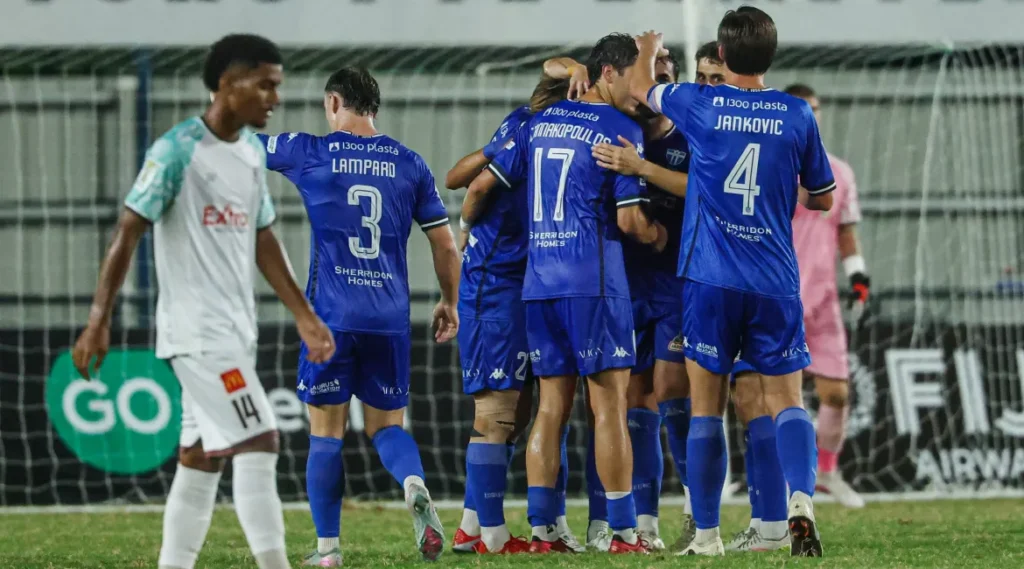
South Melbourne in the Oceania Championship Image Credits: Oceania Championship
Opening the pyramid is far more complicated than simply announcing promotion and relegation. Australia’s football calendar is fragmented. The A-League operates primarily through the summer months. The NPL operates through the winter and early spring. For the 2026-27 season, the A-League Men runs from October to June, while the NPL begins in February and finishes in September.
That creates an enormous structural problem for a fully connected pyramid. The clubs below the A-League would need to operate at a level capable of supporting professional football. If the A-League aligned with the NPL and the lower pyramid, it would compete in a football calendar that already has to coexist with Australia’s other major winter sports. That is a difficult feat against bigger leagues such as the AFL and NRL.
Beyond that, clubs lower down would need travel budgets and to survive commercially would take real sacrifice from all parties to make that work. The A-League’s existing clubs also have something to lose. They have invested heavily in their licences and their businesses.
Historically, A-League licences were extended through to 2034, while those licence arrangements have included provisions allowing promotion and relegation to be introduced. But the existing clubs will do everything in their power to block it. Promotion and relegation removes certainty. An A-League club can finish last in the current system with no threat to their place. Under relegation, its place is no longer guaranteed.
That is a major commercial change for clubs that have invested in securing their position in the competition. It is therefore difficult to imagine the A-League opening the door. The A-League’s licensing system gives the competition enormous control over who enters, and for South Melbourne historically they’ve been left out in the cold.
South Melbourne deserves the conversation.
The frustrating part is South Melbourne has probably never had a stronger argument. It has history, supporters, infrastructure, commercial support and most importantly, ambition. Beating A-League clubs in national competition proves the capability is there.
It deserves to be in the conversation. But being in the conversation is not the same as being selected. The Western United experience should be a warning. If the A-League could not make the Western United project work, it is difficult to see why it would suddenly decide that another Melbourne club is the answer.
South Melbourne may be the better football story. It may even be the better football club. But the A-League is not simply selecting the best football story.
It is selecting a professional competition, and until Australia embraces a genuine promotion and relegation system, South Melbourne’s path back to the top flight will remain dependent on someone handing it a licence.
That is the part of the dream that looks unrealistic. South Melbourne can keep knocking and it should. They always say third time’s the charm. But unless the pyramid is opened, I expect the door to remain closed.
Football Coaches Australia (FCA) is set to relaunch its Coach Education Program, offering coaches across the country a comprehensive schedule of online workshops and new education opportunities through to the end of 2026.
Following a break in the program during the FIFA Men’s World Cup period, FCA’s coach education schedule returns this month with a strong focus on providing coaches with opportunities to complete the Continuing Professional Development (CPD) hours required to maintain their coaching licences.
FCA plans to deliver two online workshops per month through to December, alongside a range of additional coach education initiatives covering the technical, tactical, physical and emotional aspects of the game.
The program returns on Monday, August 24, with Scottish FA Coach Education Manager Martyn Buckie presenting Technical and Tactical Priorities – The Differences When Coaching Junior/Youth and Adults.
Buckie has been a regular presenter across FCA’s coach education program and will return with another engaging session designed to provide practical insights for coaches working across different levels and age groups.
FCA members can attend the session free of charge when using the FCA member code, while guests and non-members can register for $22.50.
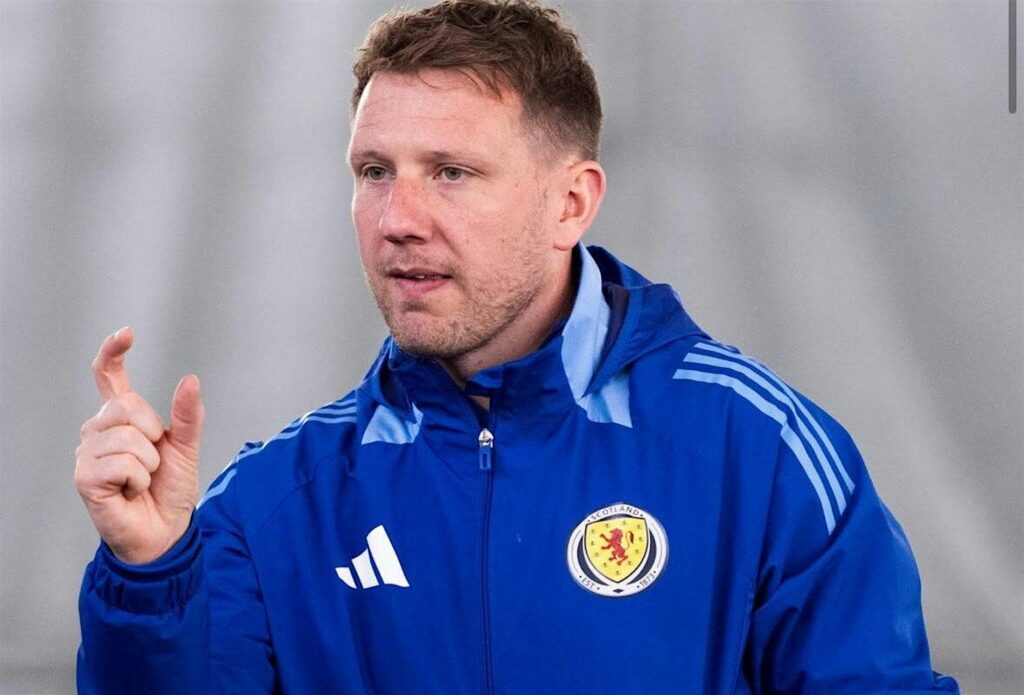
The following week, on Monday, August 31, Scottish National Women’s Team coach Melissa Andreatta will present The Identity Advantage – Building a Team to Stay Connected When Pressure Is Highest.
Andreatta’s session will explore the importance of team identity and connection, particularly in high-pressure environments, providing coaches with insights applicable across the game.
FCA President Ian Greener said the return of the program represents an important opportunity for coaches to continue developing their knowledge while meeting their CPD requirements.
“Our ongoing relationship with Football Australia to provide these sessions, all supported with CPD, is a valuable component of the coach education landscape and one we here at FCA are proud to bring to coaches at all levels of our game,” Greener said.
The program will continue throughout September, with Ernie Merrick among the presenters already confirmed and further speakers to be announced in the coming months.
FCA’s expanded schedule is designed not only to help coaches accumulate vital CPD hours, but also to expose them to a diverse range of perspectives and expertise from across the football community.
A major new initiative will begin in October, with renowned coach Ron Smith delivering a six-part series focused on using information technology to develop coaches’ skills in match analysis.
The series will provide Australian coaches with a new opportunity to explore the use of technology and match analysis as part of their coaching development. Initially, the program will be limited to 10 coaches, with further details to be announced by FCA shortly.
With two quality sessions planned each month through to the end of the year, FCA’s renewed Coach Education Program will provide coaches at all levels with regular opportunities to learn, connect and continue their professional development.
Further presenters, workshops and education opportunities will be announced throughout the coming months.
Registrations for Martyn Buckie’s August 24 workshop are now open via this link.
FCA looks forward to welcoming coaches back to its Coach Education Program and continuing to support the development of coaches across Australian football.