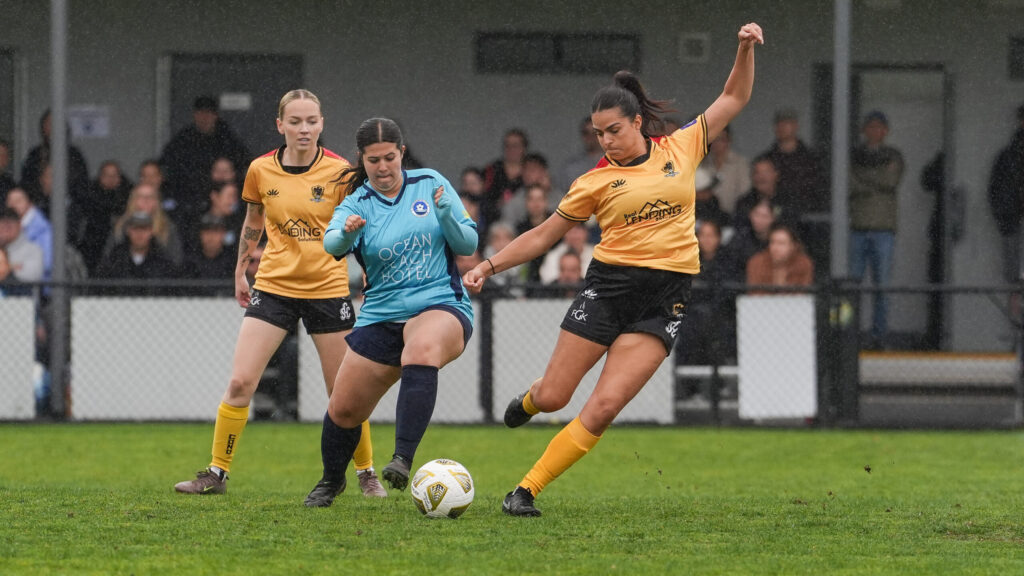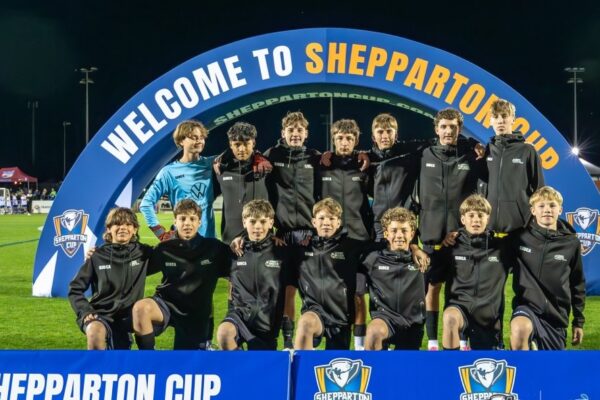

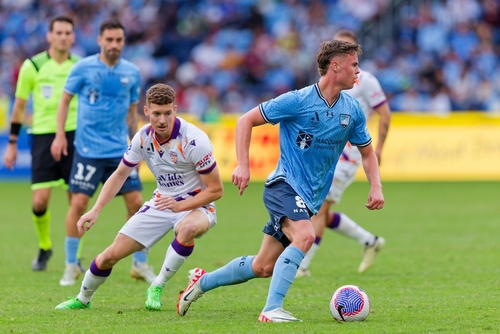


Adamstown Rosebud Football Club is a proud, community-driven team with deep roots and a long history in Northern NSW Football, having experienced considerable growth and transformation over the years.
The club, founded in 1889 and based in the Newcastle suburb of Adamstown, is one of Australia’s oldest continuously operating football clubs, competing in the Northern NSW National Premier League.
Speaking to Soccerscene, former president of Adamstown Rosebud FC and current coordinator for the Junior Development Program (JDL) Chris Dale, shared insights into his role within the club and its growth from a small senior-focused structure to a comprehensive youth development program.
In our interview, Chris highlights the importance of community engagement, key sponsorships, infrastructure upgrades and a strong future-focus on nurturing and developing young players to become senior footballers who are also well-rounded individuals who contribute to society and the local community – including giving back to the club.
Can you share some insight into your role at the club, and how Adamstown Rosebud has evolved since you first stepped into that position?
Chris Dale: When I first came to the club as a player in 2011, we had three senior teams (1st grade, reserve grade and under 19s). Now, nearly 15 years on, the club has grown and now includes comprehensive junior and youth programs.
This transformation first started in 2012 with Northern NSW Football introducing Premier Youth League (PYL), with an under 13s through to under 18s program. In 2019 this was then expanded to include the Junior Development League (JDL), which is an under 9s to under 12s program.
In my current role, I am heavily involved in the coaching and player development at the club, with a specific current focus on the JDL program. I have had other roles over my time, such as technical director, board member and also club president.
My scaled-back role allows me to also focus on my young family, which can be difficult when you are carrying the responsibility of a senior leadership position at the club. So far, I am really enjoying working with our younger players; it’s rewarding to see them develop as players and individuals.
Overall, we are working hard as a club to develop robust and well-rounded players in our junior and youth programs to feed into our senior football teams to provide a bright future for the club.

Have there been any challenges that the club has faced on or off the field? How did the club deal with them?
Chris Dale: We have two main challenges that are top of mind. One is the cost of football and how we best manage it to avoid over-charging families while still providing an excellent offering.
We do this through a sponsorship program and ongoing fundraising that helps us absorb as many costs as we can before it impacts player registrations and the back pockets of mums and dads in our community.
In general, football in Australia is a user-pay sport with limited financial support from the code, which is different to other sporting codes like AFL and NRL. With limited capacity to financially support grassroots football, it means clubs have to be very resourceful through sponsorship, fundraising and utilising volunteer services as much as possible.
Also, there is a real push for semi-professional competition, which contributes to what I see as the second major challenge, which is getting volunteers and people to help deliver on increasing expectations.
Families are busy – in most households both parents work and time is tight. People are getting kids to multiple trainings a week, as well as other commitments. On top of all of that, notwithstanding the registration fees families pay for their children to be in our program, we then want – need – them to volunteer their time to help us.
It’s a big ask and we have a fabulous community at Adamstown Rosebud FC with lots of families who are happy to be in the canteen, Dads who are happy to run the line, siblings who are happy to be ball boy and individuals who are happy to keep rubbish under control so the club looks its best.
But it is that push towards semi-professional football, the push towards everything being more elite, that’s probably been the hardest part because it means we need more volunteers to actually administer the ongoing additional requirements that are set.
At our core we are a volunteer-based club. So getting people’s time – and we really appreciate it when we get it – is really hard and it can be a struggle to get people with the required skills and time into those larger roles within the club.
I think in terms of solving those challenges, it’s a case of having business development plans, trying to have a five-year club plan and key strategies for how we spend money on player development and club uplift.
There are sponsors at our club that allocate money to certain areas, which I think is a positive thing. If funds are allocated specifically for the JDL program or to the youth program, then that really helps us to try and drive down those costs.
In terms of recruiting players, a big focus for us is always keeping players at the club for as long as we can. We invest early in strong club culture and development plans for player growth. We aspire for this to translate into our senior teams, where we know our investment will translate to outcomes.
A lot of key volunteers we have at the moment are mums, dads and grandparents who have been with the club for 5, 6, 7 years. This helps to build club culture and people feel involved and invested in the club, which is something we really focus on and value greatly. Retention of players – and their families – is pivotal in creating that family-based culture that the broader community hear about, and want to be part of.
In what ways does Adamstown Rosebud FC connect with and support its local community, both on and off the field?
Chris Dale: When you go to a match day for us it’s very much an inclusive space. We really enjoy hosting people and we enjoy people coming to the ground. We’re pretty lucky in terms of our space at Adamstown Oval, it’s a beautiful venue with good amenities that makes it easy to bring families, friends and supporters together – including the opposition!
Our annual ANZAC Day event has become an important fixture on our club calendar. We were delighted to host Weston FC for our 2025 game. Over the last 5 to 6 years it’s been a really important day for us where we work with 211 Army Cadets to host an ANZAC celebration and bring the community together, including the supporters and families of the team we are playing. There is a strong sense of comradery and I personally really value what it represents. It is important to the club that we strive to be a pillar in our community.

Have there been any new sponsors or partnerships this season, and how are they helping Adamstown Rosebud grow both on and off the field?
Chris Dale: In recent years we’ve been very lucky to have 3 prominent local businesses in Newcastle sponsor and actively engage with us. The McCloy Group has been fantastic in providing funds and resources to develop our programs.
KCE also came on board and they’ve been engaged in our youth program, helping it develop and become stronger. Last but definitely not least, Avid Project Management, a Newcastle company that continues to go from strength to strength, is a valued sponsor of our JDL program.
These 3 businesses have been huge for us. I can’t say that enough. Through their support, we have increased our service offering across all three levels of football at the club, reduced the cost of football for our teams and our families, and connected with a business community that genuinely cares.
The club is working towards upgrading Adamstown Oval’s training pitch to an all-weather synthetic surface. How will this development benefit the club moving forward?
Chris Dale: A key area of our club footprint is our training space. It’s where we lay the foundations and spend the majority of our time. Last year we renamed this key area Peter Stone field, which is in recognition of one of our famous old boys who passed away not too long ago.
Peter was really connected to our youth players and youth development. He was a former school teacher and was very committed to growing the player education side of our club for our young men.
Week-long use of this space across JDL, PYL and NPL takes its toll. Add in the significant wet weather we’ve had and it creates an environment that cannot sustain its intended use.
I believe it’s critical that we start to work with our local councils and our local stakeholders to invest in all-weather surfaces and upgrade existing facilities.
We are working with our local council and we do have some plans in place, but once again, it’s all about having funding to really drive it forward.
An all-weather surface would be a significant game-changer for the club. Even in situations like our current one, it’s been 10 weeks that players haven’t been able to train on the field due to conditions. We are proactive and shift our sessions to private all-weather facilities, but that then has a significant impact on our budget.

What’s on the horizon for the club in 2025 and beyond? Are there any new plans or projects you’re looking forward to?
Chris Dale: Player development is key. Personally for me, moving into a focused role in the JDL space, I see enormous potential to work with our 9 to 12-year-olds and develop core skills and attributes to see them progress.
Part of that is trying to build a club culture where the kids are not only playing football and having success on the field, but also they’re growing as young boys and young men. That’s always been a focus for us, making sure we’re not just developing footballers, but also developing good people.
Our player development programs are a big focus in the next 12 to 36 months. We have a really good crop of young players who are now in our senior squad.
In 2024 and 2025 over 50% of our senior players played youth football for the club. That’s great and we are really proud and excited by the talent coming through and contributing to club culture and success at a senior level.
So, continuing to bring that next wave of Rosebud players from our junior and youth ranks into our senior football is a major focus for us over the next short to medium term. And so is continuing to provide a culture that people choose to volunteer their time to be part of. We are a volunteer-led club with a passion for develop quality players who contribute to – and give back to – our community.